Your feet each contain 26 bones, 33 joints, and over 100 muscles and ligaments, and the arch is the structure that ties it all together. So what is foot arch support, exactly? It’s any device, feature, or intervention designed to maintain the natural curve along the bottom of your foot, helping distribute pressure evenly as you stand, walk, and run.
Without proper support, that arch can collapse or strain under daily load, leading to problems like plantar fasciitis, shin splints, and chronic knee or back pain. The issue is more common than most people realize, and it doesn’t only affect athletes. Anyone who spends long hours on their feet, wears unsupportive shoes, or has flat feet or high arches can benefit from the right type of arch support.
At Achilles Foot and Ankle Center, our podiatrists evaluate arch-related pain and structural issues across our thirteen Central Virginia locations every day. We see firsthand how the right support, whether it’s a custom orthotic, an over-the-counter insert, or a change in footwear, can eliminate pain and prevent bigger problems down the road. This guide breaks down the types of arch support available, the specific benefits they offer, and how to figure out which option fits your feet.
Why foot arch support matters
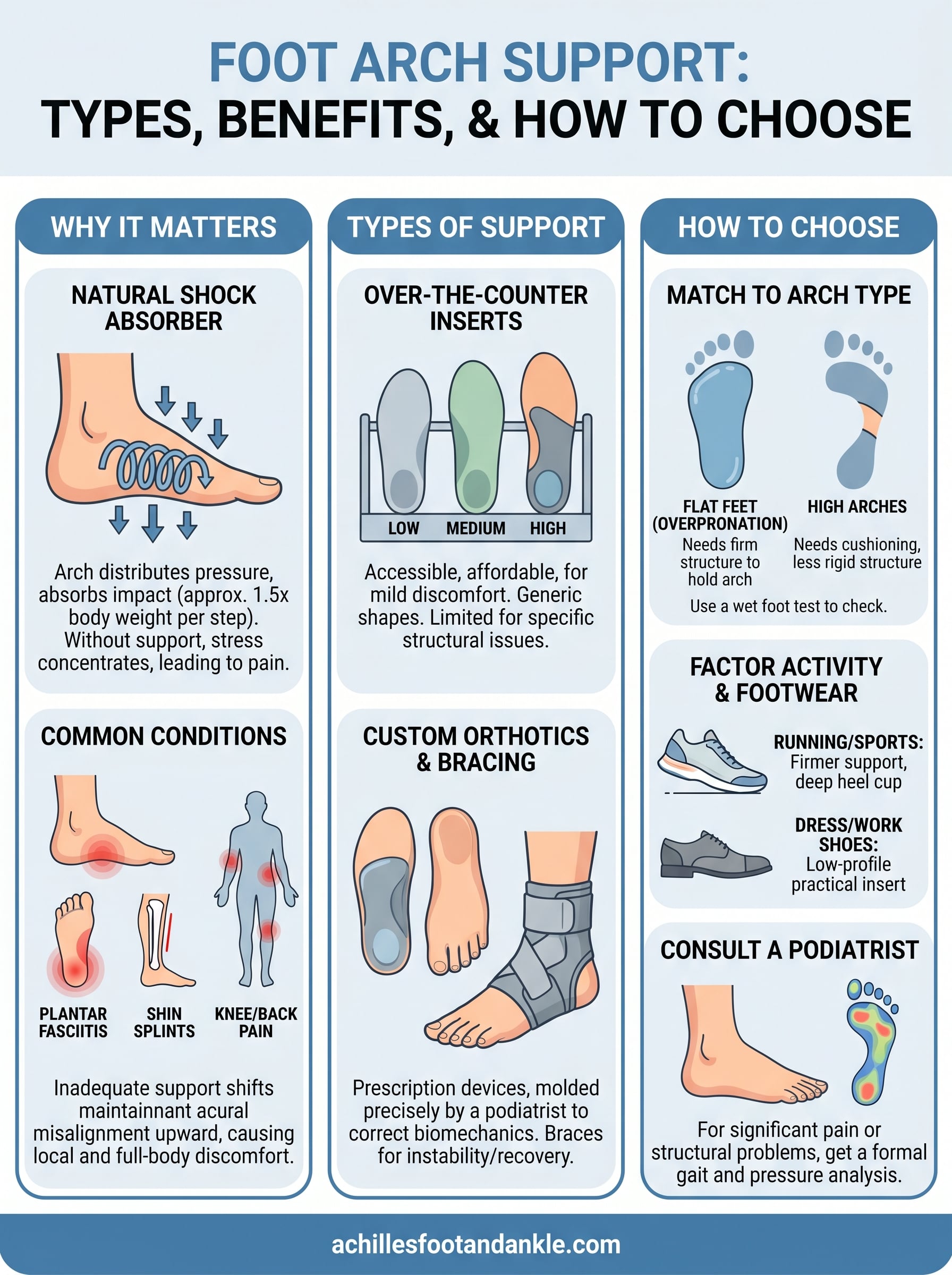
The arch of your foot acts as a natural shock absorber, compressing slightly with each step and then springing back to propel you forward. When this structure functions well, your body distributes weight efficiently across your heel, the ball of your foot, and your toes. When it doesn’t, stress concentrates in the wrong places, and that’s when pain starts, often in ways that seem entirely unrelated to your feet at first.
How your arch handles daily load
Every step you take sends a force equal to roughly 1.5 times your body weight through your foot. Over the course of a full day of walking, that adds up to an enormous amount of cumulative pressure on bones, tendons, and soft tissue. Your arch manages this by flexing, storing energy, and releasing it, a process that keeps your gait efficient and your joints protected from excessive impact. Well-fitted arch support preserves this mechanism when your foot’s natural structure is compromised, whether from genetics, a prior injury, or years of wearing shoes that offer little structural reinforcement.
A foot that lacks adequate support doesn’t just hurt locally. It shifts alignment upward through the ankle, knee, hip, and lower back, turning what starts as foot discomfort into a full-body problem.
Common conditions tied to poor arch support
Plantar fasciitis is the most frequently diagnosed consequence of inadequate arch support. The plantar fascia, a thick band of tissue running along the bottom of your foot, takes on excess tension when the arch collapses inward or when a high arch fails to absorb shock properly. Other conditions directly linked to poor support include Achilles tendinitis, shin splints, metatarsalgia, and stress fractures. These aren’t injuries reserved for athletes. Office workers, nurses, teachers, and retail employees develop the exact same problems from long hours on hard floors in unsupportive footwear.
Arch problems also compound over time. Early on, you might notice mild fatigue or soreness after long days. Without correction, that pattern progresses into chronic inflammation, structural changes, and persistent pain that requires more involved treatment to resolve. Recognizing why arch support matters, which is part of understanding what is foot arch support in a practical sense, gives you the opportunity to intervene before symptoms become difficult to manage without surgery or extended physical therapy.
Types of foot arch support
Understanding what is foot arch support starts with knowing it comes in several forms, each suited to different levels of need. The option that works best for you depends on your foot structure, symptom severity, and whether a podiatrist has identified a specific biomechanical issue.
Over-the-counter inserts
Over-the-counter inserts are the most accessible and affordable starting point. You can find them at most pharmacies and sporting goods stores, and they come in low, medium, and high arch profiles. They work well for mild discomfort or as a preventive measure if you spend long hours standing on hard surfaces.
Their main limitation is that they’re built for a generic foot shape, not yours. If your pain stems from a structural issue like overpronation or a high arch, an over-the-counter insert may reduce symptoms slightly but won’t correct the underlying problem.
If standard inserts haven’t helped after a few weeks, that’s a clear signal to have your feet professionally evaluated.
Custom orthotics and bracing
Custom orthotics are prescription devices molded precisely to your foot, typically created by a podiatrist using digital scanning or plaster casting. Because they match your exact geometry, they can address specific biomechanical problems such as uneven weight distribution or supination. They typically last several years and fit inside most shoe types, making them a practical long-term solution.
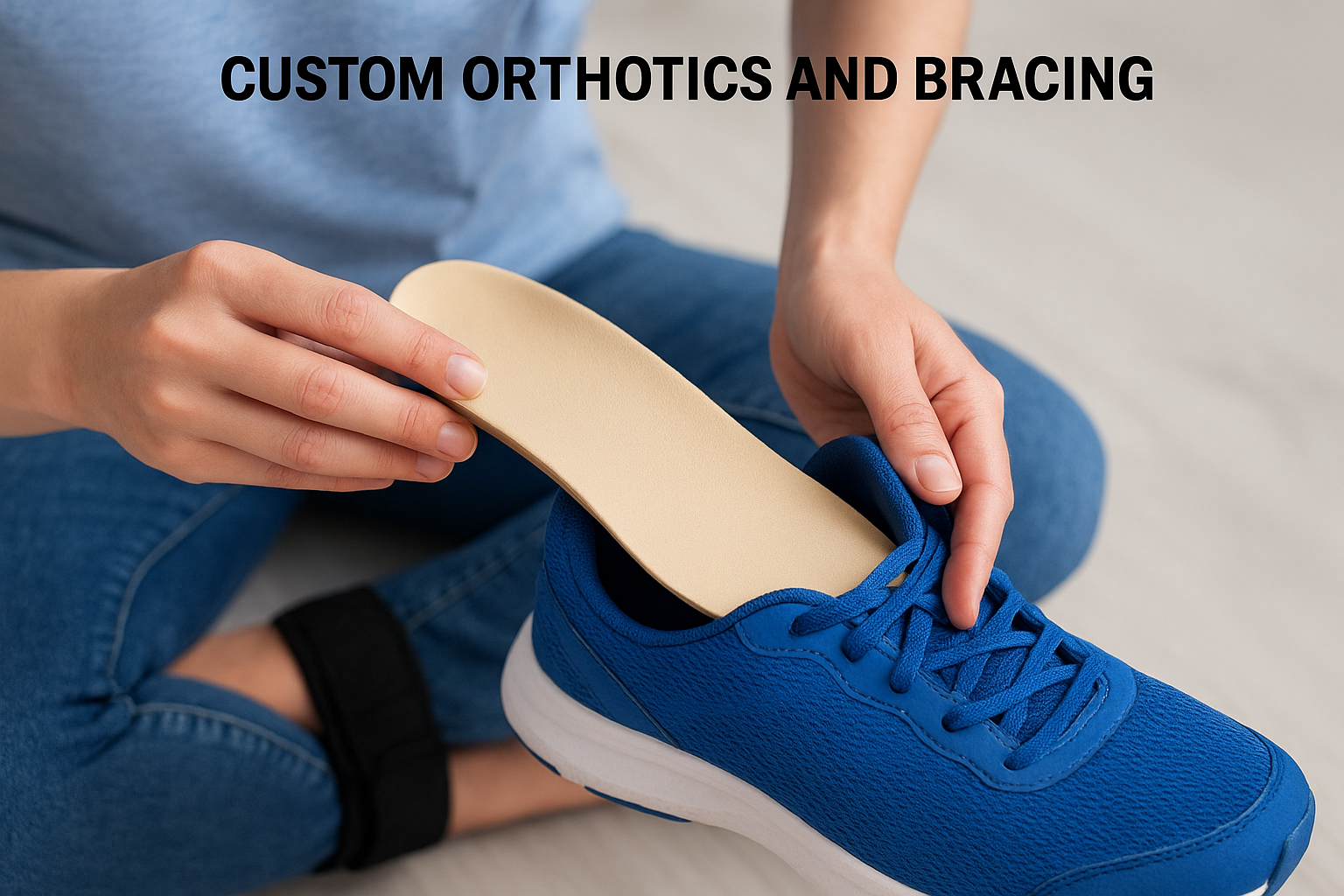
For more significant instability or post-injury recovery, ankle-foot braces go further than any insert can. They hold the foot and ankle in correct alignment during activity, reducing stress on compromised structures while you heal or rebuild strength.
How to choose foot arch support
Choosing the right arch support comes down to three factors: your foot type, your symptoms, and how you use your feet day to day. If you’ve been researching what is foot arch support, you’ve likely found a wide range of products with overlapping claims. The key is to match the device to your specific biomechanics, not just grab the most padded option available.
Match support to your arch type
Your arch type drives most of the decision. Flat feet or overpronation typically need a firm, structured insert that holds the arch in place and prevents the foot from rolling inward. High arches, on the other hand, need cushioning more than structure, since a rigid insert will only add pressure to an already stiff foot. If you’re unsure which type you have, a simple wet foot test can give you a rough idea: wet your foot, step on a piece of paper, and look at the imprint left behind.
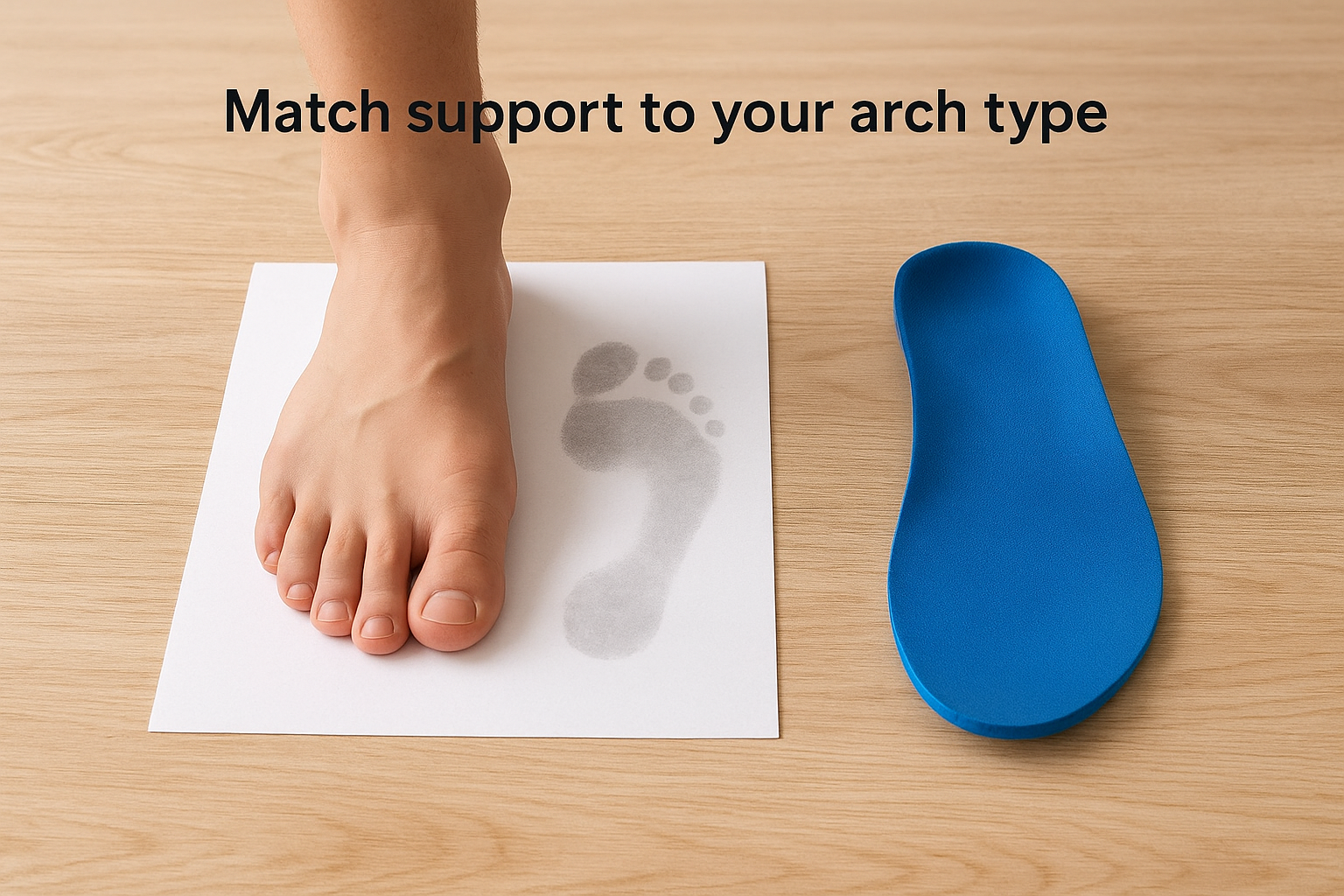
A full footprint with little visible arch usually indicates flat feet, while a narrow band or gap in the middle points to a high arch.
Factor in your activity and footwear
Running and high-impact sports place more demand on your arch than walking does, so athletes often need firmer support with deeper heel cups. If you wear dress shoes or work boots with limited interior space, a low-profile insert keeps support practical without sacrificing fit. For significant pain or structural problems, skip the guesswork entirely and see a podiatrist for a formal gait and pressure analysis before purchasing anything. That assessment tells your provider exactly where you’re compensating and which type of support will work for your specific situation.
How to tell if you need arch support
Not everyone who wears arch support actually needs it, and not everyone who needs it recognizes the signs. Pain in your heel, the ball of your foot, or along your inner ankle often points to an arch problem, but so does discomfort in your knees, hips, or lower back that appears after long periods of standing or walking. If you’re still uncertain about what is foot arch support and whether it applies to you, these markers help clarify the picture.
Physical signs and symptoms
Heel pain that peaks first thing in the morning is one of the most consistent signs of plantar fasciitis, which is directly linked to poor arch mechanics. Other symptoms worth taking seriously include visible inward rolling of your ankle when you walk, excessive shoe wear on one side of the sole, or feet that feel fatigued after short periods of activity. Shin splints and recurring stress injuries in runners frequently trace back to the same root cause.
If your foot pain consistently improves after rest but returns as soon as you’re back on your feet, that pattern strongly suggests your arch needs better support during load-bearing activity.
Quick self-checks you can do at home
The wet foot test gives you a useful starting point without any equipment. Wet the bottom of your foot and step firmly onto a dark piece of paper or a flat surface where the print shows clearly. A full, solid imprint with little visible arch indicates flat feet, while a narrow connecting band or a gap between heel and forefoot points to a high arch. Both foot types can benefit from arch support, but they need different kinds. When self-checks leave you uncertain, a podiatrist can assess your gait and pressure distribution with far more precision.
Key takeaways and next steps
Understanding what is foot arch support gives you a practical tool for addressing pain before it becomes a long-term problem. Your arch absorbs tremendous force with every step, and when it lacks support, that stress travels upward through your ankle, knee, and hip. The right support type matters: flat feet need structure, high arches need cushioning, and significant biomechanical issues need custom orthotics rather than off-the-shelf products.
If you recognize the symptoms outlined in this article, such as morning heel pain, inward ankle rolling, or foot fatigue after short activity, don’t wait for the problem to worsen. Over-the-counter inserts can help with mild discomfort, but a podiatrist’s assessment gives you a precise answer based on your actual gait and foot mechanics. At Achilles Foot and Ankle Center, our team evaluates arch issues across thirteen Central Virginia locations. Schedule a same-day appointment and get the right support for your feet.