
If you’re pregnant and your ankles look like they belong to someone else, you’re not imagining things. Ankle swelling during pregnancy affects the majority of expectant mothers, especially during the second and third trimesters. It’s one of those changes that most people warn you about but few explain well, what’s actually happening in your body, what you can do about it, and when swelling crosses the line from normal nuisance to something that needs medical attention.
The good news is that most pregnancy-related ankle swelling is completely harmless, driven by predictable shifts in fluid volume, hormones, and circulation. Simple adjustments at home, how you sit, what you wear on your feet, how you move throughout the day, can make a real difference. But certain patterns of swelling, particularly when sudden or paired with other symptoms, can signal conditions like preeclampsia that require prompt evaluation.
At Achilles Foot and Ankle Center, our podiatrists work with pregnant patients across our Central Virginia locations who are dealing with foot and ankle discomfort that goes beyond what a quick internet search can solve. Whether it’s persistent swelling, arch pain from shifting weight distribution, or concerns about circulation, we provide hands-on evaluation and individualized guidance tailored to each stage of pregnancy. This article breaks down the causes behind pregnancy-related ankle swelling, walks through practical relief strategies, and identifies the red flags that warrant a call to your doctor, or a visit to our office.
What causes ankle swelling during pregnancy
Ankle swelling during pregnancy isn’t random. Your body undergoes significant physiological changes starting in the first trimester and accelerating through the second and third, and several of those changes directly cause fluid to pool in your lower legs and feet. Understanding the underlying mechanisms helps you make sense of why swelling gets worse at certain times of day and why some weeks feel more uncomfortable than others.
Increased blood volume and fluid retention
During pregnancy, your blood volume increases by roughly 45 to 50 percent to support the growing placenta and fetus. Your kidneys respond by retaining more sodium and water, which raises the total fluid load circulating through your body. Excess fluid doesn’t stay contained inside your blood vessels, it leaks into surrounding tissues, including the soft tissue around your ankles and feet. This process, called edema, is a normal physiological response, not a sign that something is wrong.
Most of this fluid accumulates in the lower body simply because fluid follows gravity, and your ankles sit at the lowest point.
Pressure from the growing uterus
Your uterus grows considerably throughout pregnancy, and by the third trimester it puts direct pressure on the inferior vena cava, the large vein on the right side of your body that carries blood from your legs back to your heart. This compression slows venous return and causes blood to back up in the lower extremities, which worsens swelling, particularly after long stretches of sitting or standing.
Several everyday situations amplify this pressure-related swelling:
- Sitting for extended periods without moving your legs
- Standing on hard floors for hours at a time
- Lying on your back, which places the uterus directly onto the vena cava
Hormonal changes and their role
Progesterone, one of the primary hormones that sustains your pregnancy, causes your blood vessel walls to relax and become more permeable. This is necessary for a healthy pregnancy, but it also makes it easier for fluid to pass through vessel walls and into surrounding tissue. Relaxin, another pregnancy hormone, loosens ligaments throughout your body to prepare your pelvis for delivery, but it also reduces structural support in your feet and ankles, which can amplify discomfort when swelling is present.
Together, these three factors, fluid volume increases, uterine pressure on circulation, and hormonal shifts, explain the swelling you typically notice by the end of a long day.
What helps reduce swelling at home
Several straightforward habits directly reduce how much fluid pools in your lower legs and feet throughout the day. You don’t need special equipment or a complicated routine. Managing ankle swelling during pregnancy largely comes down to how you position your body, how you move, and what you put into it.
Elevate and move throughout the day
Elevation works because it uses gravity against the swelling. When you prop your feet up above the level of your heart, fluid drains back toward your core rather than sitting in your ankles. Aim for 20 to 30 minutes of elevation two or three times a day, lying on a couch or bed with your legs resting on a pillow.
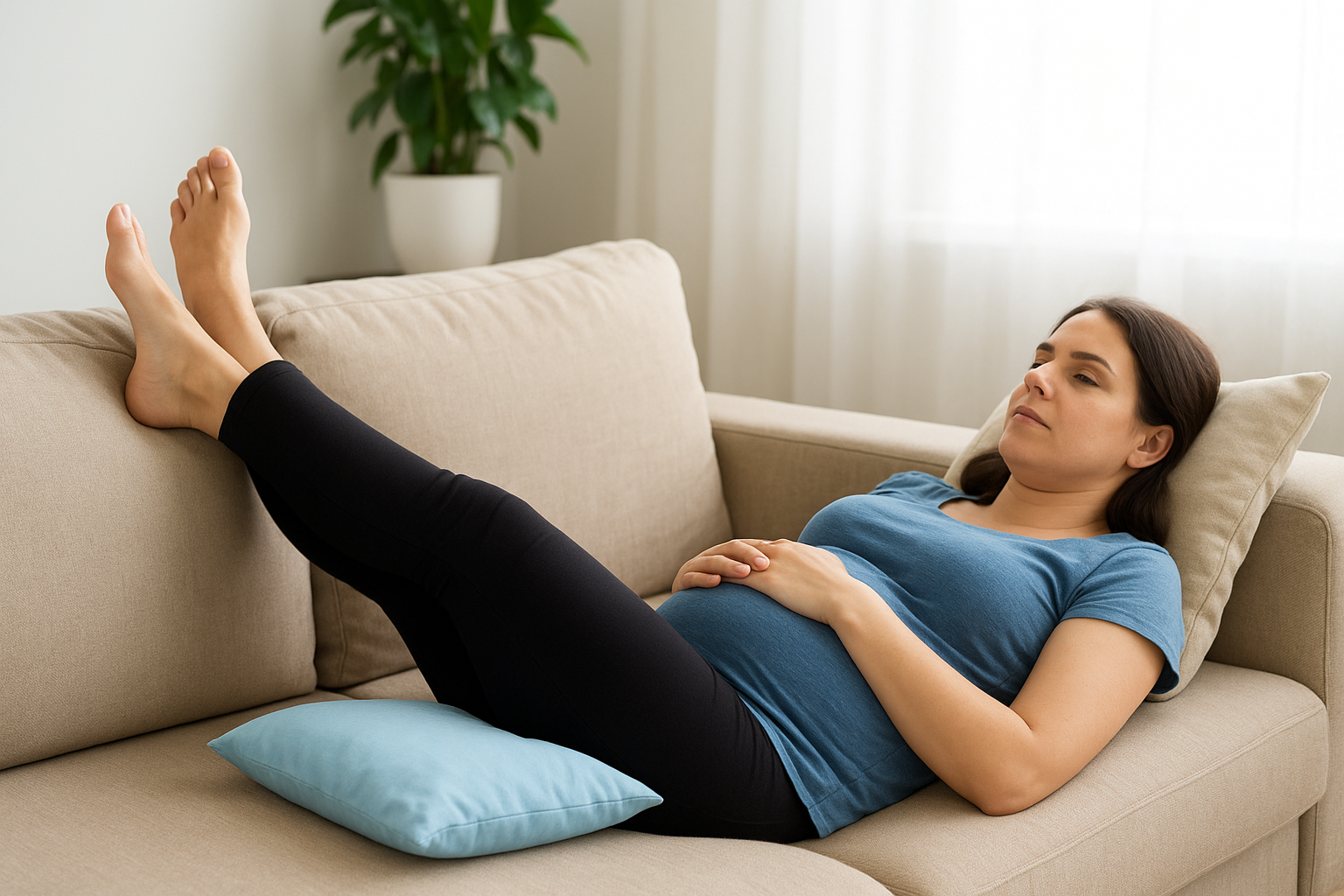
Short walks every 30 to 45 minutes during long periods of sitting are just as important as elevation because moving your calf muscles actively pumps blood back up toward your heart.
When you do sit for extended periods, avoid crossing your legs, which restricts circulation. If you stand for long stretches, shift your weight from foot to foot and take seated breaks when you can.
Hydration and diet adjustments
Drinking more water sounds counterintuitive when you’re already retaining fluid, but staying well-hydrated actually signals your kidneys to release excess fluid rather than hold onto it. Aim for around 8 to 10 cups of water daily.
On the diet side, cutting back on high-sodium foods reduces how much water your body holds in tissue. Processed foods, fast food, and canned soups are the biggest contributors. Potassium-rich foods like bananas, sweet potatoes, and leafy greens help balance sodium levels and support healthy circulation.
Compression, shoes, and support that work
What you wear on your feet and legs has a direct effect on how much ankle swelling during pregnancy builds up over the course of a day. The right gear doesn’t eliminate swelling entirely, but it reduces how severe it gets and how long it lingers by actively supporting circulation in your lower limbs.
Compression socks and sleeves
Compression socks apply graduated pressure to your lower legs, tightest at the ankle and gradually lighter toward the knee. This graduated squeeze helps push blood and fluid upward rather than letting it pool around your ankles. Look for compression levels between 15 and 20 mmHg, which is generally sufficient for pregnancy-related swelling without requiring a prescription. Put them on in the morning before you get out of bed, when fluid levels are at their lowest, rather than after you’ve already been on your feet for an hour.
Putting compression socks on before you stand up in the morning gives them the best chance of preventing fluid buildup throughout the day.
Footwear that actually supports your feet
Your feet change shape during pregnancy. Relaxin loosens the ligaments in your feet, which causes arches to drop and feet to widen, sometimes permanently. Wearing shoes that fit your pre-pregnancy size and shape adds unnecessary pressure on already stressed tissue. Choose wide, supportive shoes with low heels, good arch support, and adjustable closures like laces or hook-and-loop straps, so you can accommodate swelling that fluctuates throughout the day. Avoid flat sandals and flip-flops, which offer no arch support and force your feet to grip with every step, adding tension through the whole foot and ankle.
When swelling is a red flag
Most ankle swelling during pregnancy is gradual, symmetric, and predictable. It builds through the day and eases overnight with rest and elevation. When swelling breaks from that pattern, it deserves your immediate attention. Knowing the difference between routine edema and a warning sign can protect both you and your baby.
Swelling linked to preeclampsia
Preeclampsia is a pregnancy complication involving high blood pressure and signs of organ damage, typically developing after 20 weeks. Swelling alone doesn’t diagnose preeclampsia, but sudden, severe swelling in your face, hands, or feet, especially combined with other symptoms, is a reason to call your provider right away.
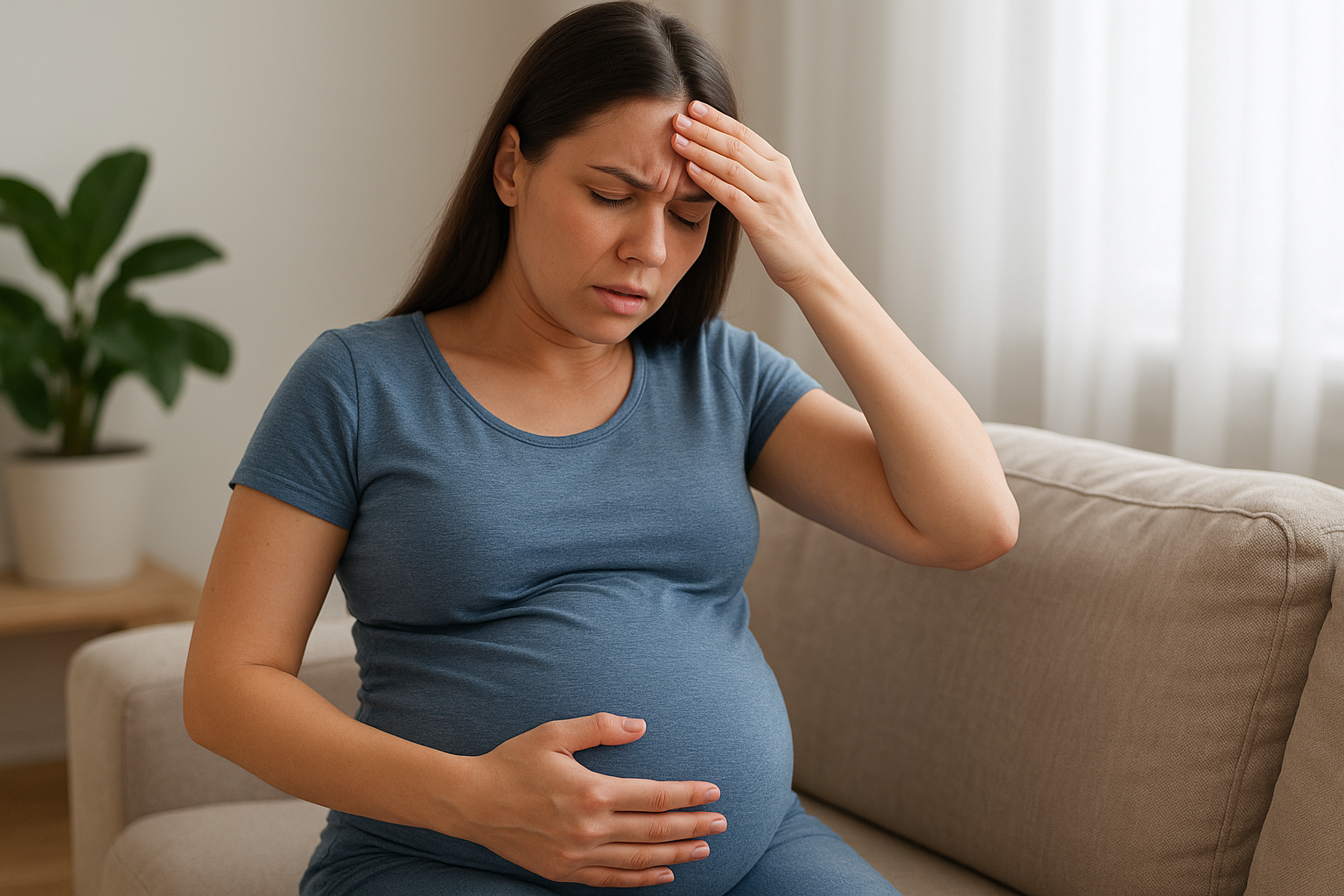
If swelling appears suddenly in your face or hands alongside a headache that won’t quit, don’t wait to see if it resolves on its own.
Watch for these symptoms alongside unusual swelling:
- Sudden weight gain of more than two pounds in a single week
- Headaches that are severe or persistent and don’t respond to rest
- Vision changes, including blurring, spots, or light sensitivity
- Pain in your upper right abdomen
- Nausea or vomiting that starts or worsens in the second or third trimester
Other swelling patterns that warrant a call
Deep vein thrombosis (DVT) is a separate condition that can cause lower leg swelling during pregnancy, and it looks different from typical edema. If one leg swells noticeably more than the other, feels warm or tender to the touch, or you notice redness along your calf, call your doctor promptly.
Pregnancy raises your risk for DVT because it increases clotting factors in your blood and slows circulation in your lower body. A clot that travels to your lungs becomes a pulmonary embolism, which is a medical emergency requiring immediate care.
What to expect after delivery
Here’s something many new mothers don’t expect: ankle swelling during pregnancy often gets worse in the first few days after you give birth before it gets better. Your body has been managing a large fluid surplus for months, and it doesn’t shed all of that overnight. Knowing what’s normal in the postpartum period helps you stay calm and recognize when something actually needs attention.
Why swelling may peak right after birth
Your body received significant IV fluids during labor and delivery, especially if you had a C-section or an epidural. That extra fluid load has to go somewhere, and much of it moves into your tissue before your kidneys clear it out. Hormonal shifts after delivery also play a role, as progesterone drops sharply, and your body begins recalibrating how it regulates fluid balance. This adjustment takes a few days, not hours.
Most postpartum swelling peaks around day two or three after delivery and begins to noticeably improve by the end of the first week.
How long it takes to resolve
For most women, postpartum swelling clears up within one to two weeks as your kidneys process the excess fluid. You’ll likely notice that you urinate significantly more than usual in those early days, which is your body doing exactly what it should. Continuing to elevate your feet, stay hydrated, and wear compression socks during this period shortens the timeline. If swelling in one leg remains notably larger than the other, feels hard, or doesn’t improve after two weeks, contact your provider to rule out DVT or another underlying issue.
A quick recap and when to get help
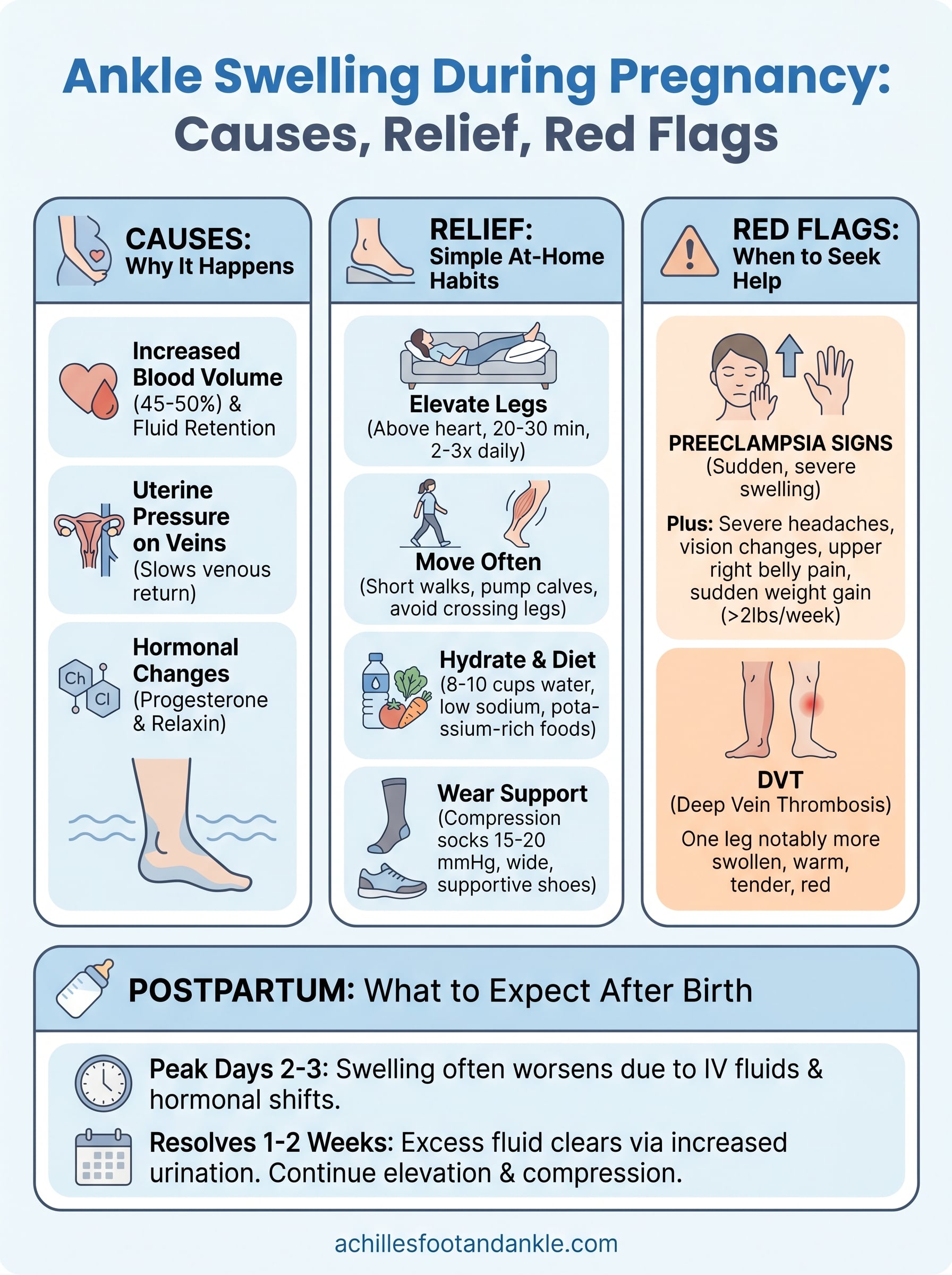
Ankle swelling during pregnancy is driven by three core factors: increased blood volume, uterine pressure on circulation, and hormonal shifts that make your vessels more permeable. Elevation, movement, hydration, and compression socks address most of the day-to-day discomfort without any special intervention. Supportive footwear reduces the added strain that comes from arch changes and weight redistribution throughout your pregnancy.
Sudden swelling in your face or hands, swelling in one leg only, or swelling paired with headaches, vision changes, or upper abdominal pain all require prompt medical attention. These patterns can indicate preeclampsia or DVT, both of which need evaluation right away rather than a wait-and-see approach.
If your swelling isn’t responding to home management, your feet ache persistently, or you want a professional assessment of your foot and ankle health, the team at Achilles Foot and Ankle Center is ready to help. Schedule a same-day appointment at one of our Central Virginia locations and get the hands-on care you need.