Your feet absorb thousands of pounds of force every single day, and most of that impact lands directly on your arches. When those arches lack proper support, the effects ripple upward, through your ankles, knees, hips, and lower back. That’s where understanding arch support insoles benefits becomes practical knowledge, not just a footnote in a shoe-shopping guide. The right insoles can be the difference between pushing through chronic discomfort and actually fixing what’s causing it.
At Achilles Foot and Ankle Center, our podiatrists across Central Virginia see the consequences of poor arch support daily, from plantar fasciitis flare-ups to alignment issues that patients didn’t realize started at their feet. We recommend insoles as part of a broader treatment plan for many of these conditions because they work. They’re one of the most accessible, non-surgical interventions available, and the research backs that up.
Below, we break down seven specific benefits of arch support insoles, covering pain relief, posture correction, and stability improvements. Whether you’re dealing with flat feet, high arches, or nagging heel pain, this list will help you understand exactly what insoles can (and can’t) do for you, and when it’s time to talk to a specialist about a custom solution.
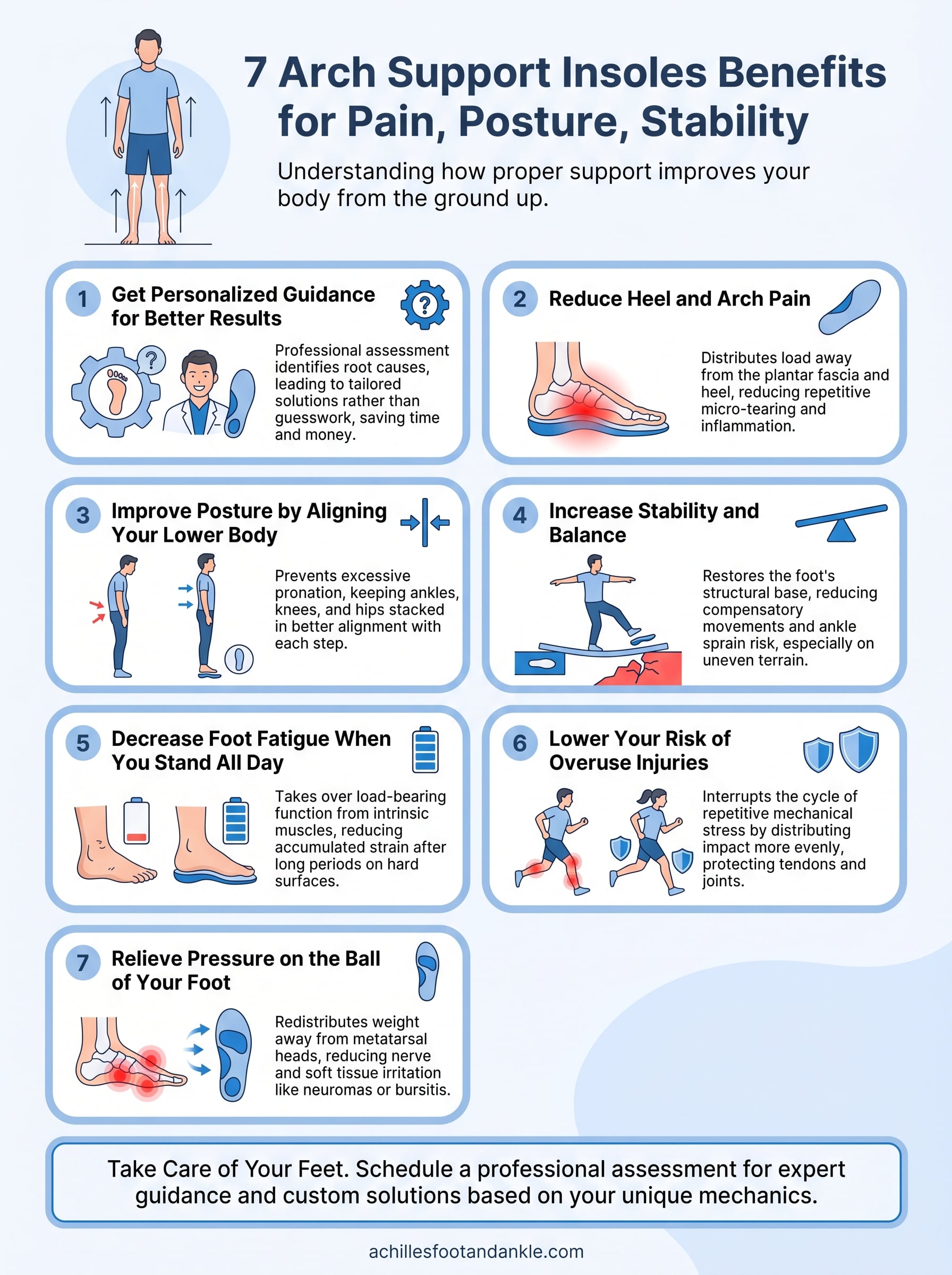
1. Get personalized guidance for better results
Before you grab the first insoles off a pharmacy shelf, understand that arch support insoles benefits vary significantly depending on your foot type, gait, and the specific condition you’re dealing with. Over-the-counter options work for many people, but they’re built around general foot shapes, not yours. A podiatrist can assess your mechanics and point you toward the right insole or custom orthotic from the start, which saves you both time and money in the long run.
What changes you may feel
When you start using properly fitted arch support, the first thing most people notice is reduced soreness after long periods on their feet. You might also feel a shift in how your weight distributes across your foot, with less pressure concentrated in one spot.
Some people describe the sensation of their foot feeling held in place rather than rolling inward or outward with each step. These early changes signal that your body is adjusting to better mechanical alignment, which is normal and typically a good sign.
Why arch support helps
Your arch functions as a natural shock absorber. When it collapses or sits too high, the surrounding structures, including tendons, ligaments, and muscles, take on stress they weren’t designed to handle consistently. Arch support redistributes that load more evenly across your foot.
Getting a professional assessment before buying insoles is the most reliable way to confirm you’re solving the right problem.
A podiatrist can identify exactly where your foot compensates and recommend the support level that targets the root cause rather than just masking the symptom.
Who gets the biggest benefit
People with diagnosed conditions such as flat feet, plantar fasciitis, or posterior tibial tendon dysfunction see the most significant improvement with proper arch support guidance. Even without a formal diagnosis, if you experience recurring soreness or fatigue after moderate activity, a professional recommendation will serve you better than a self-selected product.
How to get the benefit without new pain
Start with shorter wear periods, around two to four hours per day, and gradually increase as your foot adapts. If you experience new pain along the outer edge of your foot or in your knees, that’s a signal the arch height may be wrong for you.
Schedule a follow-up with your podiatrist rather than pushing through that discomfort, because the wrong insole can shift strain to a different part of your body rather than eliminate it.
2. Reduce heel and arch pain
Heel and arch pain are among the most common complaints podiatrists treat, and they connect directly to how well your foot’s arch is supported. When you walk or stand on an unsupported arch, the plantar fascia, the thick band of tissue running along the bottom of your foot, absorbs far more tension than it should.
What changes you may feel
You’ll typically notice less sharp pain with your first steps in the morning, which is one of the hallmark signs of plantar fasciitis. Over time, many people report a gradual reduction in heel tenderness throughout the day, particularly after extended walking or standing.
Why arch support helps
One of the clearest arch support insoles benefits shows up here: the insole transfers load away from the plantar fascia and distributes it across a broader surface area of your foot. This mechanical shift reduces the repetitive micro-tearing that drives inflammation along the heel and arch.
Consistent use of properly fitted insoles can significantly cut recovery time for plantar fasciitis compared to footwear changes alone.
Who gets the biggest benefit
People with flat feet or low arches gain the most from this benefit because their plantar fascia is under chronic strain. Runners and anyone who spends long hours on hard flooring also respond well to arch support for pain reduction.
How to get the benefit without new pain
Pair your insoles with supportive footwear that has adequate depth and structure. Thin-soled shoes undermine what the insole is trying to do, and wearing them together can actually increase pressure on sensitive heel tissue rather than reducing it.
3. Improve posture by aligning your lower body
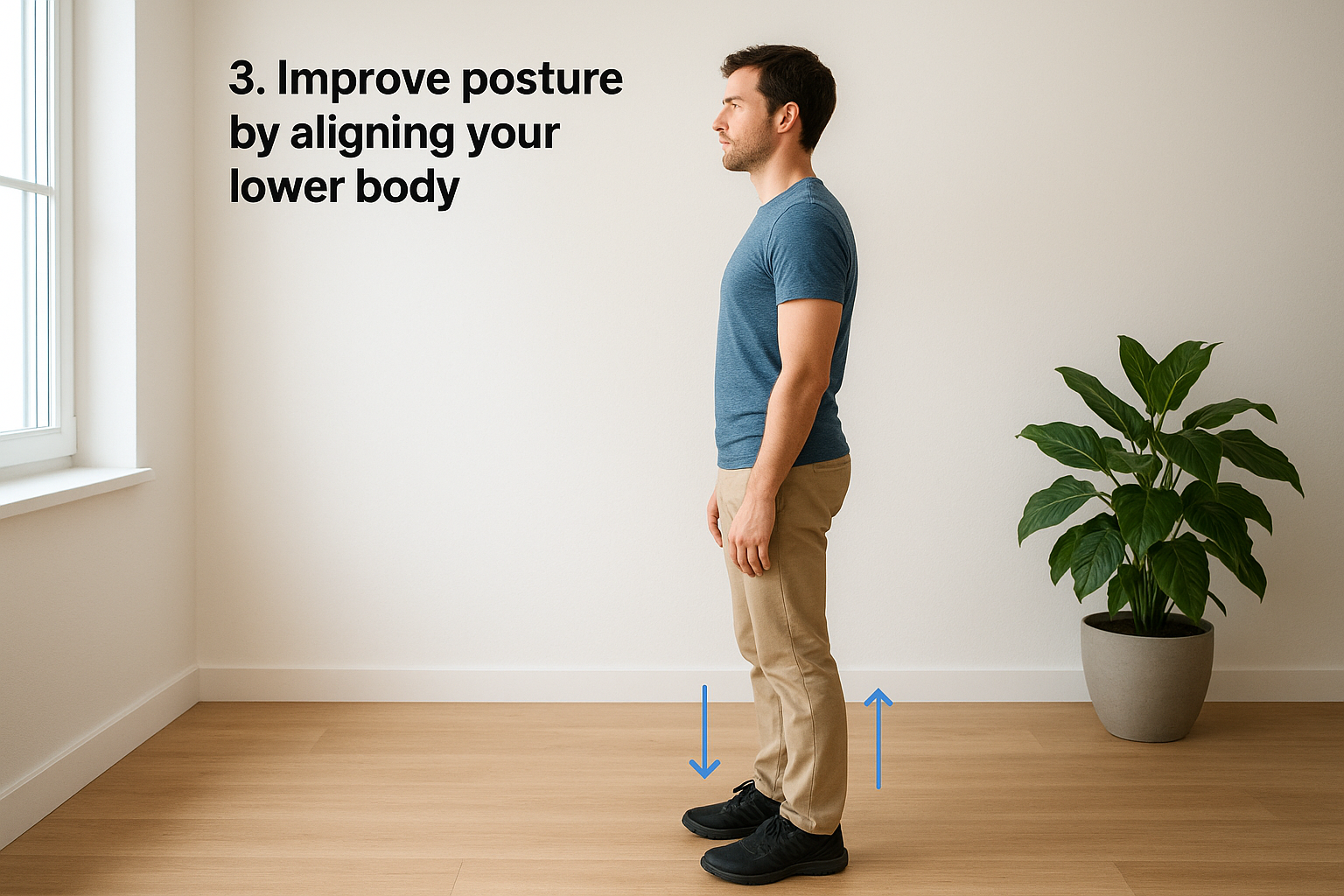
Most people don’t connect foot position to their posture, but your feet are the foundation your entire skeletal structure rests on. When your arches collapse inward, your ankles pronate, which rotates your knees inward, tilts your pelvis, and pulls your lower back out of its natural alignment. Fixing this starts at the ground.
What changes you may feel
You may notice less lower back tension after standing or walking for extended periods. Some people also find that their knees stop tracking inward during movement, which reduces knee discomfort that previously seemed unrelated to their feet.
Why arch support helps
One of the less obvious arch support insoles benefits is that they correct your foot’s position before the misalignment travels up your body. By preventing excessive pronation, the insole keeps your ankle, knee, and hip stacked in better alignment with each step you take.
Poor foot mechanics contribute directly to hip and lower back pain, making arch support a relevant part of posture correction even when your feet don’t hurt.
Who gets the biggest benefit
People who overpronate or have flat feet see the most dramatic postural improvements because their foot mechanics deviate the furthest from a neutral position. Workers who stand on hard surfaces for eight or more hours daily also report measurable relief in their lower back and hip areas.
How to get the benefit without new pain
Introduce insoles gradually, especially if you’ve carried long-standing postural habits. Your muscles need time to adapt to the corrected alignment, and rushing the process can strain the muscles around your knees or hips before they fully adjust.
4. Increase stability and balance
Your foot’s arch acts as a tripod, distributing weight between your heel, the base of your big toe, and the base of your little toe. When that arch is compromised, the tripod collapses, and your balance suffers with every step. Arch support insoles restore that structural base, giving your foot a stable platform to push off from and land on.
What changes you may feel
You’ll likely notice less wobbling or rolling at the ankle when you walk on uneven terrain or shift your weight quickly. Many people find that activities requiring single-leg balance, like climbing stairs or stepping off a curb, feel more controlled and less unpredictable after a few weeks of consistent insole use.
Why arch support helps
One of the practical arch support insoles benefits is that the insole keeps your foot in a more neutral position, which reduces the micro-corrections your muscles and tendons make constantly to prevent you from rolling an ankle. Less compensatory movement means your stabilizing muscles work more efficiently rather than working overtime just to keep you upright.
Better foot stability lowers your ankle sprain risk, which is especially relevant if you’ve already sprained the same ankle more than once.
Who gets the biggest benefit
Older adults managing balance concerns and athletes performing lateral movements in sports like basketball or tennis gain the most from this benefit. Anyone with a history of ankle sprains also benefits significantly, since repeated sprains often leave ligaments loose and the joint prone to re-injury.
How to get the benefit without new pain
Choose insoles that match your arch height precisely, since a support that’s too high can actually destabilize your foot by lifting it into an unnatural position. Start using them in low-demand activities first, then progress to sport or exercise as your foot adapts to the corrected mechanics.
5. Decrease foot fatigue when you stand all day
Standing for hours on end taxes your feet in ways that go beyond simple soreness. Your muscles, tendons, and ligaments work constantly to maintain balance and absorb impact on hard, unyielding surfaces, and without structural support, they wear down faster than they should. One of the most practical arch support insoles benefits is that they reduce the muscular effort your foot needs just to stay stable, which directly translates to less exhaustion by the end of your shift.
What changes you may feel
You’ll likely notice that your feet feel less heavy and tender after a full day of standing, particularly around the arch and heel. Many people also find their leg muscles feel less tight in the evening, since fatigue in the foot often creeps upward into the calves when your lower leg compensates for an unstable base.
Why arch support helps
When your arch lacks support, your intrinsic foot muscles work overtime to stabilize each step. Arch support takes over a portion of that load-bearing function, giving those small muscles relief throughout the day. The result is that your feet reach end-of-day with less accumulated strain than they would in unsupported footwear.
Workers who stand on concrete or tile for eight or more hours daily report some of the most dramatic fatigue reductions after switching to properly supported insoles.
Who gets the biggest benefit
Nurses, teachers, retail workers, and anyone on their feet for six or more hours daily benefit most. People with low or collapsed arches also respond strongly because their feet work hardest to compensate without support.
How to get the benefit without new pain
Match your insoles to your specific footwear type, since a work boot insole and a sneaker insole differ in thickness and structure. Using the wrong profile can create pressure points at the ball of your foot rather than reducing overall fatigue.
6. Lower your risk of overuse injuries
Overuse injuries develop gradually, not from a single event, but from repetitive mechanical stress accumulating in the same tissues day after day. When your arch lacks support, your foot absorbs impact in an uneven pattern, which concentrates force on tendons, joints, and soft tissue that aren’t equipped to handle that volume of stress over time.
What changes you may feel
You’ll likely notice that familiar aches that used to creep in after your runs or long walks start showing up less frequently. Conditions like shin splints, stress fractures, and Achilles tendinitis often trace back to poor foot mechanics, and correcting the foundation reduces the repetitive strain that feeds those injuries.
Why arch support helps
One of the most protective arch support insoles benefits is that they interrupt the cycle of repetitive stress before it builds into injury. The insole keeps your foot in a more neutral position with each stride, which distributes impact more evenly across your entire foot structure rather than funneling it into one spot.
Addressing your foot mechanics before pain becomes injury is far less disruptive than treating a stress fracture or tendon tear after the fact.
Who gets the biggest benefit
Runners, hikers, and athletes who train frequently benefit most, especially those logging high mileage on hard surfaces. People returning from a previous overuse injury also gain significant protection, since healed tissue often remains vulnerable to the same mechanical stress that caused the original problem.
How to get the benefit without new pain
Replace your insoles every six to twelve months, since worn-out support stops protecting your mechanics and allows stress to accumulate again. Pair your insoles with gradual training increases rather than sudden jumps in mileage or intensity, which remain a primary driver of overuse injuries regardless of what you wear.
7. Relieve pressure on the ball of your foot
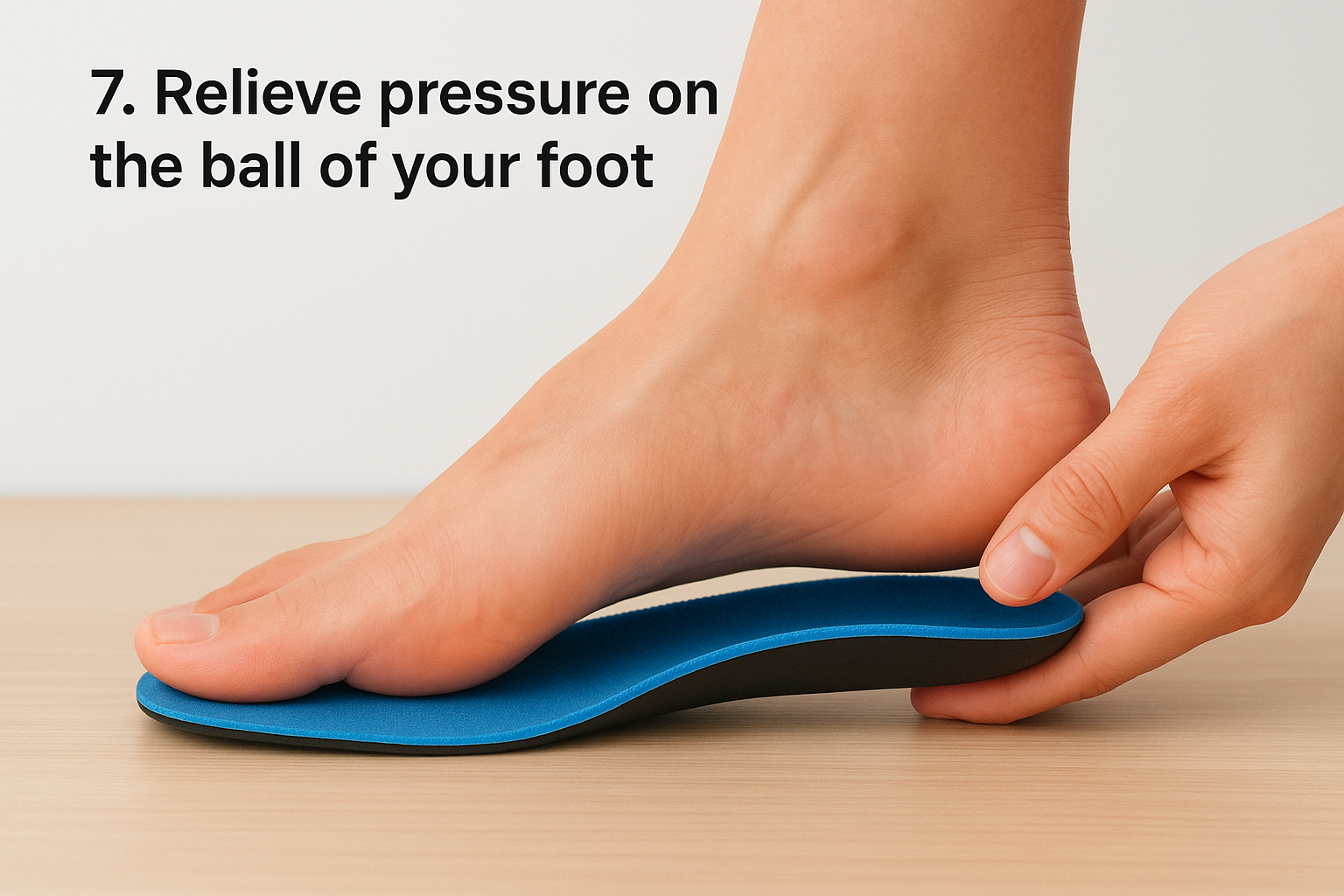
The ball of your foot, the padded area just behind your toes, absorbs heavy loads during walking and running. When your arch collapses or sits too high, weight shifts forward and concentrates on this small region with every step. That repeated pressure leads to metatarsalgia, neuromas, and bursitis, conditions that can sideline you faster than most people expect.
What changes you may feel
You’ll notice less burning or aching in the front of your foot, especially after walking or standing for extended periods. Some people also find that the sensation of walking on a bruise across the ball of their foot fades within a few weeks of consistent insole use.
Why arch support helps
One of the direct arch support insoles benefits is load redistribution. When the arch is properly supported, your foot spreads impact across a larger surface area, pulling weight back from the metatarsal heads. Less concentrated pressure at the ball means less irritation to the nerves and soft tissue in that region.
Redistributing weight off your metatarsal heads can prevent conditions like Morton’s neuroma from developing in the first place.
Who gets the biggest benefit
People with high arches benefit most here because their foot naturally shifts weight toward the heel and ball, leaving the midfoot underloaded. Anyone diagnosed with metatarsalgia or a Morton’s neuroma also sees significant relief when proper arch support corrects their load distribution.
How to get the benefit without new pain
Look for insoles with metatarsal padding built in, or ask your podiatrist about adding a metatarsal pad to your custom orthotic. Avoid insoles that are too rigid in the forefoot, since that stiffness can trap pressure in the ball area rather than dispersing it.
Take care of your feet
The arch support insoles benefits covered in this article, from pain relief to injury prevention, are real, but they depend on using the right insole for your specific foot mechanics. An insole that works well for someone with flat feet may do nothing for someone with a high arch. Knowing your foot type and the condition driving your symptoms is what separates a product that helps from one that wastes your time and money.
Your feet carry you through every part of your day, and they deserve more than a guess at the drugstore. If you’ve been dealing with persistent heel pain, fatigue, balance problems, or pressure in the ball of your foot, a podiatrist can give you a clear diagnosis and a treatment plan built around your actual needs. Schedule a same-day appointment at Achilles Foot and Ankle Center and get expert guidance from a specialist who knows feet.