A gout flare in your foot can stop you mid-step. The joint, usually the big toe, swells, turns red, and becomes so tender that even a bedsheet brushing against it feels unbearable. If you’re searching for how to relieve gout foot pain, you probably need answers right now, not next week.
Gout occurs when uric acid crystals build up in a joint, triggering intense inflammation. Flares often strike without warning, peak within the first 24 hours, and can linger for days if left unmanaged. The good news: there are concrete steps you can take at home to reduce the pain and shorten the episode before you even see a doctor.
At Achilles Foot and Ankle Center, our podiatrists across Central Virginia treat gout-related foot pain regularly, from acute flares to the joint damage that repeated attacks can cause over time. Below, we walk through the home remedies, medications, and physical techniques that actually help during a flare, along with guidance on when it’s time to get professional care.
What to do first and when to get help
When a gout attack starts, your first instinct might be to push through the pain or wait it out. That approach will make things worse. Acting within the first few hours gives you the best chance to limit the severity and duration of the flare. Knowing what to do immediately, and when home care is not enough, puts you in a better position from the start.
Your first moves in the opening hours
The moment you feel burning and swelling building in the joint, stop what you are doing. Get off the foot entirely. Continuing to walk on an inflamed joint drives more pressure into a space already packed with sharp uric acid crystals. Your immediate priority is to reduce mechanical stress on the joint while you put the right treatment in place.
Acting within the first two to four hours of a flare significantly improves your chances of shortening the episode.
Here is a quick checklist of your first-hour actions:
- Stop walking on the affected foot
- Get to a chair or bed and prop the foot up above heart level
- Apply a cold pack wrapped in a cloth, not directly on skin
- Take any prescribed gout medication you already have on hand
- Drink a large glass of water to begin flushing uric acid
When home care is not enough
Understanding how to relieve gout foot pain at home is useful, but some situations need a podiatrist quickly. If your pain stays severe despite rest and over-the-counter medication, or if you notice streaking redness, spreading warmth up the leg, or fever alongside joint pain, get evaluated right away. An infected joint can look exactly like a gout flare but needs entirely different treatment.
Your first flare also warrants a professional visit even if the pain fades on its own. A podiatrist can confirm the diagnosis through imaging or joint fluid analysis and check your uric acid levels. Without that baseline, repeated flares cause silent joint erosion and lead to tophi, which are hard uric acid deposits under the skin that sometimes require surgery to remove.
Step 1. Rest, ice, and elevate the foot
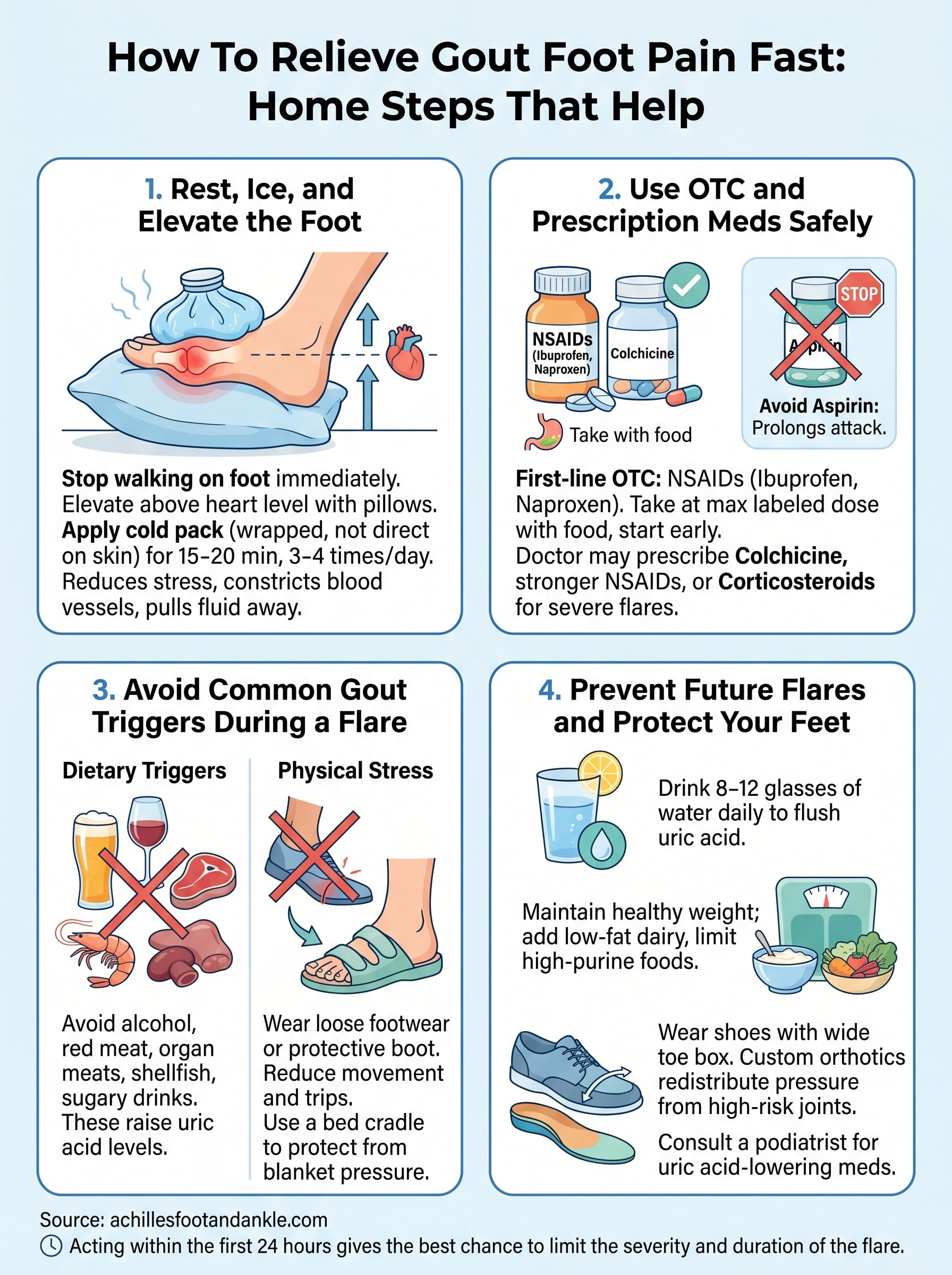
The three basics of rest, ice, and elevation work together to interrupt the inflammation cycle as quickly as possible. Each one reduces a different part of the problem: rest stops mechanical stress on the joint, ice constricts blood vessels to limit swelling, and elevation uses gravity to pull inflammatory fluid away from the affected area. Combining all three at once gives you a stronger effect than any single measure alone.
How to ice a gout flare correctly
Ice helps most in the first 24 to 48 hours of a flare when inflammation is peaking. Applying it incorrectly, however, can irritate the skin or drive more discomfort into an already-sensitive joint.
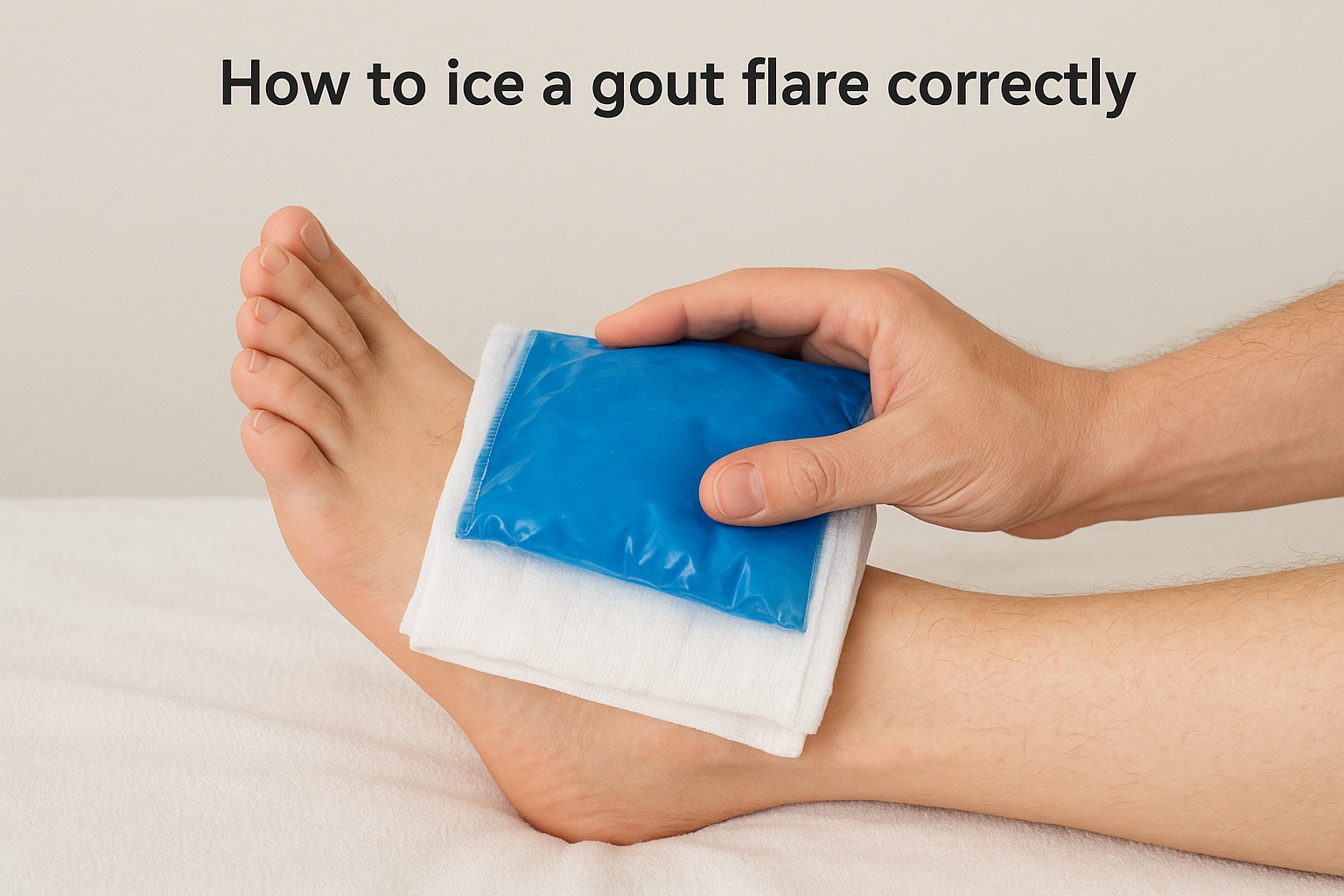
Never place ice directly on bare skin over an inflamed gout joint. Always use a barrier like a thin cloth or paper towel.
Follow this icing protocol during a flare:
- Wrap a cold pack or bag of frozen peas in a cloth or thin towel
- Apply to the affected joint for 15 to 20 minutes at a time
- Wait at least 40 minutes before reapplying
- Repeat up to three or four times per day in the first 48 hours
How to position the foot correctly
Elevation works best when your foot sits above your heart level, not just propped on a low coffee table. Lie flat on a bed or couch and place two firm pillows under your calf and heel. Keeping the foot at the right height pulls pooled fluid away from the swollen joint and noticeably reduces the throbbing sensation within 20 to 30 minutes.
Step 2. Use OTC and prescription meds safely
Medication is one of the most direct tools you have for managing a flare quickly. Knowing which drugs work, how to take them, and what to avoid helps you treat the attack effectively without accidentally making things worse. When you’re figuring out how to relieve gout foot pain, the right medication choice can cut the length of a flare in half.
Over-the-counter options that work
Nonsteroidal anti-inflammatory drugs, or NSAIDs, are the first-line OTC choice during a gout flare. Ibuprofen (Advil, Motrin) and naproxen sodium (Aleve) both reduce inflammation at the joint level. Take them at the maximum labeled dose with food and start as early in the flare as possible, since early treatment produces the strongest effect.
Avoid aspirin during a gout flare. It interferes with uric acid excretion and can prolong the attack.
Prescription medications your doctor may prescribe
Your podiatrist may prescribe stronger options if OTC drugs are not enough. The table below covers the most common prescription choices:
| Medication | How it works | Common use case |
|---|---|---|
| Colchicine (Colcrys) | Blocks inflammatory signals from uric acid crystals | First 12 hours of a flare |
| Prescription-strength NSAIDs | Higher-dose anti-inflammation | Moderate to severe flares |
| Oral corticosteroids (prednisone) | Broad inflammation suppression | Patients who cannot tolerate NSAIDs |
Your doctor will guide the correct dose based on your kidney function and other medications you currently take.
Step 3. Avoid common gout triggers during a flare
What you do during a flare matters as much as the treatments you apply. Certain foods, drinks, and behaviors actively raise uric acid levels in your blood, feeding the inflammation you are trying to stop. Knowing how to relieve gout foot pain means cutting off these triggers while you treat the symptoms.
Foods and drinks that make a flare worse
Your diet has a direct impact on uric acid production and excretion during an active attack. High-purine foods break down into uric acid, adding fuel to an already overloaded joint. Alcohol is particularly problematic because it both raises uric acid and blocks the kidneys from clearing it.
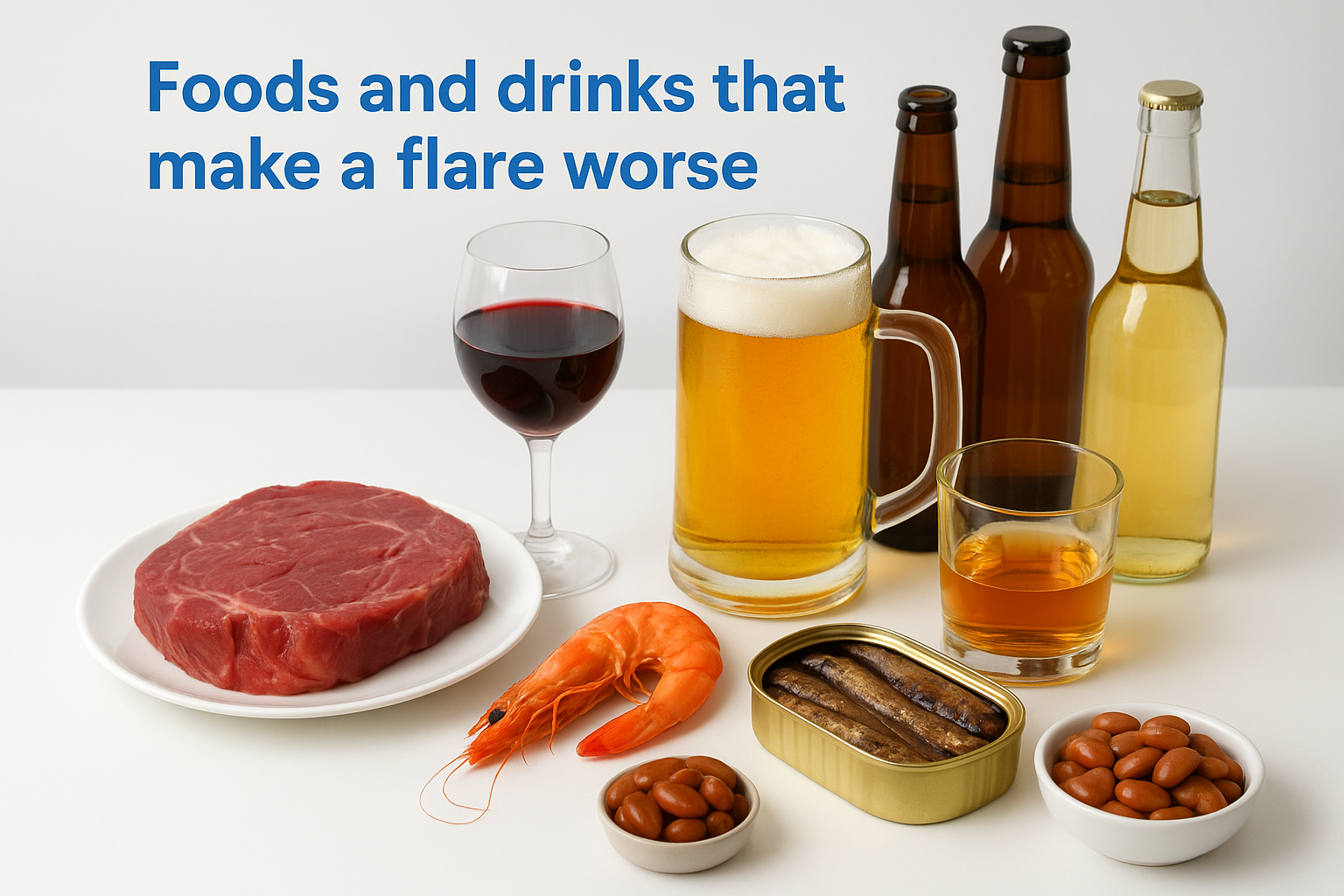
Drinking alcohol during a gout flare is one of the fastest ways to extend the attack by days.
Avoid these until the flare fully resolves:
- Organ meats (liver, kidney, sweetbreads)
- Shellfish and anchovies
- Beer, wine, and liquor
- Sugary sodas and high-fructose fruit juices
- Red meat in large portions
Physical stress on the joint
Even moving around the house puts compressive force through the inflamed joint, which delays recovery. Wear loose, open-toed footwear or a protective boot if you must walk, and keep trips to a minimum. Tight shoes pressing against the swollen area will increase pain and worsen swelling for hours.
Protecting the foot from accidental bumps matters too. A simple cardboard box positioned under the sheets acts as a bed cradle, preventing blanket weight from pressing against the toe overnight. Small adjustments like these reduce unnecessary pressure on the joint while your medication takes effect.
Step 4. Prevent future flares and protect your feet
A single gout flare is painful enough. Letting flares repeat without addressing the root cause leads to permanent joint damage and increasingly frequent attacks. Knowing how to relieve gout foot pain in the moment is only part of the picture. The other part is reducing uric acid levels consistently so the next flare never starts.
Lower your uric acid over time
Your doctor can prescribe uric acid-lowering medications such as allopurinol or febuxostat once your acute flare resolves. These drugs work long-term by reducing how much uric acid your body produces or increasing how efficiently your kidneys clear it. Pair medication with dietary changes you sustain well beyond the flare.
Keeping your serum uric acid level below 6 mg/dL significantly reduces your risk of future attacks.
Use these habits to keep uric acid in check daily:
- Drink 8 to 12 glasses of water per day to support kidney excretion
- Add low-fat dairy products to your diet, which actively lower uric acid
- Limit red meat, shellfish, and alcohol on an ongoing basis
- Maintain a healthy body weight, since excess weight raises uric acid production
Protect your feet with the right footwear
Pressure on the big toe joint from ill-fitting shoes can trigger a flare even when uric acid levels are only borderline elevated. Wear shoes with a wide toe box that does not compress the metatarsophalangeal joint during daily activity.
Custom orthotics from a podiatrist redistribute pressure away from high-risk areas and reduce your chance of a mechanical trigger setting off your next attack. Combining proper footwear with uric acid management gives your joints the best long-term protection available.
Next steps for lasting relief
You now have a clear picture of how to relieve gout foot pain at home, from icing and elevation in the first hours to cutting triggers and lowering uric acid long-term. These steps work, but they work best when you pair them with professional oversight to confirm your diagnosis, check your uric acid levels, and build a prevention plan that fits your specific situation.
Repeated flares without treatment quietly erode cartilage and bone inside the joint, leading to permanent damage that becomes harder to reverse over time. The steps in this guide give you real tools for managing an attack today and reducing your risk going forward. Your podiatrist at Achilles Foot and Ankle Center can run the labs, prescribe the right medications, and fit you with custom orthotics to protect the joint between flares.
Do not wait for the next attack to take action. Book a same-day appointment with our team and get ahead of gout before it gets worse.