
Trimming your own toenails gets harder with age. Reduced flexibility, poor eyesight, and thickened nails turn a once-simple task into something frustrating, or even risky. For caregivers, helping a parent or loved one with toenail care for elderly family members raises its own set of questions: What tools should I use? How do I handle nails that are thick and discolored? When is it time to call a podiatrist?
At Achilles Foot and Ankle Center, our team treats elderly patients across Central Virginia who deal with these exact challenges every day. We see what happens when nails go neglected, ingrown toenails, infections, and painful complications, especially in patients managing diabetes or circulation problems. We also know that with the right approach, most of these issues are preventable.
This guide walks you through how to safely trim and maintain elderly toenails at home, what to do about thickened or difficult nails, and how to recognize when professional care is the smarter choice. Whether you’re caring for yourself or someone you love, you’ll leave with practical steps you can use right away and a clearer sense of when home care is enough and when it’s not.
Before you start: safety checks and supplies
Before picking up any nail clippers, take a few minutes to assess the situation. Rushing into toenail care for elderly patients without the right preparation is how small problems turn into bigger ones. A thorough check of the person’s health history and current foot condition will tell you how carefully you need to proceed, and whether home care is safe at all before you begin.
Check for conditions that change how you should proceed
Certain medical conditions make toenail trimming significantly higher-risk. If the person you’re caring for has diabetes, peripheral neuropathy, or poor circulation, even a minor nick or cut can lead to a slow-healing wound or a serious infection. The same caution applies to anyone taking blood thinners like warfarin or aspirin therapy, since small cuts bleed longer and are harder to manage at home.
If the person has diabetes or any circulatory condition, have a podiatrist evaluate the feet first before attempting any trimming at home.
Look closely at the nails before you do anything else. Nails that are thickened, discolored (yellow, brown, or white), crumbling, or separating from the nail bed are common signs of a fungal infection or another underlying issue. Redness, warmth, swelling, or any discharge around the nail edges signals an active infection that needs professional care before you proceed.
Gather the right tools
Using the wrong tools is one of the most common reasons toenail trimming causes pain or injury in older adults. Standard fingernail clippers are too small and too curved for thick or wide toenails, and they produce uneven cuts that raise the risk of ingrown nails. Heavy-duty straight-edge toenail clippers are the right starting point, and a few additional items will make the process safer and more comfortable.
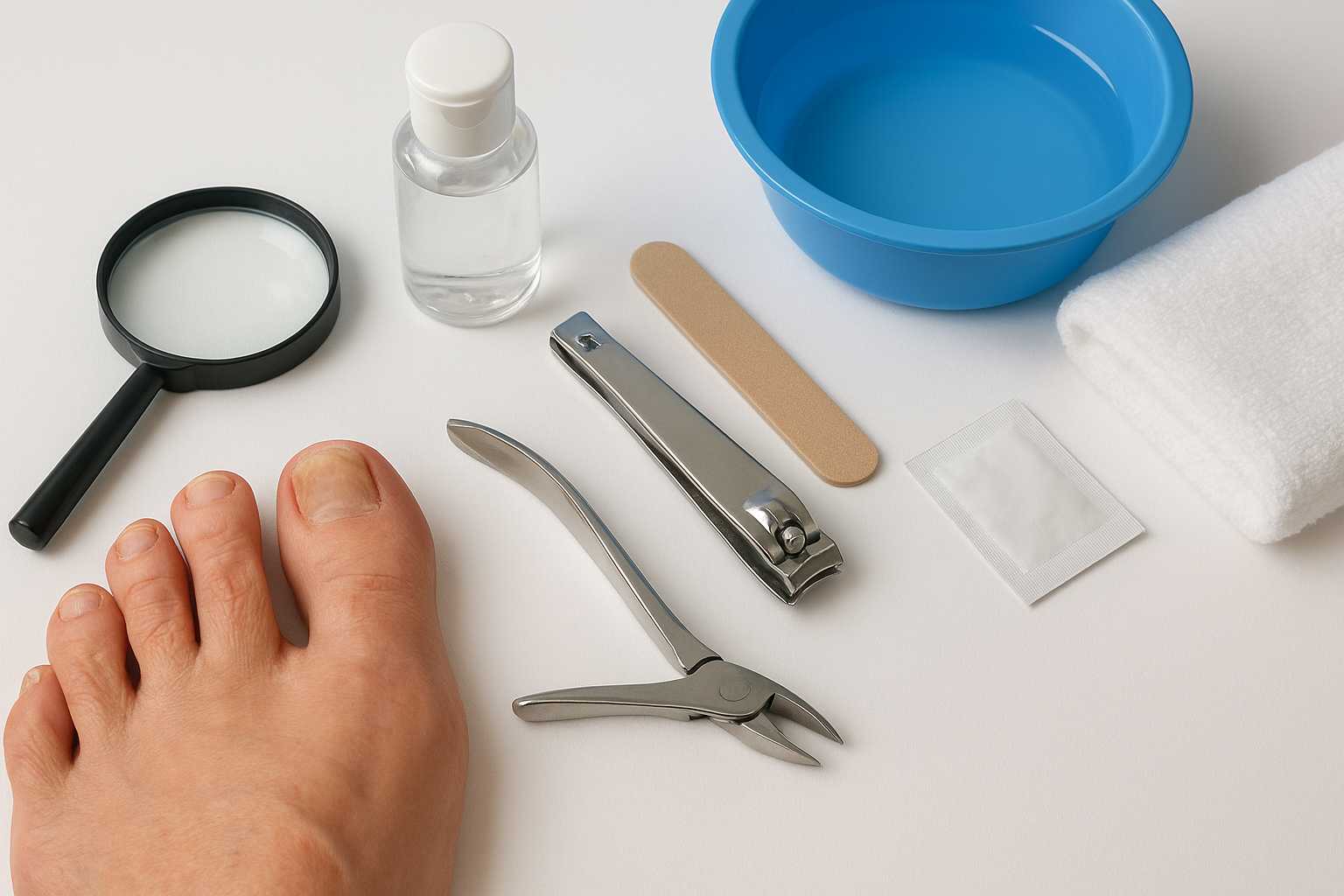
| Tool | What to look for |
|---|---|
| Toenail clippers | Wide, straight-edge blade; heavy-duty for thick nails |
| Nail file or emery board | Medium-coarse grit to smooth sharp edges |
| Basin or shallow bowl | For soaking feet before trimming |
| Mild, fragrance-free soap | Gentle on sensitive or dry skin |
| Clean, lint-free towel | Soft enough to pat dry without irritating skin |
| Magnifying glass | Useful if vision is limited |
| Bright task lamp or headlamp | Direct lighting to see the nail clearly |
| Rubbing alcohol or antiseptic wipes | To clean and disinfect tools before use |
Wipe all clippers and files with rubbing alcohol before you start to reduce the risk of transferring bacteria or fungal spores. If you provide care for more than one person, never share clippers between individuals since nail fungus spreads easily through contaminated tools.
Set up in a firm chair with good back support. The foot should rest flat on a low stool or your knee at a height where you can see the full nail surface clearly without bending at an awkward angle. Stable positioning and good lighting are the two factors that most directly reduce the chance of slipping and cutting the surrounding skin.
Step 1. Soften, clean, and set up safely
Softening toenails before you trim them is the single most important step you can skip but shouldn’t. Dry, hard nails crack, splinter, and compress unevenly under the clippers, which is painful and leaves sharp edges behind. Spending five to ten minutes on preparation makes every cut cleaner, safer, and far less likely to cause discomfort, especially when handling the thickened nails common in toenail care for elderly patients.
Soak the feet properly
Fill a shallow basin with warm, not hot, water and a small amount of mild, fragrance-free soap. The water temperature matters: skin and circulation change with age, and nerves may not accurately detect heat, so always test the water on your wrist before placing the foot in. Soak for five to ten minutes, no longer. Over-soaking softens the skin too much, which increases the risk of small tears when you handle the nail edges.
If the person has diabetic neuropathy or reduced sensation in their feet, test the water temperature with a thermometer and keep it at or below 100°F (38°C) to avoid burns.
After soaking, pat the feet dry thoroughly with a clean, soft towel, including the spaces between the toes. Moisture trapped between toes creates a warm environment where fungal infections take hold quickly.
Clean and inspect before trimming
Use a soft nail brush to gently clean any debris from under the nail edges while the foot is still damp. Look at each nail closely under your task lamp before you reach for the clippers. Check for redness or swelling along the nail border, which could mean an ingrown nail is already forming. Also note any discoloration, unusual texture, or separation from the nail bed, since these signs change how you should trim or whether you should trim at all. If anything looks infected or inflamed, stop and contact a podiatrist before proceeding.
Step 2. Trim and file to prevent ingrown nails
Once the nails are clean, softened, and dry, you’re ready to cut. How you angle the clippers matters more than most people realize, and it’s the single biggest factor in whether you end up with an ingrown nail weeks later. Taking small, deliberate cuts is far safer than trying to trim each nail in one squeeze, especially during toenail care for elderly patients who often have thicker or more brittle nails than expected.
Cut straight across, not curved
Position the clippers so the blade runs straight across the top of the nail, parallel to the nail tip. Do not curve or angle the cut down into the corners. Rounding the edges pulls the nail border down into the surrounding skin, which is the primary cause of ingrown toenails. Leave the nail just long enough so it reaches the tip of the toe without extending past it.
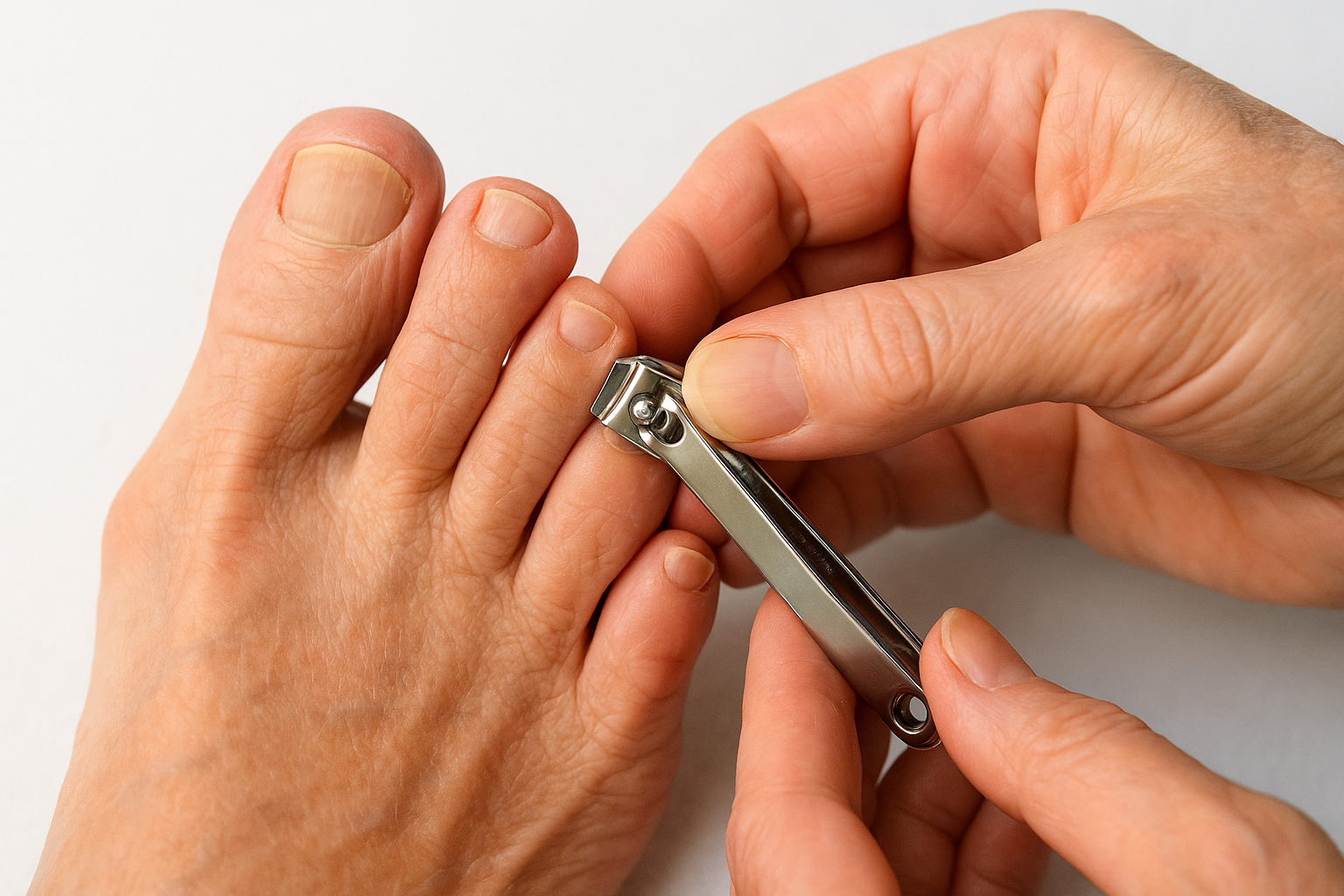
Never cut the nail shorter than the edge of the toe. Short nails cut below the nail bed are one of the most common triggers for painful ingrown nails in older adults.
Work across the nail in two or three small clips rather than one large cut. One clip on the left side, one in the middle, one on the right gives you clean control and reduces the chance of the nail cracking or splitting under pressure. If a nail is particularly wide, you may need four clips.
File the edges smooth
After clipping, run a medium-coarse nail file or emery board across the entire top edge of each nail using short, back-and-forth strokes. Filing removes any sharp corners or jagged points that clippers leave behind, which are the edges most likely to dig into adjacent toes or catch on socks and tear.
File in one direction whenever possible. Sawing back and forth aggressively can weaken brittle nails, causing them to peel in layers at the tip. Light, even strokes are all you need.
Step 3. Manage thick, curved, or brittle toenails
Thickened, curved, and brittle nails are among the most common challenges in toenail care for elderly patients. Standard clippers often can’t handle them cleanly, and forcing a bad cut can crack the nail or pinch the surrounding skin. Understanding what type of nail you’re dealing with before you start will help you choose the right approach.
Thick nails
Thick nails are often caused by fungal infections, repetitive trauma, or the naturally slower nail growth that comes with age. A standard clipper won’t cut through them cleanly. Instead, use heavy-duty toenail clippers or a nail nipper with a long, curved jaw that gives you more leverage and control. Work in small increments, taking thin slices across the nail rather than trying to cut the full thickness in one squeeze.
If a nail is so thick that cutting it causes pain or the nail crumbles rather than cuts cleanly, stop and book an appointment with a podiatrist.
Filing down the surface between trims also helps. A coarse nail file or an electric nail grinder can reduce thickness gradually without putting pressure on the nail bed. Light, consistent passes work better than grinding in one spot.
Curved or ram’s horn nails
Some nails develop an extreme inward curve or grow in a long, horn-like shape, a condition called onychogryphosis. Attempting to cut these at home carries a real risk of injury because the shape makes it nearly impossible to maintain a straight cutting angle. Your safest option is to soften the nail thoroughly, then make very small cuts along the curved edge to reduce the length in stages rather than forcing the clipper through the full nail at once.
Brittle nails
Brittle nails crack and splinter under pressure from clippers. Soaking for a full ten minutes is especially important here since the extra moisture time makes the nail more flexible. After soaking, use sharp, fresh clippers because dull blades apply more compression and make splitting worse. Trim while the nail is still slightly damp but patted dry, which gives you a short window where it’s pliable enough to cut cleanly.
Step 4. Know when to stop and call a podiatrist
Home toenail care for elderly patients works well in many situations, but it has clear limits. Recognizing those limits before you cause an injury is just as important as knowing how to trim correctly. If you encounter anything that makes you hesitate during the process, that hesitation is usually telling you something worth listening to.
Signs that mean stop immediately
Some warning signs during trimming are direct signals to put the clippers down and pick up the phone. Any active bleeding, discharge, or sign of infection around the nail requires professional evaluation before you proceed further. The same applies if the person reports sharp pain during cutting, since pain during a routine trim usually points to an ingrown nail, infection, or pressure issue that needs proper treatment rather than more trimming.
If you see pus, swelling, or red streaking around any nail, contact a podiatrist or urgent care provider the same day.
Watch for nails that are black or dark brown without any recent trauma, since this can indicate blood pooling under the nail or, in rare cases, something more serious. Do not attempt to clip through it.
Conditions that require professional trimming every time
Certain health situations move routine nail care out of the "handle at home" category altogether. A podiatrist should manage trimming directly if the person has any of the following:
- Diabetes with peripheral neuropathy or poor circulation in the feet
- Active or recurrent fungal nail infections that have not responded to treatment
- Ingrown toenails that have broken the skin or become infected
- Extremely thick, distorted nails (onychogryphosis) that standard clippers cannot manage safely
- A history of foot ulcers or open wounds on the feet or lower legs
- Blood-thinning medications combined with limited visibility or hand dexterity
Scheduling regular appointments with a podiatrist every six to eight weeks covers all of these cases and keeps nail health tracked by someone trained to catch early problems before they escalate.
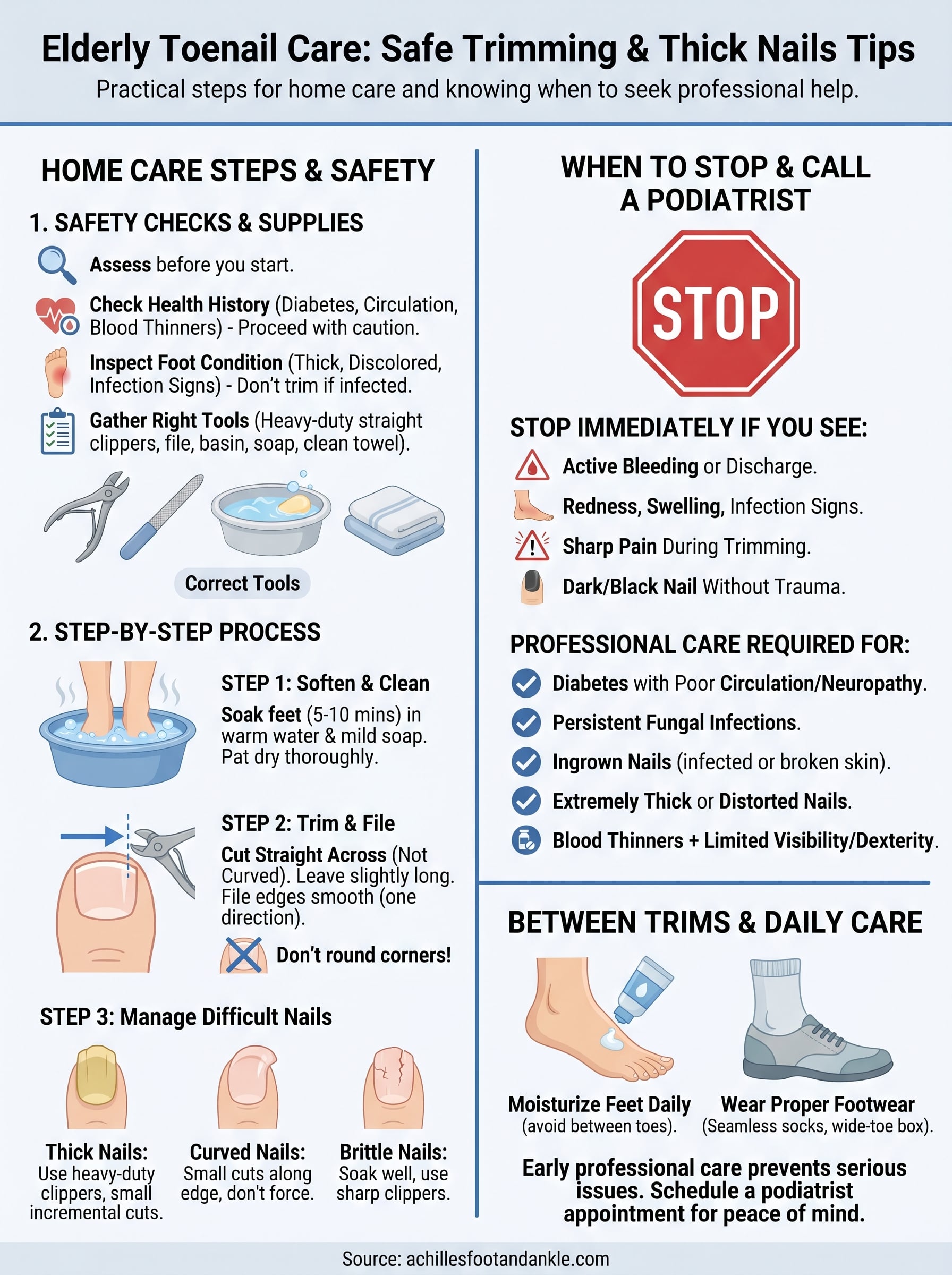
Keep feet comfortable between trims
Good toenail care for elderly patients doesn’t stop at the trim. Moisturizing your feet daily with a thick, fragrance-free cream prevents the dry, cracked skin that makes nails brittle and harder to cut next time. Apply cream to the heels and soles, but keep it away from the spaces between your toes where trapped moisture encourages fungal growth.
Wearing properly fitted socks and shoes also matters more than most people expect. Socks with seamless toes and wide-toe-box shoes reduce pressure on nails between appointments and lower the chance of trauma that causes thickening over time. Check your feet at least once a week for redness, swelling, or changes in nail color.
When something looks off, or when trimming feels too risky to handle at home, don’t wait to seek help. Early professional care stops small nail problems from becoming serious infections. Schedule a same-day appointment at Achilles Foot and Ankle Center and get expert podiatry care before a minor issue turns into something harder to treat.