

A wound that won’t close after weeks or months isn’t just slow to heal, it’s often infected, and that infection keeps resetting the healing process before your body gets a chance to catch up. If you’re caring for a diabetic ulcer, a pressure ulcer on the foot, or a surgical wound that keeps draining or smelling off, you need real answers, not generic bandage advice. That’s what chronic wound infection treatment is about: identifying what’s driving the infection and stopping it before it spreads deeper into tissue or bone.
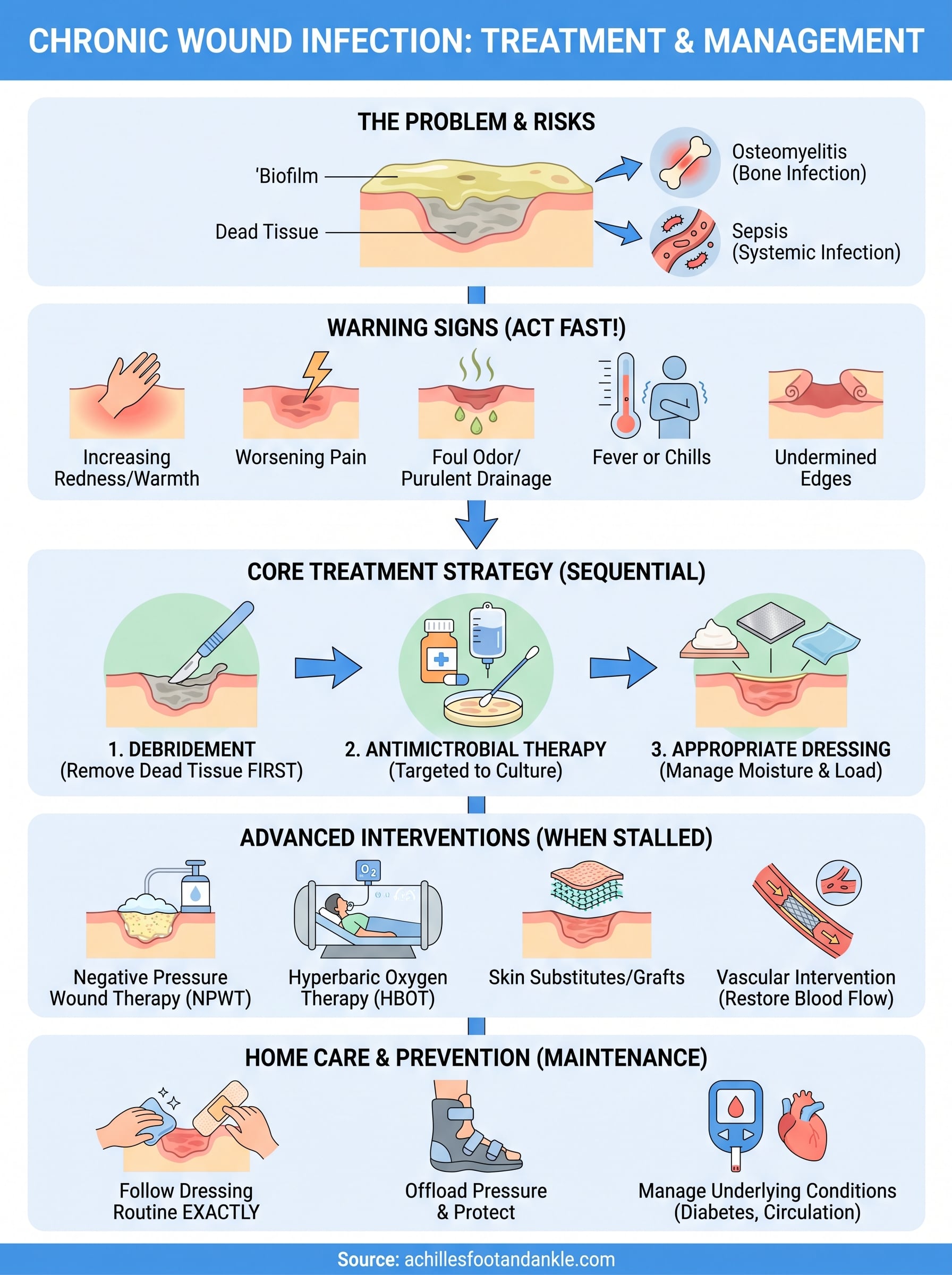
Effective treatment of chronic wound infection usually combines several strategies working together. Debridement removes dead and infected tissue so healthy tissue can actually take over. Antimicrobial therapy, whether topical or systemic, targets the specific bacteria involved, and advanced wound dressings manage moisture and bacterial load between visits.
In this article, we break down each of these strategies in plain terms: how doctors identify infection versus normal healing, which treatments work for which wound types, and when a wound needs specialized limb salvage care instead of routine dressing changes. If you’re dealing with a stubborn wound, this gives you a clear picture of what proper treatment looks like.
Why untreated wound infections put your health at risk
A chronic wound doesn’t get infected the way a fresh cut does. Biofilm, a slimy layer of bacteria that shields itself from antibiotics and your immune system, builds up over weeks and quietly prevents closure. You might not see obvious pus or smell anything alarming for a long time, which is exactly why so many patients wait too long to get help. By the time symptoms become impossible to ignore, the infection has often moved past the surface and into deeper structures where it’s much harder to treat.
How infection spreads beyond the wound bed
Once bacteria colonize a wound bed, they don’t stay put. Untreated infection tracks along tissue planes, invades tendons and joint capsules, and eventually reaches bone, a condition called osteomyelitis that almost always requires surgery and weeks of IV antibiotics to resolve. From there, bacteria can enter the bloodstream and trigger sepsis, a body-wide inflammatory response that damages organs and kills roughly 350,000 Americans every year according to the CDC. Sepsis from a wound infection isn’t a rare, freak outcome. It’s a documented, predictable end point when infected chronic wounds go unmanaged in patients with diabetes, vascular disease, or weakened immune systems.
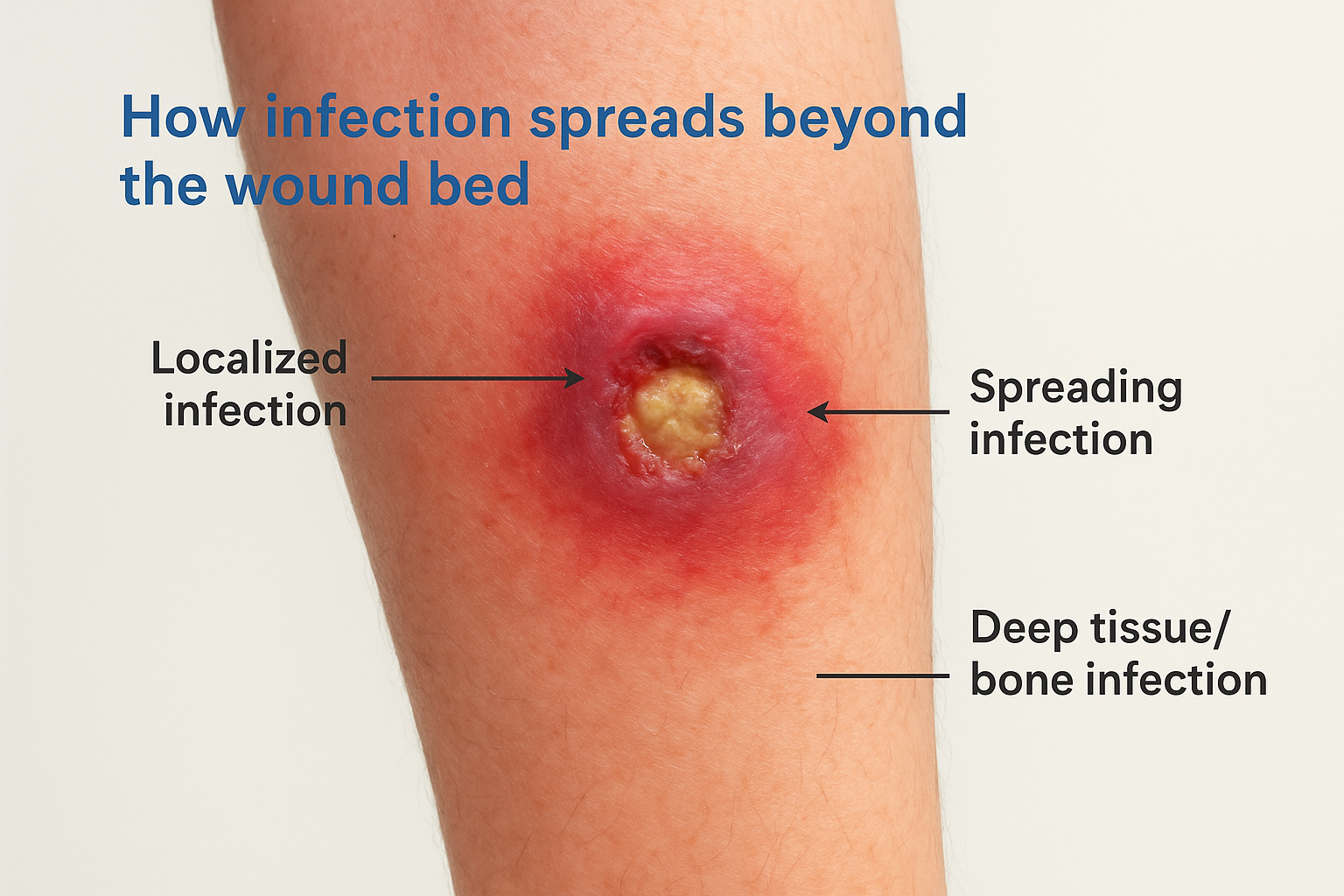
A wound infection you ignore for weeks doesn’t stay in the wound. It moves into bone, into blood, and into the rest of your body.
| Stage | What’s happening | Health risk |
|---|---|---|
| Localized infection | Bacteria colonize the wound bed, biofilm forms | Delayed healing, increased drainage |
| Spreading infection (cellulitis) | Redness and warmth extend into surrounding skin | Pain, fever, tissue damage |
| Deep tissue/bone infection | Bacteria reach tendon, joint, or bone (osteomyelitis) | Surgical debridement, long-term antibiotics, joint damage |
| Systemic infection (sepsis) | Bacteria enter the bloodstream | Organ failure, hospitalization, death |
The real cost: amputation and limb loss
Nowhere is this progression more visible than with diabetic foot ulcers. Roughly half of all lower-limb amputations in the United States trace back to a diabetic foot ulcer that became infected and didn’t heal, according to research published by the National Institutes of Health. Once infection reaches bone or the blood supply to the foot is compromised, doctors are often forced to choose between aggressive limb salvage surgery and amputation. That’s not a scare tactic, it’s the documented outcome when patients delay care for wounds that keep draining, smelling, or refusing to shrink. If you’re managing a wound like this, choosing a limb salvage program from the start dramatically improves your odds of keeping the limb intact.
Why some patients face higher risk than others
Not every wound carries the same danger, and your personal risk depends heavily on your underlying health. People with diabetes heal slower because high blood sugar impairs white blood cell function and reduces circulation to the extremities, meaning infections that a healthy person would fight off easily can spiral quickly. Poor circulation from peripheral artery disease starves tissue of the oxygen and nutrients it needs to fight bacteria, so even a small infection can outpace the body’s defenses. Age matters too. Older adults often have thinner skin, slower immune responses, and other chronic conditions that compound the problem.
Several factors consistently show up in patients who develop serious complications from a chronic wound infection:
- Uncontrolled diabetes with elevated A1C levels
- Peripheral artery disease or other circulation problems
- Immunosuppression from medication or chronic illness
- Prior history of ulcers, infections, or amputation
- Delayed treatment, often because the wound doesn’t look as bad as it is
Understanding these risk factors isn’t about assigning blame, it’s about knowing when to escalate care instead of waiting another week to see if a wound improves on its own. Treating a chronic wound infection early, before it reaches bone or bloodstream, is almost always faster, cheaper, and less painful than treating the consequences of waiting. The next section walks through exactly what signs separate a wound that’s healing normally from one that’s actively infected, so you know when it’s time to act.
Recognizing the signs of an infected chronic wound
A healing wound and an infected one can look confusingly similar in the early days, which is why so many patients miss the turning point. Some drainage, mild redness, and a bit of swelling are normal as tissue rebuilds itself. What separates normal healing from treatment of chronic wound infection territory is direction: wounds moving through the normal stages of healing get smaller, less painful, and less inflamed week over week. An infected wound moves the opposite way, even if the changes are subtle at first.
Signs you can see and feel
Look closely at the wound bed and the skin around it every time you change a dressing. Certain visual and physical changes are reliable red flags rather than normal healing variation:
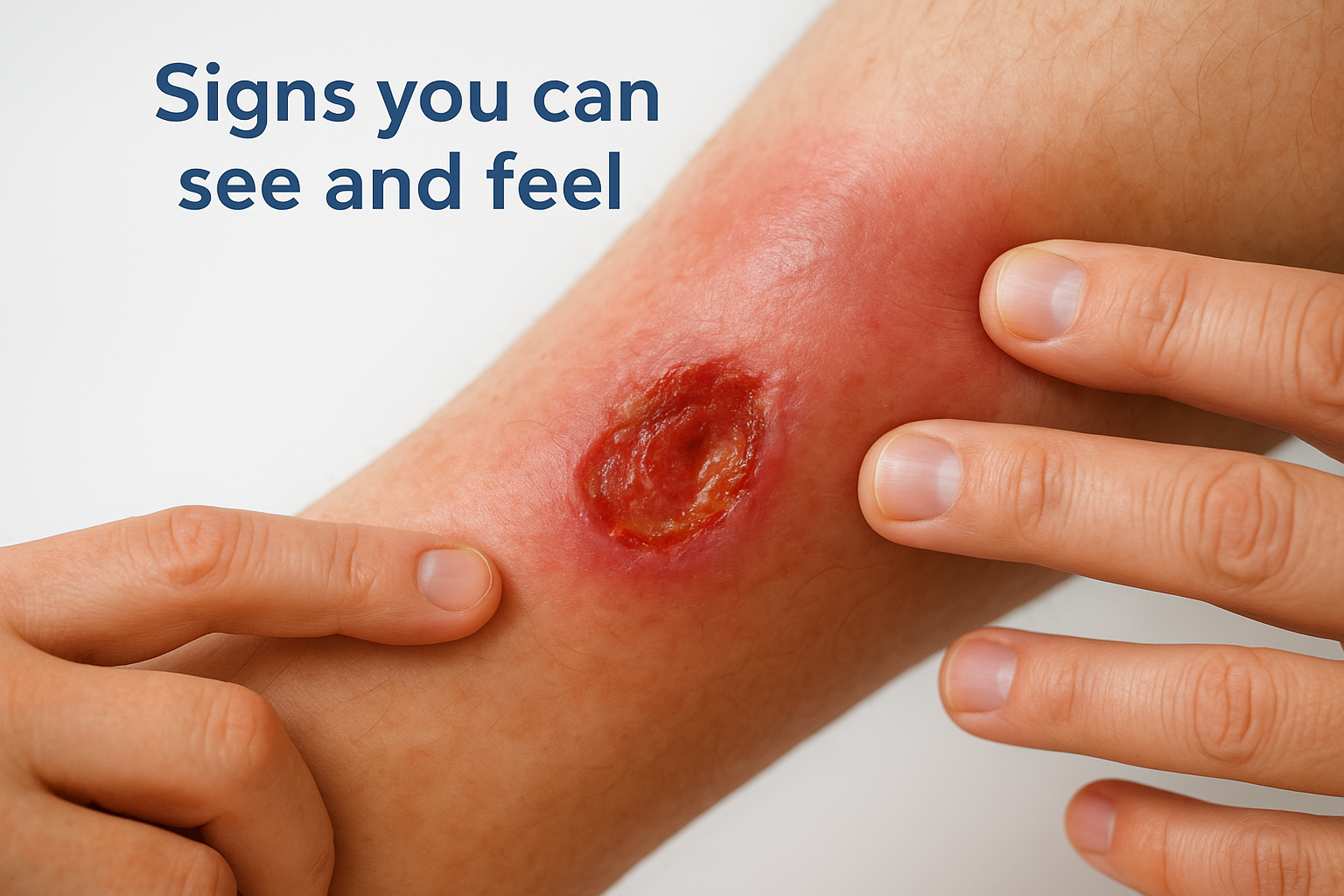
- Increasing redness that spreads outward from the wound edges instead of staying contained
- Warmth in the surrounding skin that feels noticeably hotter than nearby tissue
- Swelling that worsens rather than gradually subsides
- New or worsening pain, especially if the wound had stopped hurting and pain suddenly returns
- Wound edges that look undermined, rolled, or fail to shrink after two to four weeks of care
Because you see the wound daily, you’re often the first person to notice a shift. Trust that instinct and don’t wait for a scheduled follow-up if something looks wrong.
Drainage and odor changes worth flagging
Drainage tells you a lot about what’s happening beneath the surface. Clear or slightly yellow fluid in small amounts is typical during healing. Once drainage turns thick, cloudy, green, or foul-smelling, or the volume suddenly increases after a period of improvement, bacteria have likely taken hold. A wound that develops a distinct odor between dressing changes, not just at the moment you remove the bandage, is one you should get evaluated rather than monitor at home. Purulent drainage combined with any of the visual signs above is one of the clearest indicators clinicians rely on when diagnosing infection.
Systemic symptoms that mean it’s urgent
Some symptoms point beyond the wound itself and toward infection that’s already spreading through the body. These require same-day medical attention, not a wait-and-see approach:
| Symptom | What it may indicate |
|---|---|
| Fever or chills | Systemic infection response |
| Rapid heart rate or breathing | Early sepsis warning sign |
| Confusion or unusual fatigue | Possible bloodstream infection |
| Red streaking away from the wound | Lymphatic spread (lymphangitis) |
| New numbness or discoloration in the limb | Compromised blood supply, urgent evaluation needed |
If a wound comes with fever, red streaking, or confusion, that’s not a wound problem anymore, it’s a whole-body emergency.
Any one of these symptoms alongside a chronic wound justifies calling your provider immediately rather than waiting for your next scheduled visit. Patients with diabetes or circulation problems sometimes don’t run a fever even with significant infection, so don’t rule out infection just because your temperature reads normal. Once you or your care team confirm signs of infection, the next step is matching the right treatment strategy to the severity and depth of what’s found, which is exactly what proper chronic wound infection treatment is built around.
How to treat chronic wound infection: core medical strategies
Once infection is confirmed, treatment follows a logical sequence rather than a single fix. Chronic wound infection treatment almost always starts with removing the source of the problem before anything else, then layers in medication and dressing changes that keep bacteria from regaining ground. Skipping steps or relying on antibiotics alone rarely works, because bacteria hiding in biofilm and dead tissue are largely protected from drugs circulating in the bloodstream.
Debridement comes first
Debridement means physically removing dead, damaged, or infected tissue from the wound bed, and it’s the single most important step in treatment of chronic wound infection. Dead tissue feeds bacteria and blocks new tissue from forming, so no amount of antibiotics or dressing changes will close a wound sitting under a layer of necrotic debris. Podiatrists use several debridement methods depending on wound depth and patient tolerance:
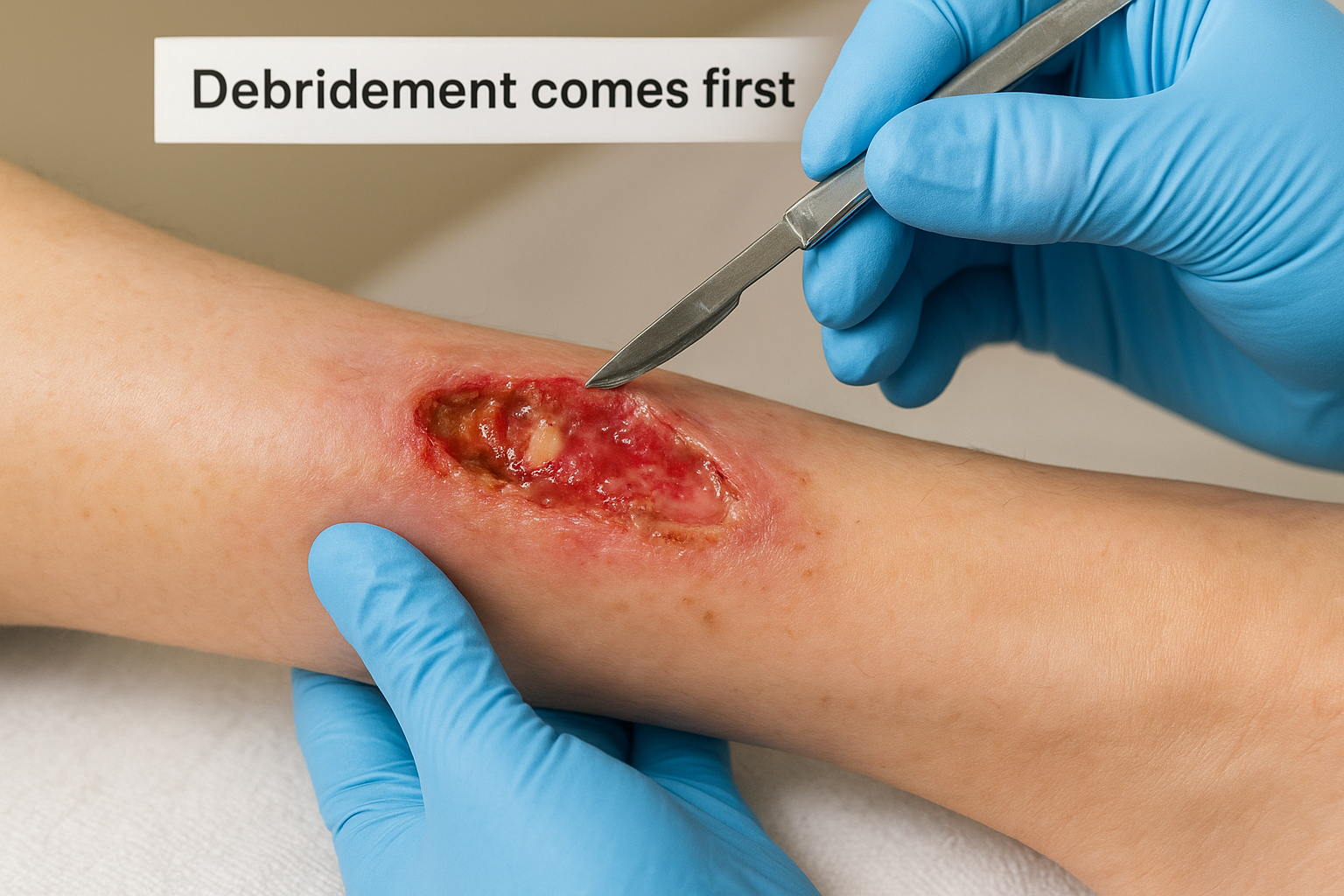
- Sharp debridement, where a clinician removes tissue with a scalpel or curette during an office visit
- Mechanical debridement, using irrigation or specialized dressings to lift dead tissue
- Enzymatic debridement, applying topical agents that chemically break down nonviable tissue over days
- Surgical debridement, performed in an operating room for deep or extensive infection
You cannot heal a wound that’s still feeding the bacteria underneath it. Debridement removes the fuel source first.
Matching antimicrobial therapy to the culprit
After debridement, your provider typically sends a tissue sample for culture rather than guessing which antibiotic to prescribe. This matters because the wrong antibiotic buys bacteria time to multiply while doing nothing for you. Superficial infections often respond to topical antimicrobials like silver-based diabetic wound dressings, medical-grade honey, or iodine preparations applied directly to the wound. Deeper infections, or those with signs of spreading, require systemic antibiotics taken orally or delivered intravenously, chosen specifically to target the bacteria identified in the culture. Osteomyelitis and other bone infections usually need weeks of IV therapy alongside surgical removal of infected bone.
Choosing the right dressing for the job
Dressings do more than cover a wound between visits, they actively shape the healing environment. The right dressing type depends on how much drainage the wound produces and whether infection is still active:
| Wound Condition | Dressing Type | Purpose |
|---|---|---|
| Heavy drainage | Alginate or foam | Absorbs excess fluid, prevents maceration |
| Active infection | Silver-impregnated dressing | Reduces bacterial load between changes |
| Dry or low-drainage wound | Hydrogel | Maintains moisture for tissue growth |
| Biofilm concerns | Antimicrobial gauze with debridement | Disrupts bacterial colonies directly |
Getting this combination right takes clinical judgment, since a dressing that works for one stage of healing can actually slow progress at another. Physicians trained in chronic wound treatment reassess dressing choices at nearly every visit rather than sticking to a fixed protocol, because a wound that’s improving one week can regress the next if the treatment plan doesn’t adjust with it.
Most chronic wound infections respond to this core combination of debridement, targeted antimicrobial therapy, and appropriate dressing selection within a few weeks. When a wound doesn’t respond, that’s a signal to move toward more advanced interventions, which we cover next.
Advanced therapies for wounds that resist standard treatment
Some wounds don’t respond to debridement, antibiotics, and dressing changes even after weeks of consistent care, and that’s when it’s time to escalate rather than repeat the same plan hoping for a different result. Outpatient wound care centers exist precisely for these stalled cases, pairing technology with surgical skill to restart healing in tissue that’s stopped responding on its own. None of these options replace the basics covered earlier, they build on top of them once infection is controlled and the wound bed is clean.
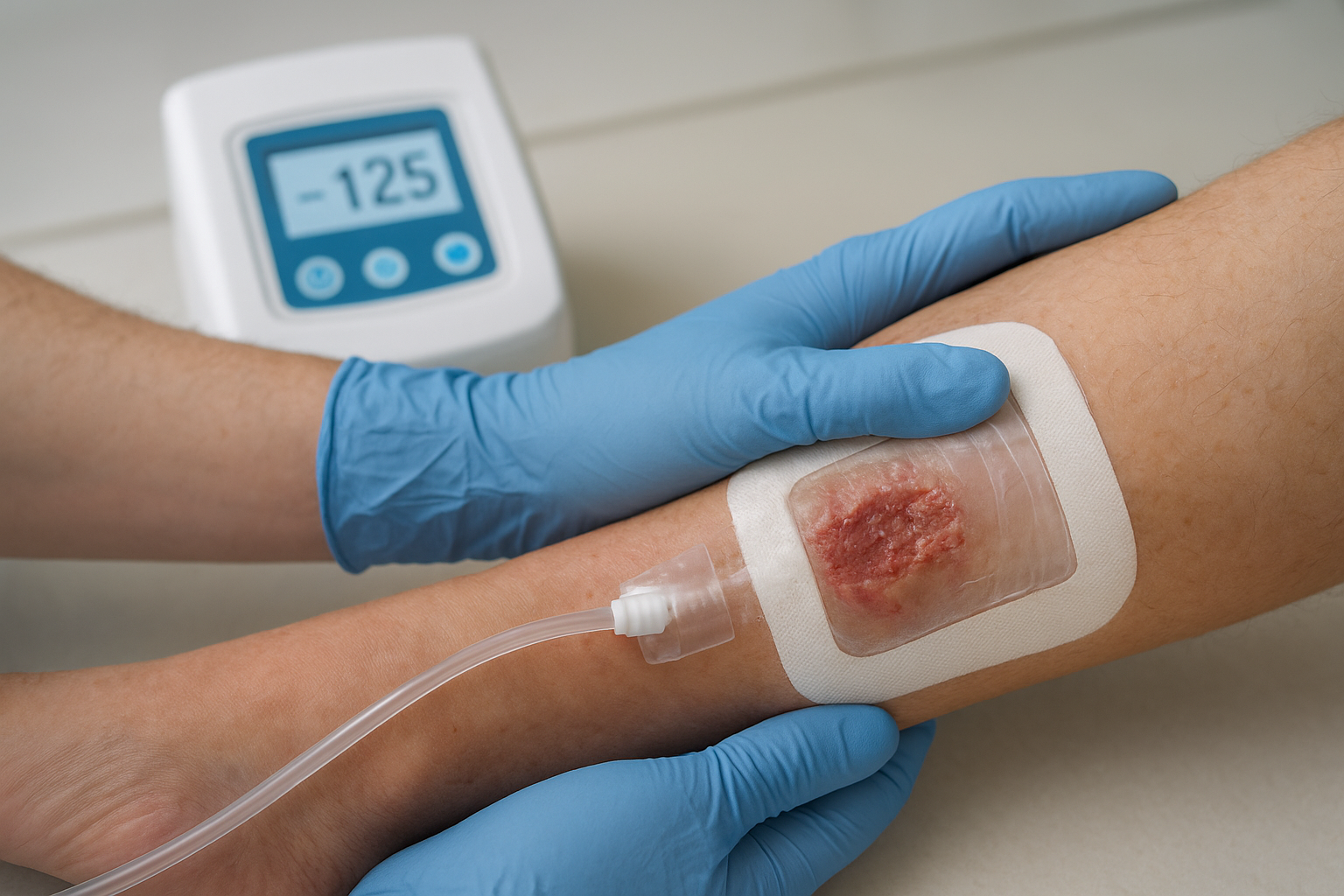
Negative pressure wound therapy
Negative pressure wound therapy, often called wound VAC therapy, applies controlled suction to the wound through a sealed foam dressing connected to a pump. The suction pulls excess fluid away, reduces swelling, and draws blood flow toward the wound bed, which speeds granulation tissue formation. It’s especially useful for deep wounds, surgical dehiscence, and wounds with heavy drainage that overwhelm standard dressings between visits. Patients typically wear the device continuously, with dressing changes every two to three days instead of daily.
Hyperbaric oxygen therapy for stubborn wounds
Hyperbaric oxygen therapy places you in a pressurized chamber breathing pure oxygen, which dramatically increases the oxygen dissolved in your blood plasma. That extra oxygen reaches tissue that’s been starved by poor circulation, fueling the cellular repair process and helping white blood cells fight bacteria more effectively. It’s most commonly used for diabetic foot ulcers, radiation injury, and wounds complicated by osteomyelitis that hasn’t fully resolved with antibiotics alone.
A wound that won’t heal on its own often just needs more oxygen delivered directly to the tissue trying to repair itself.
Skin substitutes and grafts
When a wound has lost significant tissue, bioengineered skin substitutes and grafts give the body a scaffold to rebuild on rather than asking it to close a large gap from scratch. These range from cellular tissue products derived from donated skin to fully synthetic matrices seeded with growth factors. Providers select among several options depending on wound size, depth, and location:
| Advanced Therapy | Best Suited For | How It Works |
|---|---|---|
| Negative pressure wound therapy | Deep, draining wounds | Suction removes fluid, boosts blood flow |
| Hyperbaric oxygen therapy | Poor circulation, diabetic ulcers | Increases oxygen delivery to tissue |
| Skin substitutes/grafts | Large tissue loss | Provides scaffold for new tissue growth |
| Vascular intervention | Blocked or narrowed arteries | Restores blood supply to the limb |
Addressing the vascular problem underneath
Sometimes the wound itself isn’t the whole story. If arteries feeding the foot or leg are narrowed or blocked, no dressing or graft will hold because tissue simply isn’t getting the blood supply it needs to survive, let alone heal. In these cases, a vascular specialist may need to restore circulation through angioplasty or stenting before wound therapy has any real chance of working. This is one reason limb salvage programs bring podiatrists, vascular surgeons, and wound care specialists together rather than treating the wound in isolation, and it’s an approach Achilles Foot and Ankle Center uses for exactly these resistant cases.
Caring for a healing wound at home
Medical treatment closes the gap, but what happens between appointments determines whether that progress holds. Knowing how to clean, dress, and protect a foot wound at home isn’t just following a checklist, it’s protecting the work your provider already did from getting undone by a missed dressing change or a wound that got wet in the shower. Patients who take this seriously heal faster and see fewer setbacks than those who treat home care as an afterthought between office visits.
Following your dressing change routine exactly
Getting the technique right matters as much as picking the correct dressing type. Skipping steps or reusing supplies past their intended use is one of the most common ways a healing wound gets reinfected at home. Before touching the wound, work through the same sequence every time:
- Wash your hands thoroughly with soap and water before and after touching the wound or dressing
- Remove the old dressing gently, checking it for unusual color, odor, or drainage amount compared to the last change
- Clean the wound only with the solution your provider recommended, never with hydrogen peroxide or alcohol unless specifically instructed
- Apply the new dressing exactly as shown, covering the full wound bed without leaving edges exposed
- Dispose of used materials properly and log the date, since gaps in dressing changes are easy to lose track of otherwise
Having a consistent routine also makes it far easier to notice small changes early, since you’re looking at the same wound under the same conditions each time.
Keeping the wound protected during daily activities
Ordinary daily life creates more opportunities for reinfection than most patients expect. Showering with an unprotected dressing, wearing shoes that rub against the wound site, or sitting for long stretches without offloading pressure from a foot ulcer can each undo days of healing progress. If your wound is on your foot, ask your provider about offloading devices like a walking boot or specialized shoe insert designed to keep pressure off the affected area while you move around. Pets, dust, and even bedding fibers can introduce bacteria to an open wound, so keep the area covered and avoid letting anything touch it directly outside of scheduled dressing changes.
A wound heals or worsens in the hours between appointments, not just during them.
Knowing when home care isn’t enough
Some situations call for contacting your care team immediately rather than waiting for the next scheduled visit. Bleeding that won’t stop with light pressure, a dressing soaked through within hours of application, or a wound that suddenly looks or smells different than the day before all warrant a call. Many practices, including Achilles Foot and Ankle Center, offer a patient portal where you can send photos or questions directly to your provider between visits, which catches problems days before they’d otherwise surface at a follow-up. Tracking your wound consistently and reporting changes early keeps small setbacks from becoming the kind of infection that requires the advanced interventions covered earlier.
Preventing chronic wound infections from recurring
Once a wound closes, the work isn’t over. Chronic wound infection treatment doesn’t end at closure, because the same conditions that created the first wound, poor circulation, uncontrolled blood sugar, or repeated pressure on one spot, are still there waiting to start the cycle again. Patients who treat healing as the finish line often see a new ulcer form within months in the same location or nearby, which is why podiatrists build a maintenance plan into every recovery, not just an exit plan.
Managing the conditions that caused the wound
Getting blood sugar under control matters more after healing than most patients realize, since elevated glucose keeps damaging small blood vessels and nerves even when the skin looks fine. Tight glycemic control, verified through regular A1C testing rather than occasional finger sticks, gives new tissue a fighting chance against the next minor injury. Vascular health deserves the same attention. If narrowed arteries contributed to slow healing the first time, they’ll cause the same problem again unless a vascular specialist addresses the blockage directly. Regular checkups with your primary care provider to manage diabetes, blood pressure, and cholesterol aren’t separate from wound care, they’re part of it.
Protecting the skin from repeat pressure and friction
Skin that’s healed over a chronic wound is thinner and weaker than the tissue around it, which means the same shoe, chair, or sleeping position that caused the original ulcer can reopen it. Custom orthotics and the best shoes for diabetic feet redistribute pressure away from vulnerable spots on the foot, and they’re one of the most effective tools available for stopping recurrence in patients with neuropathy or foot deformities. Checking your feet daily for redness, blisters, or warm spots catches trouble before it becomes an open wound again.
The wound that comes back usually forms in the exact same spot as the one that just healed, because the underlying pressure problem never went away.
A short daily habit prevents most repeat ulcers:
- Inspect both feet every evening, including between toes and the heel
- Check shoes for debris, worn insoles, or seams before putting them on
- Moisturize dry skin to prevent cracking, but avoid lotion between toes
- Trim nails straight across to avoid ingrown nails that can become entry points for infection
- Report any new redness or sore to your provider the same day you notice it
Scheduling maintenance visits, not just emergency ones
Waiting until a new wound appears to see your podiatrist misses the point of maintenance care. Routine follow-up visits, even when nothing looks wrong, let a specialist catch pressure points, circulation changes, or early skin breakdown before they turn into another open ulcer.
| Recurrence Risk Factor | Prevention Strategy |
|---|---|
| Peripheral neuropathy | Daily foot checks, custom orthotics |
| Poor circulation | Vascular follow-up, smoking cessation |
| Repetitive pressure | Offloading devices, shoe fitting |
| Uncontrolled diabetes | Regular A1C monitoring, diet management |
Visiting a diabetic foot care program on a set schedule, rather than only after something goes wrong, is consistently the difference between patients who stay wound-free for years and those who cycle through infections every few months.
When healing stalls, what comes next
A chronic wound that won’t close is a signal, not a mystery. Debridement, targeted antimicrobial therapy, and the right dressing resolve most infections when they’re started early and followed consistently. When those basics aren’t enough, advanced options like negative pressure therapy, hyperbaric oxygen, and vascular intervention exist for exactly this reason, and waiting longer only narrows your options.
Getting the treatment of chronic wound infection right depends on catching changes early and having a team that adjusts the plan as the wound responds, rather than repeating a protocol that’s stopped working. If a wound on your foot or leg has stalled, changed color, or started draining more than it did last week, that’s not something to monitor for another month. Get a same-day wound evaluation with our podiatrists and have a specialist look at it before the infection decides your next steps for you.