Your feet ache by mid-afternoon, your arches feel flat and tired, and every pair of sneakers you own seems to make it worse instead of better. Finding the best arch support shoes for walking shouldn’t require a medical degree, but with hundreds of options claiming to fix your pain, it’s easy to end up with another pair collecting dust in your closet. If you’re dealing with plantar fasciitis, flat feet, or just want to walk without wincing, you’re in the right place.
This guide skips the marketing fluff and gets straight to what actually works. We’ve narrowed the field down to ten shoes that deliver real arch stability and cushioning, based on what our podiatrists see help patients every day in the clinic. Each pick includes who it’s best suited for, whether you’re on your feet all day at work or logging miles on weekend trails, so you can match the shoe to your actual foot type and activity level.
As a podiatry practice serving Central Virginia, we treat heel pain, arch collapse, and walking-related injuries daily, and footwear is often the first fix we recommend. Below, you’ll find our top ten recommendations, plus practical tips on what to look for so your next pair actually supports the way you walk.
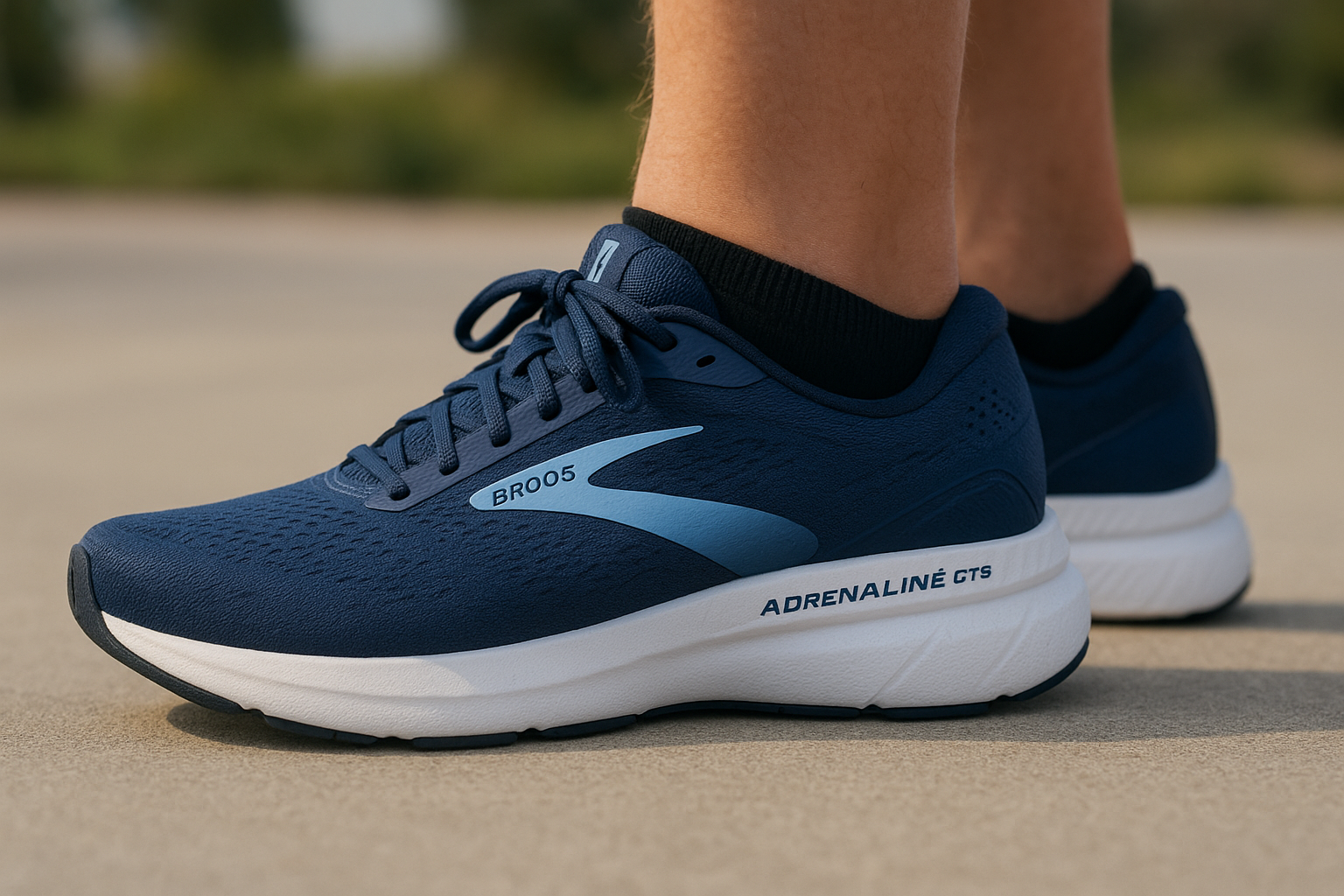
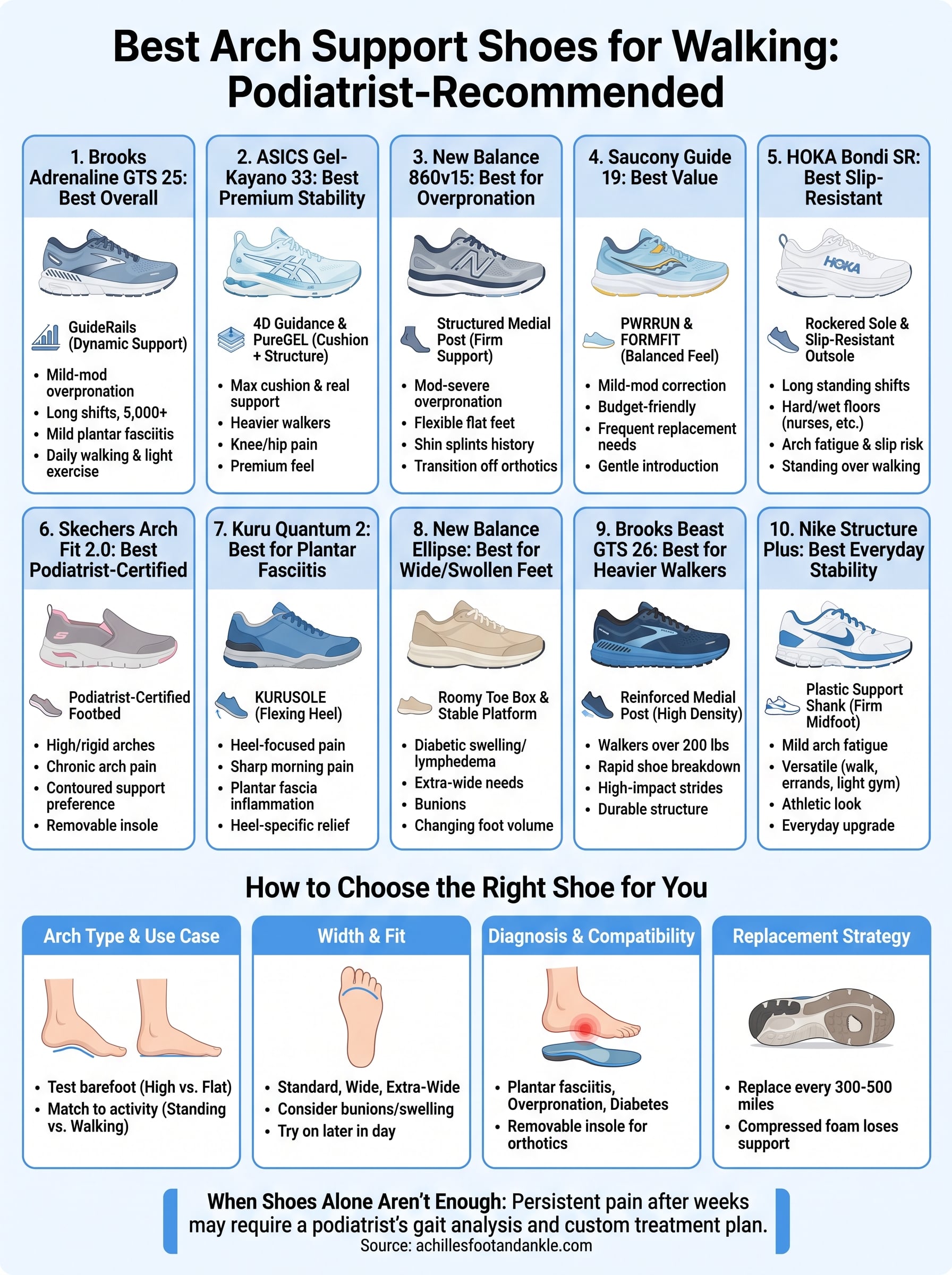
1. Brooks Adrenaline GTS 25: best overall arch support
The Brooks Adrenaline GTS 25 has earned its reputation as the go-to recommendation among podiatrists for a reason: it balances structured support with everyday comfort better than almost anything else on the market. GTS stands for "Go To Support," and Brooks has refined this line for over two decades based on real biomechanical data, not guesswork. If you only try one shoe from this list, this is the one we’d point you toward first.
Why it stands out for arch support
The Adrenaline GTS 25 uses Brooks’ GuideRails Support System, a technology that works differently than traditional medial posts. Instead of jamming a firm wedge under your arch, GuideRails monitor excess movement at the knee and guide your stride back into alignment only when you need it. This means you get dynamic arch support without the stiff, corrective feel that makes some stability shoes uncomfortable for long walks. The DNA LOFT v3 midsole cushions each step while still providing the firmness your arch needs to avoid collapsing inward with every stride.
If your feet roll inward when you walk, the Adrenaline GTS 25 corrects that motion without forcing your foot into an unnatural position.
The engineered mesh upper adds structure around the midfoot, which helps keep your arch cradled rather than letting your foot spread and flatten inside the shoe. This is a detail a lot of cheaper arch support shoes for walking skip entirely.
Who it’s best for
Walkers with mild to moderate overpronation get the most benefit here, especially people who are on their feet for long shifts, whether that’s retail work, nursing, or warehouse jobs. It’s also a strong pick if you’re transitioning out of a more corrective, orthopedic-looking shoe and want something that still looks like a normal sneaker. We routinely recommend this model to patients recovering from mild plantar fasciitis flare-ups because the support is firm without aggravating tender arches.
- Walkers logging 5,000+ steps daily on hard surfaces
- Patients managing mild flat feet or early-stage overpronation
- Anyone who wants stability without a bulky, medical-looking shoe
- People who need a shoe that transitions from errands to light exercise
Price range
The Adrenaline GTS 25 typically retails between $140 and $150, depending on width and color options. Brooks offers standard, wide, and extra-wide sizing, which matters if swelling or bunions have forced you into wider shoes in the past. Given the durability of the midsole, most patients get 400 to 500 miles before the cushioning starts to break down, which works out to a reasonable cost per wear for a shoe worn almost daily.
A podiatrist’s take
Our clinicians see this shoe come up constantly in patient conversations, and for good reason. "I recommend the Adrenaline GTS more than any other shoe in my practice," is a sentiment echoed across our providers, largely because it fits a wide range of foot types without needing custom modifications. That said, if you have severe flat feet or a diagnosed condition like posterior tibial tendon dysfunction, this shoe alone likely won’t be enough. Pairing it with a properly fitted custom orthotic, something our team can evaluate during an in-office gait evaluation, often makes the difference between temporary relief and a real long-term fix.
2. ASICS Gel-Kayano 33: best premium stability shoe
The ASICS Gel-Kayano 33 sits at the top of the price ladder for a reason: it’s the shoe we point to when patients want maximum cushioning without giving up structured arch support. ASICS has run this line for over 30 years, and the 33rd version refines what was already a trusted design rather than reinventing it. If budget isn’t your main concern and you want a shoe built for long days on your feet, this is a serious contender for best arch support shoes for walking.
Why it stands out for arch support
Underneath the plush exterior, the Gel-Kayano 33 relies on ASICS’ 4D Guidance System, a foam-and-gel combination that adjusts firmness based on how your foot loads through each step. Combined with a wider, more stable base than previous Kayano models, this stability shoe keeps your arch from collapsing inward even during longer walks. The PureGEL technology at the heel absorbs shock, which reduces the strain that travels up into your arch and plantar fascia with every heel strike.
A cushioned shoe only helps your arch if the cushioning doesn’t sacrifice structure, and the Kayano 33 manages both.
Who it’s best for
Heavier walkers and anyone managing moderate overpronation tend to notice the difference immediately, especially if joint pain in the knees or hips has made firmer shoes uncomfortable.
- Walkers who want premium cushioning alongside real arch support
- Patients with mild knee or hip discomfort tied to walking impact
- Anyone upgrading from a worn-out stability shoe that’s lost its structure
Price range
Expect to pay between $170 and $180 retail, making it one of the pricier options on this list. Given the durable midsole, most patients stretch this shoe past 500 miles before replacement.
A podiatrist’s take
Our team often recommends the Kayano 33 to patients who’ve already tried mid-range stability shoes without enough relief. It won’t replace a custom orthotic for severe arch collapse, but paired with one, it’s one of the most supportive combinations we prescribe.
3. New Balance 860v15: best for overpronation
The New Balance 860v15 has been a podiatry clinic staple for years, and the latest version keeps the formula that made it a trusted recommendation for anyone dealing with significant overpronation. New Balance built this shoe specifically for feet that roll inward more than average, which puts it in a different category than general comfort sneakers marketed as arch support shoes for walking. It’s less flashy than some competitors, but the support underneath is engineered for a specific biomechanical problem.
Why it stands out for arch support
Underneath the upper, the 860v15 uses a dual-density foam midsole with a firmer medial post built directly into the arch side of the shoe. This isn’t a subtle nudge like some guidance systems; it’s a structured medial post that physically resists the inward collapse that happens when your arch flattens with each step. The wider platform at the base also adds lateral stability, so your foot doesn’t wobble as the arch does its job.
When your arch collapses inward with every step, a firm medial post does more to stop that motion than cushioning alone ever will.
Who it’s best for
This shoe suits walkers with moderate to severe overpronation, flexible flat feet, or a history of shin splints tied to poor foot alignment.
- Walkers whose old shoes wear down unevenly on the inner edge
- Patients with flexible flat feet needing daily overpronation control
- Anyone transitioning off a custom orthotic-only routine into supportive footwear
Price range
Retail pricing sits between $135 and $145, with standard, wide, and extra-wide options available. Given the firm midsole construction, most patients get 400 to 450 miles of reliable support before it’s time to replace them.
A podiatrist’s take
Our providers often recommend the 860v15, one of the shoes that control overpronation we point to most, to patients whose gait analysis shows clear inward rolling at midstance. It won’t feel as plush as premium options, but that firmness is intentional. Patients managing posterior tibial tendon strain frequently do better in this shoe than in softer, more cushioned alternatives.
4. Saucony Guide 19: best value for arch support
The Saucony Guide 19 proves you don’t need to spend $170 to get real stability. Saucony redesigned this shoe with a focus on everyday walkers who want dependable arch support without paying premium-shoe prices. It’s the pick we hand to patients who ask, "what’s a good arch support shoe that won’t break the bank?"
Why it stands out for arch support
Saucony built the Guide 19 around its PWRRUN cushioning platform, paired with a wider medial base that resists arch collapse during the push-off phase of your stride. The FORMFIT footbed contours around the arch itself rather than relying only on a firm post, so your foot gets support from both above and below. This combination gives the shoe a balanced support feel, firm enough to correct mild overpronation but not so rigid that it feels orthopedic.
You don’t need a $180 shoe to get real arch support, the Guide 19 proves that structure and price aren’t always linked.
Who it’s best for
This shoe fits walkers who need moderate correction but don’t want to spend premium-shoe money to get it.
- Walkers managing mild to moderate overpronation on a budget
- Patients replacing worn-out shoes more than once a year
- Anyone new to structured footwear who wants a gentle introduction
Price range
The Guide 19 retails between $110 and $120, making it one of the most affordable options with genuine arch stability on this list. Standard and wide widths are both available. Most patients get 350 to 400 miles before the midsole starts breaking down, which is slightly less than pricier competitors but still reasonable given the cost.
A podiatrist’s take
Our clinicians often suggest the Guide 19 to patients on a fixed income or anyone hesitant to invest heavily in a shoe they’re not sure will help. It delivers enough structure to make a noticeable difference for mild arch pain, though patients with more severe flat feet usually need to pair it with a custom orthotic insert for lasting relief.
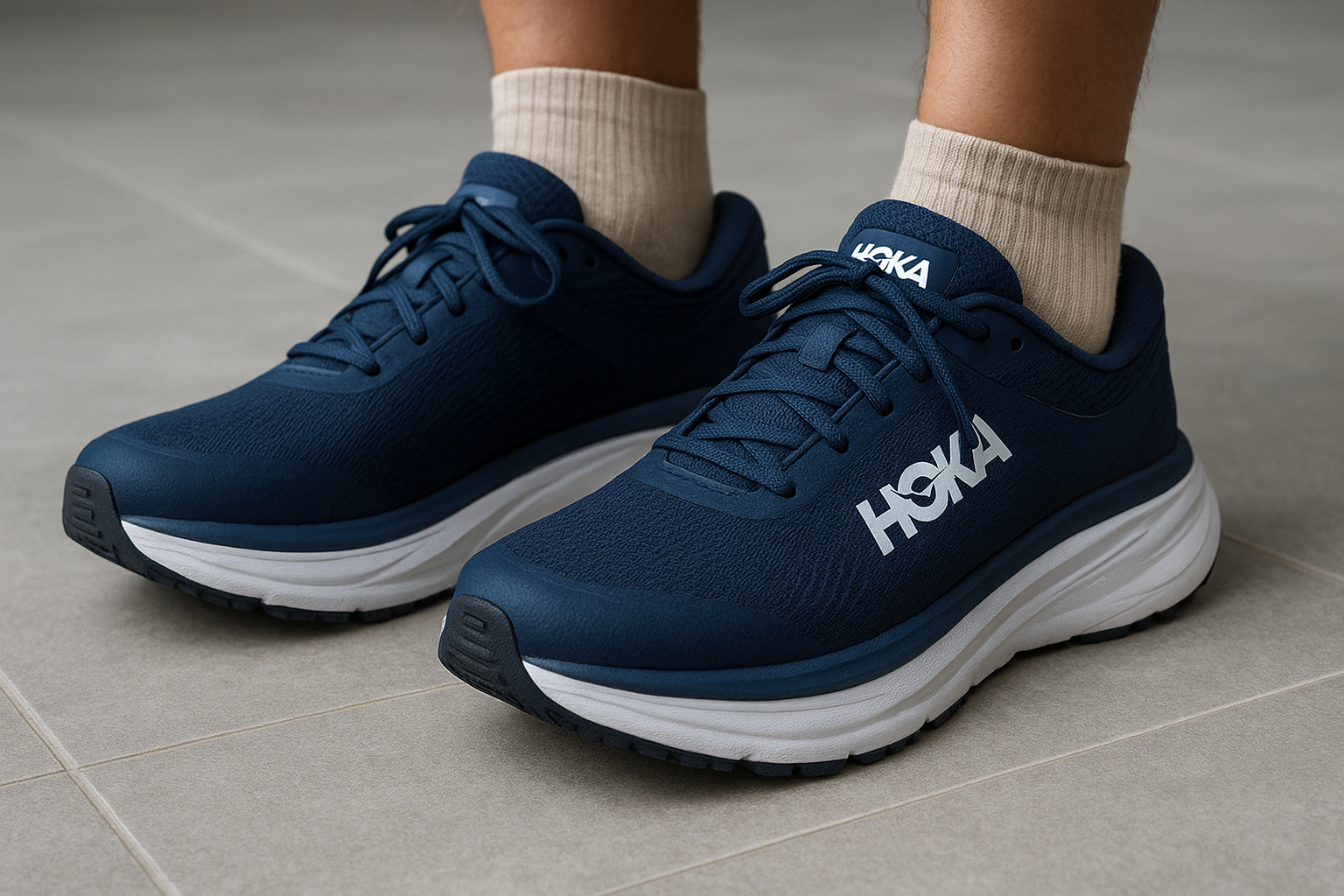
5. HOKA Bondi SR: best slip-resistant walking shoe
HOKA built the Bondi SR specifically for people who spend their shifts standing on tile, concrete, or wet floors, think nurses, restaurant workers, and warehouse staff. The "SR" stands for slip-resistant, and this isn’t a marketing label; it’s a rubber outsole compound tested against real workplace slip standards. If your job keeps you upright for eight to twelve hours a day, this shoe solves two problems at once: arch fatigue and traction.
Why it stands out for arch support
The Bondi SR carries over HOKA’s signature oversized midsole, but the SR version firms up the arch zone compared to the standard Bondi. A rockered sole design shifts your weight forward through each step, which takes pressure off the arch during the push-off phase, a detail that matters if you’re standing in place more than you’re actually walking. The early-stage meta-rocker also reduces the strain on your plantar fascia by controlling how your foot rolls from heel to toe.
If you’re on your feet all shift on hard floors, the arch support only matters if the sole also keeps you from slipping.
Who it’s best for
This shoe is built for people whose job requires long standing hours on slick or hard surfaces rather than dedicated fitness walking.
- Nurses, servers, and retail workers on 10-hour shifts
- Anyone managing arch pain plus a slip-and-fall risk at work
- Patients with plantar fasciitis who stand more than they walk
Price range
The Bondi SR retails between $155 and $165, which is on the higher end but reflects the specialized outsole and HOKA’s thick cushioning stack. It comes in standard and wide widths, though not extra-wide, which is worth noting if you’ve needed that sizing in other HOKA models. Given the demanding use case, most patients replace these every 300 to 350 miles since standing all day wears down cushioning faster than walking does.
A podiatrist’s take
We recommend the Bondi SR most often to patients whose jobs, not their weekend hobbies, are causing their arch pain, and it sits alongside our other shoes for long standing shifts. It’s not the shoe we’d suggest for someone training for a 10K, but for standing-heavy occupations, it consistently reduces the end-of-shift arch fatigue our patients describe.
6. Skechers Arch Fit 2.0: best podiatrist-certified support
Skechers built the Arch Fit 2.0 around a contoured footbed shaped like an orthotic, then went through actual podiatric testing to back up the claim. That certification matters because plenty of brands slap "arch support" on the box without any clinical validation behind it. This shoe closes that gap and lands squarely among the best walking shoes for plantar fasciitis and arch fatigue at a mid-range price point.
Why it stands out for arch support
Instead of a firm medial post like the New Balance 860v15, the Arch Fit 2.0 uses a molded podiatrist-certified footbed with a deep heel cup and raised arch contour built directly into the midsole. This shape cradles the arch from underneath rather than correcting motion from the side, which feels noticeably different on your first walk. The Goga Mat cushioning layered on top softens impact without flattening out the arch contour beneath it, so the support holds up even after miles of wear.
A certified footbed shape does more for chronic arch pain than a stiff post ever will.
Who it’s best for
This shoe suits people whose arch pain comes from the shape of their foot itself, not from excess inward rolling.
- Walkers with high or rigid arches that ache under standard insoles
- Patients managing chronic plantar fasciitis without significant overpronation
- Anyone who’s tried orthotic inserts before and liked the contoured feel
Price range
The Arch Fit 2.0 retails between $85 and $100, making it one of the more affordable certified arch support shoes on this list. Skechers offers standard, wide, and extra-wide options, and the removable footbed lets you swap in a custom orthotic if your podiatrist prescribes one. Most patients get 350 to 400 miles before the footbed cushioning compresses and needs replacing.
A podiatrist’s take
We like recommending this shoe to patients who respond well to contoured arch support insoles during a gait exam but aren’t ready for a full custom orthotic. It’s a solid bridge option, though patients with true overpronation typically still need a firmer stability shoe alongside it.
7. Kuru Quantum 2: best for plantar fasciitis
Kuru built its entire brand around one problem: heel pain from plantar fasciitis. The Quantum 2 is the brand’s flagship walking shoe, and it’s the pick we reach for when a patient’s pain is concentrated specifically at the heel rather than spread across the whole arch. If your first steps out of bed feel like stepping on glass, this shoe targets that exact complaint, and it appears again in our roundup of shoes for plantar fasciitis heel pain.
Why it stands out for arch support
Kuru’s patented KURUSOLE technology flexes independently under the heel, moving with your foot instead of staying rigid like a standard midsole. This heel-cradling design absorbs the shock that typically triggers plantar fascia flare-ups during the heel-strike phase of your stride. The shoe also includes a firm, contoured arch shank that keeps your foot from flattening out once the heel has done its job of absorbing impact.
When morning heel pain is your main complaint, a shoe built to flex around the heel does more than one that only supports the arch.
Who it’s best for
This shoe suits walkers whose pain is centered at the heel and along the plantar fascia rather than general arch fatigue.
- Patients with diagnosed or suspected plantar fasciitis
- Walkers who describe sharp pain with their first steps each morning
- Anyone who’s tried generic cushioned sneakers without heel-specific relief
Price range
The Quantum 2 retails between $150 and $160, placing it in the mid-to-premium range. Kuru offers standard and wide widths, though sizing runs slightly different from mainstream brands, so trying them on in person helps. Most patients report 350 to 400 miles of reliable heel support before the KURUSOLE cushioning starts to soften.
A podiatrist’s take
We recommend the Quantum 2 specifically for patients whose imaging or exam points to plantar fascia inflammation rather than general arch collapse. It’s not a general-purpose stability shoe, and patients with significant overpronation often need something firmer alongside it. But for isolated heel pain, especially in the first few weeks after a plantar fasciitis diagnosis, it’s one of the more targeted options we’ve seen actually change how patients describe their morning pain.
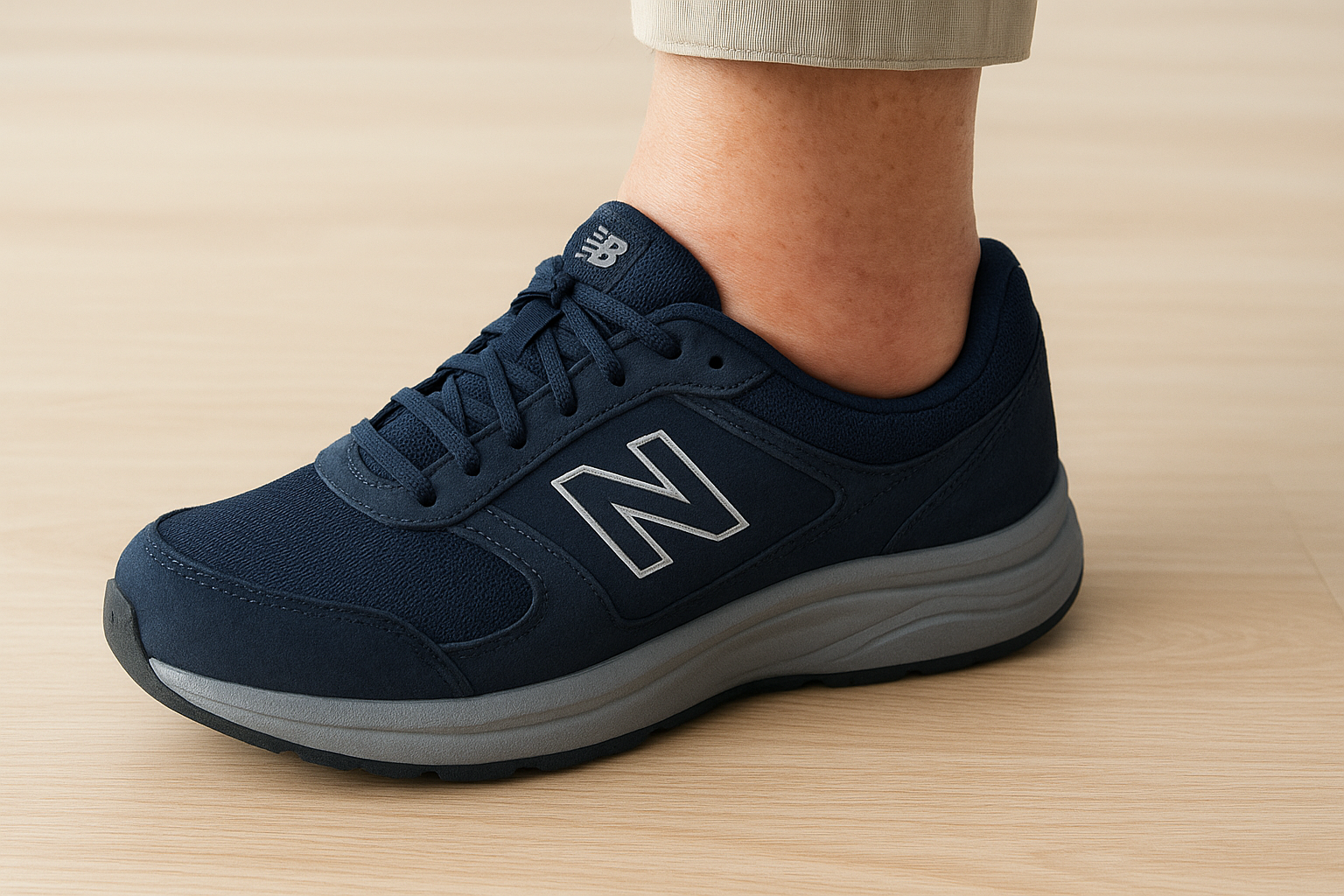
8. New Balance Ellipse: best for wide or swollen feet
New Balance designed the Ellipse for feet that don’t fit the standard shoe mold, whether that’s from diabetic swelling, lymphedema, or just a naturally wide forefoot that’s been squeezed into narrow toe boxes for years. This shoe skips the tapered, athletic silhouette most walking shoes use and instead builds outward from the arch, giving swollen or wide feet room without sacrificing the structure that keeps arches from collapsing. It’s one of the few models on this list we actively recommend to patients managing chronic swelling alongside foot pain.
Why it stands out for arch support
The Ellipse uses a wide, stable platform paired with a roomy toe box that lets toes splay naturally instead of getting compressed, which matters because compressed toes often shift weight onto the arch in ways that worsen pain. A firm heel counter and molded arch shape keep support intact even as the shoe accommodates extra volume from swelling. The seamless interior construction also reduces friction points, which matters for patients with diabetic neuropathy who can’t always feel developing pressure sores, the same reason we often suggest velcro shoes for swollen, sensitive feet.
A wide shoe only helps swollen feet if the arch support doesn’t disappear along with the extra room.
Who it’s best for
This shoe suits patients whose foot volume changes throughout the day or who’ve struggled to find wide arch support shoes that don’t feel loose everywhere else.
- Patients with diabetic foot swelling or lymphedema
- Walkers who need extra-wide or extra-depth sizing
- Anyone managing bunions alongside arch pain
Price range
The Ellipse retails between $110 and $125, with width options ranging from standard through extra-wide, including depth-friendly sizing for custom orthotic inserts. Most patients get 350 to 400 miles before the midsole needs replacing, though daily swelling fluctuations may mean sizing up seasonally.
A podiatrist’s take
We recommend the Ellipse often in our diabetic foot care program, where fit and skin protection matter as much as arch structure. Patients with significant swelling typically still need custom diabetic shoe fittings, but the Ellipse is a strong off-the-shelf starting point.
9. Brooks Beast GTS 26: best for heavier walkers
Brooks built the Beast GTS 26 for walkers who need more than the standard stability platform can deliver, specifically bigger frames and higher-impact strides that wear through regular shoes fast. This isn’t the Adrenaline GTS 25 scaled up with marketing language; it’s a genuinely reinforced chassis designed to hold its shape under more body weight and more force per step. If you’ve bottomed out the support in lighter stability shoes within a few months, this is the model built to last.
Why it stands out for arch support
The Beast GTS 26 pairs Brooks’ GuideRails system with a wider base and a firmer, higher-density foam than the Adrenaline line uses. That extra density matters because heavier walkers generate more downward and inward force with each step, and softer foams simply compress too fast to keep the arch stable through a full stride. The reinforced medial post sits deeper in the midsole here, resisting collapse even under sustained loading rather than just cushioning the impact.
A shoe only supports your arch as long as its foam holds its shape, and the Beast GTS 26 is built to resist compression longer than lighter stability shoes.
Who it’s best for
This shoe suits walkers over roughly 200 pounds, or anyone who’s noticed their usual stability shoes flatten out and lose support within a few weeks.
- Heavier walkers needing a durable, high-density midsole
- Patients whose current shoes compress unevenly within 2 to 3 months
- Anyone combining significant body weight with moderate overpronation
Price range
The Beast GTS 26 retails between $150 and $160, with standard, wide, and extra-wide sizing available. Given the reinforced construction, most patients get 500 to 550 miles before replacement, which is longer than most shoes on this list and helps offset the higher upfront cost.
A podiatrist’s take
We recommend the Beast GTS 26 specifically when a patient’s weight is accelerating shoe breakdown faster than their arch pain is improving. It’s not a shoe for casual walkers who don’t need the extra density, but for the right body type, it holds structural support noticeably longer than standard stability models.
10. Nike Structure Plus: best everyday stability shoe
Nike rebuilt the Structure line from the ground up with the Structure Plus, adding real arch guidance to a shoe that’s long been a general fitness staple. This isn’t a specialty medical shoe, and that’s the point: it’s built for people who want a normal-looking sneaker that happens to include genuine stability features without the orthopedic look some patients try to avoid. If you split your time between walking, errands, and light gym work, this is the most versatile pick on this list.
Why it stands out for arch support
The Structure Plus uses a firmer foam wrapped around the midfoot combined with a wider platform than earlier Structure models, which keeps the arch from collapsing during longer walks. Nike added a plastic support shank under the arch itself, a feature missing from most of their non-stability shoes, and it noticeably reduces the flex point where feet with weaker arches tend to break down mid-stride.
A shoe that looks athletic but still stabilizes your arch closes the gap between medical support and everyday footwear.
Who it’s best for
This shoe suits walkers with mild arch fatigue who want one pair that works for walking, standing, and casual exercise without switching shoes throughout the day.
- Walkers who split time between errands, light workouts, and standing
- Patients with mild pronation who don’t need aggressive correction
- Anyone who prioritizes an athletic look alongside real support
Price range
The Structure Plus retails between $120 and $140, with standard and wide widths available depending on colorway. Most patients get 400 to 450 miles before the midsole starts to soften noticeably.
A podiatrist’s take
We recommend this shoe to patients whose arch pain is mild and inconsistent rather than chronic. It won’t outperform the Adrenaline GTS 25 or 860v15 for moderate overpronation, but for someone who just needs a dependable, everyday upgrade from unsupportive sneakers, it delivers noticeably better results than standard running shoes without feeling like a medical device.
11. How to choose arch support shoes for your feet
Start with your arch type before you look at brand names or price tags. Stand barefoot on a hard floor after a shower and check how much of your foot’s inner edge touches the ground. A high, rigid arch barely touches at all and usually needs cushioning that absorbs shock without adding stiffness. A flat or low arch leaves a nearly complete footprint and typically needs firmer medial support, like the structured post found in the New Balance 860v15 or the other flat feet arch support options we recommend, to stop the foot from rolling inward.
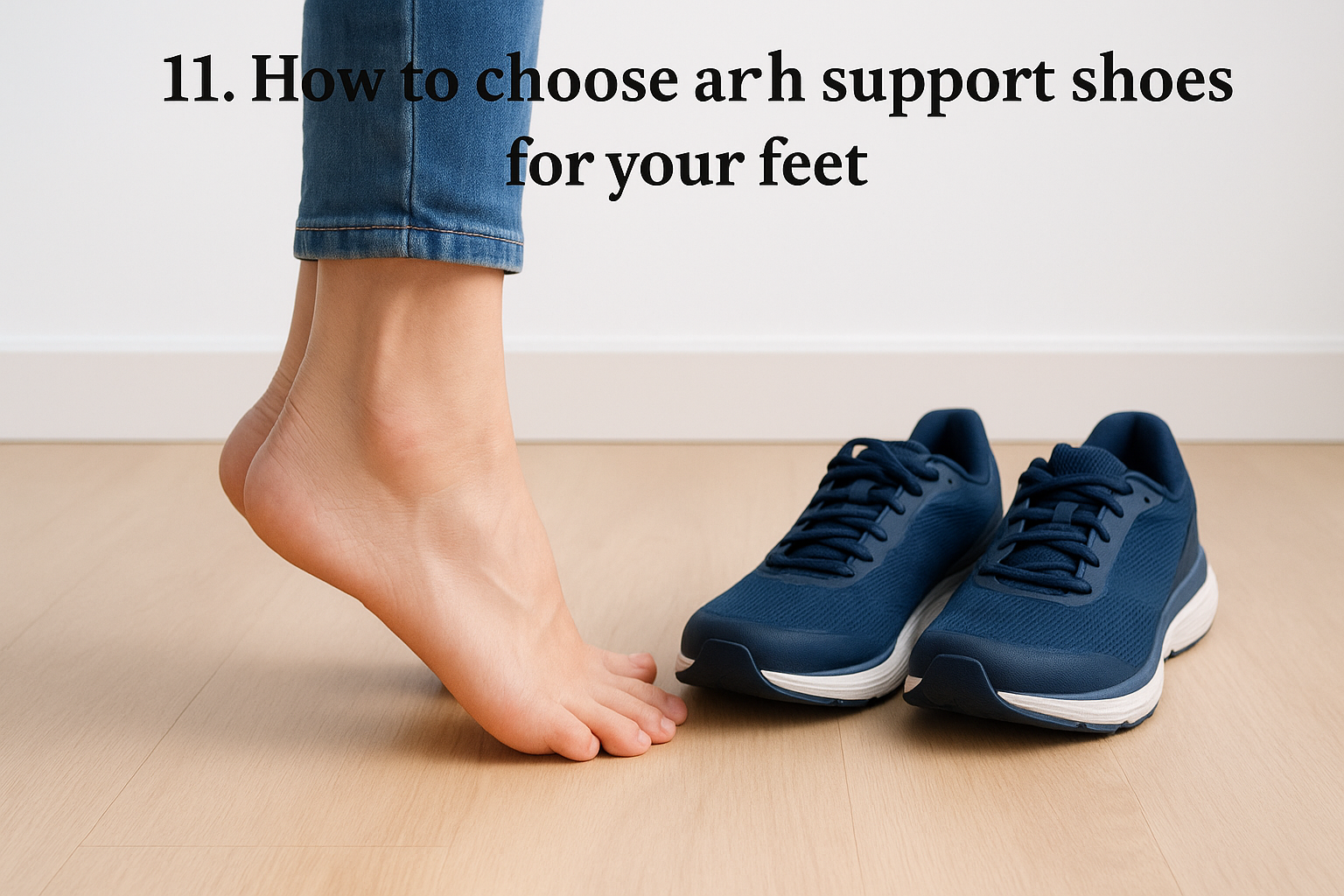
Next, think about how you actually load your feet during the day. Someone standing on concrete for ten hours needs different support than someone walking three miles on a treadmill. Match the shoe’s job to your job.
The best walking shoe isn’t the one with the highest rating online, it’s the one built for how your specific foot moves.
Use this quick checklist before buying:
- Arch type: high, neutral, or flat, tested barefoot
- Primary use: standing all shift, walking for exercise, or errands
- Width needs: standard, wide, or extra-wide, especially if you have bunions or swelling
- Existing diagnosis: plantar fasciitis, overpronation, or diabetic neuropathy
- Orthotic compatibility: removable insole if you already use a custom insert
Fit matters as much as the technology inside the shoe. Try shoes on later in the day when feet are slightly swollen, and always walk around the store rather than just standing at the mirror, which is the same approach we cover in our guide to fitting a walking shoe properly. Replace arch support shoes for walking every 300 to 500 miles depending on your body weight and how much time you spend on your feet daily, since compressed foam stops supporting your arch long before the shoe looks worn out. If you’re unsure which arch type you have or your pain hasn’t improved after switching shoes, a short gait analysis at a podiatry office answers the question faster than trial and error with a stack of returned shoe boxes.
12. Common foot conditions that need extra arch support
Plantar fasciitis tops the list of conditions we see walk through our doors, and it’s often the reason patients start searching for arch support shoes for walking in the first place. The plantar fascia, a thick band of tissue running along the bottom of your foot, gets inflamed from repetitive strain, and shoes with a rigid arch shank or heel-specific cushioning, like the Kuru Quantum 2, take pressure off that tissue with every step, though it helps to know the difference between arch pain and plantar fasciitis first.
Flat feet and posterior tibial tendon dysfunction go hand in hand more often than patients expect. When the tendon that holds up your arch weakens, the arch collapses gradually, sometimes over years, and firmer stability shoes with a structured medial post become necessary rather than optional. Left untreated, this condition can progress to adult-acquired flatfoot, where collapsed arch treatment options sometimes extend to bracing or surgery.
High, rigid arches cause a different problem: too little contact with the ground concentrates impact on the heel and ball of the foot, one of several problems high arches cause over time. Cushioned shoes with flexible midsoles absorb that shock instead of transferring it straight up your leg.
Your arch type doesn’t just affect comfort, it determines which injuries you’re most likely to develop over time.
Bunions and hammertoes shift weight distribution across your foot, which often overloads the arch even when the arch itself is structurally normal. A roomy toe box paired with arch support, like what you’ll find in the New Balance Ellipse and other shoes that accommodate bunions, prevents that compensation pattern.
Diabetic neuropathy deserves its own mention because reduced sensation means patients often can’t feel developing pressure points until skin breakdown occurs. This is why our diabetic foot care program pairs footwear built for diabetic feet and arch support recommendations with regular skin checks, not just shoe fittings.
Overuse injuries like shin splints tied to arch mechanics and stress fractures also trace back to poor arch support more often than patients realize, since misalignment at the foot travels straight up the kinetic chain to your shins and knees.
When shoes alone aren’t enough for your foot pain
The right pair from this list solves a lot of problems, but shoes have limits. If you’ve switched to a supportive shoe and your arch pain still lingers after a few weeks, that’s usually a sign of something a shoe can’t fix on its own, whether it’s a structural issue like posterior tibial tendon dysfunction or nerve involvement that needs a real diagnosis. We see this pattern constantly in our Central Virginia clinics: patients who tried three or four pairs of arch support shoes for walking before ever getting a gait analysis, losing months they didn’t need to lose.
Don’t wait until the pain becomes chronic. A quick exam tells you whether you need a custom orthotic, physical therapy, or just a better-fitting shoe than the one you’re wearing now. See a Central Virginia podiatrist today and let our team figure out what’s actually going on with your feet.