

Plantar fasciitis is one of the most common causes of heel pain, and once it starts affecting your daily routine, you want answers fast. But when you search for podiatrist or orthopedic for plantar fasciitis, the results can leave you more confused than when you started. Both types of doctors treat foot conditions, so how do you know which one is right for your situation?
The short answer: either can help, but they bring different training, perspectives, and treatment approaches to the table. A podiatrist focuses exclusively on the foot and ankle, while an orthopedic surgeon covers the entire musculoskeletal system. That distinction matters more than you might think, especially when it comes to getting an accurate diagnosis and a treatment plan that actually works. At Achilles Foot and Ankle Center, our podiatric specialists treat plantar fasciitis daily across our Central Virginia locations, from first-step morning pain to stubborn cases that haven’t responded to rest or stretching.
This article breaks down the key differences between podiatrists and orthopedic doctors, explains what each brings to plantar fasciitis treatment, and helps you decide which specialist makes the most sense for your specific symptoms. We’ll also cover when you might need to see one over the other, and when it doesn’t matter much at all.
What plantar fasciitis is and why it hurts
The plantar fascia is a thick band of connective tissue that runs along the bottom of your foot, connecting your heel bone to your toes. When that tissue gets overloaded through repeated stress, small tears develop and the surrounding area becomes inflamed. The result is sharp heel pain, typically worst during your first steps in the morning or after extended periods of sitting or rest.
The plantar fascia absorbs a significant amount of force with every step you take, which is why this condition tends to develop gradually over time rather than from a single injury.
The anatomy behind the pain
Your plantar fascia works like a shock-absorbing bowstring that supports the arch of your foot with every step. Tight calf muscles, flat feet, high arches, and long hours on hard surfaces all increase the strain placed on this tissue. Micro-tears form at the point where the fascia attaches to the heel bone, which is why the pain almost always centers at the heel rather than the arch or toes.

Several factors increase your risk of developing this condition:
- Sudden jumps in activity level or mileage
- Wearing footwear that lacks arch support or cushioning
- Standing on hard floors for extended work shifts
- Carrying extra body weight, which adds direct load to the fascia with each step
Why the pain follows a pattern
Most people with this condition notice pain is worst right after rest because the fascia shortens and tightens while you’re off your feet. The moment you stand and take those first steps, the tissue stretches again and pulls at the already-inflamed attachment point on your heel bone.
Whether you’re deciding between a podiatrist or orthopedic for plantar fasciitis, this predictable pain pattern helps your doctor confirm the diagnosis quickly and rule out other causes. Activity often warms the tissue enough to reduce discomfort temporarily, but that does not mean the injury is resolving on its own without proper treatment.
Podiatrist vs orthopedic: the real differences
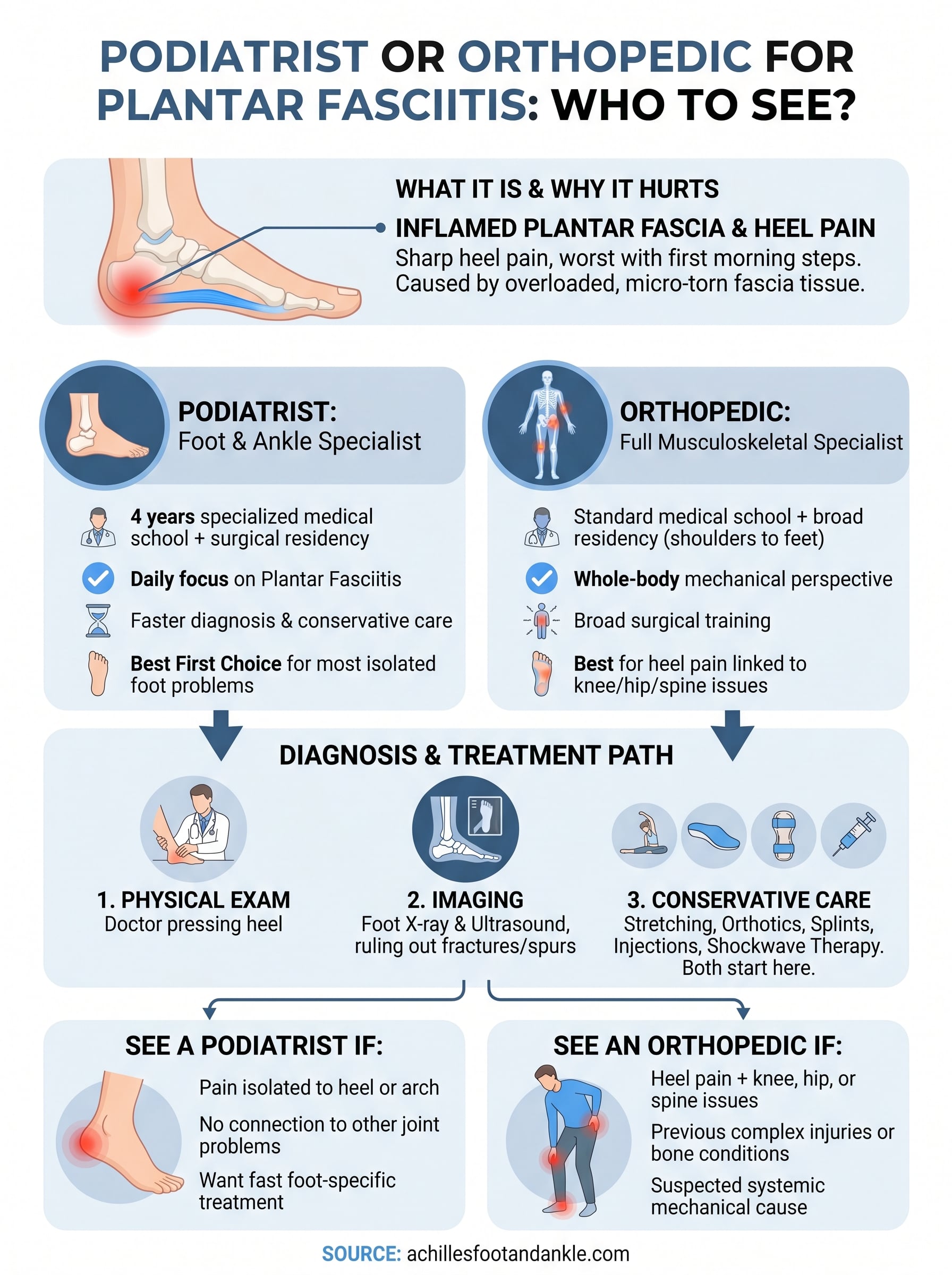
A podiatrist completes four years of podiatric medical school followed by a surgical residency focused entirely on the foot and ankle. An orthopedic doctor attends standard medical school and then completes a residency covering the entire musculoskeletal system, from shoulders to spine to hips to feet. That difference in focus shapes how each provider approaches your heel pain.
What a podiatrist specializes in
Podiatrists spend their entire careers treating foot and ankle conditions, which means they see plantar fasciitis constantly. This concentrated clinical experience translates directly into faster diagnosis and a deeper familiarity with the full range of conservative treatments. When you’re weighing a podiatrist or orthopedic for plantar fasciitis, that daily specialization gives podiatrists a practical edge for most foot-specific problems.
A podiatrist typically performs more plantar fasciitis evaluations in a single month than many general orthopedic surgeons see in a year.
What an orthopedic doctor offers
Orthopedic surgeons bring a whole-body mechanical perspective, which matters when your heel pain connects to a hip or knee alignment issue. Their broad surgical training covers a wider range of reconstructive options if your case eventually requires an operating room. For isolated foot problems without a systemic cause, this broader scope rarely changes the treatment plan you’d receive.
Who to see for plantar fasciitis in most cases
For most people dealing with heel pain, a podiatrist is the right first call. When you’re weighing a podiatrist or orthopedic for plantar fasciitis, the podiatrist’s exclusive focus on the foot and ankle gives them a natural advantage for diagnosing and managing this specific condition. You’ll spend less time explaining your symptoms and more time working through a targeted treatment plan.
Most plantar fasciitis cases resolve with conservative care, and podiatrists are trained to deliver exactly that without unnecessary referrals or delays.
When a podiatrist is the better fit
A podiatrist handles the full range of treatment options for plantar fasciitis, from custom orthotics and corticosteroid injections to advanced procedures like shockwave therapy. If your pain is isolated to the heel or arch and has no clear connection to a broader joint or structural issue elsewhere in your body, starting with a podiatrist gets you to the right treatment faster.
When orthopedic makes more sense
You should consider an orthopedic specialist if your heel pain comes alongside knee, hip, or spine problems that may share a mechanical root cause. An orthopedic doctor is also worth seeing if a previous injury or bone condition appears to be driving your symptoms beyond a straightforward fascia issue.
What your doctor will do at the visit
Whether you choose a podiatrist or orthopedic for plantar fasciitis, the initial appointment follows a predictable structure. Your doctor will start by asking detailed questions about your pain location, daily activity level, and when symptoms first appeared before moving to a hands-on examination.
The physical exam
Your doctor will press directly on the bottom of your heel to locate the point of maximum tenderness, which typically sits at the attachment point of the fascia on the heel bone. Flexing your foot upward during the exam tests whether that movement reproduces or intensifies your symptoms, which gives your doctor strong diagnostic confidence even without imaging.

This press-and-flex assessment, combined with your symptom history, is often enough to confirm plantar fasciitis on the first visit.
Imaging when needed
X-rays help rule out stress fractures or heel spurs that may be contributing to your pain. An ultrasound can visualize the fascia directly and confirm tissue thickening or tearing at the attachment site. Both tools help your doctor build a clearer picture of what’s happening inside your foot.
Your doctor may also check your gait and foot mechanics during the visit to identify biomechanical factors, such as overpronation or a tight Achilles tendon, that are adding load to the fascia with every step you take.
Treatments that work and what to avoid
Whether you’re deciding between a podiatrist or orthopedic for plantar fasciitis, both specialists typically start with conservative options before moving to anything more involved. Stretching the calf muscles and plantar fascia daily remains the most evidence-supported starting point, and most patients see meaningful improvement within six to eight weeks when they stay consistent with it.
Treatments that consistently deliver results
Your doctor will likely combine multiple conservative approaches at once rather than testing one at a time. This stacked method speeds recovery and lowers the risk of the condition becoming chronic.
- Calf and arch stretching performed before your first step each morning
- Custom orthotics to correct the biomechanical load placed on the fascia
- Night splints that keep the fascia gently stretched while you sleep
- Corticosteroid injections to reduce significant inflammation
- Shockwave therapy for cases that haven’t improved after several months of conservative care
Stretching before your first morning step is one of the highest-impact habits you can build to reduce plantar fasciitis pain over time.
What to avoid doing
Walking barefoot on hard floors and pushing through sharp pain during workouts are the two habits that prevent most cases from healing properly. Avoid worn-out or unsupportive footwear entirely during recovery, including flat sandals and old athletic shoes, since they strip away the shock absorption your fascia needs to repair.
Next steps for heel pain relief
Heel pain from plantar fasciitis rarely gets better on its own if you keep doing the same things that triggered it. The decision between a podiatrist or orthopedic for plantar fasciitis comes down to your specific situation, but in most cases, a podiatrist with dedicated foot and ankle experience gives you the fastest route to an accurate diagnosis and a treatment plan built around your daily life.
Start by tracking when your pain occurs, how long it lasts, and what makes it worse. Bring that information to your appointment so your doctor can move straight into evaluation rather than spending time reconstructing your symptom history. Avoid pushing through sharp heel pain during workouts or walking barefoot on hard surfaces while you wait for your visit.
If you’re in Central Virginia and ready to get your heel pain assessed by a specialist, book a same-day appointment at Achilles Foot and Ankle Center today.