

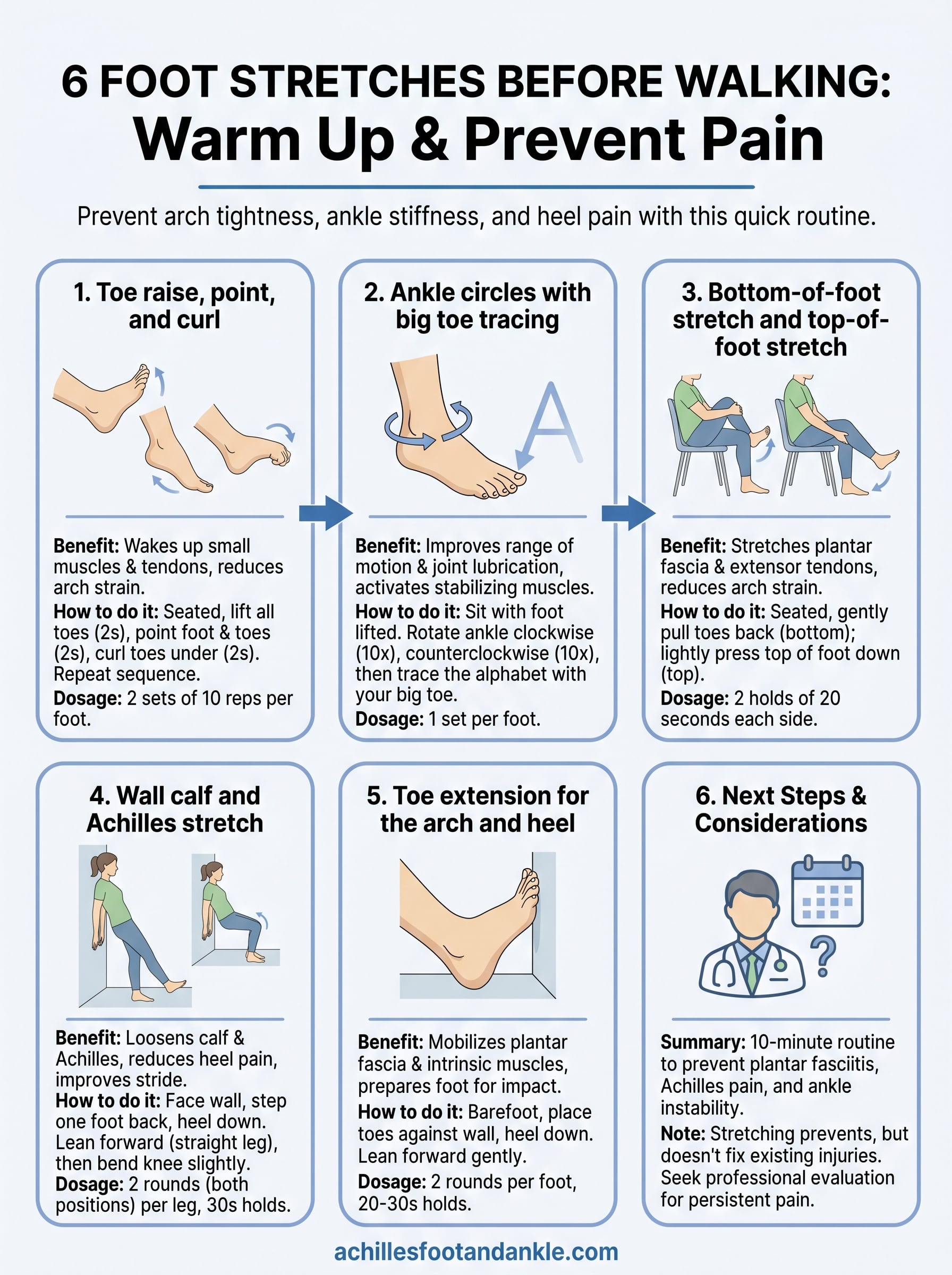
Most people lace up their shoes and head straight out the door, no warm-up, no prep, nothing. Then ten minutes into their walk, they feel tightness in their arches, stiffness in their ankles, or a sharp sting in their heels. A few simple foot stretches before walking can prevent most of these issues by increasing blood flow, loosening tight muscles, and preparing your joints for repetitive impact.
At Achilles Foot and Ankle Center, our podiatrists across Central Virginia see these preventable problems daily, plantar fasciitis flare-ups, Achilles tendon strain, and ankle instability that often start with skipping a basic warm-up. We know from thousands of patient cases that a short stretching routine makes a real difference in how your feet feel during and after a walk.
Below, you’ll find six targeted stretches that take just a few minutes and address the areas most prone to walking-related pain. Whether you walk for exercise, commute on foot, or simply want to move without discomfort, these stretches will help you start each walk on the right foot.
1. Toe raise, point, and curl
This three-part movement wakes up the small muscles and tendons running along the top and bottom of your foot. Most people never actively engage these muscles in daily life, so they tend to be stiff first thing in the morning or after sitting for long periods.
What it helps and why it matters before walking
The toe raise, point, and curl targets intrinsic foot muscles, the plantar fascia, and the toe flexors and extensors all in one sequence. Strengthening and mobilizing these structures before a walk reduces strain on your arch and lowers your risk of plantar fasciitis, a common complaint among regular walkers.
Stiff toe joints are one of the earliest signs of arch fatigue, and addressing them before you walk keeps the entire kinetic chain moving efficiently.
How to do it
Sit in a chair with both feet flat on the floor. Move through each position one at a time, keeping the movements slow and deliberate:
- Toe raise: Keep your heels down and lift all ten toes off the floor. Hold for two seconds.
- Toe point: Lift your entire foot and point your toes forward and down toward the floor. Hold for two seconds.
- Toe curl: Keep your heel down and curl your toes under as if gripping the floor. Hold for two seconds.
Complete all three positions in sequence without rushing. Control each position rather than snapping between them.
Dosage and progression
Start with two sets of ten repetitions on each foot. As the sequence gets easier over two to three weeks, add a third set or hold each position for four seconds. This small increase in time under tension builds real strength in the intrinsic muscles without overloading them.
Mistakes to avoid and modifications
The most common mistake is rushing through the curl phase. Moving too quickly often substitutes the calf muscles for the smaller foot muscles you actually want to activate. Slow down and feel the work along the sole of your foot.
For anyone with a hammer toe or bunion, skip the point position and focus only on the raise and curl. Both movements still deliver most of the warm-up benefit without stressing a deformed or sensitive joint.
2. Ankle circles with big toe tracing
Ankle circles combined with big toe tracing give your ankle joint full range of motion while also activating the smaller stabilizing muscles that control foot placement during each stride. Together, they make one of the most effective foot stretches before walking because they address both the joint and the surrounding tissue in one movement.
What it helps and why it matters before walking
This stretch improves synovial fluid distribution in the ankle joint, which lubricates the cartilage and reduces friction when you push off the ground with each step. Restricted ankle mobility is a direct cause of compensations higher up the chain, including knee and hip pain on longer walks.
Improving ankle range of motion before a walk reduces your risk of rolling an ankle, especially on uneven terrain.
How to do it
Sit with one foot lifted off the floor. Slowly rotate your ankle through a full circle, going clockwise ten times and then counterclockwise ten times. Then trace each letter of the alphabet with your big toe, keeping the movement deliberate and controlled throughout.
Dosage and progression
Start with one set per foot and add a second set after two weeks if your ankles still feel stiff after the first round. Alphabet tracing naturally varies the movement pattern, so you get progressive challenge built directly into the exercise itself.
Mistakes to avoid and modifications
Avoid letting your whole lower leg rotate with the movement. The motion should come from your ankle, not your knee. If you have a recent ankle sprain, reduce the circle size until the joint feels stable before working back to a full range.
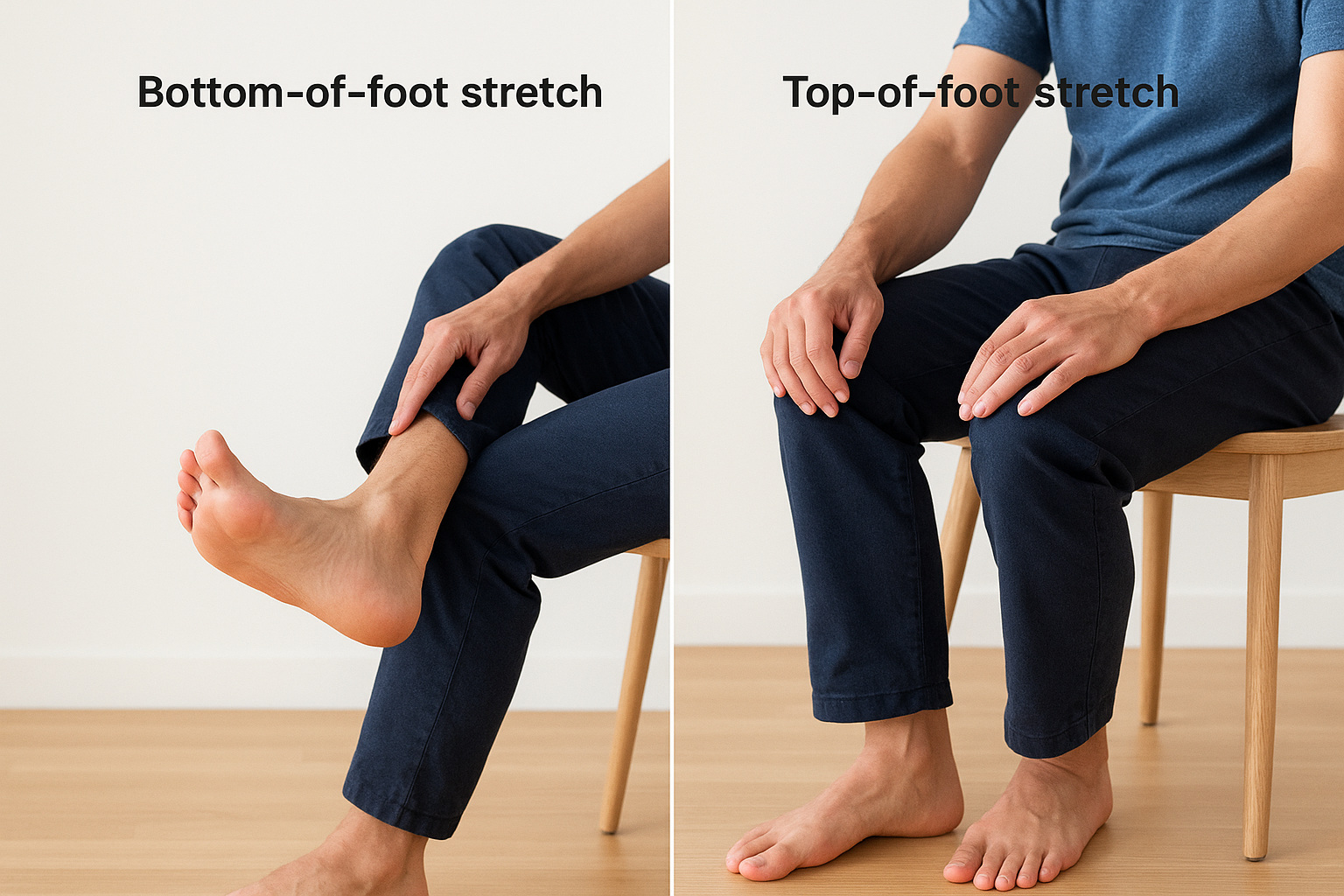
3. Bottom-of-foot stretch and top-of-foot stretch
This pairing targets two sides of the same structure. The bottom stretch works the plantar fascia and the connective tissue running from your heel to your toes, while the top stretch loosens the extensor tendons and dorsal foot muscles. Together, they form one of the most balanced foot stretches before walking you can do in under two minutes.
What it helps and why it matters before walking
Both stretches counteract the tightening that happens during rest and prolonged shoe wear. Your plantar fascia shortens when you’re off your feet, and the top of your foot stiffens from hours in shoes. Opening both sides before a walk reduces arch strain and lowers the risk of dorsal foot pain on longer routes.
Stretching both sides of the foot creates balanced tension across the arch, protecting it from the repetitive stress of each step.
How to do it
Sit in a chair and cross one foot over your opposite knee. Work through both stretches one at a time, holding each position for 20 seconds before switching sides.
- Bottom-of-foot stretch: Pull your toes gently back toward your shin until you feel steady tension along the sole.
- Top-of-foot stretch: Point your toes downward and lightly press the top of your foot against the floor.
Dosage and progression
Perform two holds of 20 seconds on each side for both stretches. After two weeks, extend each hold to 30 seconds to deepen the connective tissue response as your flexibility improves.
Mistakes to avoid and modifications
Avoid pulling your toes back too forcefully on the bottom-of-foot stretch. A firm but gentle pull is all you need to feel the stretch. If floor contact is uncomfortable, perform the top-of-foot stretch seated by tucking your toes under your foot on a folded towel instead.
4. Wall calf and Achilles stretch
The calf complex and Achilles tendon absorb significant force with every step you take, and tight calves are one of the leading contributors to both plantar fasciitis and Achilles tendinopathy. Adding this stretch to your foot stretches before walking routine takes less than two minutes and addresses one of the most overlooked sources of walking-related pain.
What it helps and why it matters before walking
This stretch targets both the gastrocnemius and the soleus, the two muscles that feed into your Achilles tendon. Tight tissue in this chain pulls on the heel bone, increasing tension along the plantar fascia with every push-off. Loosening this area before you walk reduces heel pain and improves your stride length without extra effort.
A tight Achilles tendon shortens your effective stride and forces your arch to compensate, which accelerates fatigue on longer walks.
How to do it
Stand facing a wall with both hands placed flat against it for support. Step one foot back and keep that heel pressed firmly into the floor. Lean forward gently until you feel a steady pull through your calf and into your heel. Hold for 30 seconds, then bend the back knee slightly to shift the stretch lower into the soleus and Achilles for another 30 seconds. Switch sides.
Dosage and progression
Perform two rounds per leg, completing both the straight-knee and bent-knee positions each time. After three weeks, increase each hold to 45 seconds as your tissue tolerance improves.
Mistakes to avoid and modifications
Avoid letting your back heel lift during the stretch, as this removes tension from exactly where you need it. If you have Achilles pain currently, reduce your forward lean and skip the bent-knee position until the acute discomfort settles.
5. Toe extension for the arch and heel
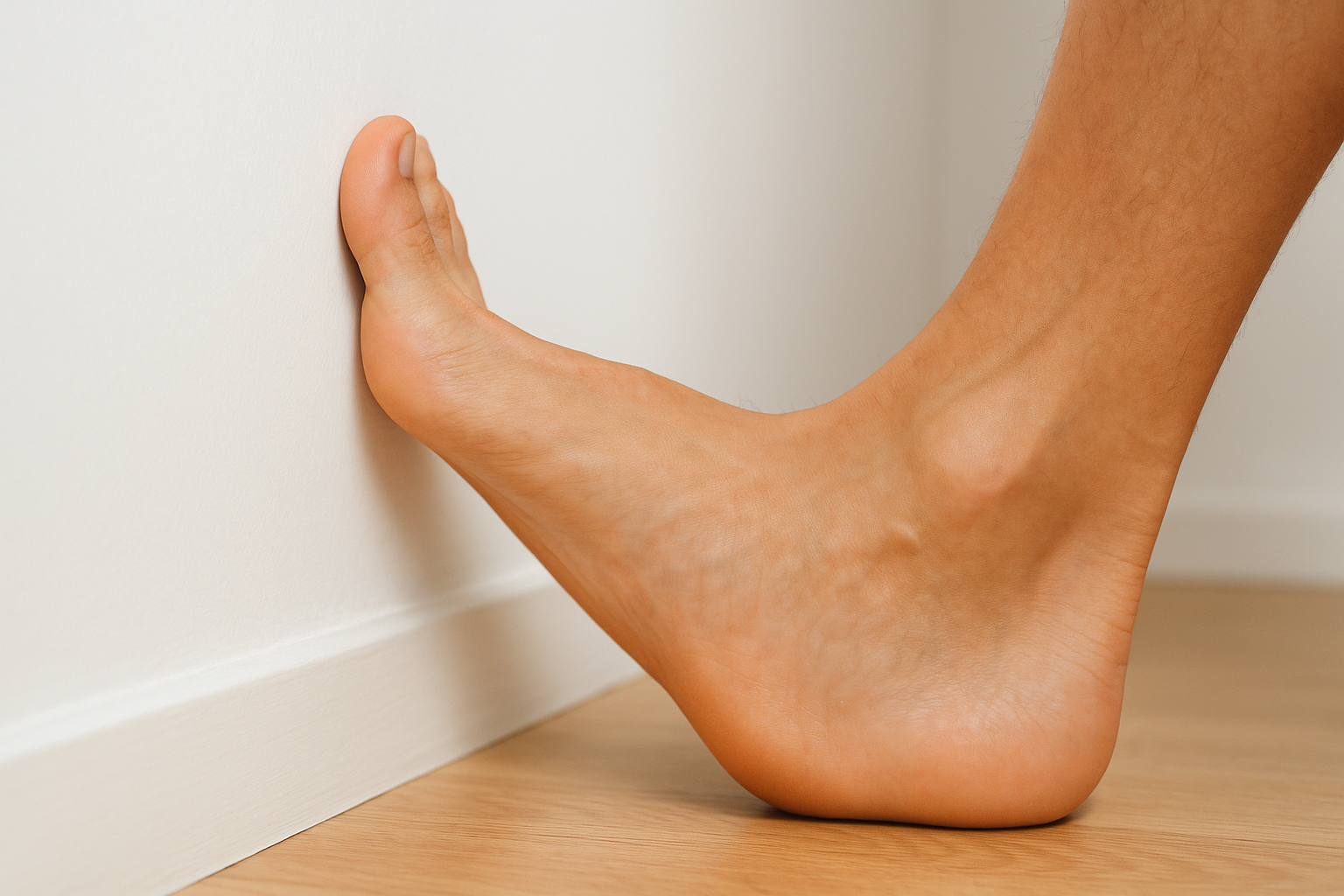
Toe extension is one of the most underused foot stretches before walking, but it directly targets the structures that take the most punishment during a walk. This movement stretches the plantar fascia from a different angle than a standard arch stretch, pulling on the connective tissue between your heel and the ball of your foot where impact forces concentrate.
What it helps and why it matters before walking
This stretch mobilizes the plantar fascia and the intrinsic arch muscles simultaneously by placing them under controlled tension before they absorb repeated ground contact. Walkers who experience heel pain in the first few steps of a walk often have restricted fascia that this stretch can directly address.
Extending your toes upward before walking pre-loads the plantar fascia in the same direction it gets stressed during push-off, which reduces the shock of that first step.
How to do it
Stand barefoot and place the toes of one foot against a wall, keeping your heel on the floor. Lean your body gently forward until you feel a clear stretch through your arch and heel. Hold steady without bouncing. Switch sides and repeat on the other foot.
Dosage and progression
Hold each side for 20 to 30 seconds and perform two rounds per foot. After two weeks, increase to three rounds if your arch still feels tight after the first two.
Mistakes to avoid and modifications
Avoid bending your standing knee during the stretch, as this reduces the tension in the plantar fascia. If wall contact feels uncomfortable, use a rolled towel under your toes on the floor to achieve the same angle.
Next steps for happier walks
These six foot stretches before walking take less than ten minutes combined, and that small investment pays off every time you step out the door. Consistent stretching reduces your risk of plantar fasciitis, Achilles pain, and ankle instability, three of the most common conditions our podiatrists treat across Central Virginia. Start with two or three stretches from this list and build the full routine over a week so your body adapts without feeling overloaded.
Stretching handles prevention, but it does not fix an existing injury. If you are already dealing with heel pain, arch tightness, or recurring ankle problems, a stretching routine alone will not resolve the underlying cause. Your feet carry your full body weight across thousands of steps each day, and they deserve proper evaluation when something feels wrong. Schedule a same-day appointment with one of our foot and ankle specialists and get a clear answer on what your feet actually need.