You pushed through your run, hit your miles, and now your feet are paying the price. If you’re searching for how to treat sore feet from running, you’re not alone, it’s one of the most common complaints we hear from runners at every level. The good news is that most post-run soreness responds well to simple, at-home strategies when you act quickly.
At Achilles Foot and Ankle Center, our podiatrists treat runners across Central Virginia for everything from mild soreness to stress fractures. That clinical experience gives us a clear picture of what actually works and what’s a waste of your time. We also know when soreness crosses the line into something that needs professional attention.
Below, you’ll find five practical tips to relieve sore feet after a run, speed up your recovery, and help you figure out whether your pain is routine or a sign of something more serious. Each tip is backed by what we see work in our clinics every day.
1. Get a podiatrist exam to rule out injury
The first step in figuring out how to treat sore feet from running is confirming what you’re actually dealing with. General muscle fatigue after a long run feels different from the pain caused by a stress fracture, plantar fasciitis, or nerve irritation. Skipping a professional evaluation and treating the wrong problem will slow your recovery and could turn a manageable issue into a serious setback.
Signs your soreness may be more than normal fatigue
Routine post-run soreness typically fades within 24 to 48 hours and doesn’t limit your ability to walk or bear weight normally. Pain that sharpens with each step, worsens after rest, or concentrates in one specific spot is a different story. Swelling, bruising, numbness, or tingling alongside that pain are clear signals that something beyond muscle tiredness is happening.
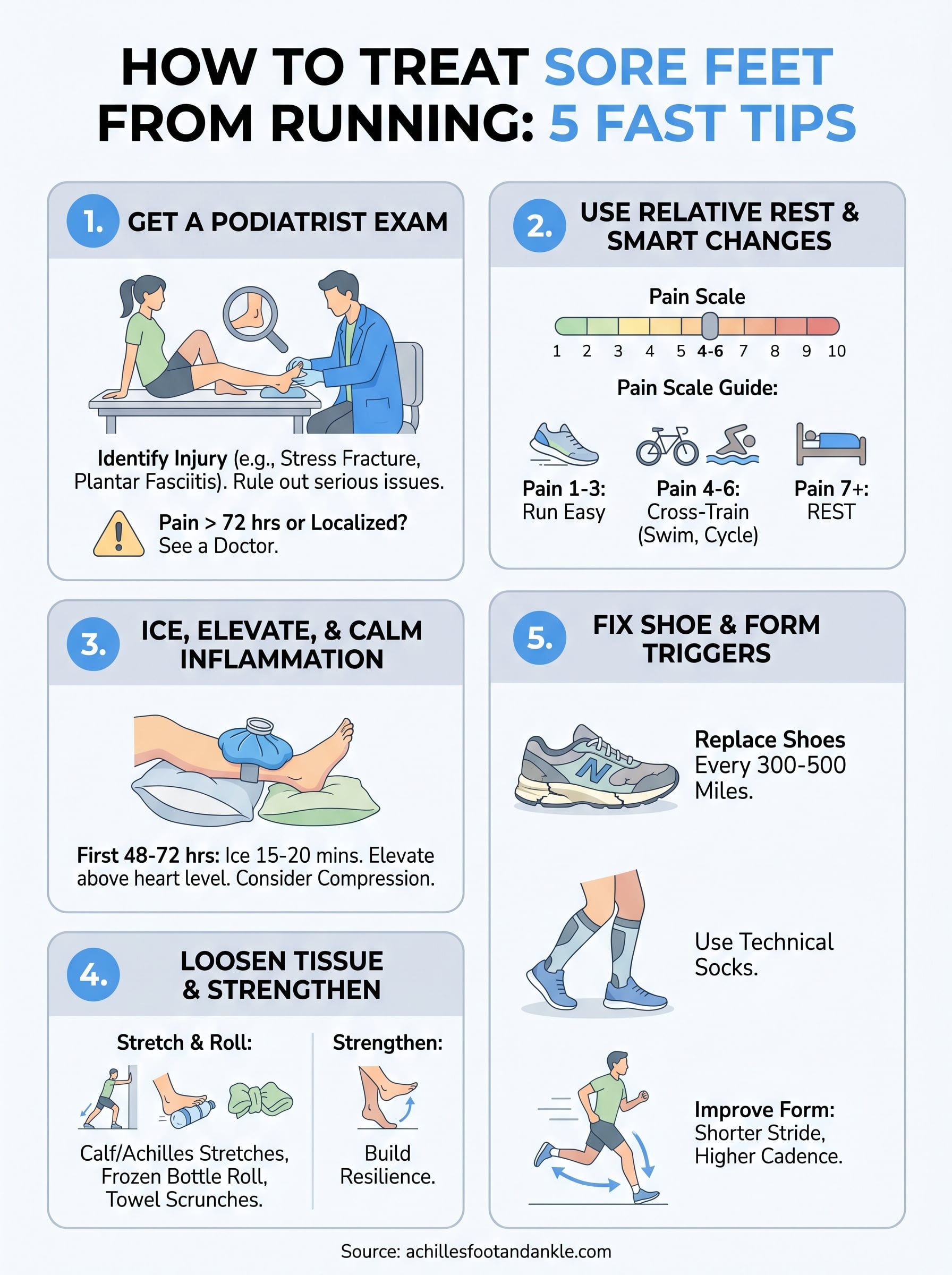
If your foot pain disrupts your normal walking pattern or persists beyond 72 hours, schedule a podiatrist appointment before your next run.
What a foot and ankle exam can diagnose in runners
A podiatrist can identify stress fractures, plantar fasciitis, Achilles tendinopathy, Morton’s neuroma, and posterior tibial tendon dysfunction through physical examination and on-site imaging. These conditions often look like simple soreness in the early stages, but each one needs a specific treatment approach. Continuing to run through a stress fracture, for example, risks turning a small crack into a full break.
Treatments a podiatrist may recommend for faster relief
Depending on your diagnosis, your provider may recommend custom orthotics, corticosteroid injections, physical therapy, or a structured offloading protocol. Some runners benefit from ultrasound-guided treatments or a walking boot to protect the injured tissue while it heals. Your treatment plan will address the actual cause of your pain, not just the symptoms.
What to do while you wait for your appointment
Until your appointment, stop high-impact activity and switch to low-impact movement like swimming or cycling to maintain fitness. Ice the sore area for 15 to 20 minutes after any activity, keep your foot elevated when sitting or resting, and avoid pushing through sharp or localized pain that gets worse with each mile.
2. Use relative rest and smart training changes
Rest doesn’t mean stopping all movement. Relative rest means cutting back the activity that caused your soreness while staying active in ways that spare your feet. This approach is key to how to treat sore feet from running without losing the fitness base you’ve worked to build.
How to tell if you should run, modify, or stop
Use a simple 1 to 10 pain scale to guide your decision before each run. Here’s a quick framework:
- Pain 1 to 3 that fades within a mile: run easy at reduced effort
- Pain 4 to 6: skip the run and cross-train instead
- Pain 7 or above: rest fully for 48 to 72 hours
A simple 48 to 72 hour reset plan for sore feet
Pull back from running for two to three days and focus on sleep, hydration, and light walking to keep blood flowing to the tissue. This short window lets inflammation calm down without a meaningful drop in your fitness level.
A 48 to 72 hour break rarely costs you fitness, but skipping it often costs you weeks.
Low-impact cardio options that keep fitness up
Swap your runs for activities that maintain your aerobic base without pounding your feet. Good options include:
- Swimming or pool running (near-zero foot impact)
- Stationary or outdoor cycling
- Rowing machine
How to return to running without flaring symptoms
Start back at 50 percent of your usual mileage on a softer surface like grass or a rubberized track.
When two or three easy sessions feel completely pain-free, increase your distance by 10 percent each week until you reach your normal training load.
3. Ice, elevate, and calm inflammation the right way
Managing inflammation quickly is one of the most effective steps in how to treat sore feet from running. Cold, elevation, and compression work best when you apply them in the right order and at the right time, not randomly after the fact.
When cold helps and when it does not
Ice works well during the first 48 to 72 hours after a run when your tissue is actively inflamed. After that window, heat or contrast therapy often works better for stiff, tight muscles. Avoid icing an area that already feels numb, has poor circulation, or shows open skin.
A quick icing routine after runs
Wrap a bag of crushed ice or a gel pack in a thin cloth and apply it to the sore area for 15 to 20 minutes. Repeat up to three times in the first day for best results.
Never apply ice directly to your skin, a simple cloth barrier prevents tissue damage.
Swelling control with elevation and compression
Keep your foot elevated above heart level for at least 20 minutes after icing. A compression sock or wrap (15 to 20 mmHg) reduces fluid buildup and speeds tissue recovery, especially if you notice visible puffiness around the ankle or arch.
Over-the-counter pain relief basics and safety notes
Ibuprofen or naproxen sodium can reduce both pain and inflammation short term. Follow the label dosing exactly, and avoid taking them on an empty stomach. If you need daily OTC pain relief for more than five days, see a podiatrist to find the underlying cause.
4. Loosen tight tissue with rolling and stretching
Tight calves and stiff plantar fascia are among the most common drivers of foot pain in runners. Releasing that tension is a direct and practical part of how to treat sore feet from running without relying solely on rest or medication.
Fast self-check for calf and arch tightness
Stand barefoot and do a slow single-leg calf raise on each foot. If one side feels noticeably stiffer or you can’t rise as high, that calf is pulling extra load onto your arch and heel. A quick standing stretch that reproduces your foot pain confirms tight tissue is contributing to your soreness.
Calf and Achilles stretches that reduce foot load
Press both hands against a wall, step one foot back, and hold a straight-knee calf stretch for 30 seconds, then repeat with a slight knee bend to target the Achilles more directly. Do three rounds per side after every run, and again before bed on recovery days.
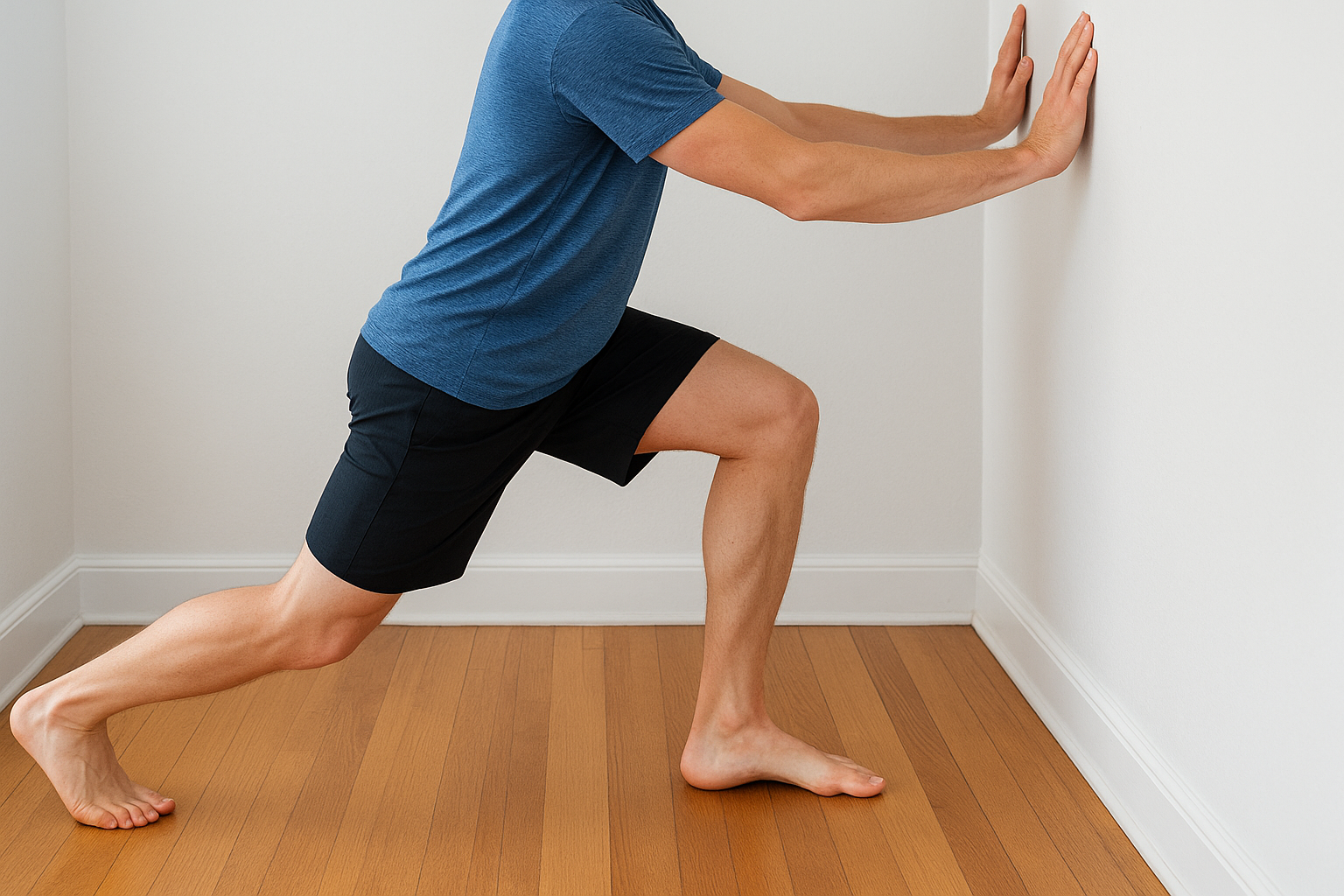
Consistent daily stretching reduces plantar fascia tension more effectively than occasional deep-stretching sessions.
Foot rolling and massage techniques for sore spots
Roll the arch of your foot over a frozen water bottle or lacrosse ball for two minutes per foot. Apply moderate pressure and pause on tender spots for five to ten seconds rather than rolling past them continuously.
Foot strengthening moves that protect your next run
Towel scrunches and single-leg calf raises build the intrinsic foot muscles that absorb impact on each stride. Do two sets of 15 repetitions on each foot three times per week to build lasting resilience.
5. Fix the common shoe and running form triggers
Your gear and your movement patterns cause more foot soreness than most runners realize. Addressing these two factors is a practical part of how to treat sore feet from running that often gets overlooked when people focus only on recovery techniques.
How to spot worn-out shoes and bad fit fast
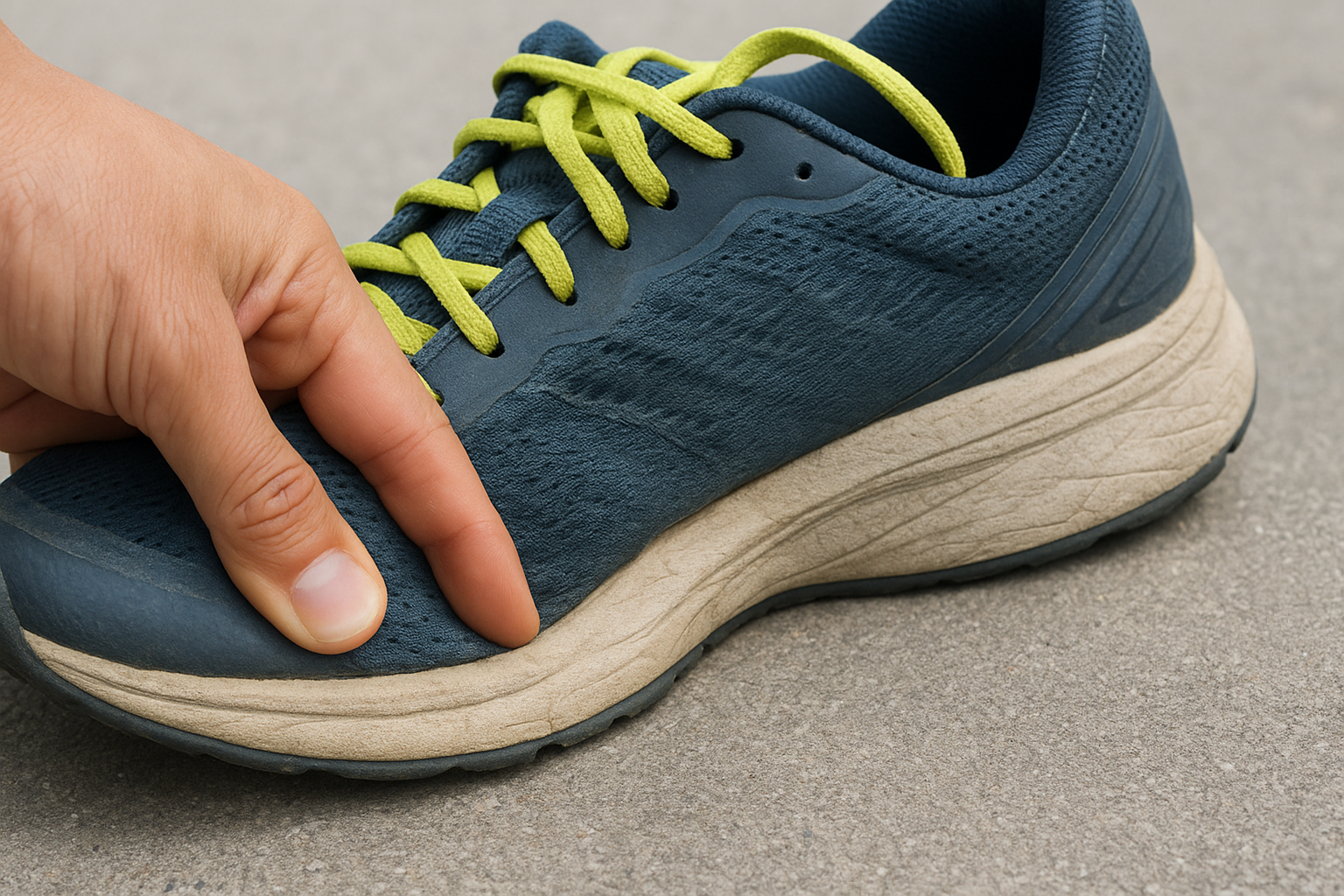
Check the midsole of your running shoe by pressing your thumb firmly into the foam. If it compresses easily and doesn’t spring back, the cushioning is gone regardless of how the outsole looks. Most running shoes last 300 to 500 miles, so track your mileage and replace them on schedule.
Lacing, socks, and friction fixes for hotspots and blisters
Switch to moisture-wicking running socks (no cotton) and check that your laces aren’t cinched too tight across the midfoot. A heel-lock lacing pattern stops your foot from sliding forward and reduces blister-causing friction on longer runs.
A single sock switch from cotton to technical fabric can eliminate most blister problems without any other change.
When arch support, inserts, or orthotics make sense
Over-the-counter inserts help mild arch fatigue, but custom orthotics from a podiatrist correct biomechanical issues that generic insoles can’t address. If store-bought inserts haven’t reduced your foot pain after two to three weeks, a custom fitting is worth pursuing.
Form cues that reduce pounding without a full gait overhaul
Shorten your stride slightly and aim to land with your foot closer to under your hips rather than far out in front. Increasing your cadence by five to ten steps per minute reduces the ground impact force your feet absorb on every run.
Your plan for pain-free runs
Knowing how to treat sore feet from running is the first step, but acting on that knowledge consistently is what actually keeps you running. Start with the basics: relative rest, ice, elevation, and stretching handle most post-run soreness within a few days. Fix your shoes and form to cut off the triggers that created the problem in the first place.
When soreness lingers past 72 hours, sharpens in one spot, or keeps coming back despite your best efforts, a podiatrist evaluation is the smartest move you can make. Most running-related foot conditions respond well to early treatment and get harder to resolve the longer you wait. Your feet carry you through every mile, and they deserve specific, professional attention when home strategies are not enough.
Book a same-day appointment at Achilles Foot and Ankle Center and get a clear answer on what is causing your foot pain.