

Running puts your feet through repeated impact, friction, and moisture, a combination that leads straight to blisters, black toenails, and stubborn calluses if you’re not proactive. Good foot care for runners isn’t just about comfort; it’s about keeping you on the road without painful setbacks that sideline your training.
At Achilles Foot and Ankle Center, our podiatrists treat runners across Central Virginia who come in with problems that were entirely preventable. From weekend joggers nursing their first blister to experienced marathoners dealing with recurring toenail damage, we see the same patterns, and the same mistakes, over and over. The good news? A few simple habits can eliminate most of these issues before they start.
Below, you’ll find six practical tips to protect your feet, prevent blisters, and keep your runs pain-free. These aren’t vague suggestions, they’re the same strategies our specialists recommend to patients every day, grounded in what actually works for active feet that log serious miles.
1. Get a runner-focused foot exam early
Most runners skip straight to buying shoes and building their training schedule. That’s a mistake. Your foot structure, gait mechanics, and existing skin conditions all determine where friction will develop during a run, and correcting those factors early is far easier than treating blisters mid-training cycle.
Why this prevents blisters
Blisters form where repeated friction meets a vulnerable area, and your feet have unique pressure points based on how you pronate, supinate, or strike the ground. A runner-focused foot exam maps those points before they become hot spots. A podiatrist can identify structural issues like bunions, hammertoes, or flat arches that shift weight onto areas not built to handle heavy mileage, making blisters and calluses almost inevitable without some form of intervention.
Catching structural problems before your training volume increases gives you time to address them with orthotics or targeted exercises rather than managing the fallout mid-race.
What to address during the visit
Bring your current running shoes to the appointment. Wear patterns on the sole tell a podiatrist a lot about how your foot loads during a stride. Also mention your weekly mileage, terrain type, and any recurring hot spots from previous runs. The more specific you are about where pain or irritation occurs, the more useful the visit becomes.
Skin and nail health belong on the agenda too. Your podiatrist can check for early signs of fungal infection, skin breakdown, or nail damage that you might have written off as normal wear. These conditions weaken the skin’s ability to tolerate friction, which means blisters form faster and take longer to heal.
When to see a podiatrist
An injury isn’t required to book an appointment. Scheduling a visit before starting a new training cycle or ahead of a major race gives you time to act on any recommendations. Returning to running after a break, switching to a new terrain, or ramping up mileage all create elevated blister risk that a proactive exam can significantly reduce.
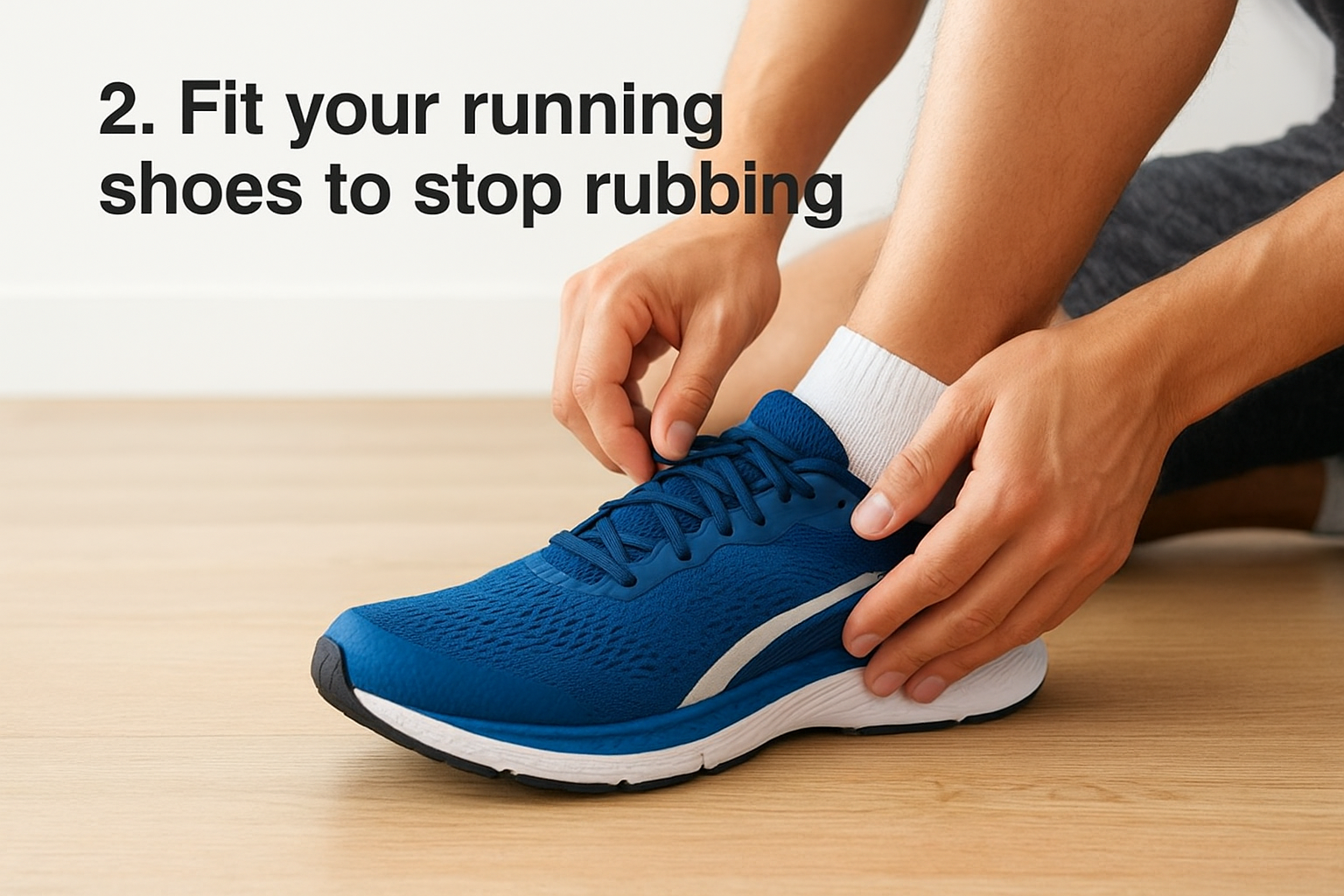
2. Fit your running shoes to stop rubbing
Proper foot care for runners begins with shoes that actually fit your foot, not just your size on a tag. When your shoe is too tight, too loose, or the wrong shape, friction concentrates in predictable spots like your heel, little toe, and the ball of your foot on every single stride.
Why this prevents blisters
Shoes that fit correctly keep your foot stable inside the upper, which reduces the sliding that generates heat and eventually breaks down skin. A wide enough toe box stops your toes from pressing into fabric on every stride, protecting the areas most prone to blistering during longer efforts.
Buying shoes in the evening, when your feet are slightly swollen, gives you a more accurate fit for how they’ll feel mid-run.
How to do it on run day and off days
Get fitted at a specialty running store where staff can measure both feet while you’re standing and observe your gait. Buy shoes with a thumb’s width of space between your longest toe and the end of the shoe. Before committing to long runs, wear new shoes around the house for a few days to confirm the fit holds up under real conditions.
When to see a podiatrist
If you keep getting blisters in the same spot despite switching shoes, your foot structure is likely directing pressure there regardless of what’s on your foot. A podiatrist can fit you with custom orthotics that redistribute load and make a well-fitted shoe work far better for your specific mechanics.
3. Pick socks and lacing that reduce friction
Shoes get most of the attention, but your sock choice and lacing pattern are just as critical for blister prevention. The right combination keeps your foot locked in place and cuts the surface-level friction that tears skin apart over miles.
Why this prevents blisters
Blisters form when two surfaces repeatedly rub against each other, and socks sit right in the middle of that equation. Cotton holds moisture, which softens skin and makes it fail faster. Running-specific socks made from synthetic or merino wool blends wick sweat away and lower friction against your foot. Lacing also matters because a loose shoe lets your foot slide forward, concentrating pressure on your toes and heel with every footfall.
Switching from cotton to moisture-wicking socks is one of the simplest changes you can make for better foot care for runners.
How to do it on run day and off days
Choose double-layer or padded running socks in the right thickness for your shoe fit. For lacing, try the heel-lock technique: thread the lace through the top eyelets to create a loop on each side, then cross them through each loop before tying. This approach anchors your heel firmly and stops forward foot slide on downhills.
When to see a podiatrist
If recurring hot spots appear in the same location despite changing your socks and lacing, your foot may be shifting due to a structural issue rather than a gear problem. A podiatrist can recommend a targeted orthotic or padding solution to address the root cause.
4. Use lubricant and tape before hot spots start
Lubricant and athletic tape are two of the most underused tools in foot care for runners. Applying them takes under two minutes before a run, and that small investment can prevent hours of pain from blisters that form mid-route when you have no way to treat them.
Why this prevents blisters
Friction builds heat, and lubricant reduces that friction between your skin and sock before the heat can damage tissue. Tape adds a physical barrier over areas already prone to rubbing, absorbing the mechanical stress before your skin takes it. Together, they create a two-layer defense that holds up even on longer, sweatier efforts when skin becomes softer and more vulnerable to breakdown.
How to do it on run day and off days
Apply a body glide stick or petroleum-based lubricant to your heels, toes, and any spot that has blistered in the past before you lace up. For tape, use thin kinesiology tape or moleskin cut to match the shape of your hot spot, then press the edges down firmly so they don’t peel mid-run. On off days, moisturize those same areas to keep your skin supple and better able to handle friction when you head back out.
Tape bonds far better to dry, clean skin than to skin treated with lotion right before your run.
When to see a podiatrist
If you find yourself taping the same spots before every single run, your foot mechanics are directing consistent pressure there that gear alone won’t fix. A podiatrist can identify the structural root cause and address it with custom orthotics or targeted padding so you stop managing symptoms and start preventing them.
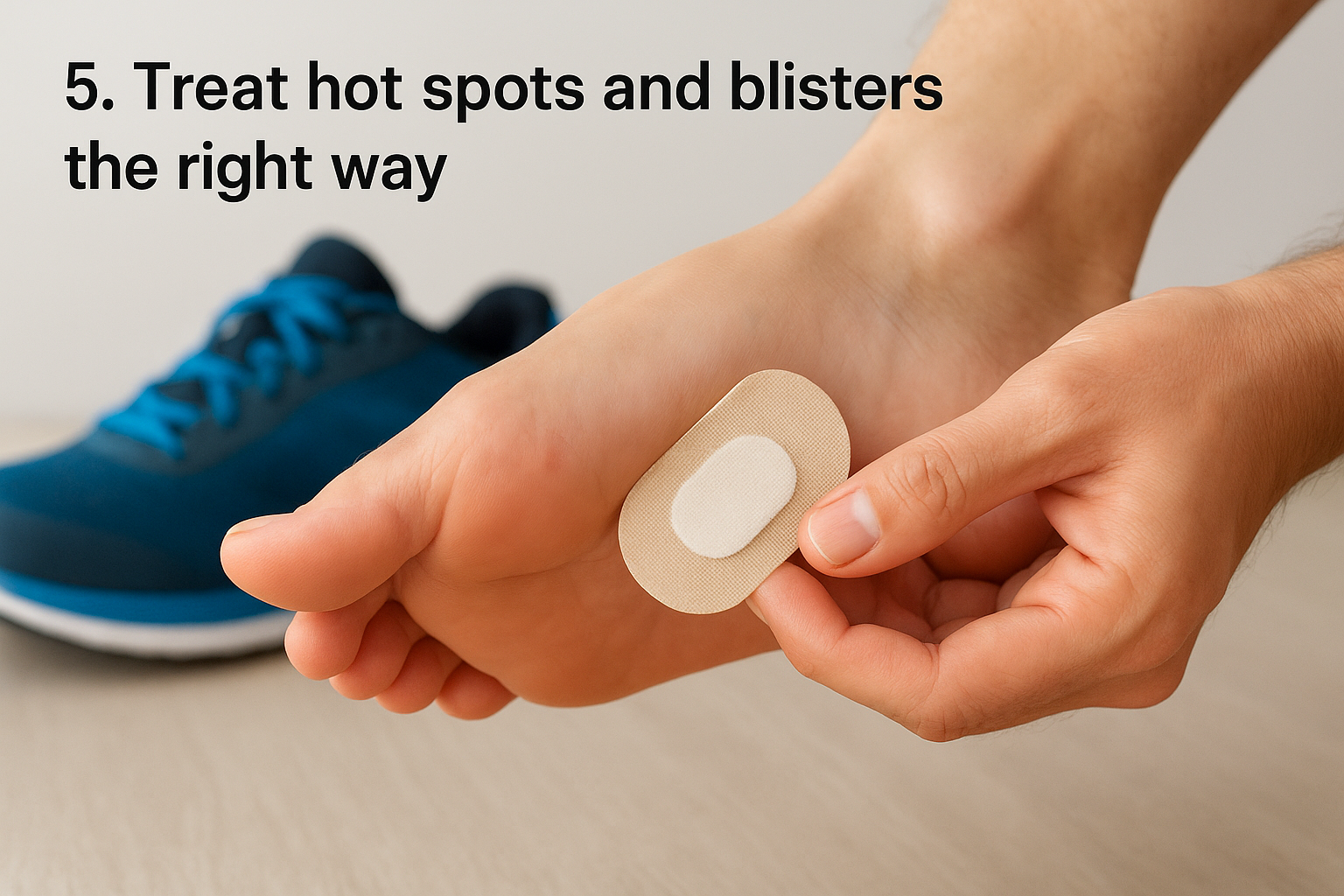
5. Treat hot spots and blisters the right way
Even with the best preparation, hot spots and blisters sometimes appear mid-run. Knowing how to respond quickly and correctly limits damage and gets you back to training faster.
Why this prevents blisters
Treating a hot spot the moment you feel it stops the friction cycle before fluid builds beneath the skin. Waiting until a full blister forms leaves the area far more vulnerable to tearing and infection, which extends recovery time and increases the chance of missing training days.
A hot spot addressed within the first few minutes rarely becomes a blister that sidelines you for days.
Early intervention keeps the skin intact and dramatically shortens healing time compared to dealing with an open wound on the road.
How to do it on run day and off days
When a hot spot forms mid-run, stop and apply a bandage or moleskin patch from your kit before continuing. At home, keep blisters intact whenever possible since the overlying skin acts as a natural barrier against infection.
Clean the area with mild soap, apply antibiotic ointment, and cover it with a sterile bandage. Change the dressing daily and watch for increasing redness, warmth, or swelling.
When to see a podiatrist
Solid foot care for runners includes knowing when home treatment isn’t enough. See a podiatrist if a blister shows signs of infection such as pus, red streaking, or fever.
Recurring blisters in the same spot also warrant a visit, since repeated skin breakdown in one location usually points to an underlying mechanical problem that gear and bandages alone won’t fix.
6. Manage calluses, nails, and foot fungus proactively
Calluses, nails, and fungal infections affect how your foot handles friction in ways that go far beyond appearance. Each condition changes the surface structure of your skin, creating rough edges, soft patches, or tender spots that catch on your sock and generate concentrated heat with every stride you take.
Why this prevents blisters
Thick, uneven calluses develop hard ridges that act like sandpaper against your sock, creating focused friction exactly where you don’t want it. Nails that are too long press into adjacent toes or the front of your shoe on every downhill stride. Fungal infections like athlete’s foot soften and weaken skin significantly, making it far more likely to tear under the same conditions that healthy skin handles without issue.
Keeping your nails trimmed and your calluses smooth is one of the most overlooked aspects of foot care for runners.
How to do it on run day and off days
Before runs, confirm your nails sit just below your toe tip and aren’t jagged at the edges. On off days, use a pumice stone after a shower to smooth uneven calluses while skin is still soft. Apply antifungal powder or spray between your toes if you notice any itching, peeling, or discoloration developing.
When to see a podiatrist
Some calluses and nail conditions require professional debridement to resolve safely without cutting into healthy tissue underneath. A podiatrist can also diagnose and treat persistent fungal infections that over-the-counter products haven’t cleared after several weeks of consistent use.
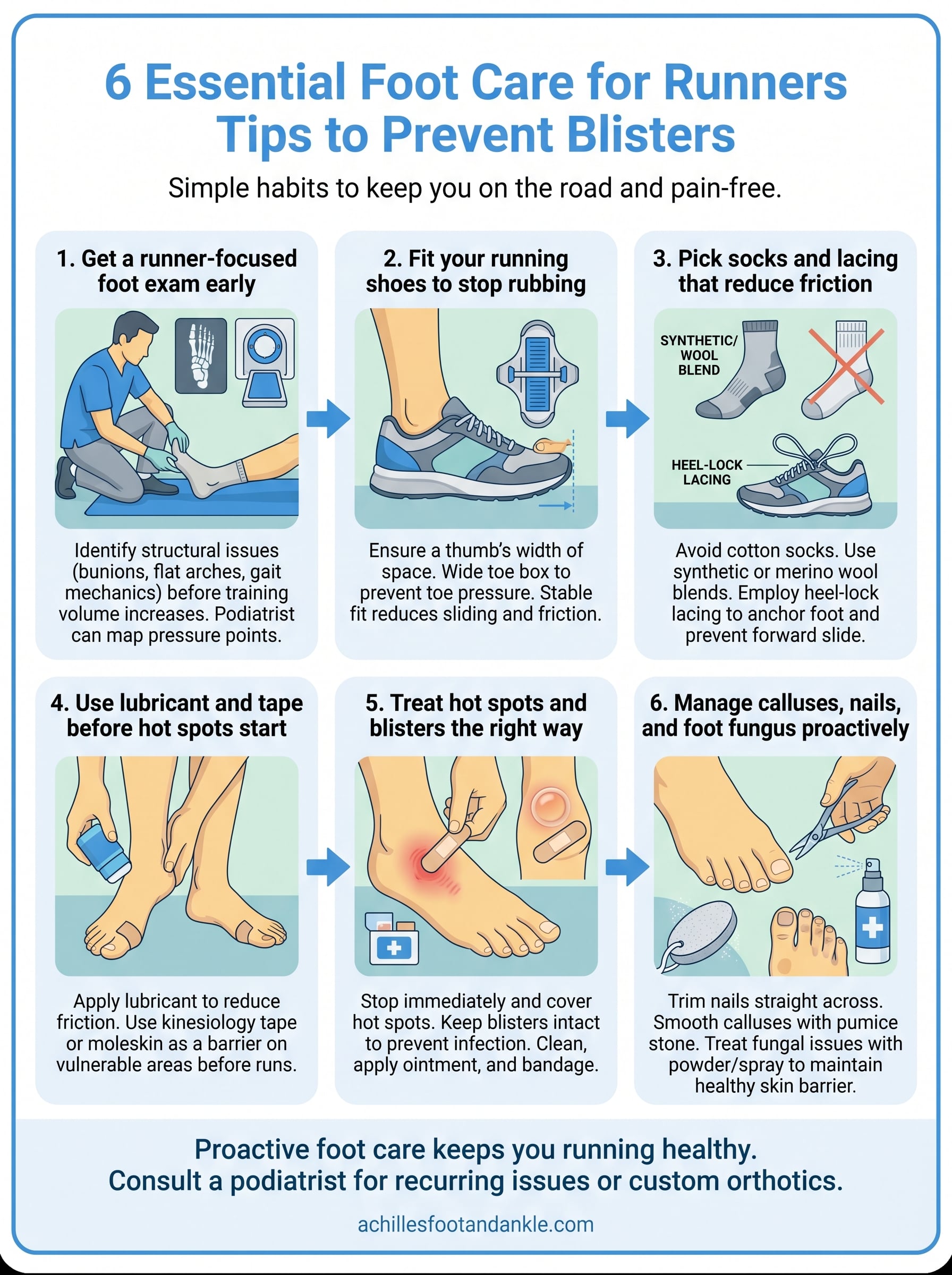
A simple plan to keep your feet run-ready
These six steps cover the full picture of foot care for runners, from your first podiatry visit to how you handle a blister mid-run. The runners who stay healthy aren’t doing anything complicated. They get their feet assessed early, choose gear that fits their mechanics, and build a short pre-run routine that takes only a few minutes before each session.
Start with the basics this week. Trim your nails, swap your cotton socks for a moisture-wicking pair, and pick up a body glide stick before your next long run. Once those habits are in place, layer in the rest. If any spot keeps coming back despite your best efforts, that’s your signal to stop guessing and get a professional set of eyes on your foot mechanics. The team at Achilles Foot and Ankle Center is ready to help. Schedule a same-day appointment today and keep your training on track.