
Yes, can pregnancy cause flat feet is one of the most common questions expectant mothers bring to our podiatrists at Achilles Foot and Ankle Center. And the short answer is yes. Hormonal shifts and increased body weight during pregnancy can permanently change the structure of your feet, flattening the arches in ways that don’t always reverse after delivery.
This happens more often than most people realize. The hormone relaxin, which loosens ligaments to prepare your body for childbirth, doesn’t limit its effects to the pelvis. It targets connective tissue throughout your body, including the ligaments that support your arches. Combine that with the added load of carrying a growing baby, and your feet can spread and flatten over the course of just a few months.
At Achilles Foot and Ankle Center, our specialists across Central Virginia see pregnancy-related foot changes regularly. Whether you’re currently pregnant, postpartum, or dealing with flat feet that started during a past pregnancy, understanding what’s happening structurally helps you make better decisions about treatment. This article breaks down the causes, the warning signs to watch for, and practical options for relief, from conservative care to custom orthotics and beyond.
Why pregnancy can change your arches
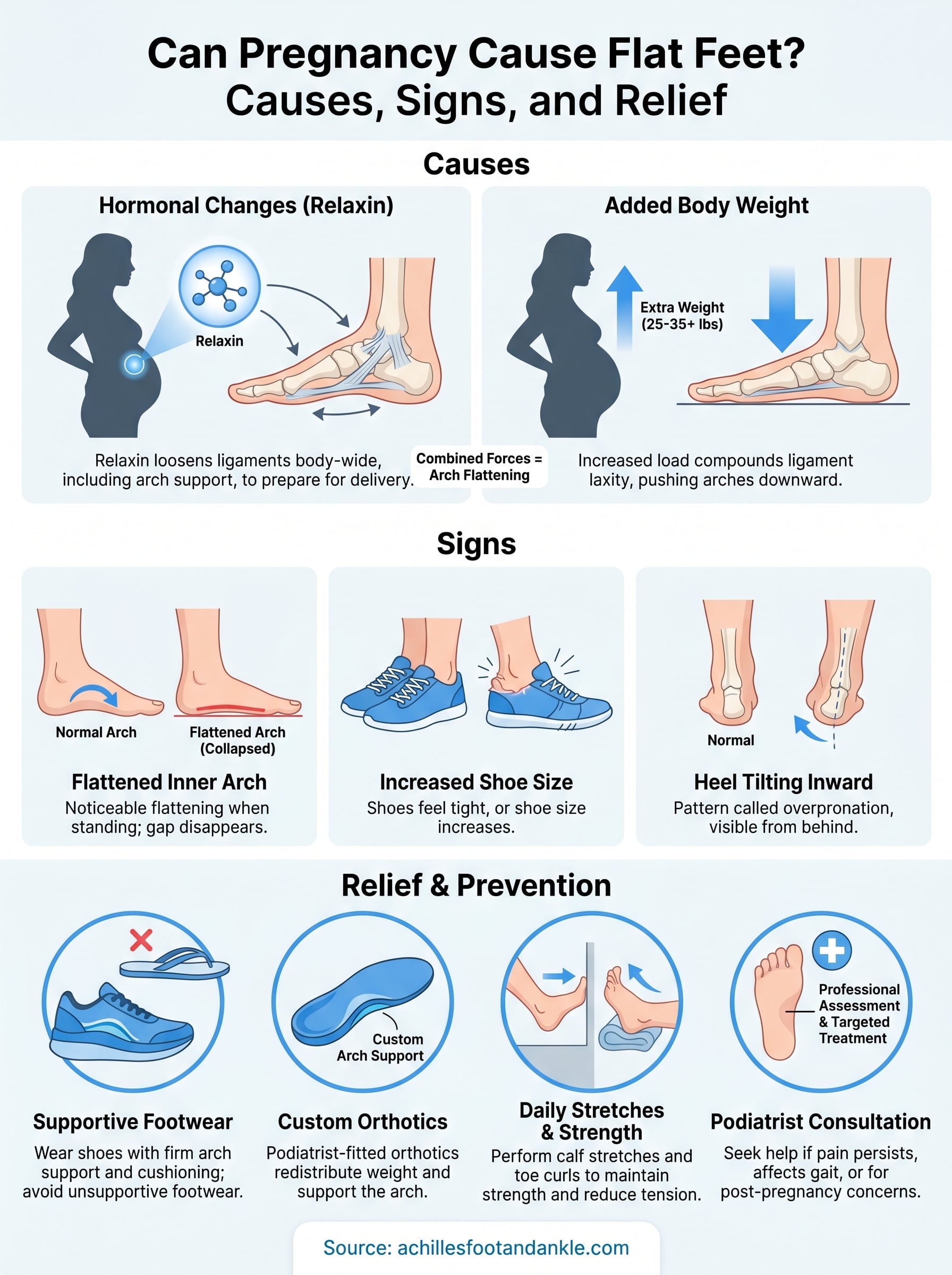
Two main forces drive flat feet during pregnancy: hormonal changes and added body weight. These forces work together, and understanding each one explains why questions like can pregnancy cause flat feet come up so regularly in podiatry practices across the country.
Relaxin does more than prepare you for delivery
Your body starts producing a hormone called relaxin in the first trimester. Its primary job is to loosen the ligaments in your pelvis so your body can accommodate labor and delivery. The problem is that relaxin doesn’t target only your pelvis. It circulates through your entire body, softening connective tissue from your hips all the way down to your feet.
The plantar fascia and supporting ligaments along the bottom and sides of your feet hold your arches in place under normal conditions. When relaxin loosens these structures, your arch loses the taut support it depends on. Even routine activities like walking or standing then become enough to push the arch downward, which is why many women notice their feet spreading and flattening well before the third trimester.
Relaxin affects connective tissue throughout your entire body, not just your pelvis, which makes arch collapse a recognized and common result of pregnancy.
Extra weight increases the pressure on your arches
Healthy weight gain during pregnancy typically ranges from 25 to 35 pounds for most women. Your feet and ankles bear all of that additional load with every step you take. This added pressure compounds the ligament laxity that relaxin creates, pushing the arch structure further toward the ground with each stride.
Fluid retention and circulatory shifts during pregnancy also cause significant foot and ankle swelling. A swollen foot sitting on loosened ligaments has very little natural resistance to arch collapse, so the two problems reinforce each other throughout the full pregnancy.
Why the changes can last beyond delivery
Many women assume their feet will return to normal after giving birth, but that isn’t always the case. When ligaments stretch beyond their normal range and hold that position for months, they don’t reliably return to their original length after delivery. Repeated loading on already-loosened tissue can lock in permanent structural changes to the arch, especially if you are on your feet often, wearing unsupportive shoes, or going through multiple pregnancies over time.
Women with naturally lower arches before pregnancy carry a higher risk of permanent flat feet. Once the arch collapses far enough and maintains that position, the bones and surrounding soft tissue adapt to it, making restoration without professional intervention considerably harder.
Signs your arches are flattening
Recognizing the early signs of arch collapse during pregnancy gives you a better chance of managing the problem before it becomes a long-term issue. Many women attribute foot discomfort to normal pregnancy swelling and miss the structural changes happening underneath. Knowing what to look for helps you act sooner.
Physical changes you can see
The most visible sign is a noticeable flattening of the inner arch when you stand on a hard floor. Before pregnancy, you likely had a gap between the inner edge of your foot and the ground when standing. If that gap has shrunk or disappeared, your arch is collapsing. You may also notice that your feet appear wider than they were before, or that shoes that fit well six months ago now feel tight across the ball of the foot.
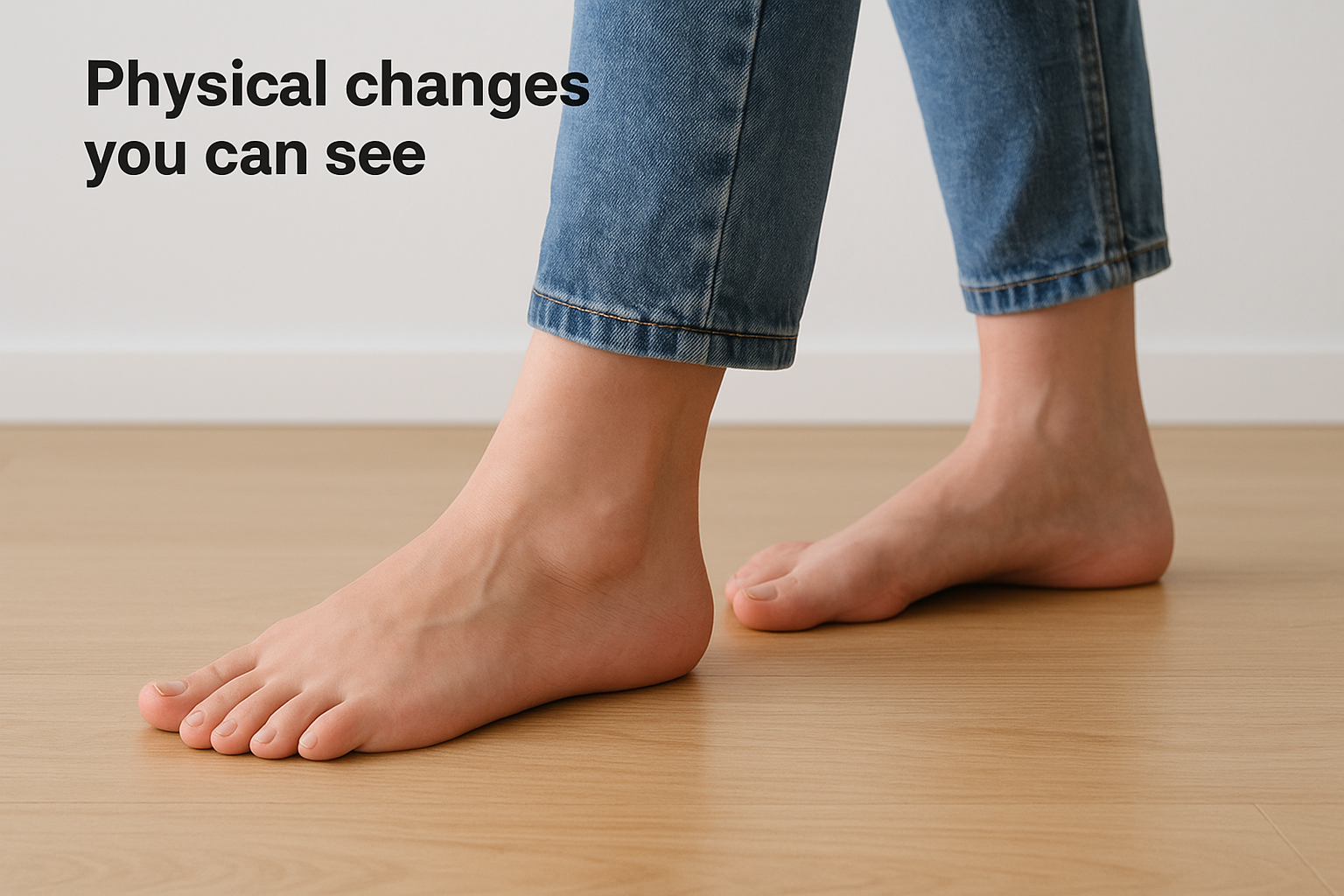
If your shoe size increases during pregnancy, that’s a strong signal that your arches have spread and your feet have structurally changed.
Another physical clue is the way your heels sit. When the arch collapses, the heel often tilts inward, a pattern called overpronation. Looking at the back of your feet in a mirror while standing can reveal this tilt clearly.
Pain patterns that point to arch collapse
Arch flattening rarely stays silent for long. Aching or burning along the bottom of your foot, especially near the heel and inner arch, is a common early complaint. You may feel the discomfort most sharply during the first few steps in the morning or after sitting for an extended period.
Shin pain, knee pain, and even lower back pain can also trace back to changing foot mechanics, since arch collapse shifts how force travels up through your entire body with each step.
What to do for relief during pregnancy
Managing the foot discomfort that comes with arch collapse doesn’t require waiting until after delivery. Several practical interventions can reduce pain and slow structural changes while you’re still pregnant. The goal isn’t to reverse what’s happening overnight but to support your feet through a physically demanding period so the damage stays minimal.
Wear supportive footwear every day
The single most impactful step you can take is upgrading your footwear immediately. Shoes with firm arch support, a wide toe box, and a cushioned midsole reduce the strain your loosened ligaments face throughout the day. Flip-flops, flat canvas shoes, and any footwear with minimal structure will accelerate arch collapse and increase daily pain.
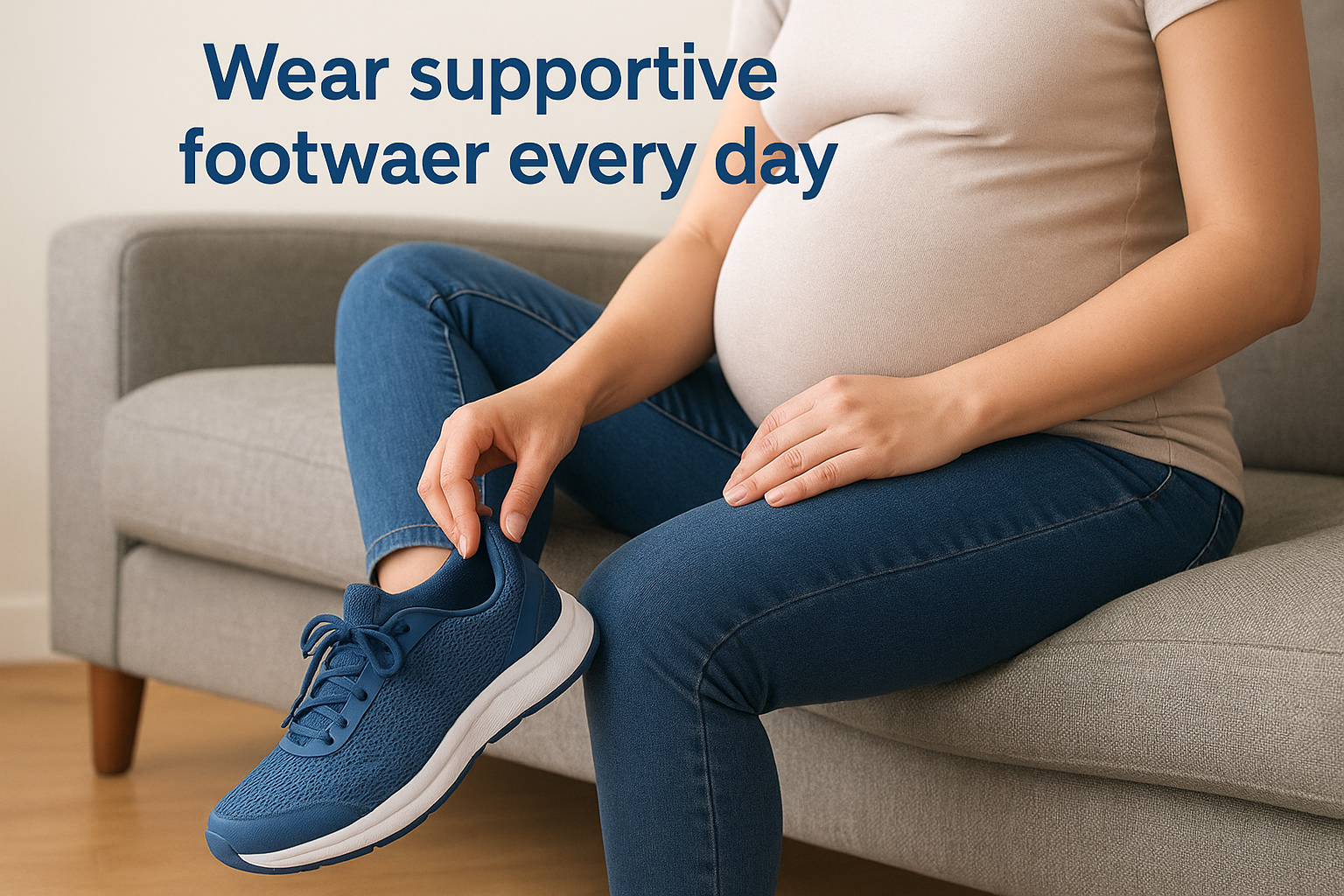
Custom orthotics offer an even more targeted solution. A podiatrist can fit you for orthotic insoles designed to redistribute your body weight and hold your arch in a supported position as your foot expands. This is especially relevant if you’re asking can pregnancy cause flat feet and you’re already noticing changes early on in your pregnancy.
Getting into supportive footwear and orthotics early in pregnancy reduces your risk of permanent arch changes after delivery.
Stretch and strengthen your feet daily
Calf stretches and towel toe curls are two simple exercises that help maintain foot muscle strength even as ligaments loosen. Stretching your calf muscles daily reduces tension on the plantar fascia and eases heel pain during standing and walking.
Rolling a frozen water bottle under your arch for ten minutes after a long day reduces inflammation and gives soft tissue temporary relief. These small, consistent habits can meaningfully extend how comfortable your feet stay through the third trimester.
Can you prevent flat feet in pregnancy
You can’t stop relaxin from circulating through your body, but you can take steps that significantly reduce how much your arches collapse under its effects. Prevention isn’t about eliminating every risk factor; it’s about protecting your foot structure while the conditions working against it are at their peak. Starting these habits early gives your feet the best chance of coming through pregnancy with minimal permanent change.
Start early with the right footwear and arch support
The earlier you switch to structurally supportive shoes, the less cumulative damage your arches absorb each day. Many women wait until foot pain forces the change, but by that point the arch has already shifted. If whether pregnancy can cause flat feet is a concern you have in early pregnancy, treat it as a prompt to act before symptoms appear rather than after.
Switching to supportive footwear in the first trimester gives your arches the best defense against the combined pressure of relaxin and increasing body weight.
Look for shoes that offer these specific features:
- A firm midsole rather than a flexible, flat sole
- A contoured footbed that cradles the arch directly
- Enough room in the toe box to accommodate daily swelling
Keep your lower leg muscles consistently engaged
Foot and lower leg strength plays a real protective role when ligaments loosen. Maintaining regular low-impact activity, like walking and prenatal stretching, keeps the muscles supporting your arch actively working. Those muscles absorb a portion of the load that loosened ligaments can no longer fully handle on their own.
Staying within your provider’s recommended weight gain range also limits the total force your feet carry with each step, which directly slows how aggressively your arch flattens across each trimester.
When to see a podiatrist and treatments
Not every case of pregnancy-related arch flattening requires professional care, but some do. If daily foot pain is interfering with your ability to walk, work, or sleep, or if you’ve tried supportive footwear and the discomfort continues to worsen, those are clear signals that self-management isn’t enough. Asking can pregnancy cause flat feet is a reasonable starting point, but getting a professional assessment tells you exactly how much structural change has already occurred and what your best path forward looks like.
Signs that self-care isn’t enough
Pain that radiates up into your shins, knees, or lower back often means your changed foot mechanics are affecting your entire gait, not just your arch. You should also schedule an appointment if you notice one foot is flattening faster than the other, if swelling doesn’t improve with elevation, or if you’re postpartum and the arch hasn’t shown any recovery after several months.
Persistent pain after delivery is a strong reason to see a podiatrist rather than assume your feet will resolve on their own.
Treatment options your podiatrist can offer
A podiatrist has several targeted tools for managing pregnancy-related flat feet. Custom orthotics are the most common first-line treatment, designed from a mold of your specific foot structure to provide support exactly where your arch needs it most. Physical therapy focused on strengthening the intrinsic foot muscles and the posterior tibial tendon helps rebuild the active support system that ligament laxity has compromised. In cases where structural changes are permanent and cause ongoing functional problems, a podiatrist may discuss bracing or, in rare situations, surgical correction to restore arch height and reduce long-term joint strain.
Next steps for healthier feet
So, can pregnancy cause flat feet? Yes, and the structural changes it brings are real, but they’re also manageable with the right support at the right time. Supportive footwear, custom orthotics, and targeted strengthening exercises give you practical tools to protect your arches whether you’re currently pregnant, recently postpartum, or dealing with changes from a previous pregnancy. The earlier you act, the better your chances of preventing permanent arch collapse.
Your feet carry you through every stage of pregnancy and recovery, so treating foot pain as a priority rather than an afterthought makes a real difference in your daily comfort and long-term joint health. If arch pain, heel discomfort, or swelling is affecting your quality of life, don’t wait to see if it resolves on its own. The specialists at Achilles Foot and Ankle Center are ready to help. Schedule a same-day appointment and get a clear plan for healthier, pain-free feet.