That sharp, burning pain under the ball of your foot mid-run isn’t something you should push through. Metatarsalgia in runners is one of the most common forefoot conditions we treat, and it tends to get worse, not better, when ignored. The metatarsal heads absorb enormous force with every stride, and when something disrupts how that force is distributed, pain and inflammation follow.
Runners often assume the discomfort will resolve with rest alone. Sometimes it does. But when it keeps coming back or starts changing how you run, you need a clear plan, not guesswork. At Achilles Foot and Ankle Center, our podiatrists work with runners across Central Virginia to diagnose the root cause and build a treatment approach that actually gets them back on the road or trail.
This article breaks down what causes metatarsalgia, how to recognize the symptoms early, and what treatment options work, from shoe changes and orthotics to more advanced interventions when conservative care isn’t enough.
Why runners get metatarsalgia
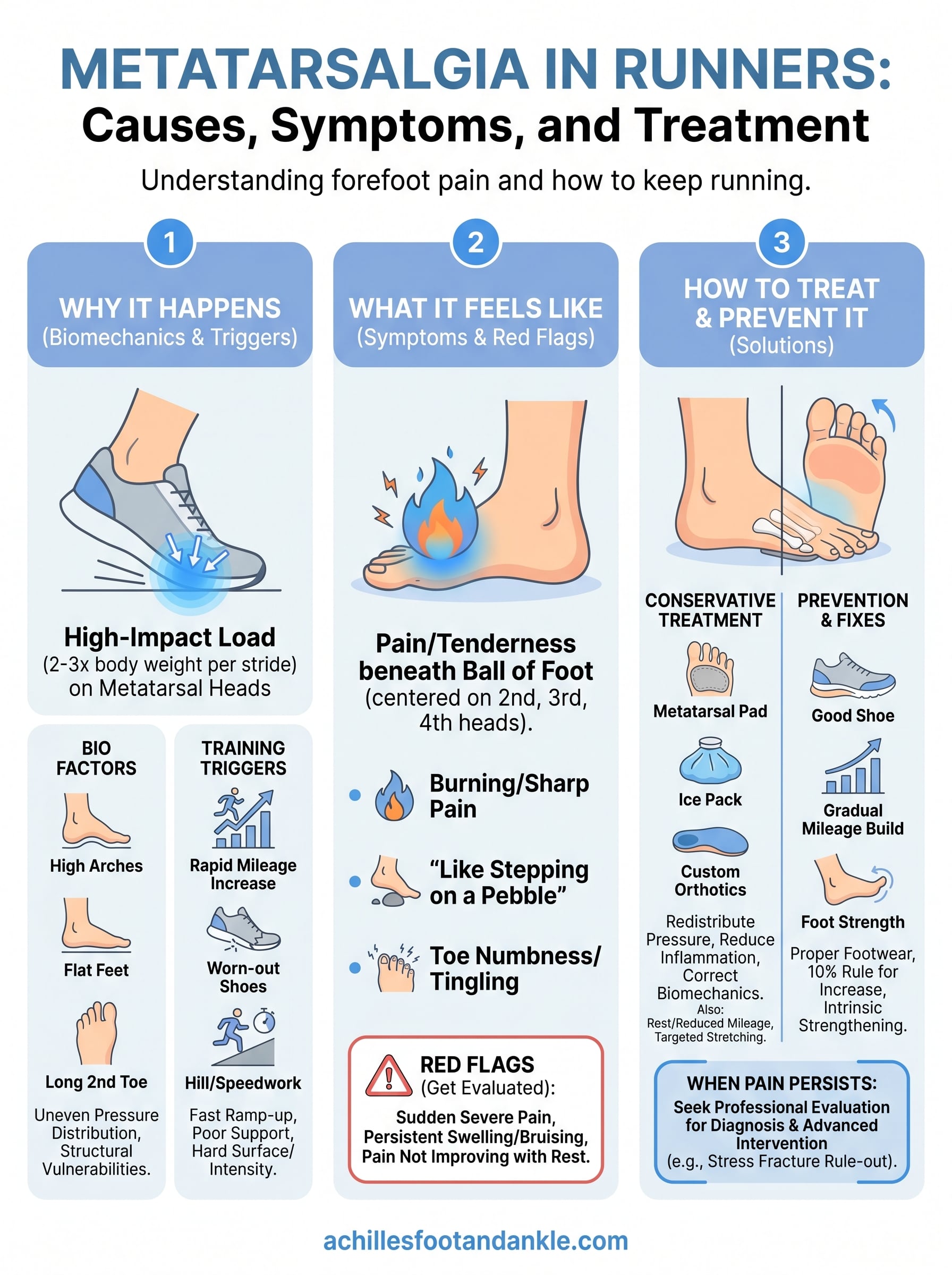
Running places repetitive, high-impact load on the metatarsal heads with every foot strike. The ball of your foot absorbs roughly two to three times your body weight per stride. Over miles of training, that cumulative stress adds up fast, especially if your gait, footwear, or training volume pushes load distribution out of balance.
The mechanics behind forefoot stress
Your five metatarsal bones spread across the forefoot and work together to transfer force from heel strike through toe-off. When one or more of those bones carries more load than it should, the surrounding soft tissue becomes inflamed. Runners with a dropped second metatarsal head or a longer second toe relative to the first are especially prone to this pattern.
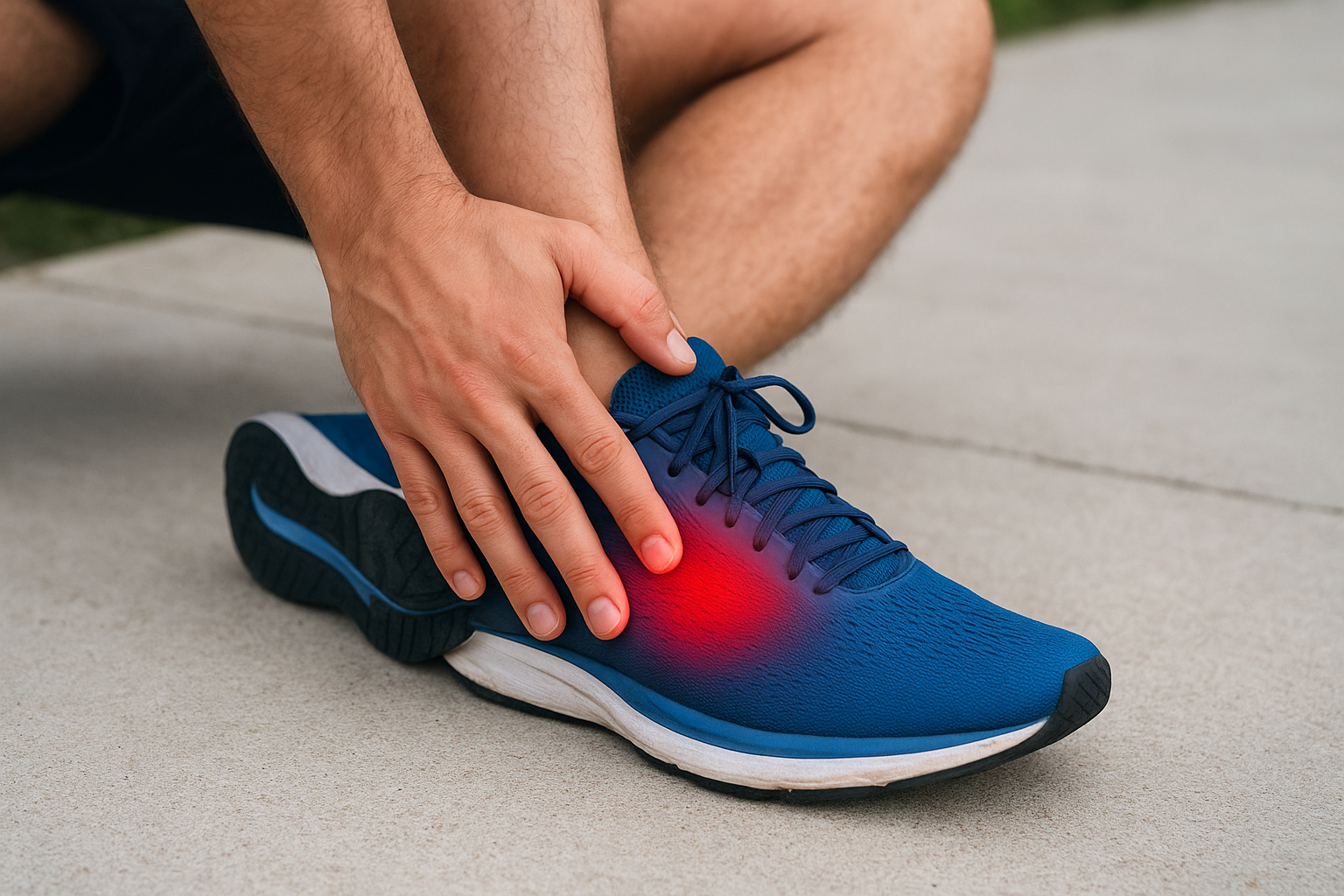
Uneven load distribution across the metatarsal heads is the core mechanical driver of metatarsalgia in runners, regardless of what first triggers it.
High-arched feet concentrate pressure at the ball of the foot because the arch doesn’t flatten enough to spread impact. Flat feet create a different problem, causing the foot to overpronate and shift stress toward the inner metatarsal heads. Both foot types can lead to the same painful outcome if load isn’t managed properly across training cycles.
Training and biomechanical triggers
Rapid mileage increases are one of the most common triggers. Soft tissue adapts more slowly than your cardiovascular system, so when you ramp up too quickly, the metatarsal area takes a beating before it has time to strengthen. Worn-out shoes that have lost their cushioning and support compound the problem significantly, removing a key layer of shock absorption your foot depends on.
Running hills, speedwork, and track sessions all shift more load to the forefoot. If you add those elements without gradually building your foot’s tolerance, you increase your injury risk considerably.
Signs, symptoms, and red flags
Metatarsalgia in runners typically shows up as pain and tenderness beneath the ball of the foot, usually centered under the second, third, or fourth metatarsal heads. The discomfort builds gradually over several runs before it becomes hard to ignore.
What the pain feels like
Most runners describe the sensation as burning, aching, or sharp pain in the forefoot that worsens during push-off or on hard surfaces. You may notice one or more of the following:
- Numbness or tingling in the toes
- A feeling like you’re stepping on a pebble
- Swelling across the ball of the foot after a long run
If the pain changes your foot strike pattern, you’re already compensating, which creates new injury risks higher up the chain.
Red flags that need immediate attention
Some symptoms mean you should stop running and get evaluated right away. Sudden, severe pain following a specific landing could indicate a stress fracture rather than soft tissue inflammation.
Persistent swelling, bruising, or pain that doesn’t improve with rest warrants a professional assessment. These patterns suggest the injury has progressed beyond simple overuse and needs imaging or hands-on evaluation to rule out structural damage.
Common causes and risk factors
Metatarsalgia in runners develops from a combination of structural vulnerabilities and controllable training habits. Understanding which factors apply to you makes it far easier to address the condition at its source rather than just managing pain after the fact.
Structural and biomechanical factors
Foot shape plays a significant role in who develops forefoot pain. Runners with high arches, flat feet, or a longer second toe than the first all carry biomechanical disadvantages that concentrate load unevenly across the metatarsal heads. Conditions like hammertoes or bunions alter how pressure distributes during push-off, adding further stress to an already vulnerable area.
Your foot structure doesn’t change, but how you support and load it absolutely can.
Training and lifestyle contributors
Several controllable factors raise your risk considerably. Excess body weight increases the force your metatarsals absorb with each stride. Worn-out running shoes that have lost their midsole cushioning remove a critical buffer between your foot and the ground. Sudden spikes in weekly mileage, hard surface training, and inadequate warm-up routines all place disproportionate stress on the forefoot before the soft tissue has adapted to handle the increased demand.
How to treat metatarsalgia and keep running
Most cases of metatarsalgia in runners respond well to conservative treatment, and you don’t necessarily have to stop running entirely. The goal is to reduce load on the inflamed metatarsal heads while keeping your fitness intact and addressing whatever caused the problem in the first place.
Conservative treatments that work
Metatarsal pads placed just behind the ball of the foot redistribute pressure away from the irritated area and often provide immediate symptom relief. Custom orthotics go further by correcting underlying biomechanical issues, making them a more durable solution for runners with structural foot problems.
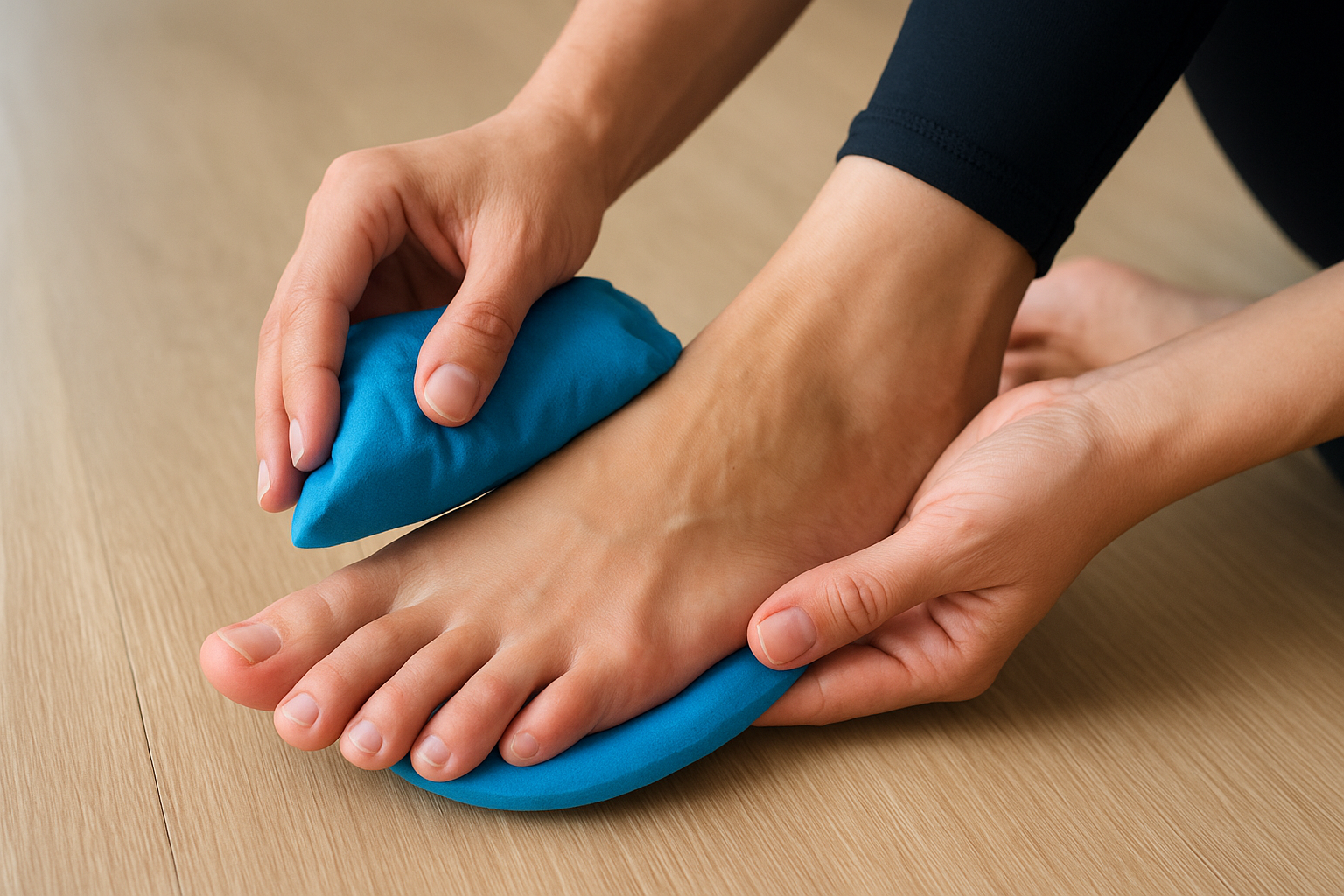
Anti-inflammatory measures like icing the forefoot for 15 to 20 minutes after runs and temporarily reducing mileage give inflamed tissue time to recover. Your podiatrist may also recommend targeted stretching for tight calf muscles and toe flexors, both of which increase forefoot load during push-off when left unaddressed.
Treating the symptom without fixing the mechanical cause almost always leads to the pain returning within weeks.
When to keep running and when to stop
Low-level discomfort that stays consistent and doesn’t worsen during a run is generally manageable with load modifications. However, pain that escalates mid-run or changes your gait is a clear signal to pull back and get evaluated before continuing training.
Prevention, shoes, and training fixes
Preventing metatarsalgia in runners starts with addressing the two biggest controllable factors: your footwear and how you structure your training load. Get both right and you significantly lower your chances of ending up sidelined.
Pick the right running shoe
Your shoes are your first line of defense against forefoot overload. Look for a shoe with adequate forefoot cushioning and a wide toe box that doesn’t compress the metatarsal heads during push-off. Replace your running shoes every 300 to 500 miles; midsole cushioning breaks down long before the upper shows visible wear.
Key features to prioritize when selecting a running shoe:
- Wide toe box that allows natural toe splay
- Forefoot cushioning appropriate for your surface
- Midsole support that matches your arch type
Build mileage and intensity gradually
Follow the ten percent rule as your baseline: increase total weekly mileage by no more than ten percent per week. When you add speedwork, hills, or track sessions, introduce them one element at a time rather than stacking multiple new stressors in the same training block.
Building foot intrinsic strength through toe curls and single-leg balance work gives your metatarsals the resilience they need to handle consistent training demand.
Next steps if your pain persists
Metatarsalgia in runners rarely resolves on its own when the underlying cause goes unaddressed. If you’ve tried reducing mileage, adjusting your shoes, and adding metatarsal padding for two to three weeks without meaningful improvement, it’s time to get a professional evaluation. A podiatrist can identify whether your forefoot pain stems from a biomechanical issue, a stress fracture, or a nerve problem like Morton’s neuroma, all of which require different treatment approaches.
Waiting too long typically means a longer recovery and a higher chance of compensatory injuries in your knee, hip, or lower back. Early intervention almost always leads to faster return-to-running timelines compared to managing pain for months before seeking care. At Achilles Foot and Ankle Center, our podiatrists treat runners across Central Virginia with targeted, evidence-based plans built around your specific foot structure and training goals. Schedule a same-day appointment and get a clear diagnosis before your next run.