A small cut on your foot shouldn’t turn into a hospital stay. But if you live with diabetes, it can, and it does more often than most people realize. Nerve damage hides the pain, poor circulation slows healing, and a blister you never felt can become an ulcer within days. That’s exactly why diabetic wound care education matters so much, both for patients managing their own feet at home and for the family members and caregivers who help them.
If you’re searching for answers, you likely want to know what proper wound care actually involves, how to catch problems early, and why this issue gets so much attention from podiatrists. The short answer: the importance of wound care in diabetic patients comes down to preventing infection and avoiding amputation, and that requires real knowledge, not guesswork.
In this article, we’ll break down what diabetic wound care education covers, from daily foot checks and dressing changes to recognizing warning signs that need urgent attention. We’ll also point you toward the training and resources available for patients, caregivers, and healthcare professionals in Central Virginia.
Why diabetic wound care education matters
The hidden risks of diabetic wounds
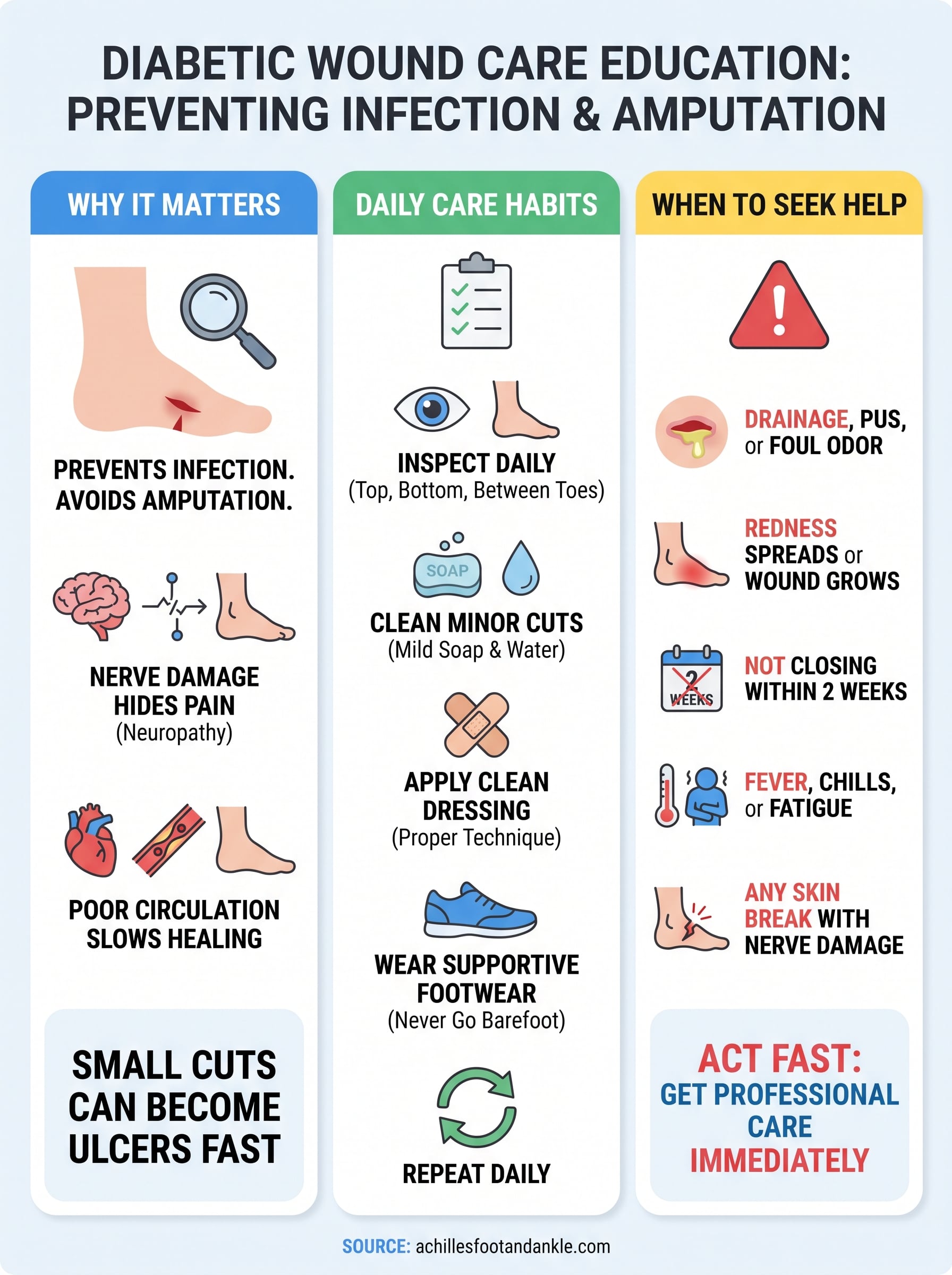
Diabetes changes how your body senses and heals injury. Peripheral neuropathy dulls sensation in the feet, so a pebble in your shoe or a seam rubbing against your heel can cause damage you never feel. At the same time, poor circulation starves the wound of the oxygen and nutrients it needs to close. Put those two problems together and a scrape that would heal on its own in a week can turn into an open ulcer that lingers for months. This is why the importance of wound care in diabetic patients isn’t just a talking point in a doctor’s office. It’s the difference between a bandage and a hospital bed.
A wound you can’t feel is still a wound that can cost you your foot.
What the numbers say
The scale of this problem is well documented. The Centers for Disease Control and Prevention identifies diabetes as the leading cause of lower-limb amputations in the United States, and roughly half of all diabetic foot ulcers become infected before they’re ever treated. Once infection sets in, the path to amputation moves fast.
| Statistic | Why it matters |
|---|---|
| Diabetes is the top cause of non-traumatic lower-limb amputation | Shows how often foot wounds escalate without early intervention |
| Roughly 1 in 2 diabetic foot ulcers become infected | Highlights the narrow window for catching problems early |
| Many ulcers go unnoticed for days due to nerve damage | Explains why daily checks matter more than pain as a warning sign |
Education closes the gap
Most amputations don’t start with a dramatic injury. They start with a small wound that nobody caught in time. Patients who understand daily inspection habits, know what a healthy wound looks like versus an infected one, and understand when to call their podiatrist catch problems in days instead of weeks. That single shift in awareness is often what separates a healed foot from a surgical referral.
How to apply wound care education in daily life
Knowledge only helps if it turns into a routine. Diabetic wound care education works best when it’s broken into small habits you repeat every single day, not a one-time lecture you hear at a checkup and forget by the weekend.
Daily foot checks that actually catch problems
Morning or night, pick a time you’ll stick with, and inspect both feet under good light. Look between the toes, check the soles with a mirror if you can’t bend that far, and feel for warmth or swelling with your hands since you may not feel it through pain. A simple checklist keeps this from slipping:

- Check the tops, bottoms, and sides of both feet
- Look between every toe
- Feel for unusual warmth, swelling, or hardness
- Note any new redness, cracks, or drainage
- Check shoes and socks for debris before putting them on
Building habits that stick
Once checking becomes automatic, the next skill is proper wound care itself: cleaning minor cuts with mild soap and water, applying a clean dressing, and keeping pressure off the area with supportive footwear. Skipping shoes, even indoors, is one of the most common mistakes patients make. Understanding basic dressing changes and knowing which products to avoid, like harsh antiseptics that damage healthy tissue, rounds out the daily toolkit that keeps small issues from becoming big ones.
What a diabetic wound care education program covers
Structured programs go far beyond a pamphlet handed out at a checkup. A real diabetic wound care education program combines hands-on skills training with the medical reasoning behind each step, so patients and caregivers understand not just what to do, but why it matters.
Core skills every program teaches
Good programs walk through the full cycle of prevention, detection, and treatment. Expect coverage of:
- Proper foot hygiene and moisturizing techniques that avoid trapping moisture between toes
- Wound cleaning, dressing selection, and change frequency
- Recognizing early signs of infection versus normal healing
- Footwear and orthotic fitting to offload pressure points
- Blood sugar management as it relates to healing speed
Wound care education isn’t one skill, it’s a checklist of habits that work together.
Certification tracks for healthcare professionals
Healthcare workers pursue more formal training, often through wound care certification courses that cover advanced topics like debridement techniques, offloading devices, and when to escalate care to a vascular specialist. These programs typically require continuing education hours and hands-on clinical practice, not just classroom lectures.
Different audiences need different depth. Patients need daily habits they can repeat without a medical background, caregivers need enough clinical knowledge to spot trouble, and professionals need the technical grounding to treat complex wounds safely. A well-designed patient education program at a podiatry practice usually layers these tracks together, so everyone involved in a patient’s care is working from the same information.
When to seek professional wound care help
Even with solid daily habits, some situations call for a podiatrist right away. Knowing the line between "watch it at home" and "call the office today" is part of what good diabetic wound care education teaches, and it’s often the difference between a quick office visit and a hospital admission.
Warning signs that need same-day attention
Spotting trouble early only helps if you act on it. Reach out to your podiatry team immediately if you notice any of the following:
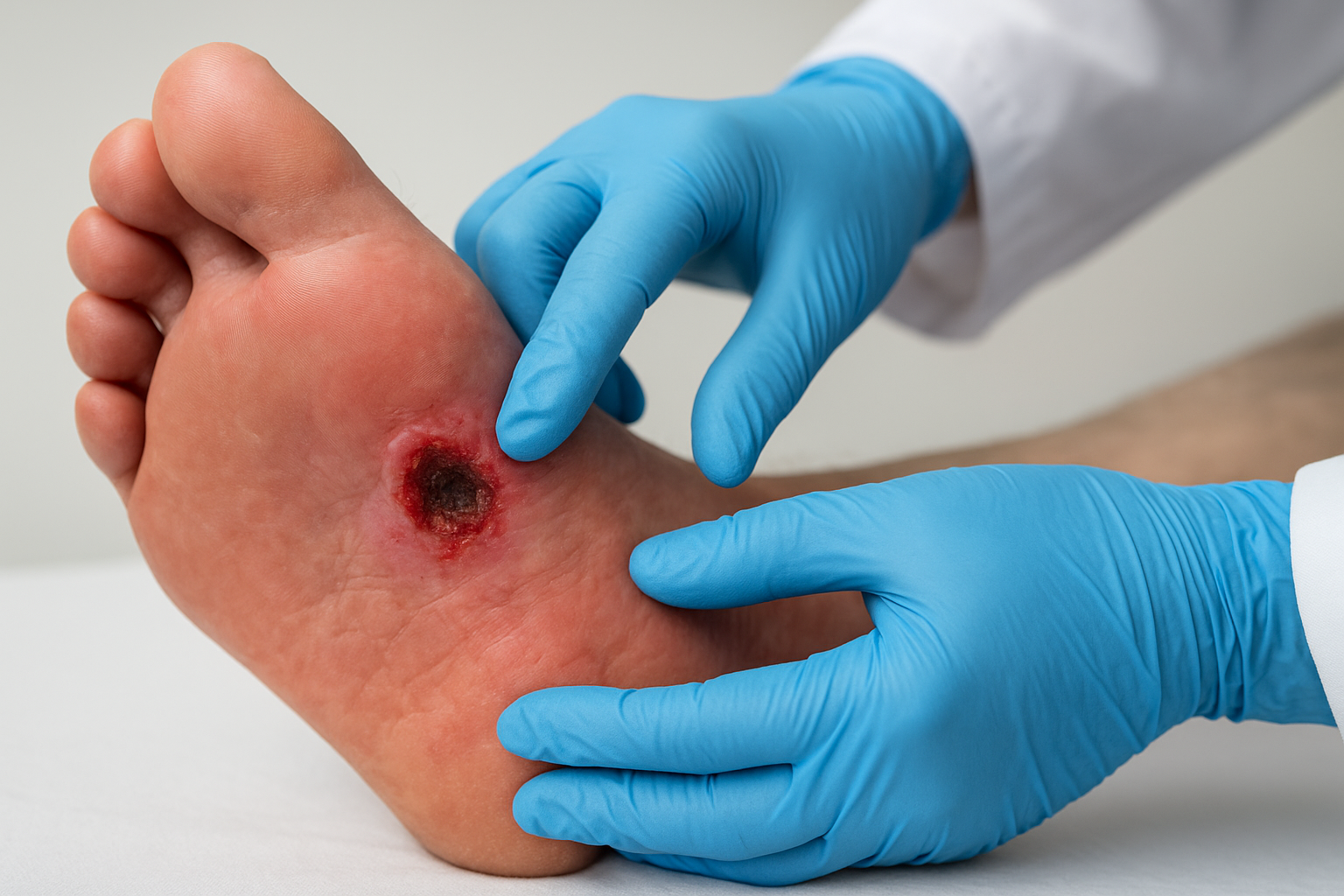
- Drainage, pus, or a foul odor from a wound
- Redness that spreads or a wound that grows larger over 24 to 48 hours
- A wound that hasn’t started closing within two weeks
- Fever, chills, or feeling unusually tired alongside a foot wound
- Any break in the skin on a foot with known nerve damage or poor circulation
When in doubt about a diabetic wound, treat it like an emergency until a professional tells you otherwise.
Why timing changes the outcome
Infections in diabetic feet move faster than most people expect, sometimes spreading to bone within days. Podiatrists have tools patients don’t: cultures to identify bacteria, imaging to check for bone involvement, and debridement to remove dead tissue that blocks healing. Waiting even a few extra days can shift treatment from a topical dressing to IV antibiotics or surgery.
Same-day appointments matter here. Practices like Achilles Foot and Ankle Center build urgent slots into the schedule specifically for wounds that can’t wait for a routine opening, because for a diabetic foot, next week is often too late.
Putting diabetic wound care education into practice
Everything in this article comes down to one point: diabetic wound care education turns a scary diagnosis into a manageable daily routine. Checking your feet, cleaning wounds properly, and knowing which signs demand a phone call are skills, not luck, and skills can be learned by anyone willing to practice them consistently.
Familiarity with your own feet builds confidence, but confidence shouldn’t replace professional judgment when something looks wrong. A wound that lingers, spreads, or drains isn’t a wait-and-see situation, it’s a reason to get seen. That’s true for patients managing years of diabetes and for caregivers just starting to learn the warning signs.
If you’ve spotted a wound that worries you, don’t sit on it. Schedule a same-day appointment with our team and get it checked before a small problem becomes a serious one.