

Foot pain shows up in a dozen different ways, and that’s exactly what makes it confusing. A sharp stab in your heel with the first steps out of bed feels nothing like the burning, tingling pain of nerve irritation, yet both send people searching for answers at 2 a.m. Understanding the different types of foot pain and causes is the first step toward treating it correctly instead of guessing with the wrong shoe insert or stretching routine.
This guide breaks down the most common foot pain conditions we see at our Central Virginia clinics, from plantar fasciitis and bunions to stress fractures and diabetic nerve pain. For each one, you’ll learn the typical symptoms, what’s actually happening inside your foot, and where the pain tends to show up, whether that’s your heel, arch, toes, or ankle.
You’ll also find clear guidance on when to see a doctor versus when rest and ice will do the job. Foot pain that lingers past a few weeks, worsens with activity, or comes with swelling, numbness, or discoloration usually needs a professional evaluation, not another week of waiting it out.
Why identifying your foot pain type matters
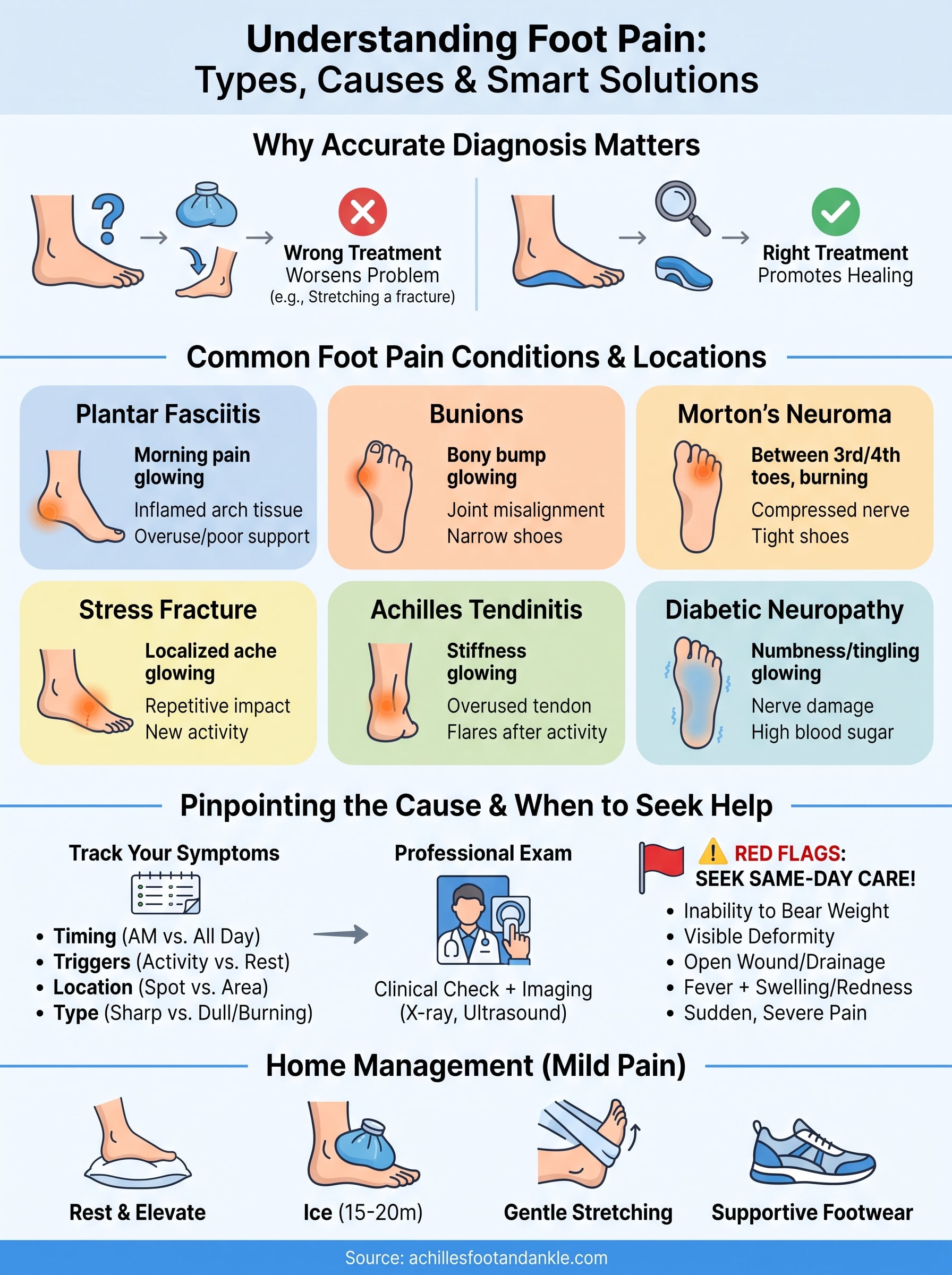
Guessing at your foot pain rarely works out well. Misdiagnosing foot pain leads people to stretch a stress fracture, ice a nerve entrapment, or buy arch supports for a problem that has nothing to do with the arch. Every structure in your foot, from the plantar fascia to the small nerves between your toes, reacts differently to rest, movement, and pressure, so the right fix for one condition can actively aggravate another.
The wrong treatment can backfire
Consider two patients who both describe "burning" pain on the bottom of the foot. One has plantar fasciitis, which responds well to stretching and supportive footwear. The other has a Morton’s neuroma, a compressed nerve between the third and fourth toes, and stretching does nothing while tight shoes make it worse. Without knowing which condition you’re dealing with, you’re stuck cycling through remedies by trial and error:
- Store-bought insoles that ease heel pain but do nothing for nerve pain
- Ice that calms tendon inflammation but has little effect on a stress fracture
- Rest that helps most injuries but can let a diabetic ulcer worsen unnoticed
- Over-the-counter anti-inflammatories that mask joint pain from arthritis while the underlying damage continues
Treating the wrong condition doesn’t just delay recovery, it can turn a two-week problem into a two-month one.
Location and pattern point to the cause
Experienced podiatrists read foot pain almost like a map. Heel pain that’s sharpest with your first steps in the morning almost always points to plantar fasciitis, while pain along the outer ankle after a twisting injury suggests a ligament sprain. Forefoot pain that worsens in narrow shoes often traces back to a bunion or hammertoe, and pain that radiates or tingles rather than aches usually signals a nerve issue rather than a structural one. Recognizing these patterns yourself gives you a head start when you do see a specialist, and it helps you avoid wasting money on treatments aimed at the wrong target.
Speed also matters more than most people realize. Foot conditions that get diagnosed early, whether that’s a hairline stress fracture or the first signs of diabetic neuropathy, are far easier to manage than ones caught after months of compensating and favoring the other foot. Waiting often means the pain spreads, your gait changes, and you end up treating a knee or hip problem that started as a foot problem.
Common types of foot pain and what causes them
Foot pain generally falls into a handful of well-defined categories, each tied to a specific structure and mechanism. Plantar fasciitis causes stabbing heel and arch pain treatment cases from inflammation of the thick band of tissue running along the bottom of the foot, usually from overuse or poor arch support. Bunions form when the big toe joint shifts outward, creating a painful bony bump that worsens in narrow shoes, and there are ways to treat and prevent bunions before surgery becomes the discussion. Stress fractures produce a dull, localized ache that intensifies with weight-bearing activity, often from repetitive impact in runners or new exercisers, so it helps to know when to seek care for a foot stress fracture.
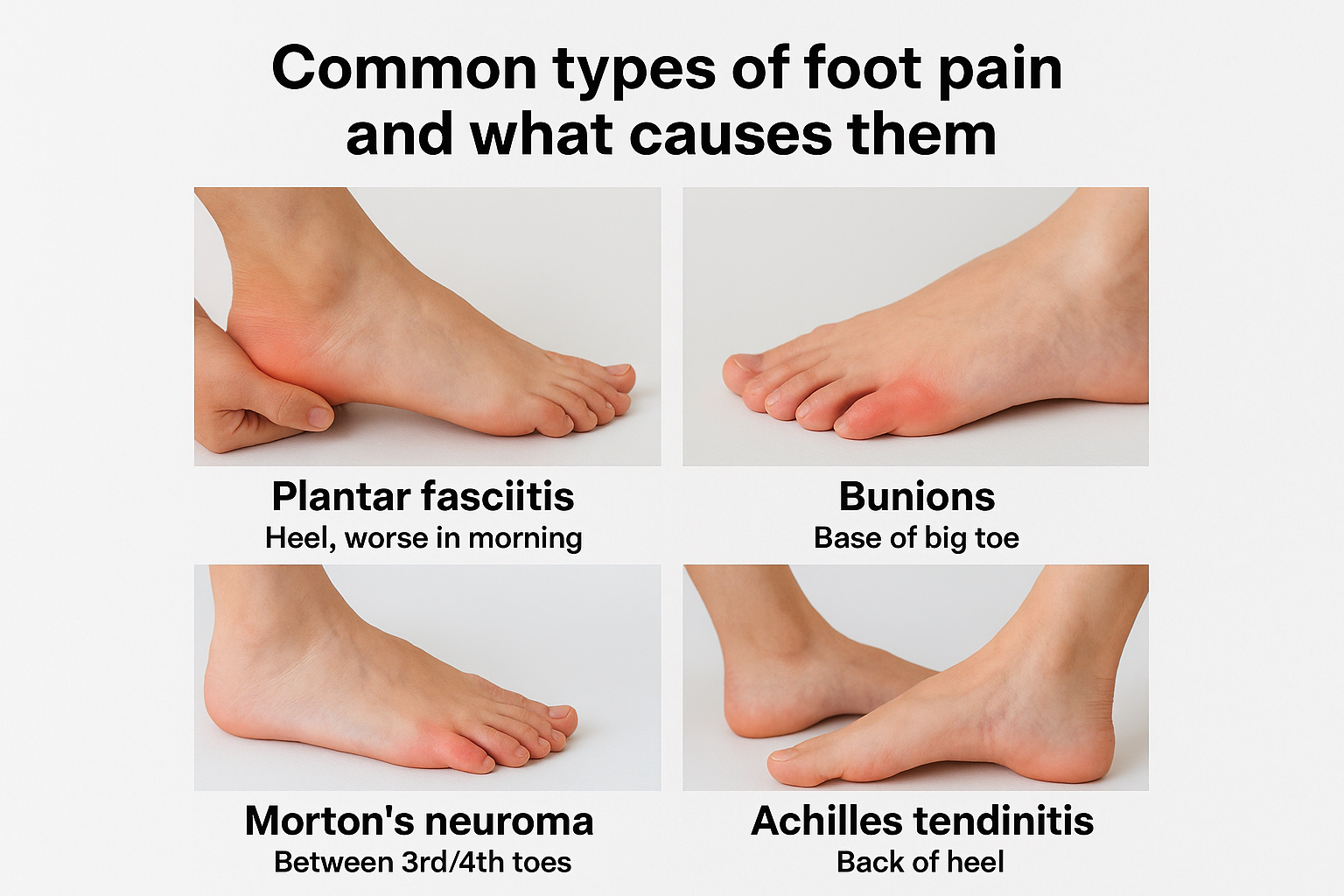
Nerve-related pain feels entirely different. Morton’s neuroma causes burning or tingling between the third and fourth toes from a compressed nerve, while diabetic peripheral neuropathy produces numbness or pins-and-needles sensations across the whole foot due to nerve damage from prolonged high blood sugar, and there are several causes of nerve pain in the foot worth knowing apart. Achilles tendinitis brings a different kind of discomfort altogether, a stiff, aching pain at the back of the heel that flares after activity and eases with rest, at least at first.
Matching the pain description to the right condition is the fastest shortcut to the right treatment.
Here’s a quick reference for the conditions we see most often:
| Condition | Typical Location | What Causes It |
|---|---|---|
| Plantar fasciitis | Heel, worse in morning | Inflamed arch tissue |
| Bunions | Base of big toe | Joint misalignment |
| Morton’s neuroma | Between 3rd/4th toes | Compressed nerve |
| Stress fracture | Midfoot or forefoot | Repetitive impact |
| Achilles tendinitis | Back of heel | Overused tendon |
| Diabetic neuropathy | Whole foot, symmetrical | Nerve damage from blood sugar |
Each of these has distinct triggers, which is exactly why an accurate diagnosis matters so much in foot care and why self-diagnosis so often misses the mark.
How to pinpoint the cause of your foot pain
Before you settle on a diagnosis from a search engine, spend a few days paying close attention to the details of your pain. Pinpointing foot pain accurately means noting when it starts, what makes it worse, and exactly where it sits on your foot. A pain journal sounds tedious, but even three or four days of notes gives a podiatrist far more to work with than "my foot just hurts."
Track your own symptoms first
Start by answering a few specific questions about your pain, then bring the answers to your appointment:
- Is the pain worse first thing in the morning, or does it build throughout the day?
- Does it flare during activity, after activity, or both?
- Can you point to one exact spot, or does it spread across a wider area?
- Is there any swelling, bruising, warmth, or color change?
- Does the pain feel sharp and stabbing, dull and aching, or burning and electric?
The way you describe your pain often tells a podiatrist as much as the exam itself.
What a professional exam adds
Once you’ve gathered your own observations, a podiatrist adds the clinical piece: a hands-on exam checking range of motion, tenderness, and swelling, paired with imaging when needed. Diagnostic imaging like digital X-rays, ultrasound, MRI, and CT for the foot and ankle can confirm a stress fracture, measure tendon damage, or rule out arthritis that mimics other conditions entirely. Our team at Achilles Foot and Ankle Center uses this same combination of history, hands-on exam, and imaging at every visit, because guessing at foot pain wastes time that treatment could be using instead.
When foot pain signals a serious problem
Most foot pain responds to rest and a few days of care, but some symptoms mean you shouldn’t wait for an appointment to open up next week. Red flag symptoms include a foot that’s suddenly hot, swollen, and red without an obvious injury, since that combination can point to infection or gout rather than a simple strain. Numbness that spreads or doesn’t fade after a few hours deserves attention too, especially if you have diabetes, because nerve damage and poor circulation together can mask a wound that’s getting worse under the surface.

A foot ulcer that goes unnoticed for even a few weeks can turn a routine appointment into a limb-threatening emergency.
Symptoms that need same-day care
Certain signs move a case from "schedule a visit" to "go today":
- Inability to bear any weight on the foot after an injury
- A visible deformity, such as a toe or ankle sitting at an odd angle
- An open wound, especially one that’s draining, foul-smelling, or slow to heal
- Fever paired with foot swelling or redness
- Sudden, severe pain with no clear cause, which can signal a blood clot or acute compartment syndrome
Our clinics keep same-day appointments open specifically for situations like these, because delaying care on a possible fracture or infection rarely ends well.
Chronic conditions that raise the stakes
Age and existing health conditions change how urgently you should react. Diabetic patients face a much higher risk of ulcers and infections that progress quietly, which is why our advanced wound care and limb salvage program exists. Peripheral artery disease can also disguise itself as ordinary foot pain while circulation quietly worsens, so persistent pain in an older adult, especially with cold or discolored toes, warrants a prompt exam rather than a wait-and-see approach.
How to manage and prevent foot pain at home
Most mild foot pain responds well to a few basic habits practiced consistently for a week or two. Podiatrist-approved home remedies for foot pain work best when you match them to the type of pain you’re having: rest and ice for sudden strains, gentle stretching for tight tissue like the plantar fascia, and supportive footwear for anything that flares with walking or standing. Skipping straight to a random insole or an internet stretching routine without knowing what you’re treating often wastes the very time that early, targeted care could save.
The habits that prevent foot pain are the same ones that speed up recovery from it.
Simple steps for mild pain
Try these first, and give each one several days before judging whether it’s helping:
- Rest the foot and reduce high-impact activity for 48 to 72 hours
- Ice the area for 15 to 20 minutes, two to three times a day
- Stretch the calf and plantar fascia gently each morning before standing
- Switch to shoes with real arch support and a firm heel counter
- Elevate the foot when swelling is present
When home care isn’t enough
Home remedies have a ceiling, and pain that persists past two weeks despite consistent care usually means the underlying structure needs more than rest to heal. Prevention matters just as much as treatment, which is why many of our patients rely on custom orthotics and bracing to correct the mechanical issues that cause repeat flare-ups in the first place. Supportive footwear alone can’t fix a misaligned joint or a chronically overloaded tendon, so if you’re cycling through the same pain every few months, that pattern itself is a signal worth bringing to a specialist.
Moving forward with healthier feet
Foot pain always has a reason, even when it feels random or stubborn. Once you understand the different types of foot pain and causes behind your symptoms, you stop guessing and start treating the actual problem, whether that’s an inflamed fascia, a compressed nerve, or a stress fracture that needs time to heal properly. Pay attention to location, timing, and pattern, try the basic home care steps for mild cases, and treat red flags like sudden swelling, numbness, or open wounds as your cue to get seen right away.
Waiting rarely makes foot pain simpler to diagnose. It usually just gives a minor issue more time to become a bigger one, and a bigger one more time to affect how you walk, stand, and move through your day. If your pain has lingered past a couple weeks or matches any of the warning signs above, don’t keep experimenting on your own. Schedule a same-day visit with our Central Virginia podiatrists and get a real answer instead of another guess.