If arthritis has settled into your feet, you already know that the wrong shoe can turn a short walk into an ordeal, whatever the type of arthritis affecting your feet happens to be. Stiff joints, swollen toes, and that deep ache in your arches don’t respond well to flimsy soles or narrow toe boxes. Finding the best shoes for arthritis in feet matters just as much as any medication or brace you’re using, because the shoes you wear affect your feet and posture either in support of your treatment plan or against it every single step.
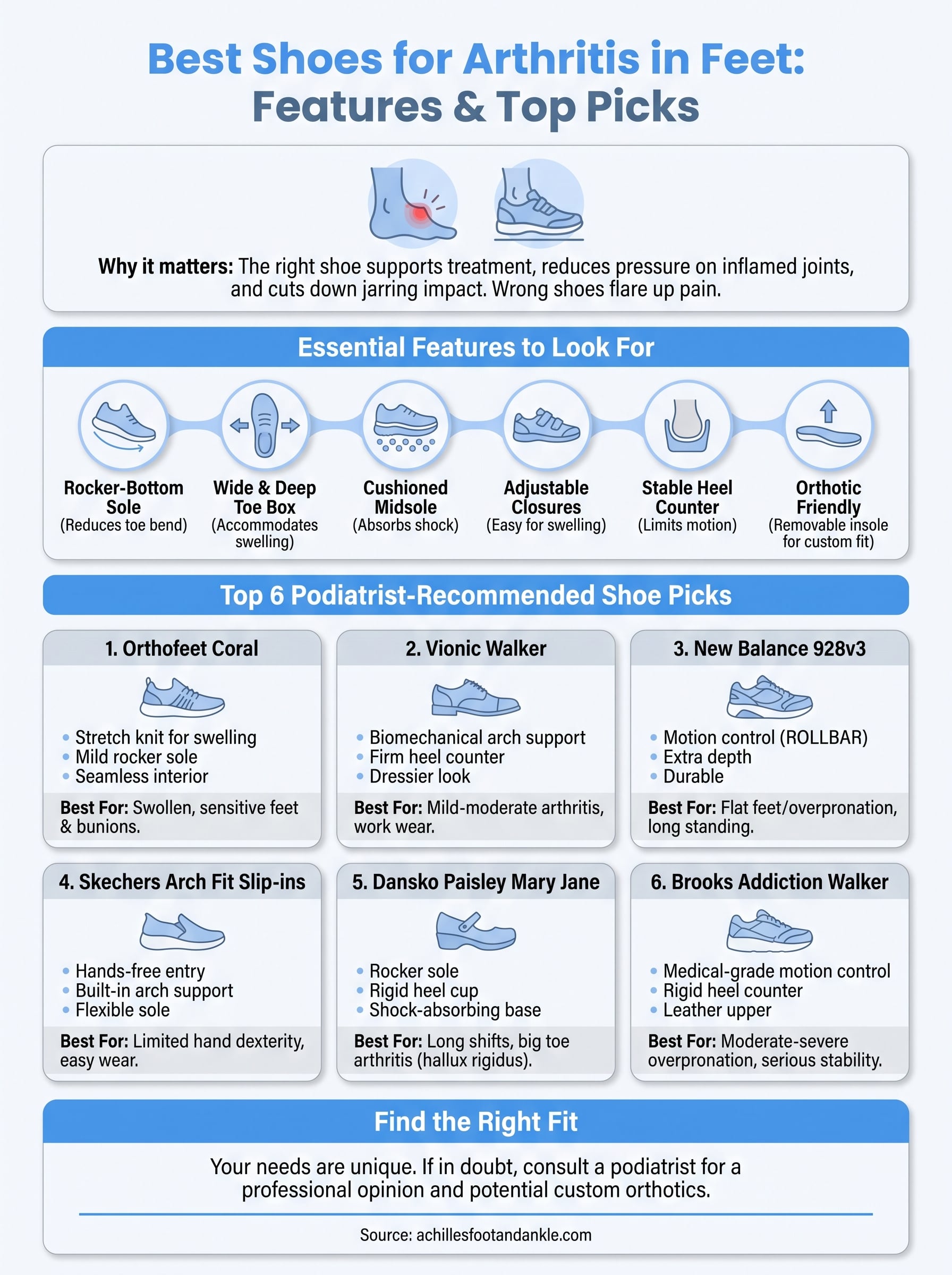
So what actually helps? Look for shoes with a rocker-bottom sole, wide and deep toe boxes, cushioned midsoles, and closures that let you adjust for swelling without a fight. These features reduce pressure on inflamed joints and cut down the jarring impact that flares up pain by evening. Skip anything with a rigid heel counter or a seam that rubs against a bunion or hammertoe, and check our podiatrist-approved bunion footwear picks if that’s your trouble spot.
As podiatrists who treat arthritic feet every day in our Central Virginia clinics, we’ve seen which shoe choices actually ease symptoms and which ones send patients back for another appointment. Below, we break down six shoe picks worth your money, plus what to check before you buy and when a custom orthotic might make even a good shoe work better for your specific joints.
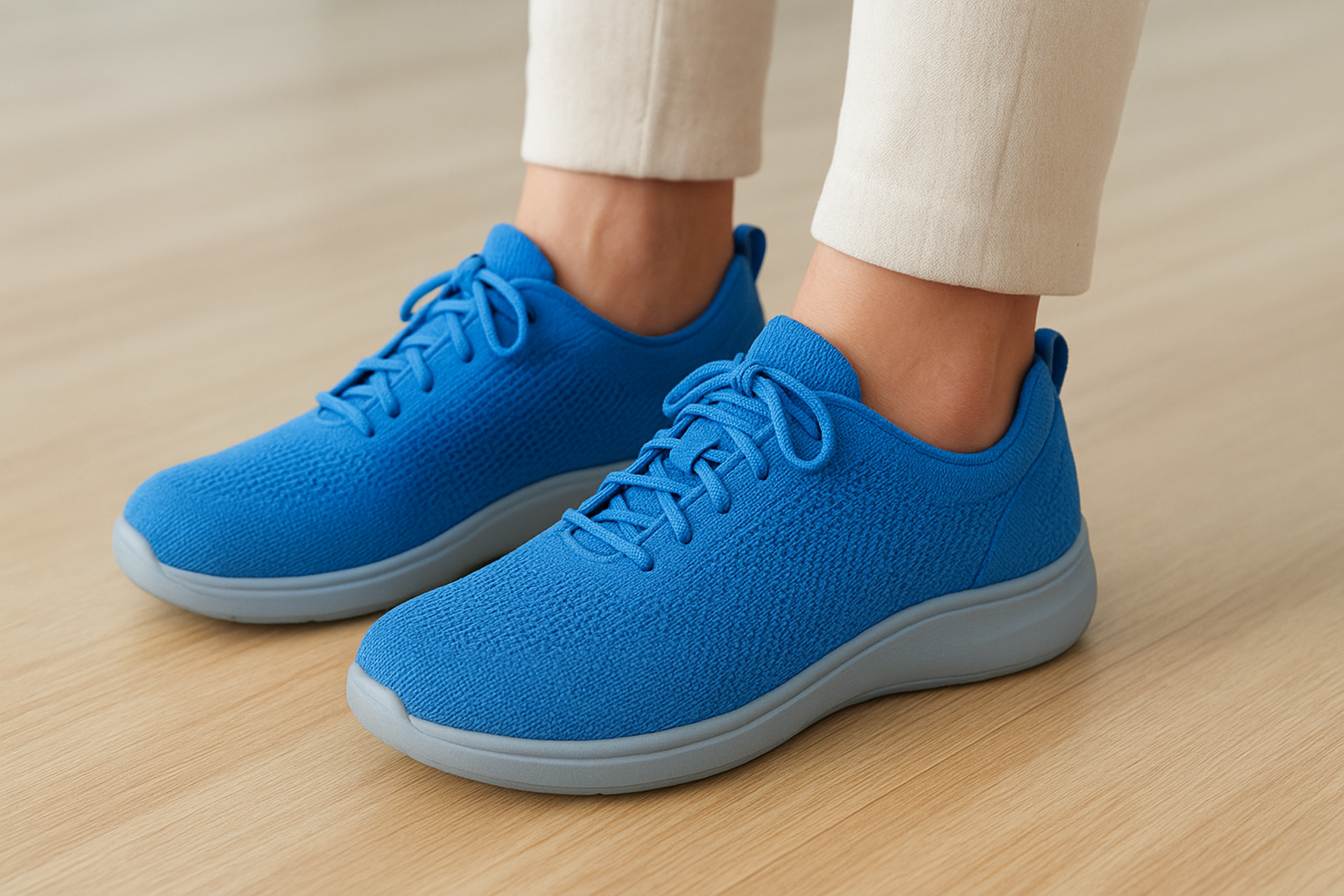
1. Orthofeet Coral stretch knit sneakers
Orthofeet built the Coral specifically around arthritic and diabetic feet, and it shows the moment you slide your foot in. The knit upper stretches to accommodate swelling that comes and goes throughout the day, so you’re not fighting the same tight spot every afternoon. This is one of the most recommended arthritis-friendly shoes among podiatrists because the design addresses pressure points before they become problems.
How it helps with arthritis
Underneath the stretch knit sits a cushioned, contoured footbed that cradles the arch and heel without forcing your toes into a narrow point. Orthofeet also builds in a mild rocker sole, which reduces the amount of bend your big toe joint has to perform with every step, a huge relief if you have arthritis flaring in the forefoot.
A shoe that stretches with your swelling does more for arthritis pain than any cushioning gimmick ever will.
Key features that matter for arthritic joints:
- Seamless interior lining to prevent rubbing on bunions and hammertoes
- Removable insoles that make room for a custom orthotic if your podiatrist prescribes one
- Wide and extra-wide width options in the same style
- Lightweight sole that reduces fatigue on long walking days
If you’re already working with a specialist on custom orthotics for arthritis, the Coral’s removable footbed makes that transition simple instead of forcing you to size up or hunt for a different shoe entirely.
Who it’s best for
People dealing with swollen, sensitive feet get the most out of this shoe, especially those managing rheumatoid arthritis symptoms in the toes and ankles alongside bunions or hammertoes. It also suits anyone who needs a shoe that adapts throughout the day rather than staying rigid from morning to night.
Price range
Expect to pay between $125 and $150 per pair. That’s higher than a typical athletic sneaker, but the orthotic compatibility and seamless construction often save you the cost of buying a separate insert down the line.
2. Vionic Walker classic shoes
Vionic built its reputation on biomechanical support, and the Walker classic delivers that in a leather lace-up that looks at home in an office or on a grocery run. This shoe skips the athletic-sneaker look some patients dislike, giving you a dressier option without sacrificing the arch support your arthritic feet actually need.
How it helps with arthritis
Inside every Walker sits Vionic’s signature podiatrist-designed footbed, which cups the heel and supports the arch to keep your foot properly aligned as you walk. That alignment matters more than most patients realize, because when your arch collapses even slightly, extra stress lands directly on the joints already inflamed by arthritis. The firm heel counter also limits side-to-side rocking, which cuts down on the joint strain that comes from an unstable stride.
Proper arch alignment takes pressure off arthritic joints before cushioning even enters the picture.
The leather upper stretches slightly over time but won’t accommodate significant swelling the way a knit shoe does, so keep that in mind if your feet puff up by afternoon.
Who it’s best for
Walkers suit patients with mild to moderate arthritis who need arch support for work environments requiring closed-toe, presentable footwear rather than athletic shoes.
Price range
Expect to pay $100 to $130 per pair, putting it comfortably mid-range among supportive arthritis footwear.
3. New Balance 928v3 walking shoes
New Balance built the 928v3 as a motion-control walking shoe, and podiatrists have recommended earlier versions of this model for decades. It’s the shoe you’ll see on plenty of retired nurses and mail carriers, people who spent years on their feet and needed something durable enough to handle daily wear without breaking down after a few months.
How it helps with arthritis
Heavy-duty ROLLBAR technology stabilizes your heel and controls excess pronation, which matters if your arthritis has thrown off your natural gait and you’re looking for ways to improve gait and balance. A firm midsole absorbs shock before it reaches your ankle and midfoot joints, and the extra-depth design leaves room for a custom orthotic or simply a foot that swells by midafternoon. The lace-up closure with extended eyelets lets you adjust tension precisely, loosening the forefoot while keeping the heel locked in place.
Motion control matters as much as cushioning when arthritis has changed how you walk.
Who it’s best for
This shoe suits patients with flat feet or overpronation on top of arthritis, along with anyone who needs serious durability for standing jobs and long hours on hard floors or long daily walks. It runs true to size but fits best for feet needing structured support rather than a soft, flexible feel.
Price range
Plan on spending $140 to $160 per pair. It’s pricier than most walking shoes in this category, but the build quality typically lasts two to three times longer than a budget sneaker, which offsets the upfront cost for daily wearers.
4. Skechers Arch Fit slip-ins
Skechers designed the Arch Fit line around a simple problem: bending down to tie shoes gets harder when arthritis has crept into your hands as well as your feet. The slip-in version solves that with a hands-free entry system, a heel that collapses flat so you can step right in, then springs back up to hold your foot securely. For patients who struggle with laces some mornings, this shoe removes a daily frustration without giving up support.
How it helps with arthritis
The built-in arch support molds around your natural foot shape rather than forcing your foot to conform to a generic insole, which matters when arthritic feet often need slightly different support from one day to the next. A memory foam footbed cushions each step, and the rubber outsole flexes at the forefoot to reduce strain on the big toe joint during pushoff.
A shoe you can put on without bending or fighting laces removes one more daily obstacle arthritis creates.
Who it’s best for
This slip-in style suits anyone with limited hand dexterity from rheumatoid arthritis or coexisting conditions like carpal tunnel, along with patients who simply want a faster, easier morning routine. It works well for casual wear and light walking rather than long hikes or standing shifts.
Price range
Expect to pay $70 to $90 per pair, making this one of the more affordable options on this list without cutting corners on arch support.
5. Dansko Paisley Mary Jane clogs
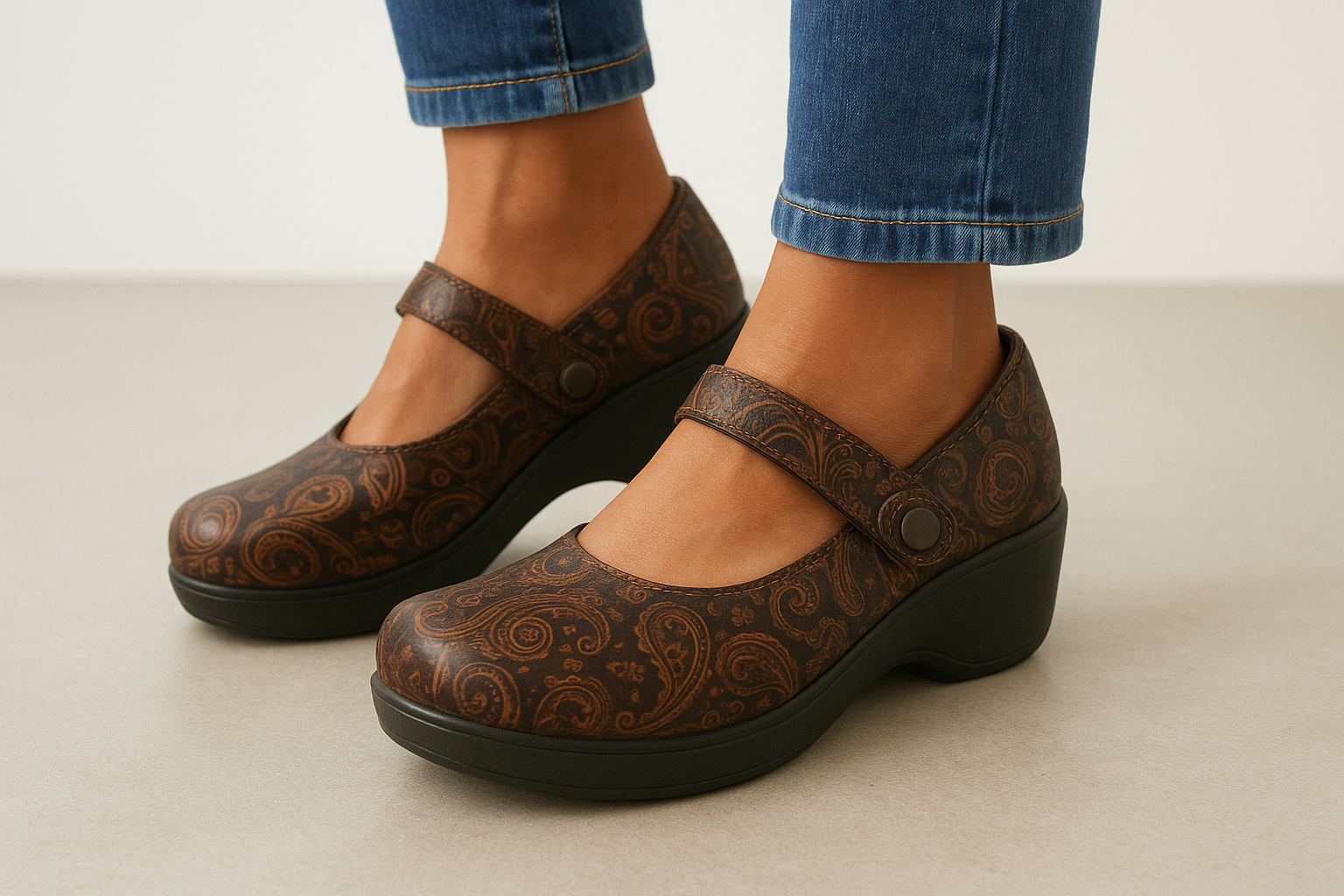
Dansko earned its following among nurses and chefs who stand on hard floors for twelve-hour shifts, and the Paisley Mary Jane brings that clog heritage into a style with a bit more polish. A wide, rocker-style base and roomy toe box make this one of the more forgiving arthritis shoes for women who want something dressier than a sneaker but still need real support underneath.
How it helps with arthritis
Dansko’s signature rocker sole rolls your foot through each step, sparing your big toe joint from bending as much as it would in a flat shoe, which helps a great deal with big toe arthritis, or hallux rigidus. A rigid heel cup keeps your foot centered and stable, while the roomy interior and adjustable strap accommodate swelling and orthotic inserts alike. The dense, shock-absorbing PU midsole holds up on tile and concrete without breaking down after a few months.
A stable rocker base does more for standing all day than any amount of extra padding.
Who it’s best for
This clog suits people who spend long stretches on their feet, particularly healthcare and hospitality workers managing arthritis alongside plantar fasciitis or heel pain, where our shoe picks for plantar fasciitis and heel pain are worth a look too. It also works for anyone who wants slip-on convenience without sacrificing arch support.
Price range
Expect to pay $120 to $140 per pair. That price reflects the leather build and replaceable footbed, both of which extend the shoe’s usable life well beyond a typical clog.
6. Brooks Addiction Walker shoes
Brooks built the Addiction Walker as a medical-grade motion control shoe, and you’ll find it recommended in podiatry offices as often as running stores. Leather uppers and a wide base give it a no-nonsense look that trades style points for stability, which is exactly the trade-off many arthritic patients want after trying flashier sneakers that didn’t hold up.
How it helps with arthritis
A rigid heel counter locks your foot in place and prevents the excess rolling that stresses already-inflamed ankle and midfoot joints. The full-grain leather upper resists stretching out of shape, so the support stays consistent wear after wear instead of breaking down like softer synthetic materials. Extra depth throughout the shoe leaves room for a custom orthotic, and the extended medial arch reduces strain on the joints most affected by osteoarthritis.
A shoe that controls motion protects arthritic joints even when cushioning alone can’t.
Who it’s best for
This walker suits patients with moderate to severe overpronation layered on top of arthritis, along with anyone who’s been told by a specialist that they need serious motion control rather than a flexible, athletic feel, so compare it against other supportive shoes for overpronation. It also works well for larger frames that need extra support underfoot.
Price range
Expect to pay $130 to $150 per pair, which sits in line with other orthopedic-grade walking shoes on this list.
Finding the right fit for your feet
No single shoe on this list works for every arthritic foot, because your joints, your swelling patterns, and your daily demands are different from the next patient’s. What matters is matching the specific features we’ve covered, rocker soles, extra depth, adjustable closures, to the joints giving you the most trouble right now. A shoe that works wonders for your neighbor’s bunion pain might do nothing for your ankle stiffness.
Don’t guess your way through this. Fitting mistakes are common, and they cost you money and comfort you don’t have to lose. If your current shoes still leave you limping by afternoon, or you’re not sure whether an orthotic would help more than a new pair of sneakers, get a professional opinion before you buy again. Schedule a same-day visit with our Central Virginia podiatrists, and we’ll help you find footwear that actually matches your feet.