

If your feet swell by afternoon, your toes crowd together, or a bunion makes every shoebox model feel like a vice, you already know how hard it is to find footwear that actually fits. Standard men’s shoes assume feet stay the same size all day. Diabetic feet rarely do, especially with neuropathy, edema, or Charcot changes in the mix. That’s exactly why extra wide mens diabetic shoes exist, and why the right pair matters more than most guys realize until they’ve dealt with a blister that turned into an ulcer.
This list focuses on men’s extra wide diabetic shoes built with depth, seamless interiors, and removable insoles that accommodate custom orthotic inserts or swelling without pinching pressure points. Every option here supports the kind of protective footwear podiatrists recommend for diabetic patients with at-risk feet.
Below, you’ll find eight of the best diabetic wide shoes for men, covering everything from wide to extra extra wide diabetic shoes for severe swelling. We break down fit, materials, and who each shoe suits best, so you can walk out of this article ready to order the right size instead of guessing again. As podiatrists who fit patients daily, we know what separates a shoe that helps from one that hurts.
1. Achilles Foot and Ankle Center diabetic shoe program
Achilles Foot and Ankle Center runs an in-house diabetic shoe and insert program built around Medicare’s Therapeutic Shoe Bill, and it’s the only option on this list where a podiatrist actually examines your feet before recommending a shoe. Instead of guessing your size from an online chart, you get measured, fitted, and monitored by clinicians who see diabetic foot complications every day across their Central Virginia locations. For men who’ve been burned by mail-order shoes that looked right online but rubbed wrong in person, that hands-on approach changes the outcome.
Key features
The program pairs extra wide diabetic shoes with custom or prefabricated inserts molded to your actual foot shape, not a generic last. Seamless interiors, protective toe boxes, and removable footbeds come standard, and staff adjust the fit at pickup rather than shipping a box and hoping. Because the practice also treats wound care and limb salvage cases, the shoes are selected with an eye toward preventing the exact problems that land patients in that clinic.
Who it’s best for
This fits men with diagnosed diabetes who qualify for Medicare’s annual shoe benefit, plus anyone managing neuropathy, edema, or a history of foot ulcers who wants a clinician’s judgment instead of a size guess. It also suits guys who’ve already tried an off-the-shelf diabetic extra wide shoes and had a poor fit, since the program includes a real diagnostic visit rather than a return-and-reorder cycle.
A shoe fitted by a podiatrist beats a shoe fitted by a size chart every time your feet are at risk.
Width and sizing options
Widths run from standard through extra wide and, for patients with significant swelling or Charcot deformity, extra extra wide accommodations built into the depth of the shoe itself. Sizing isn’t locked to a single brand; the practice stocks multiple diabetic shoe manufacturers and fits based on what your foot needs, not what’s in stock.
How to get them
Start with an appointment at one of the Achilles Foot and Ankle Center locations, where staff verify your diabetes diagnosis and Medicare or insurance eligibility, then schedule your fitting. Most patients qualify for one pair of shoes and up to three pairs of inserts per calendar year at little to no out-of-pocket cost.
2. Orthofeet extra wide diabetic shoes
Orthofeet has built its reputation on orthopedic-friendly footwear, and its diabetic line applies that same design logic to men who need serious width without sacrificing support. The brand uses a proprietary cushioning system and anatomical arch support built into most models, so the shoe does some of the work your feet can no longer do on their own after years of neuropathy or joint strain.
Key features
Every Orthofeet diabetic model includes a seam-free interior, a padded collar, and a removable insole deep enough to swap in custom orthotics. Non-binding uppers stretch to accommodate bunions and hammertoes, and many styles come in a lightweight sole designed to reduce fatigue for men on their feet all day.
Who it’s best for
This line suits men who want a recognized, widely available brand rather than a clinic-fitted option, particularly those comfortable ordering online and adjusting via exchange if needed. It also works well for guys managing arthritis alongside diabetes, since the cushioning addresses joint pain most diabetic wide shoes ignore.
Cushioning matters as much as width when your feet ache from more than one condition.
Width and sizing options
Orthofeet offers widths from medium through extra extra wide, covering most swelling and deformity cases without requiring a custom order.
How to get them
You can buy directly through Orthofeet’s website, select medical supply retailers, or other stores that carry orthopedic footwear, and many models qualify under Medicare’s shoe benefit with a prescription.
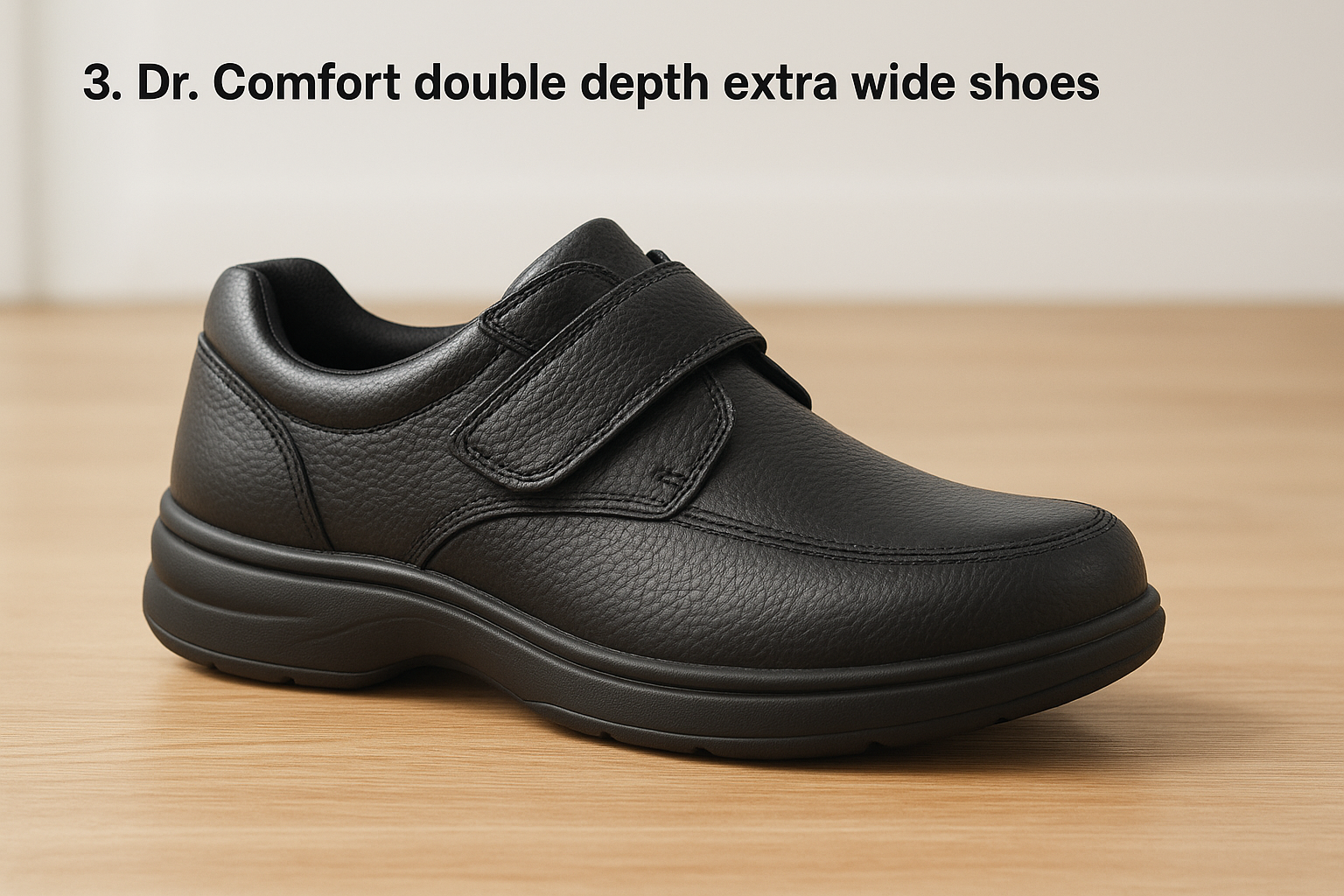
3. Dr. Comfort double depth extra wide shoes
Dr. Comfort has spent decades focused solely on diabetic footwear, and its double depth construction is the reason podiatrists mention this brand more than most. The extra internal volume means your foot doesn’t just fit widthwise, it has vertical room too, which matters if you’re wearing a custom orthotic on top of an already swollen foot.
Key features
The double depth design adds roughly a half inch of internal height compared to standard shoes, so a thick insert or brace fits without crowding your toes. Uppers come in stretchable leather or knit fabric, seams sit away from pressure points, and soles use a rocker shape that reduces strain on the forefoot with every step.
Who it’s best for
Men who need both width and depth, not just width alone, do best here. That includes anyone with Charcot foot changes, a healed ulcer site that still needs extra clearance, or a custom brace that standard diabetic extra wide shoes can’t accommodate.
Width alone doesn’t fix a fit problem when the real issue is depth.
Width and sizing options
Dr. Comfort offers widths from medium through extra extra wide diabetic shoes, with double depth built into nearly every style rather than offered as an add-on.
How to get them
Dr. Comfort shoes are sold through authorized medical retailers and some podiatry offices, and most models qualify for Medicare’s Therapeutic Shoe Bill with a physician’s prescription.
4. Propet Stability Walker extra wide shoes
Propet built the Stability Walker around men who need serious ankle support alongside width, and that combination sets it apart from shoes that only solve the fit problem. A firmer heel counter and a wider base give unsteady walkers more confidence on uneven ground, which matters if neuropathy has already affected your balance.
Key features
The Stability Walker uses a molded footbed, a rocker outsole, and a hook-and-loop closure that adjusts across a swollen instep without cutting off circulation. Reinforced side panels support the ankle during push-off, and the tread pattern is deeper than most diabetic wide shoes, which helps on wet floors or ramps at clinics and hospitals.
Who it’s best for
This shoe suits men who deal with balance issues on top of diabetic foot changes, including older patients recovering from a fall or anyone with mild drop foot. It’s less suited to guys who need double depth for a bulky custom orthotic, since the interior volume runs closer to standard than some extra wide diabetic shoes on this list.
A stable base matters as much as a wide toe box when neuropathy affects your balance.
Width and sizing options
Propet offers this model in wide and extra wide, with limited extra extra wide diabetic shoes availability depending on the specific colorway.
How to get them
Propet sells through major retailers like Amazon and through medical supply stores, and the Stability Walker qualifies under Medicare’s shoe benefit with a prescription from your podiatrist.
5. Apis extra wide diabetic shoes
Apis specializes in footwear for feet that standard "extra wide" doesn’t even cover, and its diabetic line pushes width further than most competitors bother to go. The brand built its reputation on accommodating severe deformities, so if you’ve already struck out with mainstream extra wide diabetic shoes, Apis is often the next stop before a custom-molded shoe becomes necessary.
Key features
Apis shoes use a stretchable upper material that flexes around bunions, hammertoes, and Charcot deformities without creating hot spots. Interiors run seam-free, footbeds come out completely for orthotics, and the toe box sits taller than average to clear dorsal bunions or claw toes that crowd a standard depth shoe.
Who it’s best for
This brand suits men whose feet have changed shape significantly from Charcot arthropathy, severe bunions, or long-term swelling that regular diabetic extra wide shoes can’t contain. It also works for guys who’ve had partial foot amputations and need a shoe built to accommodate an altered foot structure rather than a standard one.
When a foot has changed shape, you need a shoe built for that shape, not one stretched to fit it.
Width and sizing options
Apis offers width options that extend into extra extra wide diabetic shoes, some of the broadest on the market, plus multiple depth configurations per style.
How to get them
Apis products are sold through certified pedorthists and medical footwear retailers, and most styles qualify for Medicare coverage with a podiatrist’s prescription and documented diagnosis.
6. Pedors stretch extra wide diabetic shoes
Pedors makes shoes almost entirely from stretchable materials, which means the shoe itself flexes to your foot instead of forcing your foot to conform to a fixed last. That approach helps men whose foot shape changes throughout the day, since a shoe that’s snug at 8 a.m. can turn painful by 4 p.m. once swelling sets in.
Key features
Stretch uppers made from neoprene-like fabric wrap the entire foot without a single lace or seam pressing into skin. Slip-on and hook-and-loop styles dominate the line, and most models include a removable footbed deep enough for a custom orthotic or a bulky compression sock for swelling.
Who it’s best for
This brand suits men who can’t tolerate any rigid structure against their foot, including those with severe edema, lymphedema, or post-surgical swelling. Guys who struggle to bend down and lace shoes also benefit from the slip-on styles.
A shoe that stretches with your foot beats one you have to stretch your foot to fit.
Width and sizing options
Because the material stretches, Pedors effectively covers wide through extra extra wide diabetic shoes in a single style, adjusting to daily swelling changes without needing a different pair.
How to get them
Pedors sells through certified pedorthists and diabetic footwear specialists rather than big-box retailers, and most styles qualify for Medicare’s Therapeutic Shoe Bill with a prescription documenting your diagnosis.
7. New Balance extra wide diabetic shoes
New Balance built its reputation on athletic footwear, and its diabetic line brings that same performance mindset to men who still want to walk, hike, or stay active despite foot complications. Unlike some brands that lean purely medical in look and feel, these shoes pass for regular athletic wear, which matters to guys who don’t want their footwear to broadcast a diagnosis.
Key features
New Balance diabetic models pair a cushioned midsole with a roomy toe box and a removable insole that leaves space for orthotics without bulking up the fit. Breathable mesh uppers keep feet cooler than leather alternatives, and many styles use the brand’s rollbar technology to control excess motion at the heel, a detail that helps men with mild instability from neuropathy.
Who it’s best for
This brand suits active men who need diabetic wide shoes that still function for walking programs, gym visits, or all-day work on their feet. It’s a strong fit for guys managing early-stage neuropathy who haven’t yet developed severe deformity but still need protective, well-cushioned footwear.
An athletic-looking shoe can still protect a diabetic foot if the depth and width are built in correctly.
Width and sizing options
Select New Balance diabetic styles run from wide through extra wide, though true extra extra wide diabetic shoes availability is limited compared to dedicated medical brands.
How to get them
New Balance diabetic shoes are available through the brand’s website, authorized retailers, and some podiatry offices, with Medicare coverage available on qualifying styles when prescribed.
8. Skechers extra wide diabetic shoes
Skechers brings its budget-friendly, mass-market approach to diabetic footwear, giving men an entry point into extra wide mens diabetic shoes without the price tag of a specialty medical brand. The line won’t match the depth or orthopedic engineering of Dr. Comfort or Apis, but for men with mild to moderate foot changes, it covers the basics: width, a soft interior, and a removable insole.
Key features
Most Skechers diabetic styles use a memory foam insole, a stretch-knit or mesh upper, and a lightweight sole built for comfort rather than heavy-duty support. Seams sit away from common pressure points, and the slip-on styles skip laces entirely, which helps men who have trouble bending or tying shoes each morning.
Who it’s best for
This brand suits men with mild neuropathy or minor swelling who don’t yet need double depth or a rigid ankle support system. It also works for guys who want a casual, everyday look rather than an obviously medical shoe.
A budget diabetic shoe still needs a seamless interior and real width, not just a soft insole.
Width and sizing options
Skechers offers wide and extra wide options in select styles, though extra extra wide diabetic shoes aren’t part of the standard lineup, so severe swelling cases should look elsewhere.
How to get them
You can find Skechers diabetic shoes through major retailers, Amazon, and the brand’s own website, with some styles qualifying for Medicare coverage when prescribed.
9. How to choose the right extra wide diabetic shoe
Getting the width letter right matters more than the shoe brand you pick. Before you order another pair, understand how shoe width sizing actually works, because a mislabeled "wide" from one brand can fit like a medium from another.
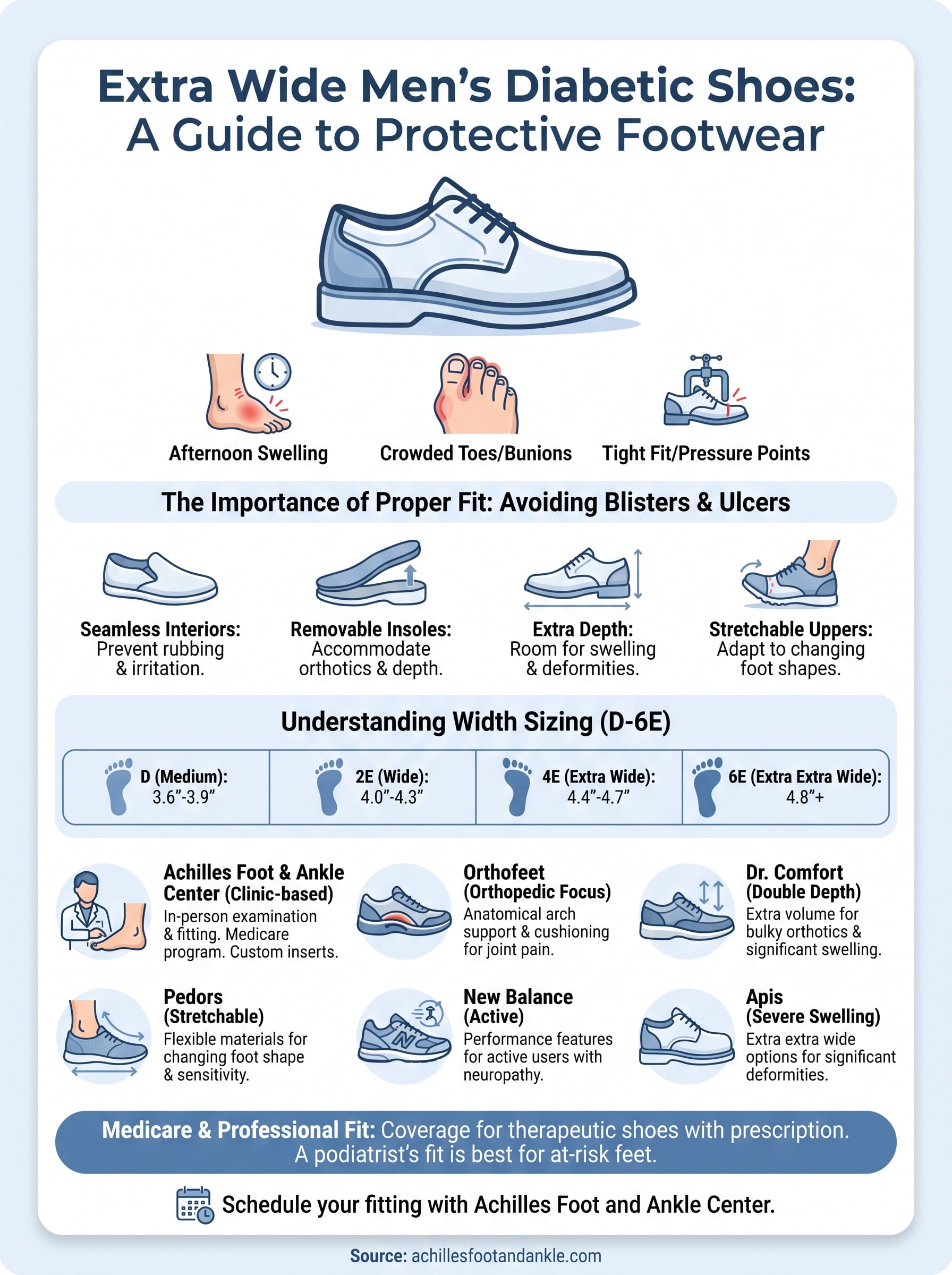
Understanding shoe width sizing from D to 6E
Manufacturers use letters to mark width, and the scale runs further than most men realize.
| Width Letter | Common Name | Typical Foot Width |
|---|---|---|
| D | Standard/Medium | 3.6" – 3.9" |
| 2E | Wide | 4.0" – 4.3" |
| 4E | Extra Wide | 4.4" – 4.7" |
| 6E | Extra Extra Wide | 4.8"+ |
Signs you need extra wide diabetic shoes
Redness across the sides of your foot at day’s end, toes that overlap, or shoes that feel fine in the morning but tight by afternoon all point to width problems, not size problems.
If you’re loosening laces by lunchtime, you’re wearing the wrong width, not just the wrong size.
Features that matter most for diabetic feet
Seamless interiors, removable insoles, and a protective toe box matter more than style. Look for a rocker sole if you have limited ankle motion, and stretchable uppers if your foot shape shifts with swelling.
Medicare and insurance coverage
Medicare’s Therapeutic Shoe Bill covers one pair of shoes and three pairs of inserts annually for diagnosed diabetics with a qualifying foot condition, provided a physician documents medical necessity. Most diabetic extra wide shoes brands listed above participate in this benefit when prescribed through a podiatrist.
Finding your perfect fit
Eight brands, one goal: a shoe that protects your feet instead of quietly damaging them. Whether you land on a clinic-fitted program, a double-depth Dr. Comfort, or a stretch-to-fit Pedors, the right extra wide mens diabetic shoes share the same fundamentals: seamless interiors, real depth, and enough width to stop rubbing before it starts. Guessing your width from an online chart is how men end up with a closet full of shoes that never quite worked.
Skip the guesswork. A podiatrist can measure your actual foot shape, check for the neuropathy or swelling patterns that change what "wide" means for you, and match you with a shoe and insert that fit on day one, not after three exchanges. If you’re tired of shoes that hurt by afternoon, get fitted for diabetic shoes at a same-day visit with Achilles Foot and Ankle Center and see someone who treats diabetic feet every single day.