If you’re dealing with foot arthritis, you already know that the wrong pair of shoes can turn a short walk into a painful ordeal. Stiff joints, swelling, and that deep ache in your toes or heel get worse fast when your footwear fights against your feet instead of working with them. Finding the right support shouldn’t require a medical degree, but it does help to know what actually matters.
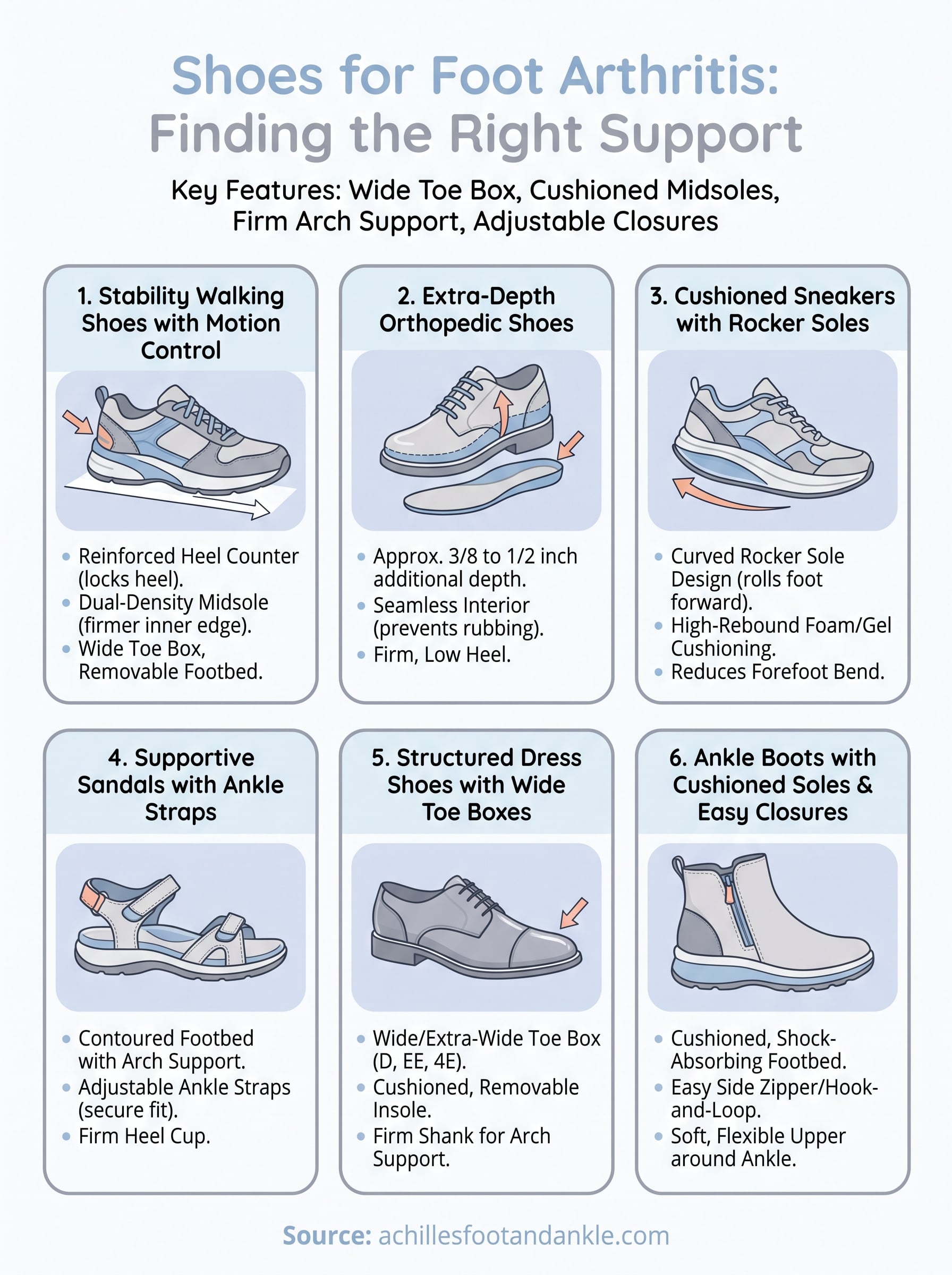
The shoes that help most share a few specific traits: a wide toe box, cushioned midsoles that absorb shock, firm arch support, and closures that let you adjust fit as swelling changes throughout the day. Skip the fashion-first picks and look for these features instead, and you’ll notice a real difference in how your feet feel by the end of the day.
In this list, we walk through six shoe options that consistently work well for patients dealing with arthritic pain in the feet and ankles. Our podiatry team at Achilles Foot and Ankle Center sees the impact footwear has on joint pain every day, and we’ve built this guide around what actually reduces discomfort, not marketing claims.
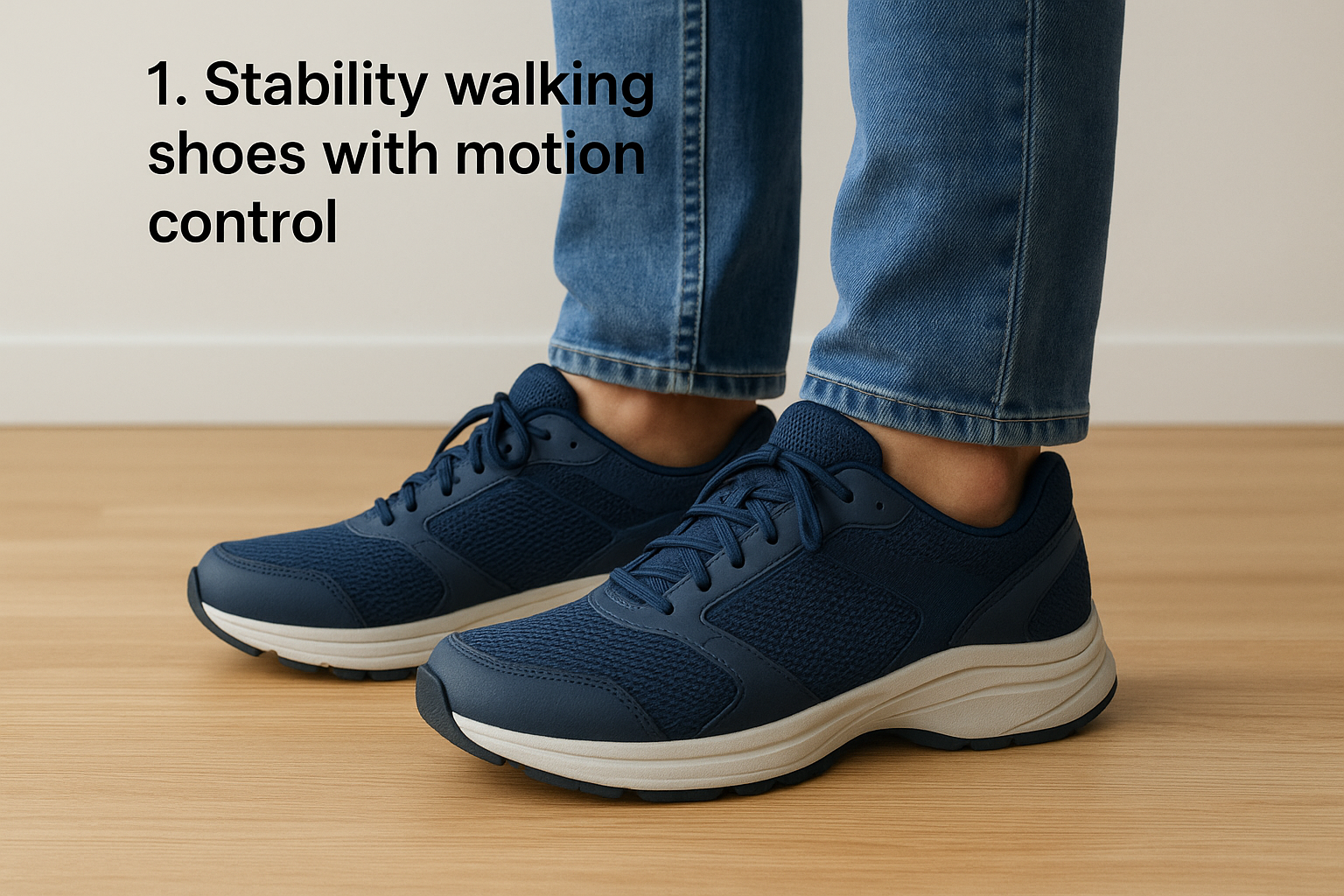
1. Stability walking shoes with motion control
Walking shoes built for motion control sit at the top of our list because they solve the biggest problem arthritic feet face: excess movement in joints that are already inflamed. When your foot arthritis flares in the midfoot or ankle, every extra twist or roll sends a jolt of pain through the joint. Stability shoes use a firmer heel counter and a denser foam wedge on the inner side of the sole to keep your foot tracking straight, which cuts down on that lateral strain. Among the best shoes for foot arthritis, this category consistently ranks highest with our patients who spend a lot of time on their feet during the day, and our podiatrist-approved walking shoe fit tips explain what to check before you buy.
Key features
Look for these specifics when you shop this category:
- Reinforced heel counter that locks the heel in place
- Dual-density midsole (firmer on the inner edge)
- Wide, non-restrictive toe box
- Removable footbed so you can add custom orthotics
- Breathable mesh upper to manage swelling
A shoe that stops your foot from rolling inward does more for arthritic joint pain than any amount of extra cushioning alone.
Who it’s for
These shoes suit patients with rheumatoid arthritis or osteoarthritis affecting the ankle, subtalar, or midfoot joints, especially if you notice your foot rolling inward when you walk, which is where the best arch support shoes for overpronation help most. They also work well for anyone managing a flat foot alongside arthritis, since the added structure compensates for the collapsed arch. If you’ve been told by a podiatrist that you need motion control rather than just cushioning, this is the category to shop first. Many of our patients pair these shoes with orthotics molded to their own feet from our practice for an even more precise fit.
Price range
| Type | Typical price |
|---|---|
| Drugstore/basic brands | $50-$80 |
| Mid-range walking brands | $90-$140 |
| Orthopedic-specific lines | $130-$180 |
Stick to the mid-range or orthopedic tier if your arthritis is moderate to severe. The cheaper models often skimp on the heel counter reinforcement that actually controls motion, which defeats the purpose of buying this category in the first place.
2. Extra-depth orthopedic shoes with removable insoles
Swelling in arthritic feet rarely stays the same size from morning to night, which is exactly why extra-depth shoes earn a spot on this list. These shoes add roughly 3/8 to 1/2 inch of additional volume throughout the toe box and midfoot compared to standard footwear, giving room for bunions, hammertoes, or custom inserts without pinching. Diabetic patients with foot arthritis often get pointed toward this category first, since it doubles as protection against pressure sores.
Key features
A true extra-depth shoe includes:
- Removable factory insole (typically 1/4 inch thick)
- Seamless interior lining to prevent rubbing
- Reinforced but flexible upper material
- Firm, low heel for stability
More depth means more room for swelling and orthotics, which means fewer painful pressure points by day’s end.
Who it’s for
Patients with diabetic neuropathy combined with arthritis benefit most, since these shoes accommodate custom molded inserts our team fits in-office. Anyone with significant toe deformities, like hammertoes or claw toes from long-standing arthritis, also does well here. If your current shoes leave red marks or blisters by evening, switching to this category often solves the problem outright.
Price range
Expect to pay $70 to $150 for quality extra-depth brands, with therapeutic lines running higher. Medicare Part B often covers one pair annually plus inserts for diabetic patients who qualify, so read up on how Medicare coverage for therapeutic shoes works and ask your podiatrist about documentation before you buy retail.
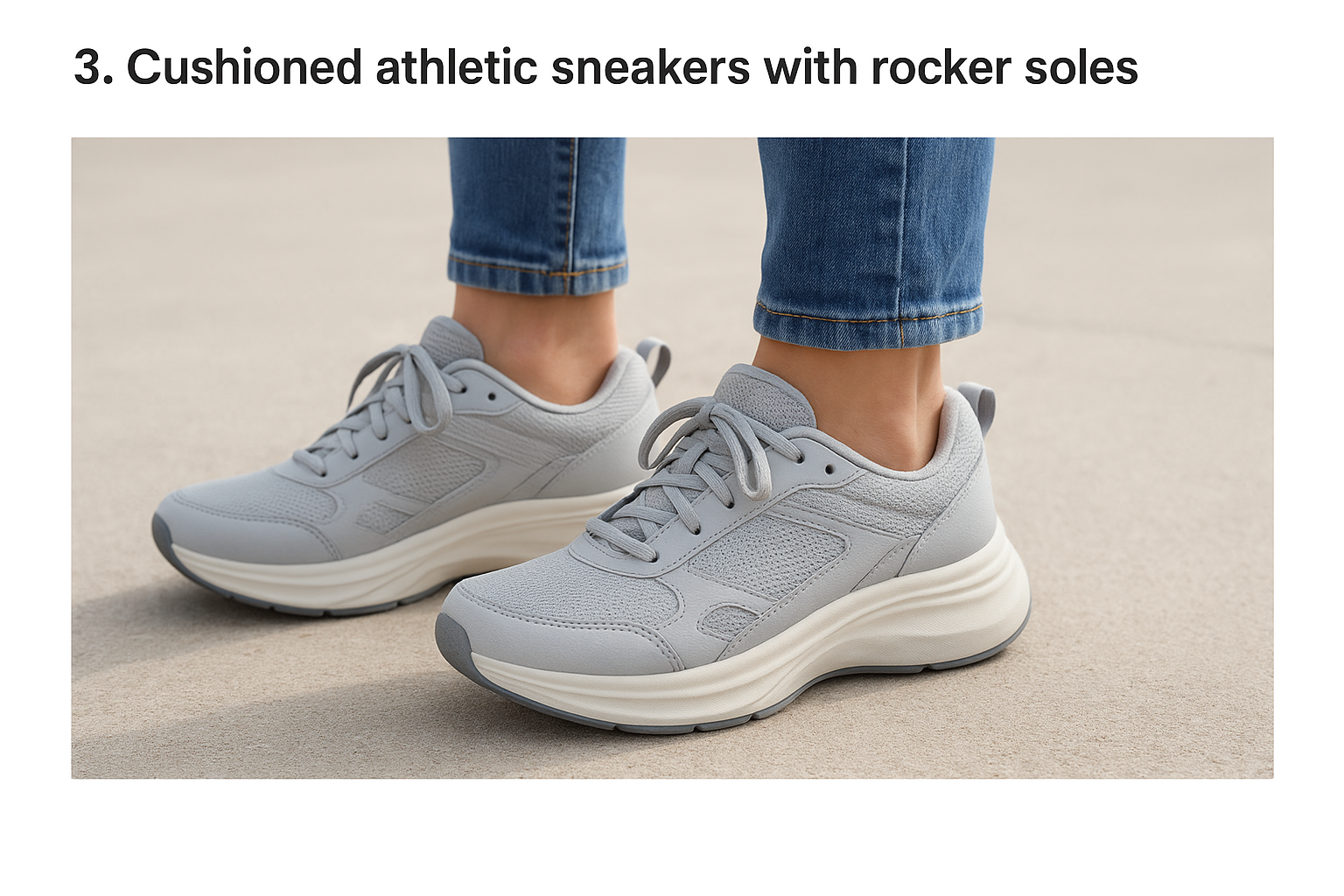
3. Cushioned athletic sneakers with rocker soles
A rocker sole changes the way your foot moves through each step, and that’s exactly why this category helps arthritic joints so much. Instead of bending your big toe joint (a common pain point in arthritis) with every stride, the curved sole rolls your foot forward for you. Paired with thick, shock-absorbing cushioning, these sneakers reduce the repetitive impact that flares up joint pain in the forefoot and midfoot. Patients recovering from bunion surgery or dealing with great toe arthritis often tell us these are the first shoes that let them walk without wincing.
Key features
- Curved or beveled rocker sole design
- High-rebound foam or gel cushioning in the midsole
- Flexible upper that moves with the foot
- Lightweight construction to reduce fatigue
A rocker sole does the bending your toe joint can’t do anymore, which is often the single biggest relief for forefoot arthritis.
Who it’s for
This style works best for patients with a stiff, arthritic big toe joint or hallux limitus, where the big toe joint has lost its normal range of motion. It also suits anyone with general osteoarthritis across the midfoot who needs help absorbing impact during daily walks or light exercise. Runners and walkers who’ve had to scale back activity because of joint pain often return to modest mileage once they switch.
Price range
Expect $100 to $170 for name-brand rocker-sole sneakers, with therapeutic or medical-grade versions reaching $200.
4. Supportive sandals with secure ankle straps
Warm weather doesn’t mean you should trade support for flip-flops. Supportive sandals with contoured footbeds and adjustable ankle straps let your feet breathe while still holding the foot in place, something flat, strapless sandals can’t do for arthritic joints. Loose sandals force your toes to grip with every step just to keep the shoe on, and that constant clenching aggravates joints in the toes and forefoot. A secure strap system solves that problem while still giving you the flexibility warm months demand.
Key features
- Contoured, cushioned footbed with arch support built in
- Adjustable hook-and-loop or buckle ankle strap
- Firm heel cup to prevent slipping
- Textured, non-slip outsole
A sandal that straps around the ankle keeps your toes from working overtime just to hold the shoe on.
Who it’s for
These sandals suit patients with arthritis in the toes or forefoot who still want breathable footwear during summer, especially in humid Central Virginia heat when swelling tends to worsen. They also work well for anyone recovering from bunion surgery in Richmond or toe joint procedures who needs open, adjustable footwear during healing. If regular closed shoes feel too tight by afternoon, a strapped sandal gives you room to loosen up without sacrificing stability.
Price range
Quality orthopedic sandals run $60 to $120, with podiatrist-recommended brands sitting toward the higher end. Cheaper drugstore sandals rarely include real arch support, so they don’t belong in this category despite the lower price tag.
5. Structured dress shoes with wide toe boxes
Work obligations don’t pause for arthritis, and plenty of patients still need to walk into an office looking polished. Structured dress shoes built with a wider toe box and a firmer sole solve the biggest problem with typical dress footwear: the narrow, pointed last that crushes toe joints already swollen from arthritis. These shoes keep a professional look while swapping the flimsy sole and cramped fit for real support underneath, and you can add insoles made for dress shoes if you need more.
Key features
Good options include:
- Wide or extra-wide toe box (often labeled D, EE, or 4E)
- Cushioned, removable insole for orthotic compatibility
- Firm shank for arch support under dress attire
- Low, stable heel (under 1.5 inches)
Looking professional and protecting your toe joints aren’t mutually exclusive once you find a properly widened last.
Who it’s for
Office workers and anyone in client-facing roles who need arthritis-friendly footwear for a dress code benefit most from this category. Teachers, healthcare workers in administrative roles, and attorneys are common patients who ask us for this recommendation. If your current dress shoes leave you swapping into sneakers the moment you get to your car, a properly fitted pair here can eliminate that daily ritual entirely.
Price range
Expect to pay $90 to $180 for orthopedic dress shoe brands built with genuine wide lasts. Standard dress shoes marked "wide" at big box retailers rarely add enough depth, so stick with brands that specifically design for arthritic feet.
6. Ankle boots with cushioned soles and easy closures
Colder months bring their own challenges for arthritic feet, and standard boots often make things worse with stiff, unforgiving soles. Ankle boots built for arthritis swap that rigid construction for cushioned midsoles and soft, flexible uppers that still protect against wind and cold. Zippers or wide hook-and-loop straps replace the tight lacing that traditional boots demand, so you can get them on without wrestling swollen joints or bending down repeatedly. Height around the ankle also adds a layer of external support for anyone with weakness or instability in that joint, one of the clearest benefits of ankle support.
Key features
- Side zipper or wide hook-and-loop closure
- Cushioned, shock-absorbing footbed
- Soft, pliable upper material around the ankle
- Removable insole for custom orthotics
- Non-slip, textured outsole for icy conditions
Easy closures matter as much as cushioning once bending over and tugging laces becomes its own painful chore.
Who it’s for
Patients with ankle arthritis or limited hand dexterity from rheumatoid arthritis in the toes and ankles benefit most, since fumbling with laces becomes genuinely difficult during a flare. Anyone managing arthritis alongside balance concerns also appreciates the extra ankle coverage these boots provide. Central Virginia’s cold, damp winters make this category worth having on hand even if you rely on other shoes the rest of the year.
Price range
Quality orthopedic ankle boots run $90 to $160, with waterproof or shearling-lined versions reaching closer to $180.
Getting the right support for your feet
The right shoe won’t cure arthritis, but it removes one of the biggest daily aggravators of joint pain. Whether you need motion control for an unstable ankle or a rocker sole for a stiff big toe, matching the shoe to your specific pain pattern makes the difference between limping through the day and actually forgetting your feet hurt at all. None of these six categories work as a one-size-fits-all fix, and that’s the point. Your arthritis has its own pattern, and your shoes should match it.
Guessing at the right fit wastes money and prolongs pain you don’t need to live with. Our podiatrists can pinpoint exactly which joints are affected and tell you which shoe features will actually help, plus fit you for custom orthotics if you need them. If your feet have been aching longer than they should, see a podiatrist today at one of our Central Virginia offices and let’s get you walking comfortably again.