

Every step feels like you’re stepping on a pebble that isn’t there. Ball of foot pain while walking usually shows up right under the ball of your foot, that padded area behind your toes, and it tends to get worse the longer you’re on your feet. If you’ve noticed it flares up during your daily walk, at the end of a work shift, or after a run, you’re not imagining things, and you’re not alone.
This kind of pain has a name, metatarsalgia, and it’s rarely random, because it traces back to a short list of common triggers behind ball of foot pain. It develops from repeated pressure on the metatarsal bones, often tied to your foot shape, footwear choices, or high-impact activity that overloads the front of your foot with every stride. The good news: once you know the cause, relief is usually straightforward.
In this article, we’ll walk through the common culprits behind ball of foot pain, from ill-fitting shoes to bunions and stress fractures, and lay out the treatment options that actually work, from padding and orthotics to when it’s time to see a podiatrist. Our team at Achilles Foot and Ankle Center sees this complaint constantly across our Central Virginia clinics, and we’ll share what genuinely helps patients get back to pain-free walking.
Why the ball of your foot hurts when you walk
Walking puts a surprising amount of force through the front of your foot. Every time your heel lifts, your metatarsal heads, the five small joints just behind your toes, absorb your entire body weight before push-off. Do that thousands of times a day, and any imbalance in how that weight distributes turns into inflammation, irritated nerves, or even a stress fracture.
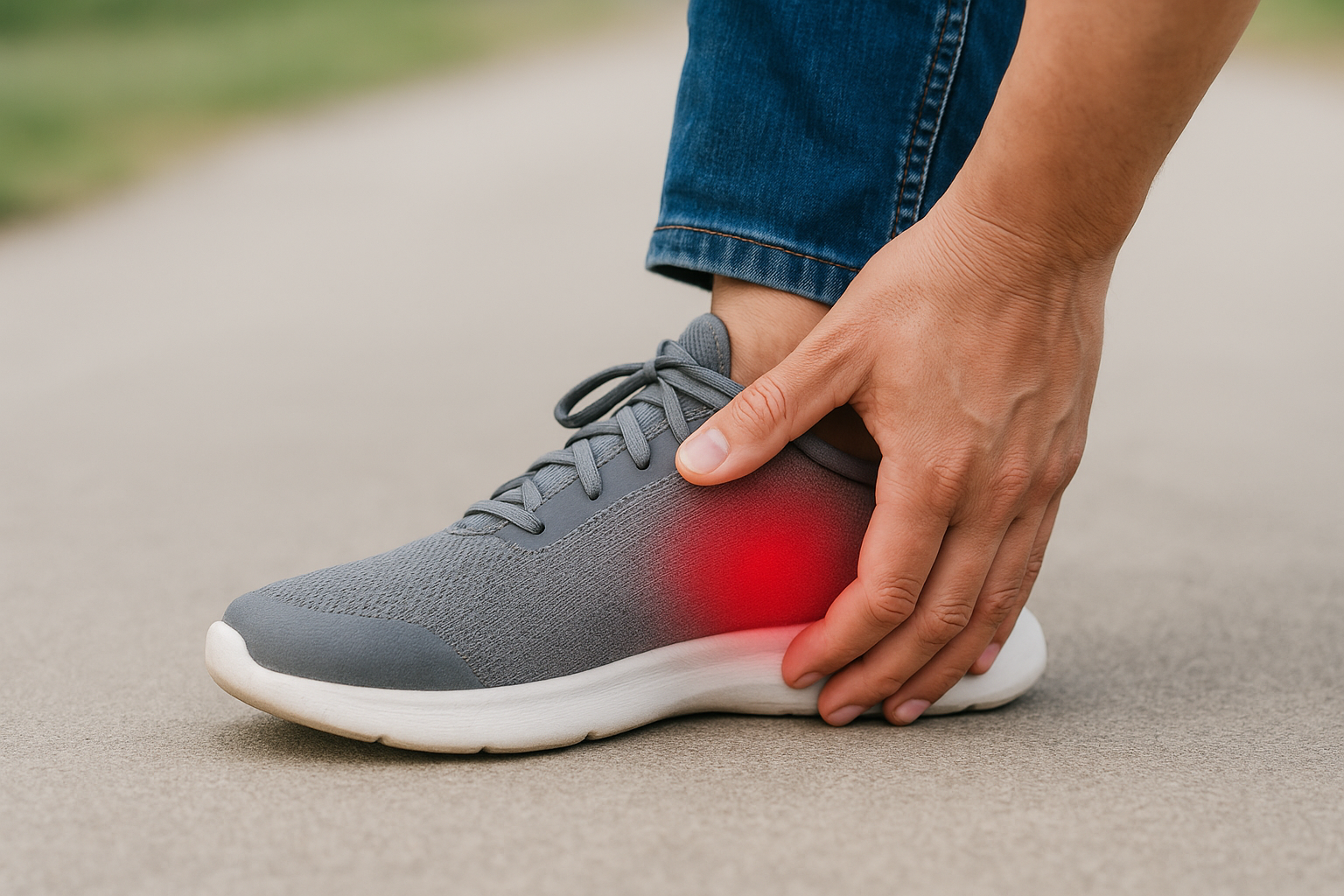
Common causes of metatarsalgia
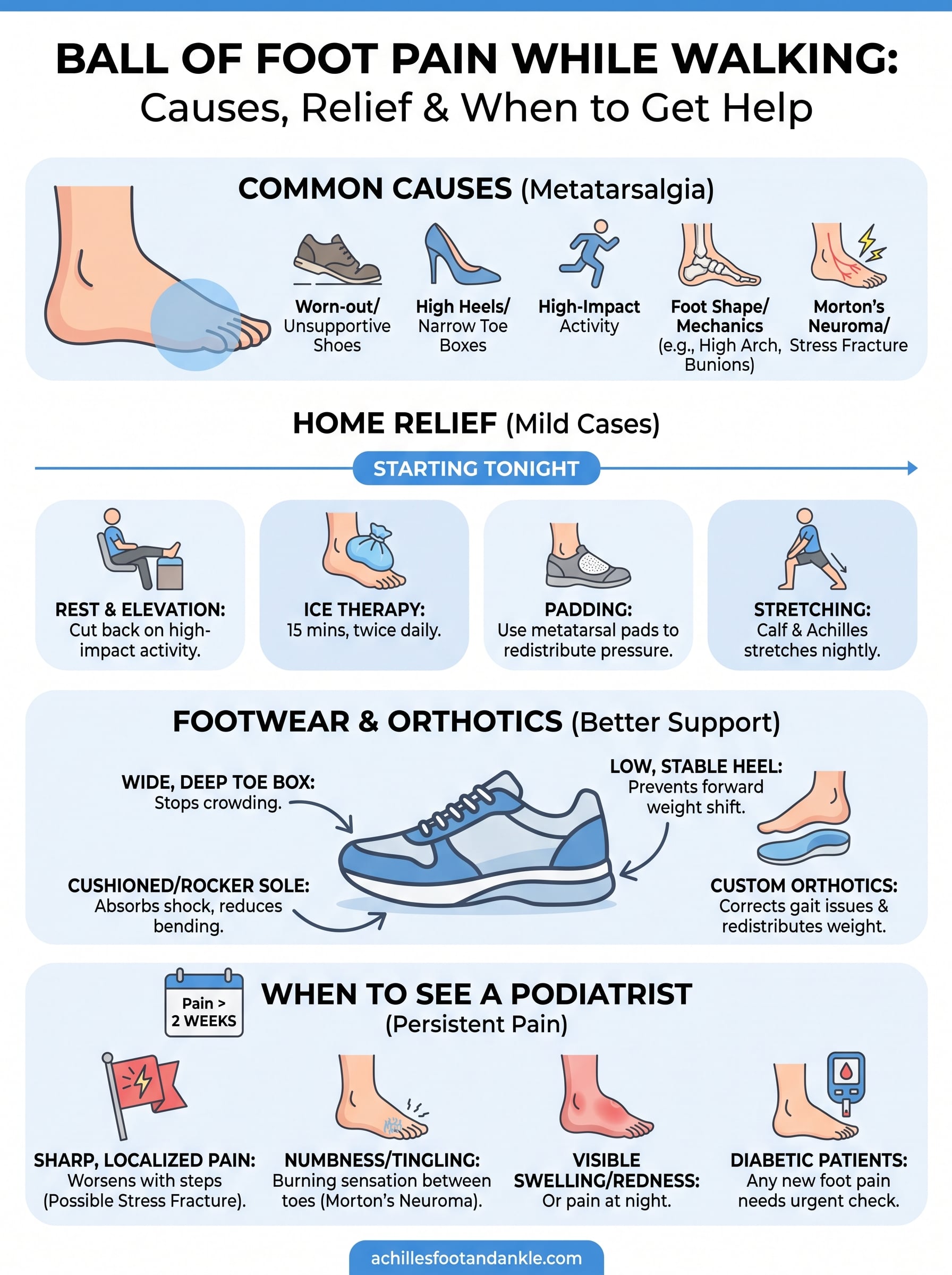
Most cases trace back to one of a handful of triggers. Here’s what we see most often in our Central Virginia clinics:
- Worn-out or unsupportive shoes, especially thin-soled flats or shoes with no cushioning left in the forefoot
- High heels or narrow toe boxes that shift weight forward and squeeze the metatarsals together
- High-impact activity like ball of foot pain from running, jumping, or long shifts on hard concrete floors
- Excess body weight, which adds direct load to the forefoot with every step
- Structural issues such as a high arch, hammertoes, or bunions that change how pressure lands
- Morton’s neuroma, a thickened nerve tissue between the third and fourth toes that causes burning or tingling in the ball of the foot, with its own set of treatment options for Morton’s neuroma
Ball of foot pain almost always comes down to too much pressure landing on too small an area, over and over again.
Foot shape and mechanics that increase risk
Some people are simply built for more forefoot pressure than others. A high arch doesn’t absorb shock as well as a flatter foot, so the metatarsals take a harder hit with each stride. Shortened calf muscles or a tight Achilles tendon also force you to push off harder through the ball of the foot, since your ankle can’t flex as far. Add a bunion or hammertoe into the mix, and the mechanics get worse, because those deformities crowd the joints and change your gait pattern without you noticing, which is why treating a bunion early matters.
Age plays a role too. The fatty padding under your metatarsal heads naturally thins as you get older, so a 55-year-old walking the same route as a 25-year-old is putting far less cushion between bone and pavement.
How to relieve ball of foot pain at home
Most mild cases of metatarsalgia respond well to simple changes you can start tonight. Rest is the first step: cut back on high-impact activity for a week or two and swap your daily walk for swimming or cycling while the inflammation settles. Ice the ball of your foot for 15 minutes after being on your feet, using a frozen water bottle rolled under the area for a bit of massage at the same time.
Give your forefoot a break from impact and it usually calms down faster than you’d expect.
Padding makes a real difference too. Over-the-counter metatarsal pads placed just behind the ball of your foot, not under it, redistribute pressure away from the sore joints. Elevate your foot when you sit down, and consider an anti-inflammatory like ibuprofen for a few days if swelling is part of the problem.
Stretching matters more than people think. Tight calves and a stiff Achilles tendon force extra push-off pressure through the forefoot, so a nightly calf stretch against a wall for 30 seconds, three times, along with other at-home stretches for ball of foot pain, can ease the load over a few weeks.
Track your progress with a simple routine:
- Ice for 15 minutes, twice daily
- Rest from running, jumping, or long walks on concrete
- Metatarsal pads in your shoes
- Calf and Achilles stretches every night
- Elevation when resting
Giving these a fair two-week trial tells you a lot about whether ball of foot pain while walking is simple overload or something that needs a closer look.
Footwear and orthotic choices that ease pressure
Your shoes either fight against ball of foot pain or feed it, there’s rarely a middle ground. A wide, deep toe box lets your metatarsals spread naturally instead of squeezing together, and a rocker-bottom sole reduces how far your forefoot has to bend with each step. Avoid anything with a flat, thin sole or a heel higher than an inch, since both push more weight straight onto the ball of your foot.
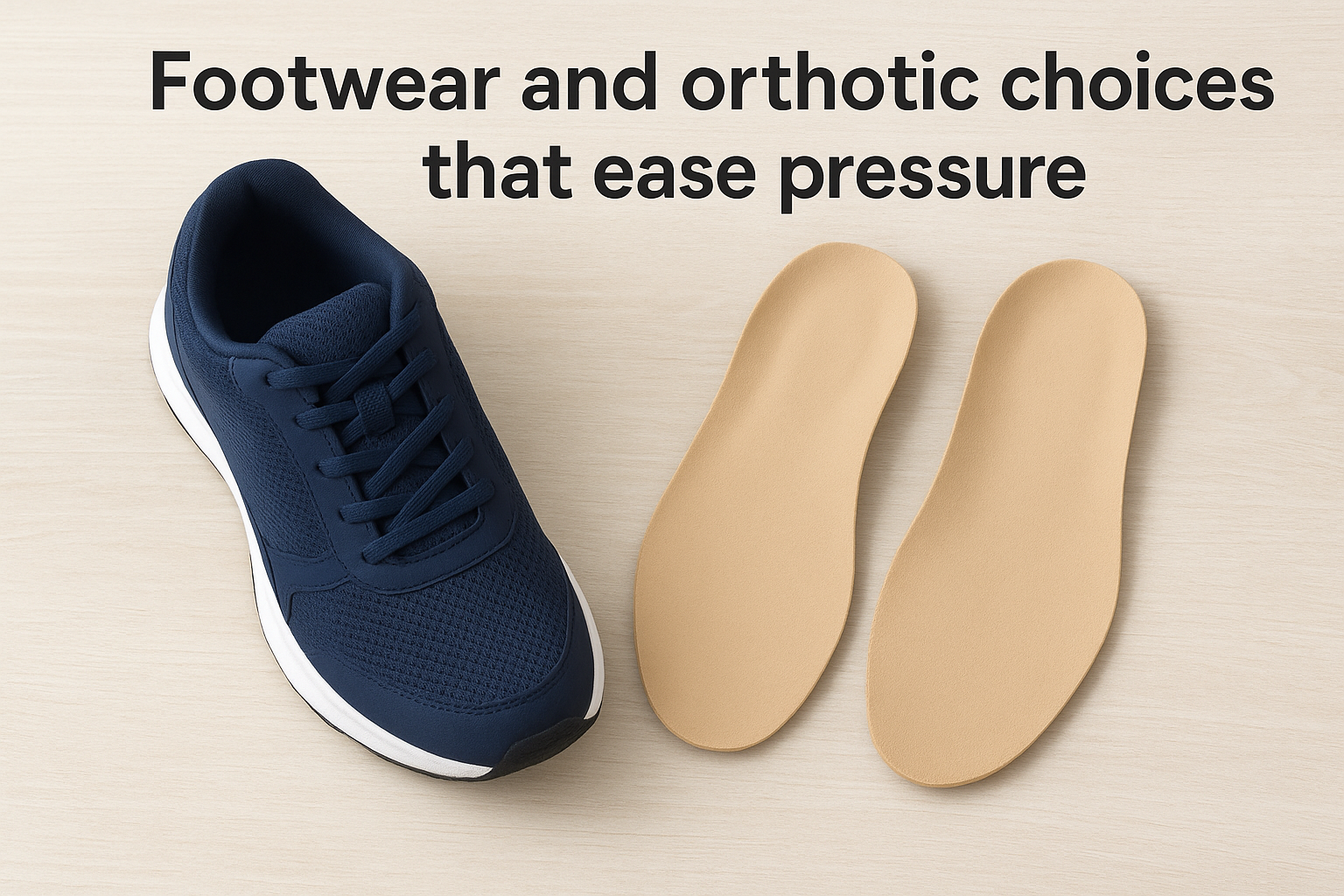
What to look for in a shoe
| Feature | Why it helps |
|---|---|
| Wide toe box | Stops crowding of metatarsal heads |
| Cushioned forefoot | Absorbs shock before it hits bone |
| Rocker sole | Reduces bending force through the joints |
| Low, stable heel | Keeps weight from shifting forward |
| Removable insole | Allows custom orthotic insertion |
The right shoe does half the work your foot used to do alone.
Orthotics and inserts worth trying
Over-the-counter cushioned insoles help mild cases, but persistent pain usually calls for custom orthotics, or custom shoe inserts, built from a mold of your specific foot shape. A well-made orthotic redistributes weight away from irritated metatarsal heads and corrects underlying issues like a high arch or early bunion that keep loading the same spot. At Achilles Foot and Ankle Center, our team fits patients with custom orthotic devices designed around their actual gait, not a generic template, which matters when metatarsalgia keeps coming back despite shoe changes. Pair the right orthotic with supportive footwear, and many patients notice a difference within a couple of weeks.
When to see a podiatrist about your symptoms
Some cases of ball of foot pain while walking need more than rest and padding. If two weeks of home care hasn’t budged the pain, or if it’s getting worse instead of better, that’s your signal to book an exam rather than keep guessing. Persistent forefoot pain that lingers past that window often points to something structural, like an advancing bunion, a neuroma, or a stress fracture that won’t heal on its own.
Pain that outlasts two weeks of rest is your foot telling you it needs a professional look, not another home remedy.
Warning signs that mean it’s time to call
Certain symptoms shouldn’t wait at all. Watch for these red flags:
- Sharp, localized pain that worsens with each step, possibly a stress fracture, so it’s worth knowing when a stress fracture in the foot needs care
- Numbness, tingling, or a burning sensation between your toes, common with Morton’s neuroma
- Visible swelling, redness, or warmth in the forefoot
- Pain that wakes you up at night or persists even while resting
- A limp or noticeable change in how you walk
- Diabetic patients noticing any new foot pain, since nerve damage can mask serious injury
What a podiatry visit actually involves
Expect a hands-on exam, a look at your gait, and likely digital imaging to rule out fractures or joint damage. Diagnosing the exact cause matters, because treatment for a neuroma looks nothing like treatment for a stress fracture. At Achilles Foot and Ankle Center, our podiatrists offer same-day appointments across our Central Virginia locations specifically for this kind of urgent forefoot pain, so you’re not stuck waiting weeks while the problem worsens.
Getting back to comfortable steps
Most people find real relief once they identify what’s driving their ball of foot pain while walking and match the fix to the actual cause. Rest, padding, and better shoes solve the majority of mild cases within a couple of weeks. Nagging or worsening pain, though, usually means there’s a structural issue underneath, a neuroma, stress fracture, or bunion, that home care alone won’t resolve.
Skipping that diagnosis just prolongs the limp and the guesswork. Trust your gut here: if two weeks of rest and better footwear haven’t changed anything, get it checked before it changes how you walk permanently.
Our podiatrists at Achilles Foot and Ankle Center diagnose and treat metatarsalgia every week across our Central Virginia clinics, and we know how much a proper exam speeds up recovery. If your forefoot pain hasn’t budged, schedule a same-day podiatry visit in Central Virginia and let’s get you back to comfortable steps.