
Most runners pay close attention to their legs, hips, and knees before heading out, but skip right past their feet. That’s a problem. Your feet absorb two to three times your body weight with every stride, and jumping into a run without proper foot stretches before running sets the stage for plantar fasciitis, Achilles tendon strain, and other overuse injuries that can sideline you for weeks.
At Achilles Foot and Ankle Center, our podiatrists across Central Virginia treat runners dealing with exactly these issues every day. The pattern we see is consistent: tight, underprepared feet lead to pain that could have been avoided with a few minutes of targeted stretching.
The good news? Warming up your feet doesn’t require special equipment or a lot of time. Below, you’ll find six specific foot stretches designed to improve mobility, loosen stiff tissues, and help you run with less risk of injury. Each one is simple enough to do at home, at the gym, or right before you hit the trail.
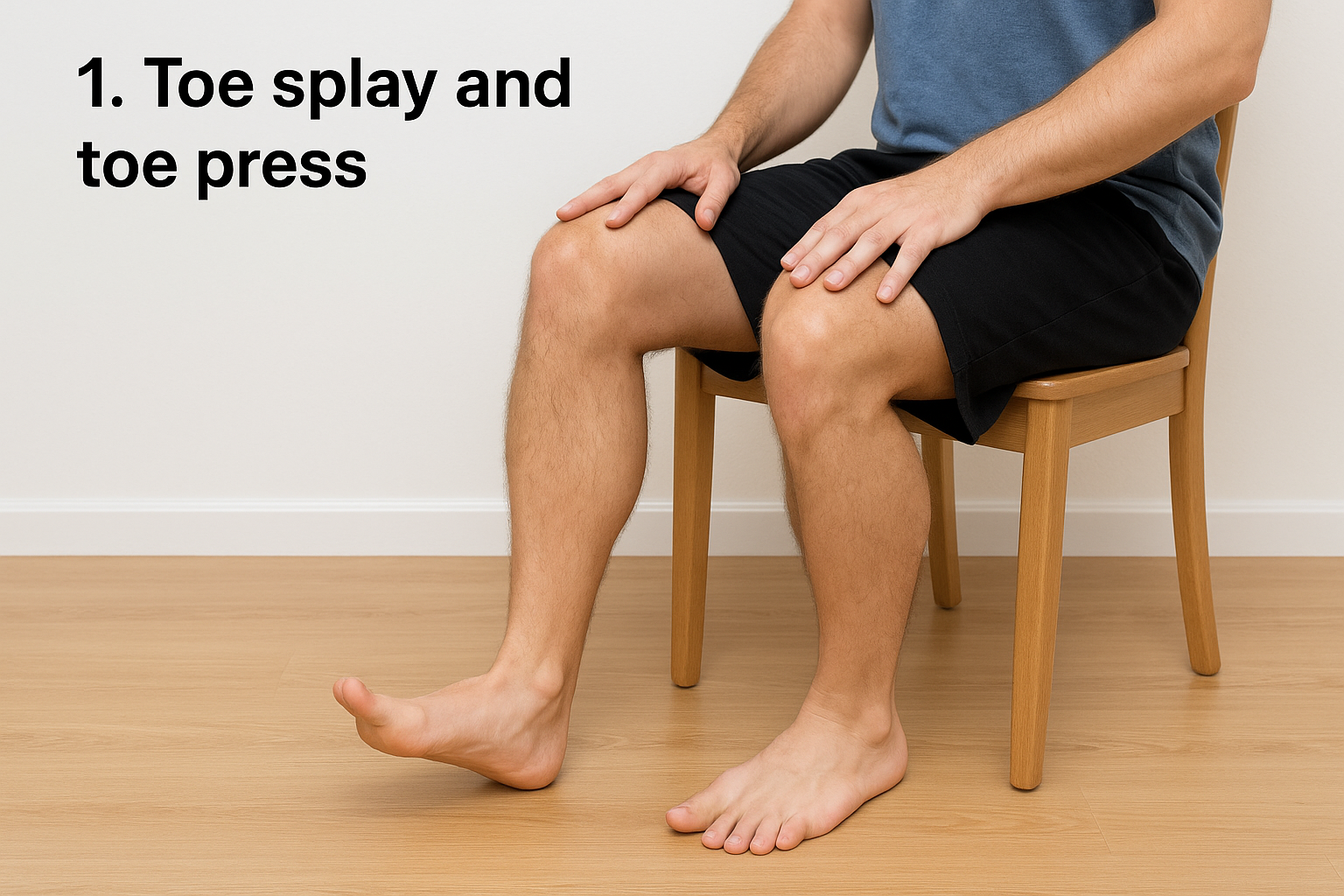
1. Toe splay and toe press
The toe splay and toe press is one of the most overlooked foot stretches before running, and also one of the most effective. It activates the small intrinsic muscles inside your foot that control toe stability and arch support with every stride you take. Starting your warm-up here builds a solid foundation for the stretches that follow.
What this warm-up targets
This exercise works the intrinsic foot muscles, the small muscles that originate and insert entirely within the foot. These muscles play a direct role in stabilizing your arch and absorbing ground impact. When they’re weak or stiff, your foot collapses inward and transfers extra load to the plantar fascia and Achilles tendon, two structures that runners injure most often.
Mobilizing your intrinsic foot muscles before a run reduces strain on the soft tissues most commonly damaged by repetitive impact.
How to do it before a run
Sit in a chair with your feet flat on the floor and your back straight. For the toe splay, spread all five toes as wide as you can, hold for two seconds, then relax completely. For the toe press, keep your heel planted, press your toes down into the floor, and try to lift the middle of your foot to create a short arch. Hold for two seconds and release. These two movements pair well because one opens the foot and the other engages it.
How many reps and how long it takes
Do 10 to 15 repetitions of each movement per foot. You can alternate feet or finish all reps on one side before switching. The full sequence takes roughly two minutes, making it easy to fit into any pre-run routine without cutting into your actual run time.
Common mistakes and quick fixes
The most common mistake is curling your toes downward instead of spreading them outward. Curling recruits the wrong muscles and delivers little benefit. Focus on pushing each toe away from the others laterally. Another frequent error is rushing through the hold. Two full seconds of tension per rep gives the muscles enough time to actually fire and respond. If the splay feels impossible at first, use your fingers to gently guide each toe outward until your foot learns the movement pattern on its own.
2. Big toe extension stretch
The big toe extension stretch targets the first metatarsophalangeal joint at the base of your big toe. This joint needs adequate range of motion for a healthy push-off with every stride, making it a key foot stretch before running.
Why big toe mobility matters for runners
Your big toe needs to extend roughly 60 to 65 degrees during a running stride. When that joint is stiff, your foot compensates by rolling inward, which shifts excess load to the plantar fascia and Achilles tendon, two structures under pressure during a run.
A stiff big toe forces compensatory patterns that increase injury risk across the entire lower limb.
How to do it before a run
Follow these steps for each foot before you run:
- Sit in a chair and cross one foot over the opposite knee.
- Grip your big toe firmly and pull it upward toward your shin.
- Hold for 15 to 30 seconds, then release slowly.
- Repeat two to three times per foot.
How to scale it for stiff or painful toes
If pulling the toe causes sharp discomfort, reduce your range and try a standing version instead. Place your foot flat on the floor and shift your weight forward slowly so the floor passively extends the toe. Start with five-second holds and build from there.
Signs you should stop and switch to a gentler option
Skip this stretch if you feel sharp or shooting pain at the joint rather than a gentle pulling sensation. Numbness, visible swelling, or pain that persists after the stretch are signals to stop and consult a podiatrist before your next run.
3. Kneeling toe tuck stretch for the top of the foot
The kneeling toe tuck stretch targets the plantar fascia and the tops of your toes, but it also does something most foot stretches before running skip: it lengthens the extensor tendons that run along the top of your foot. Adding this to your warm-up prepares the foot’s upper surface for the repetitive extension that happens with every ground contact.
What this stretch targets
This movement focuses on the dorsal surface of the foot, including the toe extensor tendons and the joint capsules around each toe knuckle. These tissues often feel tight in runners who spend long hours in rigid shoes, and loosening them before a run reduces strain during push-off.
How to do it safely
Kneel on a soft surface or yoga mat and follow these steps:
- Tuck your toes under so the tops face the floor.
- Sit back gently onto your heels until you feel tension across the top of your foot.
- Hold for 20 to 30 seconds, then release slowly.
Avoid forcing your weight backward quickly, as sudden pressure can strain the toe joints before they’re ready.
Best time to use it in your warm-up
Place this stretch third or fourth in your sequence, after your toes and arch are already slightly warm from earlier movements. Doing it cold on a stiff foot increases joint stress.
Modifications for sensitive knees or toe joints
If kneeling causes knee discomfort, place a folded towel behind your knee joint before sitting back. For sensitive toe joints, reduce how far back you sit and keep most of your weight on your hands rather than your heels.
4. Plantar fascia toe pull stretch
The plantar fascia toe pull stretch directly targets the thick band of connective tissue that runs along the bottom of your foot from heel to toes. Adding it to your foot stretches before running routine helps reduce morning stiffness and keeps that tissue pliable under load.
When this stretch helps most
This stretch delivers the most benefit if you experience tightness or heel pain in your first few steps after sitting or waking up. Runners dealing with early plantar fasciitis often find that doing it before hitting the pavement reduces the sharp pull at the heel that typically flares during the first mile.
Stretching the plantar fascia before a run can reduce peak strain on the tissue during initial ground contact.
How to do it without irritating the arch
Sit in a chair and cross one foot over the opposite knee. Grip your toes and gently pull them back toward your shin until you feel a stretch along the bottom of your foot. Keep the pull steady and controlled rather than forcing the toes back quickly.
How long to hold and how many rounds
Hold each stretch for 20 to 30 seconds and complete three rounds per foot before your run. This gives the fascia enough time to respond without overloading the tissue.
Mistakes that can flare heel or arch pain
The two most common errors are pulling the toes too forcefully and neglecting your less symptomatic foot. Aggressive pulling irritates the fascia instead of preparing it, and both feet need equal attention before every run.
5. Ball roll for the arch and heel
Rolling a ball under your foot before a run gives your plantar fascia and intrinsic muscles a targeted stimulus that static stretches alone can’t provide. Adding this to your foot stretches before running routine takes under two minutes and works especially well if your arch or heel feels stiff on back-to-back training days.
What kind of ball to use and why
A lacrosse ball is the most practical choice for most runners because its firm surface generates enough pressure to reach deeper tissue layers without losing its shape underfoot. A golf ball works for more focused pressure on a specific tight spot, but it can feel too intense on sensitive arches. Avoid soft foam balls, since they compress too easily to produce any real effect.
How to roll it before a run
Stand with the ball under one foot and apply steady downward pressure as you move your foot slowly forward and backward along the arch. Spend 30 to 60 seconds per foot, pausing briefly on any area that feels noticeably tight.
How much pressure to use
Keep the pressure around a 5 or 6 out of 10, enough to feel the tissue responding without causing you to flinch. Pressing too hard before a run can irritate the fascia instead of warming it up.
Pre-run rolling should feel productive, not painful.
When to avoid rolling and choose a different warm-up
Skip the ball roll if you have an acute plantar fasciitis flare, a bruised heel, or any open skin on the sole. Return to the seated toe pull stretch from the previous section instead.
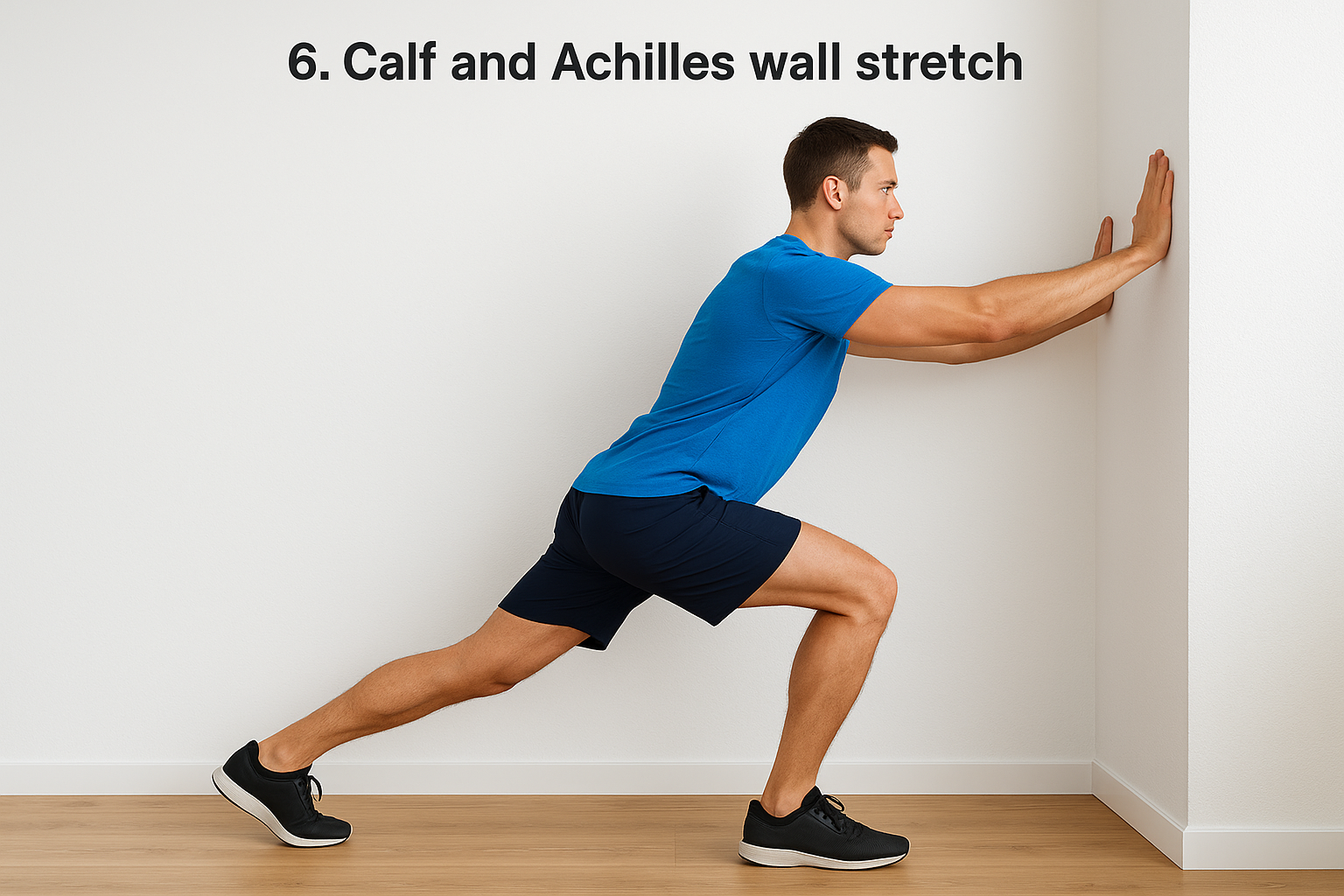
6. Calf and Achilles wall stretch
The calf and Achilles wall stretch rounds out a complete set of foot stretches before running by addressing two structures that directly control how your foot loads with every stride. Tight calves and a stiff Achilles tendon limit ankle mobility and shift excess force into the arch and heel.
How tight calves load the foot
Your calf muscles connect directly to the Achilles tendon, which attaches at the heel bone. When these muscles are stiff, your ankle can’t dorsiflex fully during a stride, and the foot compensates by pronating inward, increasing tension on the plantar fascia and putting your heel at risk on impact.
Limited ankle dorsiflexion is one of the most consistent risk factors for plantar fasciitis and Achilles tendinopathy in runners.
How to do the straight-knee version
This version targets the gastrocnemius, the larger calf muscle that most directly affects ankle mobility. Stand facing a wall with both hands flat against it for support.
- Step one foot back and keep that knee straight.
- Press your heel firmly into the floor.
- Lean forward slowly until you feel tension through the upper calf.
- Hold for 30 seconds per side.
How to do the bent-knee version
From the same starting position, bend the back knee slightly. This shifts the stretch lower into the soleus and the Achilles tendon itself, two tissues that take significant load during push-off. Hold for 30 seconds per side, two rounds each.
How to fit it into a 5-minute pre-run routine
Place this stretch last in your warm-up sequence, after the earlier movements have already warmed the foot tissues. Finishing here ensures your ankle mobility is fully prepared before your first stride.
Put it all together before your run
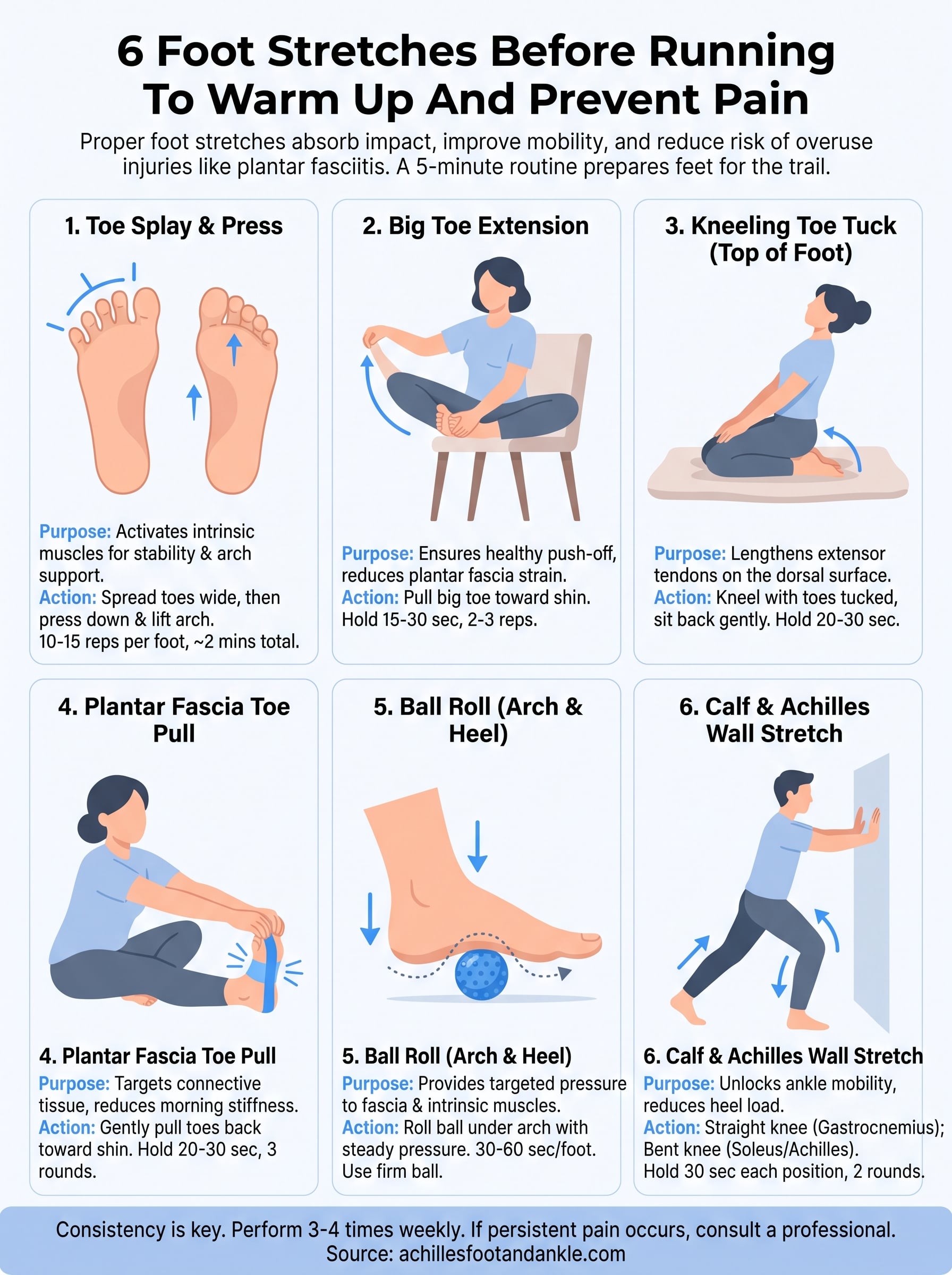
Running these six foot stretches before running back to back takes about five minutes and covers every key tissue in your foot. Start with the toe splay and toe press to activate your intrinsic muscles, work through the big toe extension and kneeling toe tuck to open the joints, then move to the plantar fascia toe pull and ball roll to prepare your arch. Finish with the calf and Achilles wall stretch to unlock ankle mobility before your first stride.
Consistency matters more than perfection here. Doing this routine three to four times per week before your runs will produce more lasting change than an occasional session. Your foot tissues adapt when you give them regular, focused attention. If you experience persistent heel pain, arch tightness, or any foot discomfort that doesn’t improve with stretching, it’s worth getting a professional evaluation. Schedule a same-day appointment at Achilles Foot and Ankle Center before a minor issue becomes a longer setback.