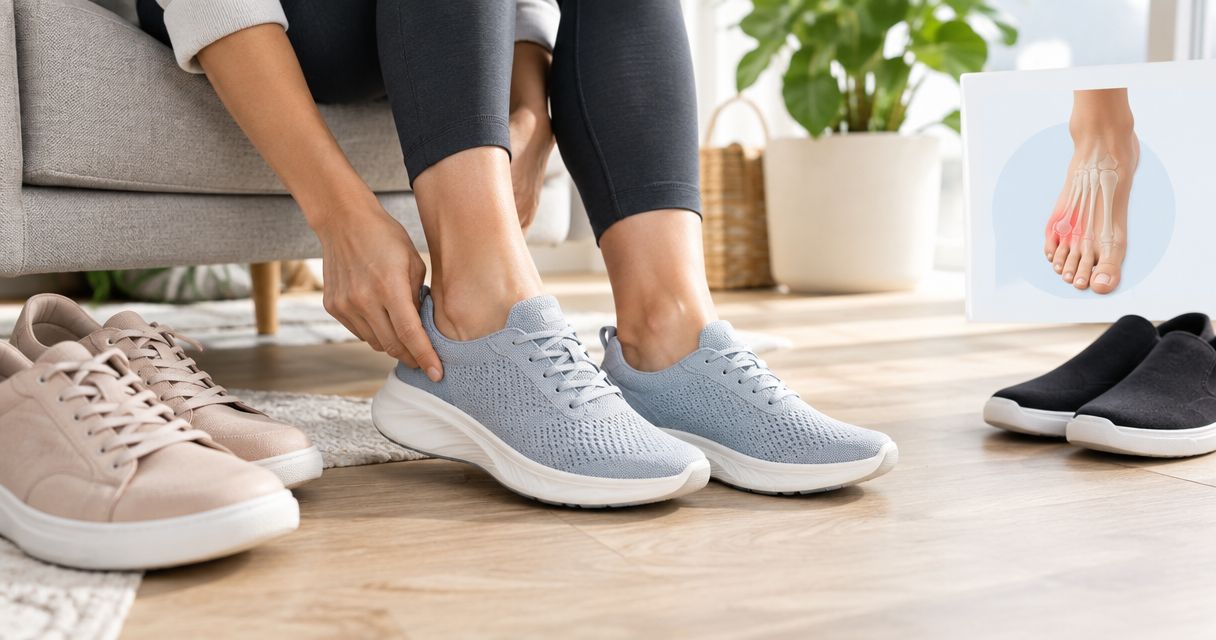

Ankle resistance bands are one of the most versatile tools you can add to your training or recovery routine. Whether you’re building glute strength, improving lateral speed, or working through a rehab program after an ankle injury, the right band makes a real difference. But searching for the best ankle resistance bands can get overwhelming fast, between cuff-style straps, loop bands, and varying resistance levels, it’s hard to know what actually works and what’s a waste of money.
At Achilles Foot and Ankle Center, we treat foot and ankle conditions across every stage, from acute sports injuries to post-surgical rehabilitation. Our specialists routinely recommend resistance band exercises to patients recovering from ankle sprains, tendon repairs, and chronic instability. That hands-on clinical experience gives us a practical understanding of what to look for in a quality ankle resistance band and which designs hold up under real use.
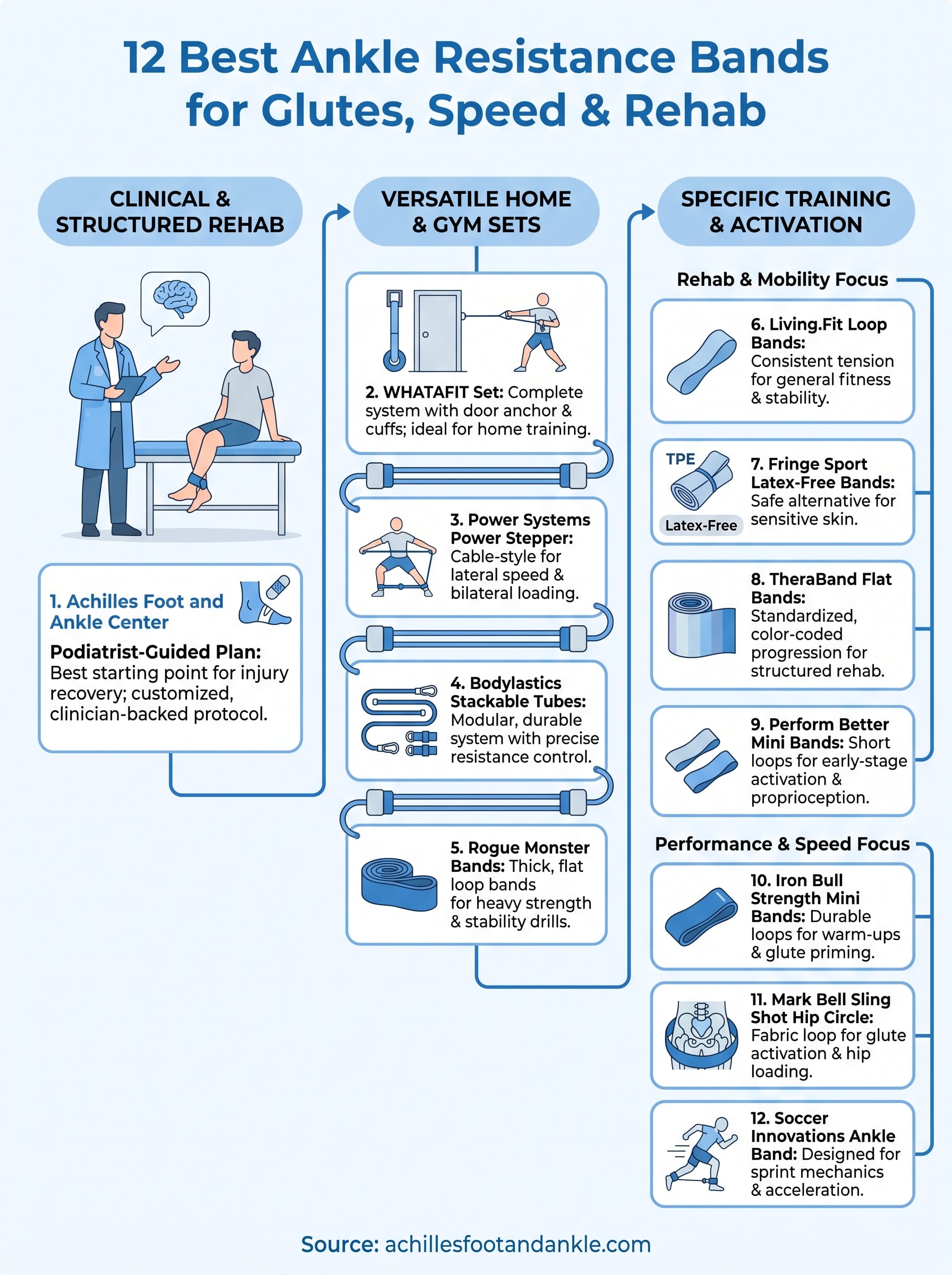
We put together this list of 12 top-rated ankle resistance bands to help you find the right fit for your specific goal, whether that’s glute activation, speed training, or physical therapy. Each pick includes what makes it stand out, who it’s best for, and what to watch out for. By the end, you’ll have a clear sense of which band matches your needs without second-guessing your purchase.
1. Achilles Foot and Ankle Center Podiatrist-Guided Band Plan
Before buying any band off a list, it helps to understand what your ankle actually needs from resistance training. The team at Achilles Foot and Ankle Center works with patients who use bands at the wrong resistance level or in the wrong movement plane, which can slow recovery or irritate healing tissue. Our podiatrists have built a structured approach to band selection and progression that prioritizes joint health, safe loading, and functional outcomes over generic rep schemes.
Best for
This plan works best for patients recovering from ankle sprains, chronic instability, or tendon injuries who want a clinician-backed framework rather than guessing at exercises without context. It also fits active adults and athletes who want to use the best ankle resistance bands correctly, including pull direction, set volume, and when to progress resistance. Consider this your starting point if any of the following apply:
- You have a diagnosed ankle condition or recent injury
- You are post-surgical and have received clearance for active rehab
- You keep re-injuring the same ankle and want to understand why
- You want a sport-specific or activity-specific band protocol
Why it stands out
Most band guides focus on product specs and skip the clinical side entirely. Achilles Foot and Ankle Center fills that gap by offering personalized guidance from podiatrists who understand the biomechanics of the ankle and subtalar joint. Your band program accounts for your specific injury history, your current range of motion, and your return-to-sport or daily activity goals.
A resistance band that is too strong for your current strength level can increase stress on healing ligaments and set your recovery back by weeks, so starting with a clinical recommendation matters.
Rather than generic programming, you get a plan built around your tissue tolerance and movement patterns, adjusted at each visit as you progress.
What to watch for
Even with a solid plan, a few things can derail your progress. Patients often increase resistance too quickly, especially once they start feeling better, which puts healing structures under excessive load. Another common issue is performing ankle band exercises with poor hip and knee control, which shifts the demand away from the ankle and reduces exercise effectiveness. Your podiatrist will screen for these patterns and make corrections before they become setbacks.
Typical price range
A consultation at Achilles Foot and Ankle Center is covered by most major insurance plans, including Medicare and Medicaid, which makes accessing a professional band plan far more affordable than most people expect. Same-day appointments are available across multiple Central Virginia locations for urgent needs.
Your out-of-pocket cost depends on your specific plan and deductible, but the value of a customized protocol from a credentialed podiatrist outweighs purchasing a random band set without any clinical direction. Getting the right plan upfront typically shortens your overall recovery timeline, which saves both time and money.
2. WHATAFIT Ankle Resistance Bands Set with Door Anchor and Cuffs
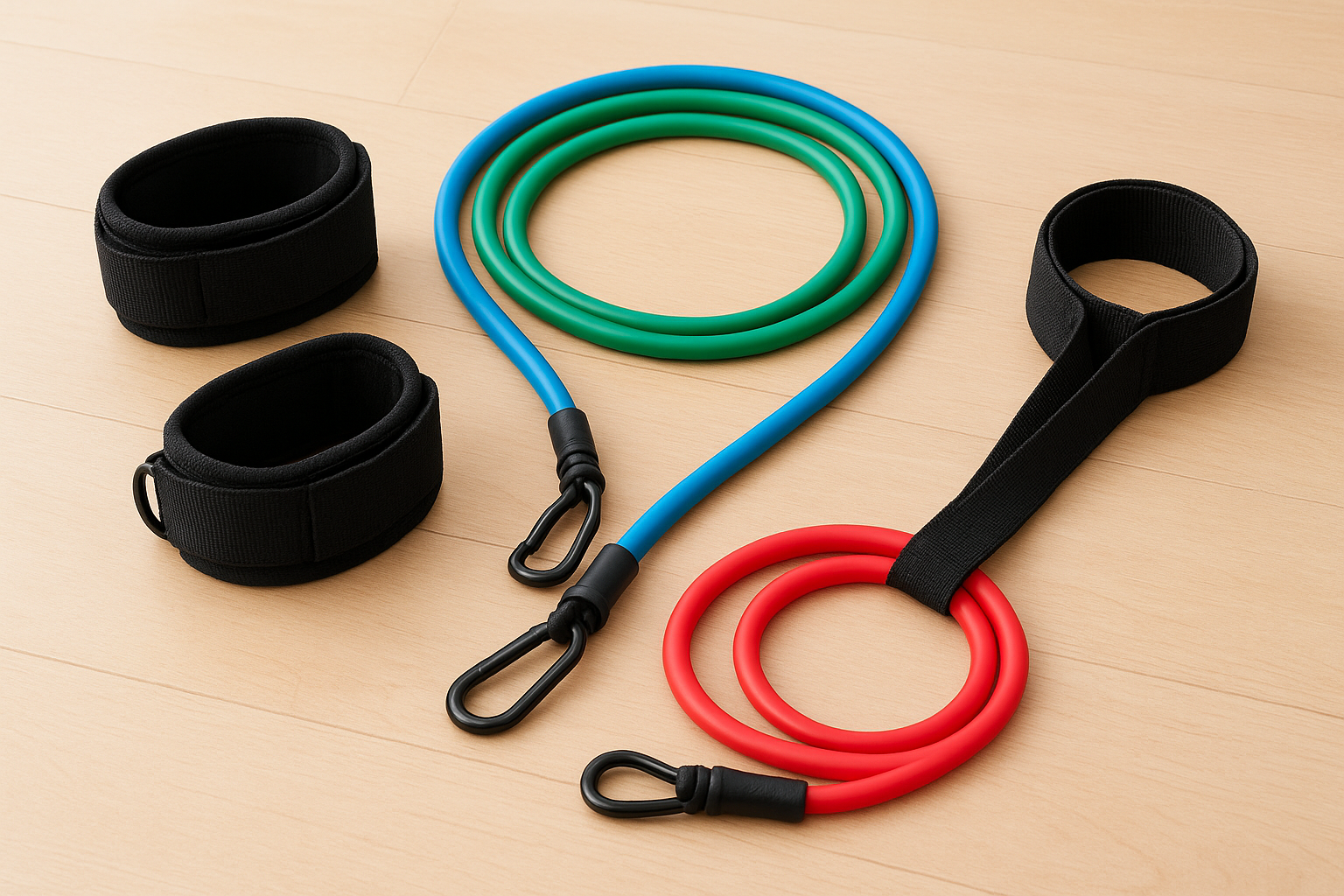
The WHATAFIT set gives you a complete ankle resistance system in one package. You get multiple tube bands at different resistance levels, padded ankle cuffs, and a door anchor, which means you can train hip abduction, adduction, flexion, and extension without any additional equipment. This all-in-one setup makes it one of the more practical options if you want to build a home ankle training routine without taking up much space.
Best for
This set works well for home gym users and rehab patients who need to train multiple ankle movement patterns without going to a facility. The door anchor opens up pulling angles that loop bands simply cannot replicate, making it useful for anyone targeting hip flexors, ankle dorsiflexion, or lateral stability drills. It suits beginners and intermediate trainees who need stackable resistance options as they progress.
Why it stands out
The padded ankle cuffs are the main differentiator here. Standard loop bands sit directly against skin or clothing and can roll or slide during movement, but the cuffs on the WHATAFIT set stay fixed throughout each set and reduce the friction that causes skin irritation. The stackable tube design also lets you combine bands to increase resistance, which extends the useful life of the set as your strength improves.
Padded cuffs matter more than most people expect, since an unsecured band shifts your movement pattern and reduces the training effect on the target muscle.
Among the best ankle resistance bands available at this price point, the WHATAFIT set delivers notable versatility for the cost compared to buying cuffs, bands, and an anchor separately.
What to watch for
The tubes on budget-level sets can degrade faster than flat or loop bands, especially with frequent high-resistance use. Check the bands for cracks or stiffness before each session. The door anchor also requires a solid door frame, so hollow-core doors are not suitable for anchoring this system under load.
Typical price range
The WHATAFIT ankle resistance band set typically runs $25 to $40 depending on the retailer and included resistance levels.
3. Power Systems Power Stepper Ankle Resistance Band
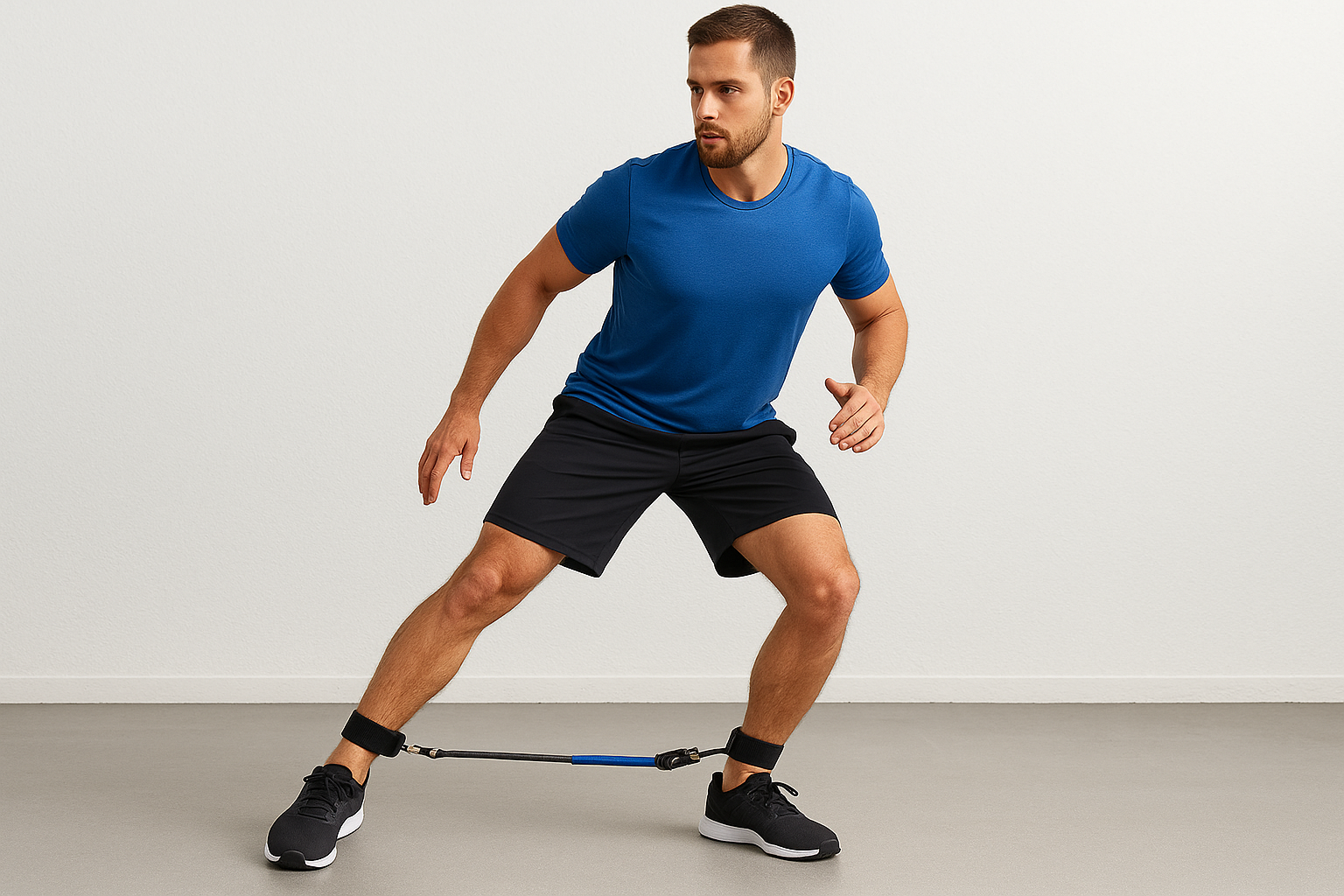
The Power Systems Power Stepper is a cable-style ankle resistance band built specifically for lateral movement training. It connects both ankles with a fixed-length cord and a center resistance tube, forcing your legs to work against each other as you step laterally, forward, or diagonally. Unlike loop bands that sit above the knees, this tool applies resistance directly at the ankle, which changes the demand on your hip stabilizers and lower leg muscles considerably.
Best for
This band suits athletes and active adults who want to train lateral explosiveness, quick direction changes, or defensive footwork. It works well for sports that require side-to-side acceleration, such as basketball, tennis, and soccer. Physical therapy patients cleared for dynamic lower-extremity loading can also benefit from the controlled resistance it provides during gait retraining and single-leg stability drills.
Why it stands out
Among the best ankle resistance bands designed for athletic performance, the Power Stepper stands out because it keeps both ankles loaded simultaneously, which trains hip abduction and adduction bilaterally rather than isolating one side at a time. This bilateral demand more closely mirrors real movement patterns in sport and daily function. The attachment design also keeps the band from riding up the leg, which helps maintain consistent resistance throughout your range of motion.
Bilateral ankle resistance training builds the coordination between both hips and ankles at the same time, which is a quality that unilateral cuff bands cannot replicate as efficiently.
What to watch for
The fixed cord length limits how wide your stance can get, so taller users or those with longer strides may find the range of motion restrictive. The tool also works best on smooth or rubberized flooring. Uneven surfaces or grass can cause the band to catch mid-step, which disrupts your movement pattern and reduces the training benefit of each rep.
Typical price range
The Power Systems Power Stepper typically costs $20 to $35, depending on the resistance level you select and where you purchase it.
4. Bodylastics Stackable Tube Bands with Ankle Straps
Bodylastics has built a reputation for producing tube-style resistance bands that hold up under consistent, heavy use. Their stackable system pairs durable snap-clip tubes with padded ankle straps, giving you the ability to dial in exact resistance levels by combining bands rather than hunting for a single band at the right weight. This modular approach makes the set useful across a wide range of training goals, from light rehab work to more demanding strength sessions.
Best for
The Bodylastics system works especially well for home gym users and physical therapy patients who want precise resistance control without committing to a fixed tension level. If you are working through ankle rehabilitation and need to increase load gradually over several weeks, the stackable design lets you add small increments of resistance without buying an entirely new set. Athletes who train multiple lower-body movement patterns, including hip abduction, ankle eversion, and dorsiflexion, will also get strong utility from this setup.
Why it stands out
The clip-and-stack mechanism is what separates Bodylastics from most competitors in this category. You can combine two or more tubes to hit a specific resistance target rather than settling for whatever a standard fixed-loop band offers. The included ankle straps wrap securely around the leg and distribute tension more evenly than thin loop bands, which reduces the pressure points that cause skin irritation during longer sets.
Stackable resistance gives you a much longer training lifespan from a single set, since you never outgrow it the way you outgrow a single fixed-resistance band.
Among the best ankle resistance bands available for home use, the Bodylastics system offers one of the more cost-efficient paths to long-term progressive overload.
What to watch for
The snap-clip connectors can wear out over time if you attach and detach bands repeatedly at high tension. Inspect the clips before each session and replace individual tubes as needed rather than continuing to use a compromised connection.
Typical price range
Bodylastics stackable sets with ankle straps typically run $30 to $60, depending on the number of tubes and resistance levels included in the package.
5. Rogue Monster Bands Used for Ankle Drills and Strength
Rogue Monster Bands are thick, flat loop bands made from natural latex that most people associate with powerlifting assistance work. What fewer people realize is that these bands translate well to ankle stability drills, resisted lateral walks, and lower-leg strengthening when used correctly. Their durability and consistent tension profile make them a solid pick for serious training environments where cheaper bands would simply snap under repeated loading.
Best for
Rogue Monster Bands fit strength athletes and performance-focused individuals who already train with barbells and want to add ankle-specific resistance work without buying a separate tool. If your training involves heavy lower-body compound lifts, adding resisted ankle drills with a Monster Band keeps your connective tissue conditioned for the forces you encounter under the bar. Coaches and physical therapists working with advanced athletes also use these bands for hip abduction circuits and lateral shuffle drills where higher tension levels are appropriate.
Why it stands out
The main advantage is material quality and longevity. Rogue builds their Monster Bands from thick rubber that resists cracking and deformation far longer than the thin tube or loop bands you find in most starter kits. The consistent resistance curve means tension builds predictably throughout your range of motion, which makes progressive overload tracking more reliable over time.
When you use a band that maintains consistent tension without sagging or snapping mid-set, you remove a variable that undermines the quality of every rep.
Among the best ankle resistance bands for heavy-duty use, Rogue Monster Bands hold their shape and resistance level through years of regular training, which represents strong long-term value.
What to watch for
These bands come in several resistance levels, and the lightest option still provides significant tension. If you are using them for light rehab work or early-stage ankle conditioning, the resistance may be too high for safe loading at that point in recovery. Start with the lightest band and confirm it suits your current strength level before progressing.
Typical price range
Rogue Monster Bands typically cost $15 to $35 per band, depending on the resistance level you select.
6. Living.Fit Loop Resistance Bands for Ankle and Lower-Body Work
Living.Fit produces flat loop bands made from natural latex that cover a wide range of resistance levels, making them adaptable for both lower-body training and ankle-specific movement drills. The bands come in multiple widths and tensions, so you can match the resistance level to your current strength and progress upward without switching to an entirely different product line.
Best for
Living.Fit loop bands suit general fitness users and athletes who want a reliable band for resisted lateral walks, clamshells, ankle eversion drills, and hip abduction circuits. If you train at home and need one band that handles both glute activation and ankle stability work, this option covers both without requiring separate tools. Intermediate-level rehab patients who have progressed past the earliest phase of recovery will also find these bands appropriate for loading ankle movement in multiple planes.
Why it stands out
Among the best ankle resistance bands in the flat loop category, Living.Fit stands out for its consistent tension throughout the full range of motion. Many cheaper loop bands feel uneven, with tension that spikes sharply at the end of a movement. Living.Fit bands resist that spike and deliver steady resistance from start to finish, which keeps your target muscles under load for longer during each rep.
Consistent resistance throughout a movement increases time under tension for the ankle stabilizers, which is a key driver of long-term joint strength and coordination.
The latex construction also resists rolling and bunching when placed around the ankle or just above the knee, so the band stays put during dynamic movements rather than shifting and disrupting your form.
What to watch for
Natural latex can cause reactions in people with latex sensitivities, so confirm your tolerance before extended skin contact. The bands also perform best when stored away from direct sunlight and heat, which accelerates material degradation and shortens the band’s usable life.
Typical price range
Living.Fit loop bands typically cost $10 to $25 depending on the resistance level and whether you purchase individual bands or a bundled set.
7. Fringe Sport Latex-Free Strength Bands for Sensitive Skin
Fringe Sport produces latex-free resistance bands made from a thermoplastic elastomer (TPE) blend that delivers consistent resistance without exposing your skin to natural rubber proteins. If you have a latex allergy or sensitivity, most standard loop and tube bands immediately drop off your list, which limits your options significantly. Fringe Sport solves that problem without sacrificing tension quality or durability, making it a practical pick for anyone who has had to avoid most resistance bands up to this point.
Best for
This band works best for latex-sensitive individuals and athletes who need ankle resistance work but cannot use standard rubber bands safely. That includes people with diagnosed latex allergies, those who develop skin reactions after extended band contact, and anyone working in clinical or gym environments where latex-free equipment is required. Physical therapy patients with sensitive skin who need a reliable band for ankle eversion, dorsiflexion, and hip abduction drills will find this option compatible with longer session durations.
Why it stands out
Among the best ankle resistance bands designed for users with material restrictions, Fringe Sport stands out because the TPE construction holds its shape and resistance profile through repeated use without the brittleness that affects some non-latex alternatives. The bands resist cracking in colder environments, which matters if you train in a garage or outdoor space where temperature varies. Consistent resistance throughout the stretch range keeps your ankle stabilizers under steady load rather than experiencing an uneven tension spike at the end of each rep.
A band that maintains even tension without material degradation gives you more reliable feedback on how your ankle is responding to load over time, which directly supports better training decisions.
What to watch for
TPE bands can feel slightly stiffer than natural latex at the same resistance rating, so you may need to size down one resistance level when switching from rubber bands to avoid overloading the joint prematurely.
Typical price range
Fringe Sport latex-free bands typically cost $12 to $30 depending on resistance level and whether you buy individually or as a set.
8. TheraBand Flat Resistance Bands for Rehab and Mobility
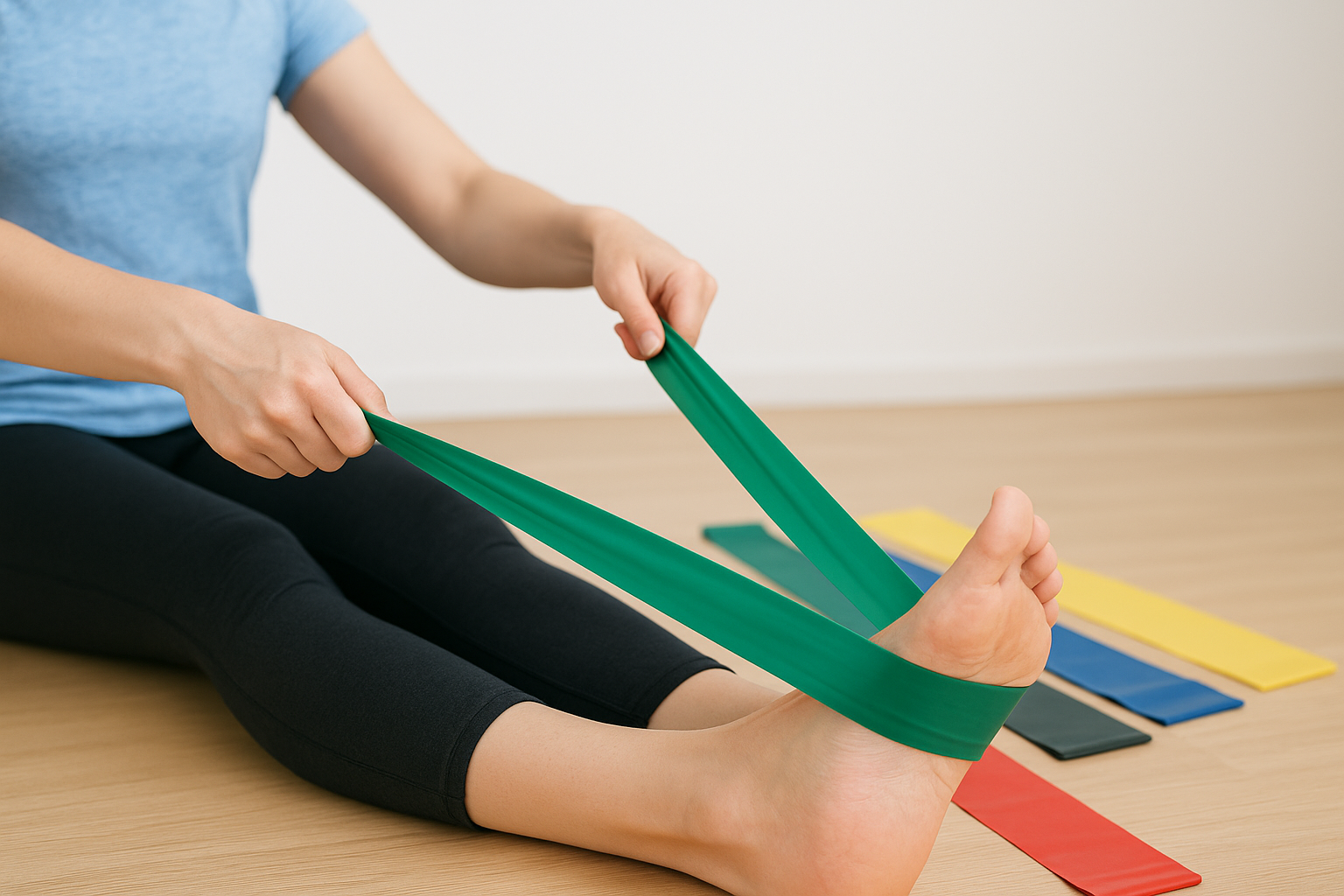
TheraBand has been a staple in physical therapy clinics for decades, and for good reason. Their flat latex bands come in a color-coded resistance progression that lets you move from the lightest tension all the way up to heavy resistance using a consistent, clinically validated system. Physical therapists, athletic trainers, and orthopedic specialists rely on TheraBand because the tension ratings are standardized and well-documented, which makes tracking patient progress more straightforward than with generic bands.
Best for
TheraBand flat bands work best for individuals in structured rehabilitation programs, including post-ankle sprain recovery, tendon repair follow-up care, and chronic ankle instability retraining. The wide flat design distributes resistance across a broad surface area, which reduces the pressure concentration that narrow loop bands place on sensitive tissue. Patients with limited ankle range of motion who need gentle, incremental loading will appreciate the lighter resistance options available at the lower end of the color range.
Why it stands out
Among the best ankle resistance bands for rehab applications, TheraBand stands out because the product is backed by published clinical research, which gives your therapist or podiatrist a reliable reference point when designing your program. The flat band format also allows for multiple attachment configurations, including tying the band around a door frame, table leg, or treatment table without requiring a separate anchor system. This flexibility makes it practical in both clinical and home settings.
The color-coded resistance system removes guesswork from your progression, so you and your clinician both know exactly where you are in your recovery at any given session.
What to watch for
TheraBand flat bands contain natural latex, so confirm you do not have a latex sensitivity before using them against bare skin during extended sessions. The bands also lack built-in ankle cuffs, which means you need to tie the band securely around your ankle or foot to prevent slipping during dynamic drills.
Typical price range
TheraBand flat resistance bands typically cost $8 to $20 per band or roll, depending on the resistance level and length you select.
9. Perform Better Mini Bands for Rehab-Focused Activation
Perform Better mini bands are short, flat loop bands designed specifically for activation and mobility work rather than heavy resistance training. Their compact size makes them practical for clinical rehab settings and home exercise programs where patients need a simple, effective tool for low-load ankle and hip work. Physical therapists and athletic trainers reach for these bands because they deliver controlled resistance without overwhelming joints that are still rebuilding strength and coordination.
Best for
These mini bands work best for patients in early-to-mid-stage ankle rehabilitation who need light, manageable resistance during activation exercises like clamshells, ankle eversion, and resisted dorsiflexion. If your podiatrist or physical therapist has recently cleared you for active loading but your ankle still lacks full stability and strength, the lighter resistance options in the Perform Better range give you a safe entry point before progressing to heavier bands.
They also suit older adults and post-surgical patients who need to rebuild ankle proprioception gradually. The shorter loop keeps the band close to the joint, which focuses the resistance exactly where ankle stabilizers need to be challenged.
Why it stands out
Among the best ankle resistance bands for structured rehab, Perform Better mini bands stand out because they come in clearly marked resistance levels that allow you to track your progression session by session. The flat latex construction distributes tension evenly across the ankle or lower leg without creating pressure points that cause discomfort during longer sets.
Consistent, low-level resistance during early rehabilitation builds the proprioceptive feedback loop that protects your ankle from re-injury far better than skipping straight to heavy loading.
What to watch for
The bands contain natural latex, so check for skin sensitivity before extended use directly against bare skin. Because the resistance levels are relatively low, stronger or more advanced users may outgrow these bands quickly and need to transition to a higher-tension option within a few weeks of consistent training.
Typical price range
Perform Better mini bands typically cost $10 to $20 for a set of multiple resistance levels.
10. Iron Bull Strength Mini Bands for Ankle Warm-Ups and Glutes
Iron Bull Strength produces flat loop mini bands built from heavy-duty latex that hold their shape through repeated stretching without snapping or rolling. These bands are compact enough to fit in a gym bag, which makes them a practical option for athletes and active adults who want a reliable warm-up tool they can use anywhere, whether at home, at a facility, or on the road before a game or competition.
Best for
Iron Bull Strength mini bands work well for athletes and fitness-focused individuals who need a dependable tool for glute activation circuits, resisted lateral walks, and ankle warm-up drills before heavier training. If you regularly perform squats, lunges, or single-leg movements and want to prime your hips and ankles before loading them with weight, these bands slot easily into your warm-up routine without adding significant setup time.
Why it stands out
Among the best ankle resistance bands in the mini band category, Iron Bull Strength stands out for its material density. The bands resist tearing and deformation better than many competitor options at a similar price point, which means you get more sessions out of each band before it needs replacing. The flat loop design also stays in position around your ankle during dynamic lateral movements rather than bunching up or shifting mid-drill.
A band that stays in place throughout your warm-up keeps each rep focused on the target muscles rather than stopping to readjust equipment between sets.
What to watch for
The bands contain natural latex, so confirm you have no sensitivity before placing them directly against bare skin during longer sessions. The resistance levels lean slightly heavier than some competing mini bands, so beginners or early-stage rehab patients should start with the lightest option and confirm it suits their current ankle tolerance before moving up.
Typical price range
Iron Bull Strength mini bands typically cost $10 to $20 for a set of multiple resistance levels.
11. Mark Bell Sling Shot Hip Circle for Glute Activation
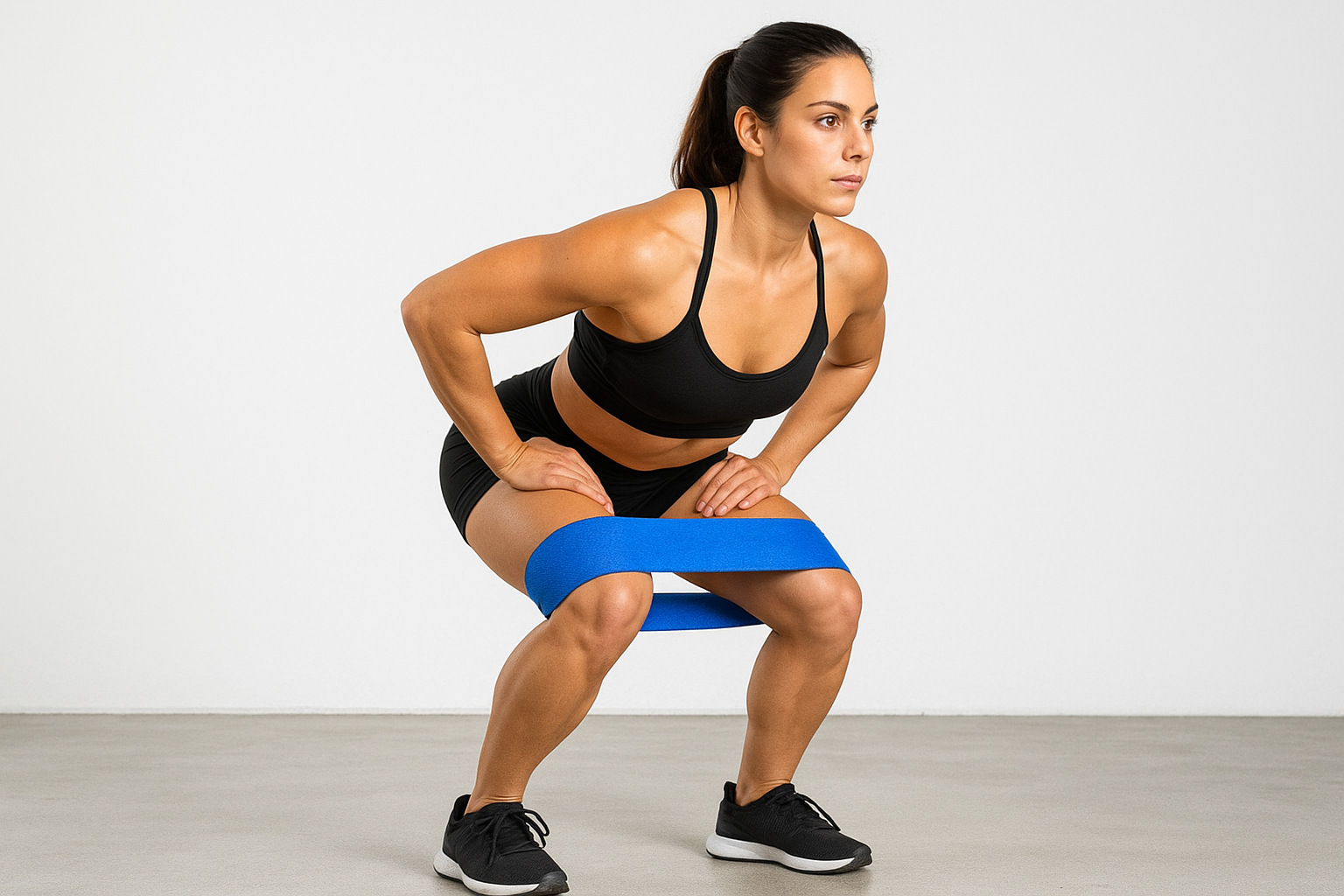
The Mark Bell Sling Shot Hip Circle is a thick fabric loop band built specifically for glute activation and hip loading. Unlike latex loop bands, the Hip Circle uses a woven elastic fabric construction that distributes resistance across a wider surface area, which reduces the digging and rolling that thinner bands cause during hip-dominant movements. While it sits above the knees rather than at the ankle, the resistance it places on your hip abductors and external rotators directly supports ankle stability by loading the proximal chain that controls foot and knee alignment during single-leg work.
Best for
The Hip Circle works best for athletes and strength trainees who need reliable glute activation before squats, lunges, deadlifts, or single-leg ankle drills. If weak glutes are causing your knees to cave inward during lower-body movements, this band gives your hips the loading they need to fire correctly before you add weight or increase ankle-specific demands. Physical therapy patients who have progressed past early-stage ankle rehab and are working on functional movement patterns will also benefit from including this band in their warm-up protocol.
Why it stands out
The fabric construction sets this band apart from most other options in this category. Fabric resists rolling and snapping far better than latex, so you get consistent resistance through every rep without the band shifting up your thigh mid-set. The Hip Circle holds its shape through heavy use and maintains its elasticity over time, which makes it one of the more durable picks among the best ankle resistance bands and hip-loading tools available at this price point.
Loading your glutes before ankle stability drills improves the hip-to-foot alignment that protects your ankle joints under dynamic stress.
What to watch for
The Hip Circle runs slightly large for smaller frames, so the band may feel loose if you have narrower hips. Try it on before committing to a full session to confirm the fit stays snug during movement.
Typical price range
The Mark Bell Sling Shot Hip Circle typically costs $30 to $40 depending on the resistance level and retailer.
12. Soccer Innovations Ankle Resistance Band for Speed Mechanics
The Soccer Innovations ankle resistance band is designed specifically to train sprint mechanics and acceleration patterns at the ankle, not just general lower-body strength. The band connects both ankles and forces your legs to work against each other during linear and lateral movement drills, which builds the hip flexor strength and ankle drive that directly translate to faster first steps and better directional change on the field.
Best for
This band fits soccer players, sprinters, and team sport athletes who want to improve speed mechanics through resisted footwork rather than traditional gym-based training. If your sport demands explosive first steps, quick lateral shuffles, or repeated acceleration, this band adds targeted resistance to exactly the movements you perform in competition. Coaches running team warm-ups can also incorporate this tool into group activation drills before practice.
Why it stands out
Among the best ankle resistance bands designed for sport-specific speed work, the Soccer Innovations band stands out because the resistance attaches at the ankle rather than the thigh or hip, which shifts the training demand onto the hip flexors, ankle dorsiflexors, and lower leg stabilizers that generate initial acceleration. The design keeps the load closer to the ground, which more closely mimics the mechanical demands of running and cutting at speed.
Applying resistance at the ankle during sprint drills builds neuromuscular patterns that transfer directly to faster ground contact times in competition.
The band is also compact and lightweight, making it easy to carry in a kit bag and use on any surface, from turf to grass to a gym floor, without special setup.
What to watch for
The band works best for athletes who already have a baseline of ankle stability and strength. Using it during early rehabilitation or before your ankle has adequate control can overload the joint under dynamic conditions. Confirm your ankle is fully stable before adding resisted sprint work.
Typical price range
The Soccer Innovations ankle resistance band typically costs $15 to $30 depending on the resistance level and retailer.
Your Next Move
You now have a clear breakdown of the best ankle resistance bands across every major use case, from clinical rehab and glute activation to sport-specific speed work. The right band depends on your current ankle health, your training goals, and whether you need medical guidance before adding load to a recovering joint.
If you are dealing with an ankle injury, chronic instability, or post-surgical recovery, a resistance band purchase is only part of the solution. Getting a professional assessment first tells you which movements are safe, which resistance level matches your tissue tolerance, and how to progress without setbacks. Skipping that step often leads to overloading healing structures and extending your timeline.
The specialists at Achilles Foot and Ankle Center are ready to help you build a safe, structured plan tailored to your ankle. Book a same-day appointment and get clinical guidance before your next training session.