
That curling, bent toe isn’t just a cosmetic issue, it can make every step genuinely uncomfortable. If you’re searching for how to relieve hammertoe pain, you’re probably dealing with rubbing shoes, sore joints, or calluses that won’t quit. The good news: surgery isn’t your only option, especially in the earlier stages.
At Achilles Foot and Ankle Center, our podiatrists across Central Virginia treat hammertoes at every stage, from mild flexibility issues to rigid deformities. We always explore conservative treatments first and recommend surgery only when non-surgical methods stop working. That clinical experience is exactly what shaped this list, these are the same strategies we walk patients through in our offices every day.
Below, you’ll find six practical, at-home tips to reduce hammertoe discomfort and slow progression. From smarter shoe choices to simple toe exercises, each recommendation is something you can start today without a procedure or prescription.
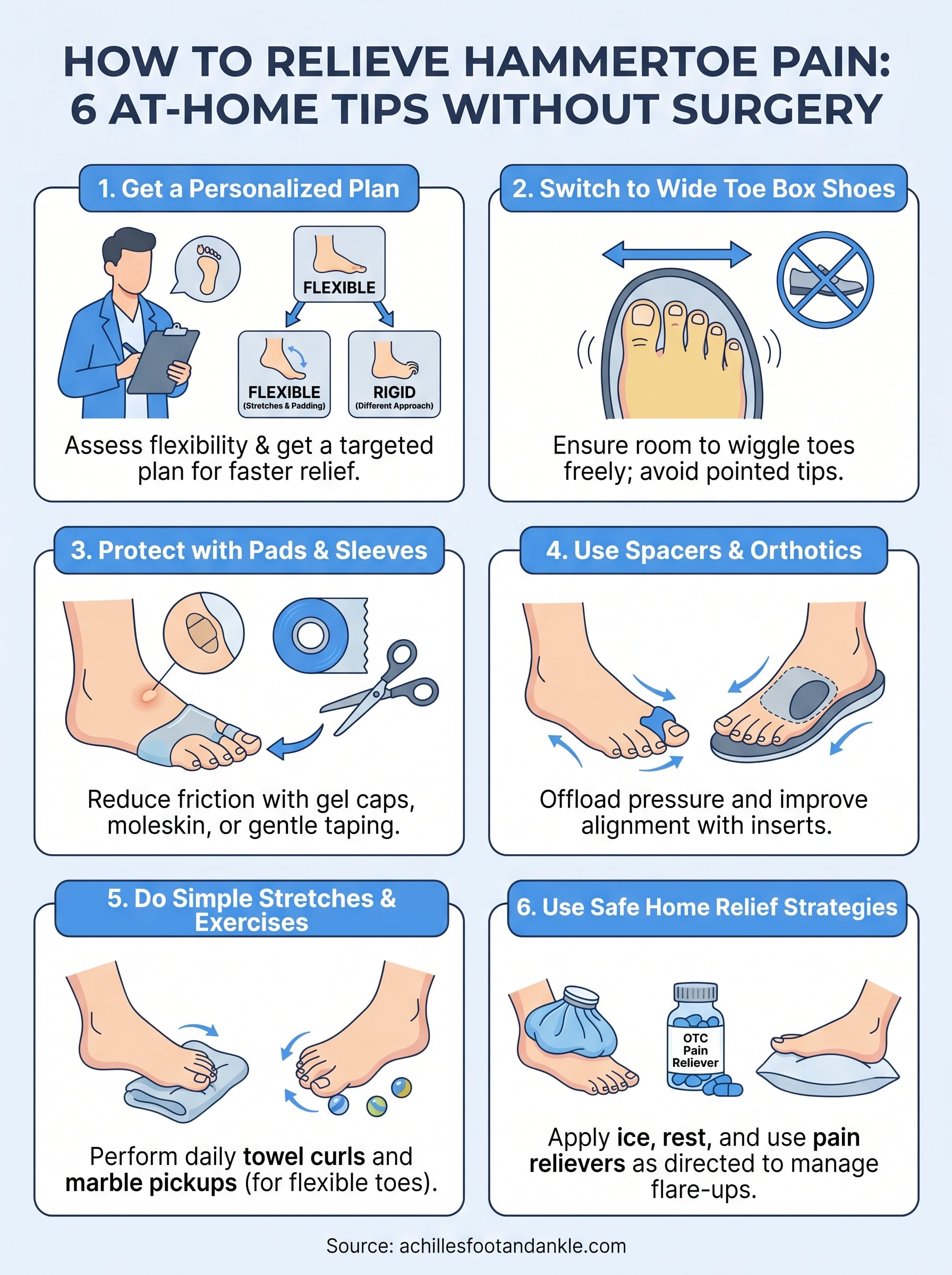
1. Get a personalized at-home plan from Achilles Foot and Ankle Center
Before you try any home remedy, knowing the actual stage and flexibility of your hammertoe changes everything. A flexible hammertoe responds well to stretches and padding; a rigid, fixed deformity needs a completely different approach. Skipping that baseline assessment means you could spend weeks on strategies that don’t fit your situation.
Why it helps
The tips that follow in this article work best when they’re matched to your specific toe structure, footwear habits, and daily activity level. When you see a podiatrist first, even for a single visit, you leave with a clear picture of what’s driving your pain and a targeted list of actions that actually fit your case. That’s a much faster path to relief than guessing.
What your podiatrist checks first
Your podiatrist evaluates toe joint flexibility (whether the joint still moves or has locked into position), looks for corns, calluses, and skin breakdown, and examines how your foot mechanics and walking pattern contribute to the problem. They also ask about footwear, daily activity, and any history of diabetes or circulation issues, since those factors directly shape which home strategies are safe for you.
What you can start the same day at home
After a visit, most patients leave with immediate, concrete next steps: a shoe style to switch to, a padding technique to try, one or two stretches, and an over-the-counter insert suggestion suited to their foot type. You don’t have to wait for a follow-up to get started. Understanding how to relieve hammertoe pain is far easier when you have a specific, personalized plan rather than a generic list.
A single appointment can save you months of trial-and-error with products that don’t match your toe type.
When to book an appointment urgently
Schedule same-day or next-day care if you notice an open sore, spreading redness, significant swelling, or pain severe enough to limit walking. These signs suggest the hammertoe has progressed or a secondary issue is developing. Achilles Foot and Ankle Center offers same-day appointments across multiple Central Virginia locations for exactly this kind of urgent situation.
2. Switch to shoes with a wide toe box
Your footwear is one of the biggest controllable factors in hammertoe pain. Narrow or tight shoes force your toes into a compressed position for hours, which accelerates joint stiffness and makes existing discomfort significantly worse.
Why it helps
A wide toe box gives each toe room to sit naturally rather than being pushed into a bent posture. When pressure on the joint decreases, inflammation and friction drop noticeably, often within a few days of switching shoes.
What to look for in everyday shoes
Look for shoes with a toe box wide enough to wiggle all five toes freely, a low heel under one inch, and a flexible but supportive sole. Avoid pointed tips entirely. Athletic shoes from brands offering wide-width sizing are often a practical starting point.
The right shoe won’t correct a hammertoe, but it can stop the pain from getting worse every day.
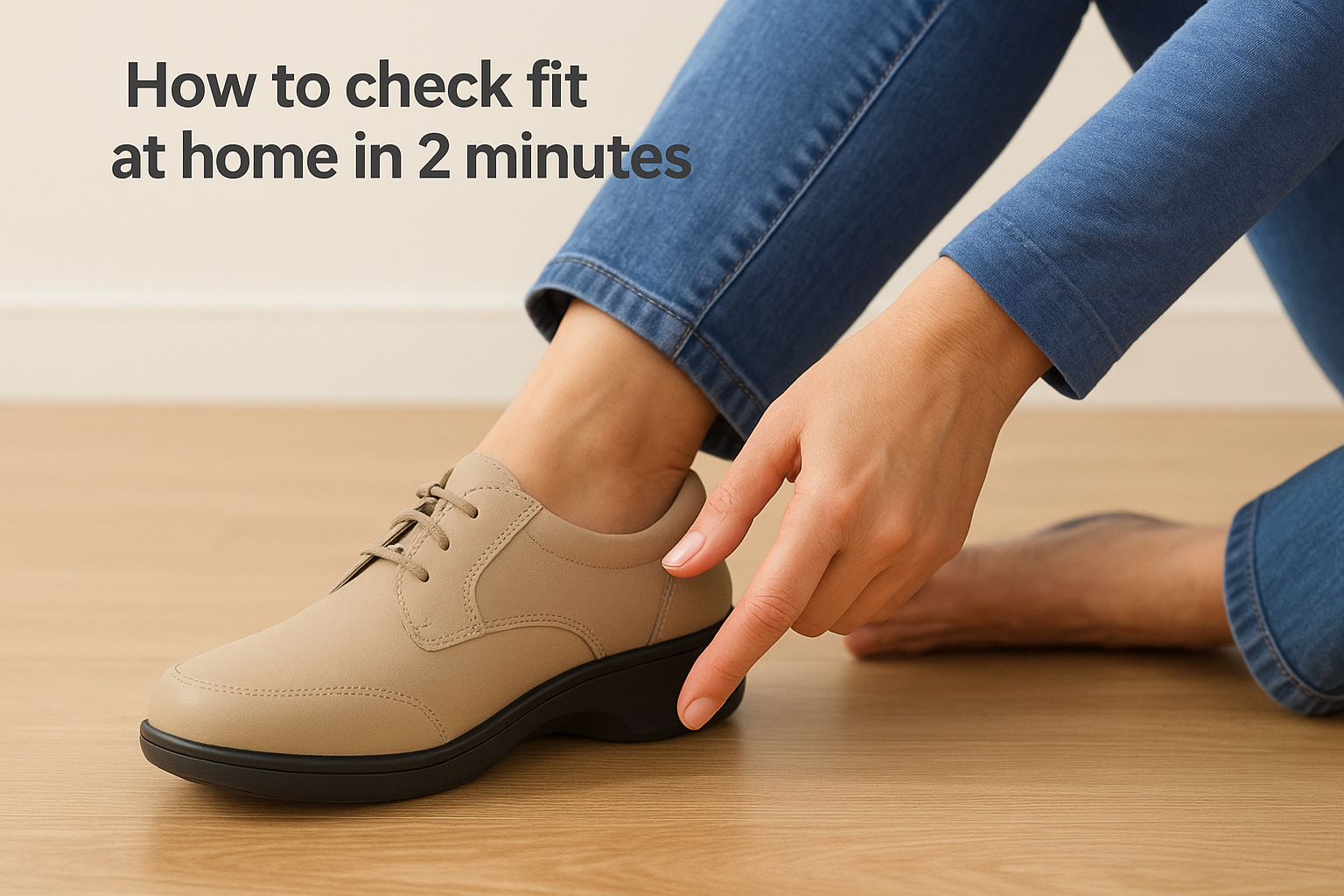
How to check fit at home in 2 minutes
Press your thumb gently on the tip of the shoe while wearing it. You should feel roughly half an inch of space between your longest toe and the end. If your toe presses against the material, the shoe is too narrow or short.
Common footwear mistakes that keep pain going
Many people wear shoes that fit the heel well but crush the toe box, assuming length equals fit. Worn-out pairs also stop absorbing impact and increase pressure on the bent joint. Understanding how to relieve hammertoe pain starts with recognizing that your shoes may be the main obstacle.
3. Protect the toe with pads, sleeves, and taping
Even in the right shoes, a bent toe rubs against material and develops painful corns or calluses. Adding a physical barrier between the joint and the shoe reduces irritation immediately and gives inflamed tissue a chance to settle down.
Why it helps
Friction and pressure are the main drivers of day-to-day hammertoe pain. Reducing that contact cuts both down at once, which makes each step more manageable without requiring any structural change to the toe.
What to use for corns, rubbing, and pressure points
Gel toe caps and foam sleeves fit directly over the affected toe and absorb the impact that would otherwise hit the joint. Moleskin pads work well over corns, shielding raised skin from direct shoe contact. You can find all three at most drugstores without a prescription.
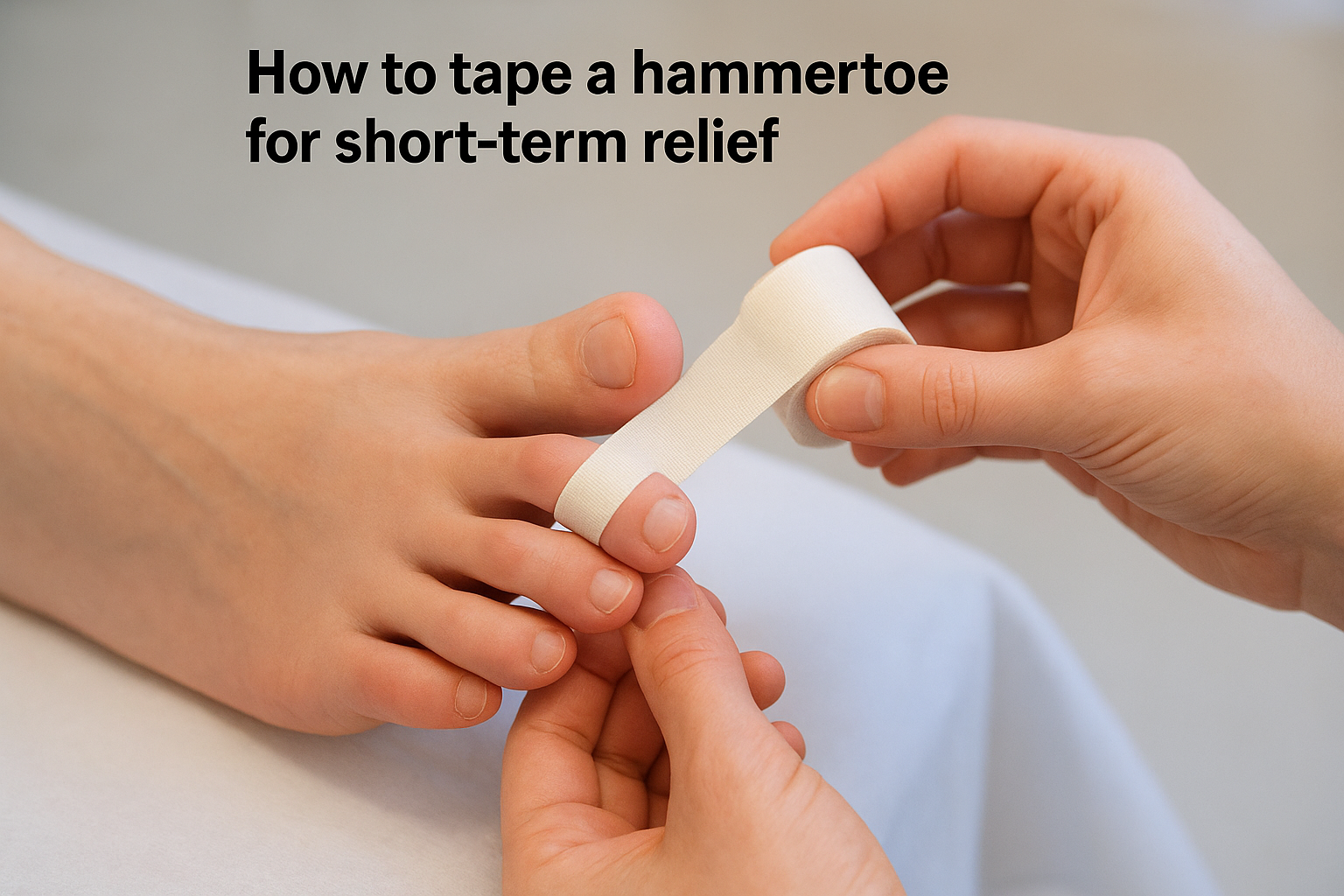
How to tape a hammertoe for short-term relief
Buddy taping, where you gently tape the bent toe to the one beside it, holds the joint in a more neutral position and reduces movement-related pain during activity. Use medical-grade athletic tape and avoid wrapping too tightly, since restricted circulation makes discomfort significantly worse.
Taping is a short-term fix. If you need it every day, that signals it’s time to see a podiatrist.
Skin safety tips, especially if you have diabetes
Diabetic patients need extra caution because reduced sensation and circulation make skin breakdown harder to detect early. Check the skin under any pad or tape every single day for redness, blistering, or open areas, and contact your podiatrist immediately if anything looks off. Knowing how to relieve hammertoe pain safely means factoring diabetes into every step of your approach.
4. Use toe spacers and orthotics to offload pressure
Padding protects the skin, but toe spacers and orthotics address a different problem: they change how pressure is distributed across your foot with every step. Reducing that mechanical load on a bent joint gives inflamed tissue a real opportunity to recover.
Why it helps
When a hammertoe sits in a compressed position, your body weight concentrates on the wrong part of the joint each time you push off the ground. Spacers and orthotics redistribute that force, which reduces the repetitive stress driving your pain. Learning how to relieve hammertoe pain long-term often comes down to correcting how load moves through your foot.
Toe spacers vs splints vs crest pads
Toe spacers sit between adjacent toes to reduce crowding and friction. Splints hold the toe straighter for short periods, which works best on flexible hammertoes that still move freely. Crest pads tuck under the bent toes and lift them slightly, relieving pressure on the tips during walking.
Match the product to your toe’s flexibility. A rigid hammertoe won’t respond the same way a flexible one does.
When over-the-counter inserts work
Off-the-shelf insoles with metatarsal support work well for mild pain and when your foot structure is fairly average. Look for inserts with a firm arch section and a metatarsal pad built in.
Signs you may need custom orthotics
If standard inserts don’t reduce your discomfort within two to three weeks, or if you have flat feet, high arches, or a history of recurring injuries, your foot mechanics likely need a prescription-grade solution. A podiatrist can take precise measurements and create orthotics designed specifically for how your foot functions.
5. Do simple toe stretches and strengthening exercises
The muscles around a hammertoe tighten progressively, pulling the joint further into a bent position. Regular movement works against that pull, keeping the joint more mobile and reducing day-to-day discomfort in flexible deformities.
Why it helps
When a hammertoe still moves freely, targeted exercises slow the shift toward a fixed position. Stretching lengthens the contracted tendons underneath the toe, while strengthening the intrinsic foot muscles improves alignment with each step.
Gentle stretches for a flexible hammertoe
Use your fingers to gently straighten the bent toe, holding for 20 seconds, five repetitions per foot. A towel toe curl, scrunching a small towel with your toes across the floor, targets those same tight tendons from a different angle and takes under two minutes seated at home.
Strength moves that support better toe alignment
Marble pickups build the intrinsic muscle strength that stabilizes the joint during walking. Short-foot exercises, drawing the ball of your foot toward your heel without curling your toes, reinforce arch support and reduce forefoot overload throughout the day.
How often to do exercises and when to stop
Aim for one short daily session of five to ten minutes. If you feel sharp pain, increased swelling, or numbness, stop immediately and call your podiatrist. Learning how to relieve hammertoe pain through movement works only when you avoid pushing through warning signals that indicate the tissue needs rest.
Mild muscle fatigue after these exercises is expected. Sharp pain during any movement means stop.
6. Use safe pain relief strategies at home
Managing inflammation and discomfort between activities gives your toe joint time to recover and keeps daily pain at a more tolerable level. This part of how to relieve hammertoe pain focuses on what you can do in the hours around activity, not just during it.
Why it helps
Hammertoe pain spikes when the joint is repeatedly loaded without any recovery time built in. Short, targeted relief strategies break that cycle, letting swelling decrease before your next walk or workout.
Ice, heat, and activity changes that reduce flare-ups
Apply an ice pack wrapped in a thin cloth to the affected toe for 10 to 15 minutes after activity to reduce acute swelling. Avoid applying heat to an inflamed joint, since warmth increases circulation and can worsen swelling in the short term. Reducing time spent on hard floors without supportive footwear also cuts down how often flare-ups occur.
Rest doesn’t mean stopping all movement. It means removing the specific load that’s aggravating the joint.
How to use over-the-counter pain relievers safely
Ibuprofen or naproxen reduce both pain and inflammation and work better than acetaminophen for joint-related hammertoe discomfort. Follow dosage instructions on the label and avoid using them for more than 10 consecutive days without talking to a doctor.
Red flags that mean you should stop self-treating
Stop home treatment immediately if you notice open skin, spreading redness, or fever, which signal infection. Numbness, significant color changes, or pain that worsens despite rest all require a podiatrist evaluation right away.
Next Steps
The six strategies above give you a solid framework for how to relieve hammertoe pain without rushing into surgery. Wide shoes, protective padding, and regular stretching all reduce daily discomfort, and pairing them together produces better results than any single approach on its own.
Your next move depends on where your toe is right now. Flexible hammertoes respond well to the home strategies in this article, but rigid deformities or any sign of skin breakdown need professional attention before home care alone can help. The sooner you get a clear picture of what you’re working with, the faster your pain improves.
Don’t wait for symptoms to get worse before reaching out. Achilles Foot and Ankle Center offers same-day appointments across Central Virginia, so you can get a personalized plan without a long wait. Book your same-day appointment and start moving forward with a plan built specifically for your situation.