If you’re pregnant and your shoes suddenly feel two sizes too small, you’re not alone. Swelling in the feet and ankles, called edema, affects the majority of pregnant women, especially during the third trimester. The good news: understanding how to relieve swollen feet during pregnancy starts with a few simple changes you can make at home. The not-so-good news: some swelling may signal a more serious condition that needs medical attention.
At Achilles Foot and Ankle Center, our podiatrists regularly treat pregnant patients across our Central Virginia locations who are dealing with foot and ankle swelling, along with the aches and structural changes that often come with it. We know firsthand that pregnancy puts extraordinary demands on your feet, and that getting the right guidance early makes a real difference in your comfort and safety.
This article covers five practical, at-home strategies to reduce pregnancy-related foot swelling, plus clear guidance on when swelling crosses the line from normal to concerning. Whether you’re in your second trimester and just starting to notice puffiness or deep into your third and struggling to walk comfortably, these tips can help you find some relief starting today.
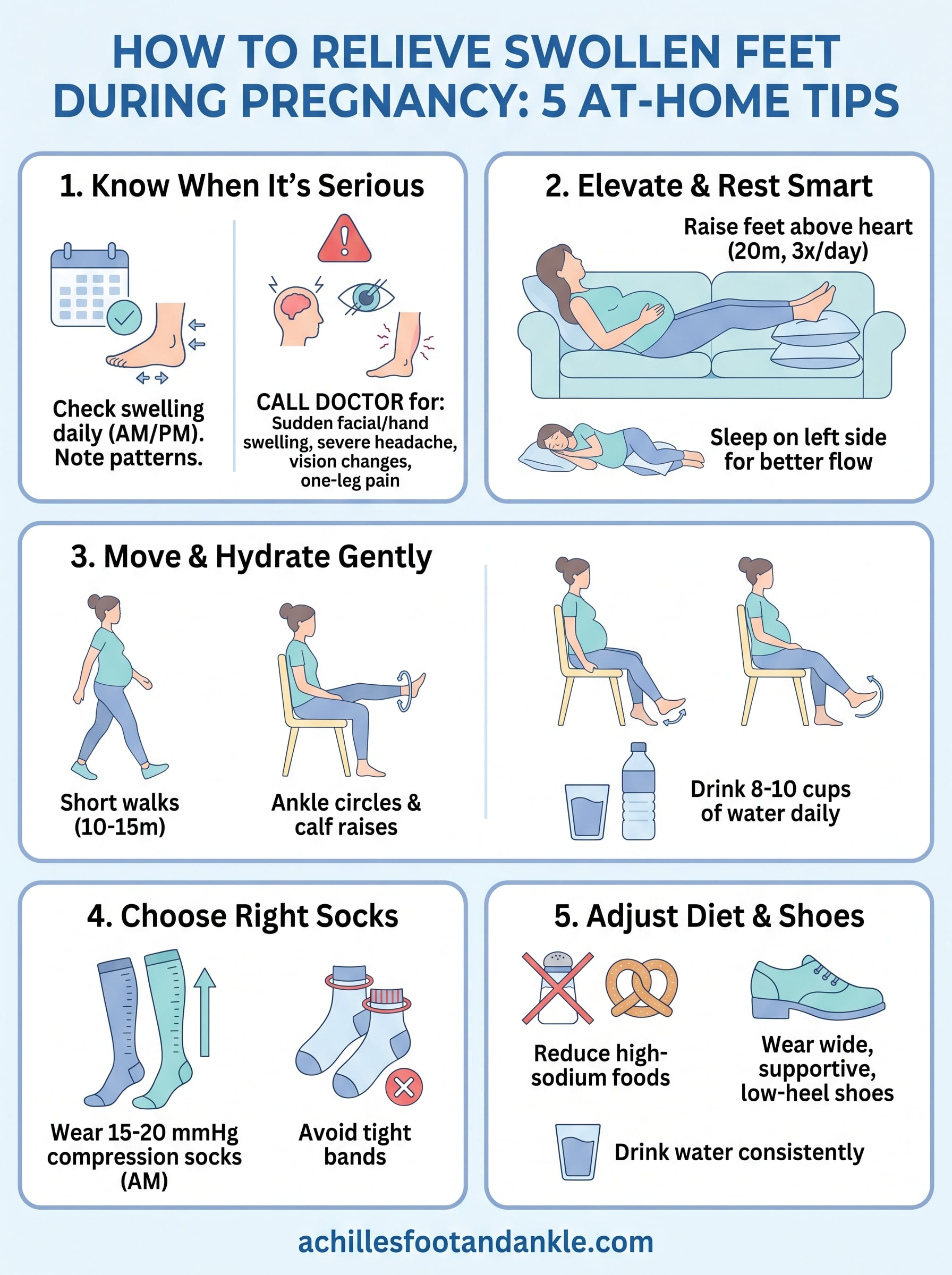
1. Know when swelling needs medical care
Before you focus on comfort strategies, you need to know the difference between normal pregnancy swelling and swelling that signals a medical emergency. Not all edema during pregnancy is the same, and treating a dangerous situation at home can put both you and your baby at serious risk.
What to do at home
Start by checking your swelling every morning and evening. Normal pregnancy swelling tends to be gradual, mostly in the feet and ankles, and often improves overnight when you rest. Take note of whether the swelling is symmetrical on both sides, whether it is getting better with rest, and whether your hands and face look puffy as well. Write down any changes so you can report them clearly to your provider.
Why it helps
Tracking your swelling helps you spot patterns that matter. Sudden or rapid swelling, especially in the hands, face, or around the eyes, can be an early sign of preeclampsia, a serious pregnancy complication involving high blood pressure. Catching these changes early gives your care team the window they need to act quickly and protect your health.
Preeclampsia affects roughly 5 to 8 percent of pregnancies, according to the American College of Obstetricians and Gynecologists, and can develop rapidly, which is why self-monitoring matters.
Safety notes and when to call your doctor
Call your doctor or go to the emergency room immediately if you notice swelling that comes on suddenly, a severe headache, vision changes, pain in your upper abdomen, or swelling in only one leg, which can indicate a blood clot. When you’re working out how to relieve swollen feet during pregnancy, ruling out these warning signs first is the most important step you can take. Do not wait to see if symptoms resolve on their own.
2. Elevate your feet and rest on your left side
Adjusting how you rest is one of the most accessible ways to reduce pregnancy swelling, and it costs nothing. A few deliberate position changes each day can make a real difference in how your feet and ankles feel by evening, particularly during the third trimester when swelling peaks.
What to do at home
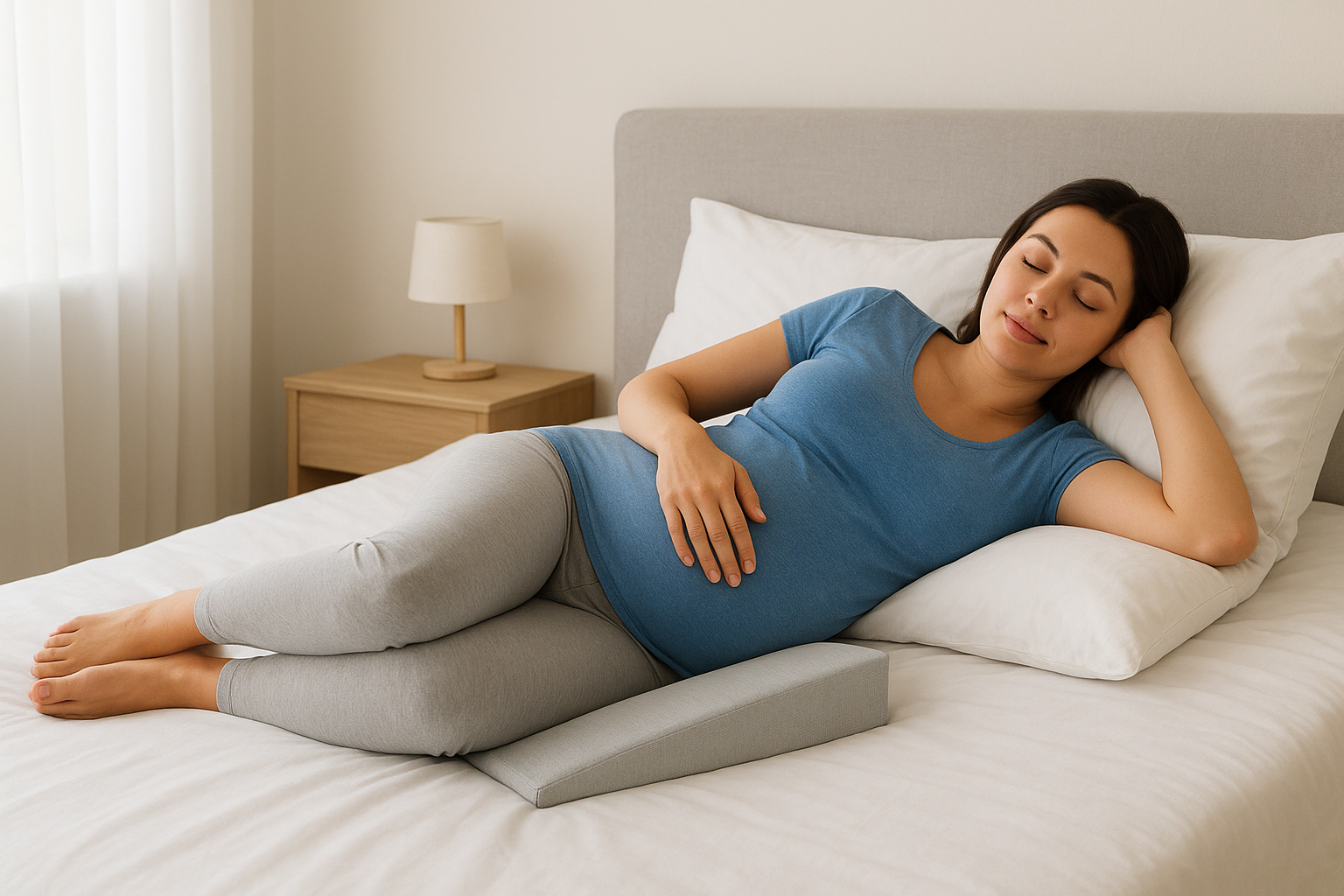
When you rest during the day, raise your feet above heart level using pillows or a wedge cushion. At night, sleep on your left side with a pillow between your knees for added support. Try these simple adjustments:
- Elevate your feet for 20 minutes, at least three times per day
- Use firm pillows or a wedge under your calves and heels
- Place a pillow behind your back to help you stay on your left side while sleeping
Why it helps
Elevation uses gravity to pull pooled fluid back toward your core, which directly reduces puffiness in your feet and ankles. Sleeping on your left side takes pressure off the inferior vena cava, the large vein returning blood from your lower body to your heart. This makes it one of the top strategies for how to relieve swollen feet during pregnancy.
The American College of Obstetricians and Gynecologists recommends left-side sleeping during pregnancy to support healthy circulation.
Safety notes and when to call your doctor
These position changes are safe for most pregnant women. If swelling does not improve after a few days of consistent elevation, or if it suddenly gets worse, contact your provider promptly.
3. Use gentle movement and water to reduce swelling
Staying still for long periods makes pregnancy swelling worse, not better. Adding light movement and paying attention to your fluid intake are two of the most effective strategies for how to relieve swollen feet during pregnancy without any special equipment.
What to do at home
Short, low-impact activity and proper hydration work together to keep fluid from settling in your lower legs. Try these simple daily habits:
- Take 10 to 15 minute walks two or three times per day
- Do seated ankle circles and calf raises to keep circulation moving when walking is uncomfortable
- Drink 8 to 10 cups of water daily to help your body release stored fluid
Why it helps
Light exercise activates your calf muscles, which act as a natural pump that pushes blood and fluid back up toward your heart. Staying well-hydrated lowers the concentration of sodium in your tissues, which directly reduces fluid retention in your feet and ankles.
The Centers for Disease Control and Prevention identifies walking as a safe, low-impact activity for most healthy pregnancies.
Safety notes and when to call your doctor
Avoid high-impact exercise and prolonged standing, both of which worsen swelling. If you notice pain or visible redness in one calf during or after movement, stop immediately and call your doctor, as this can indicate a blood clot.
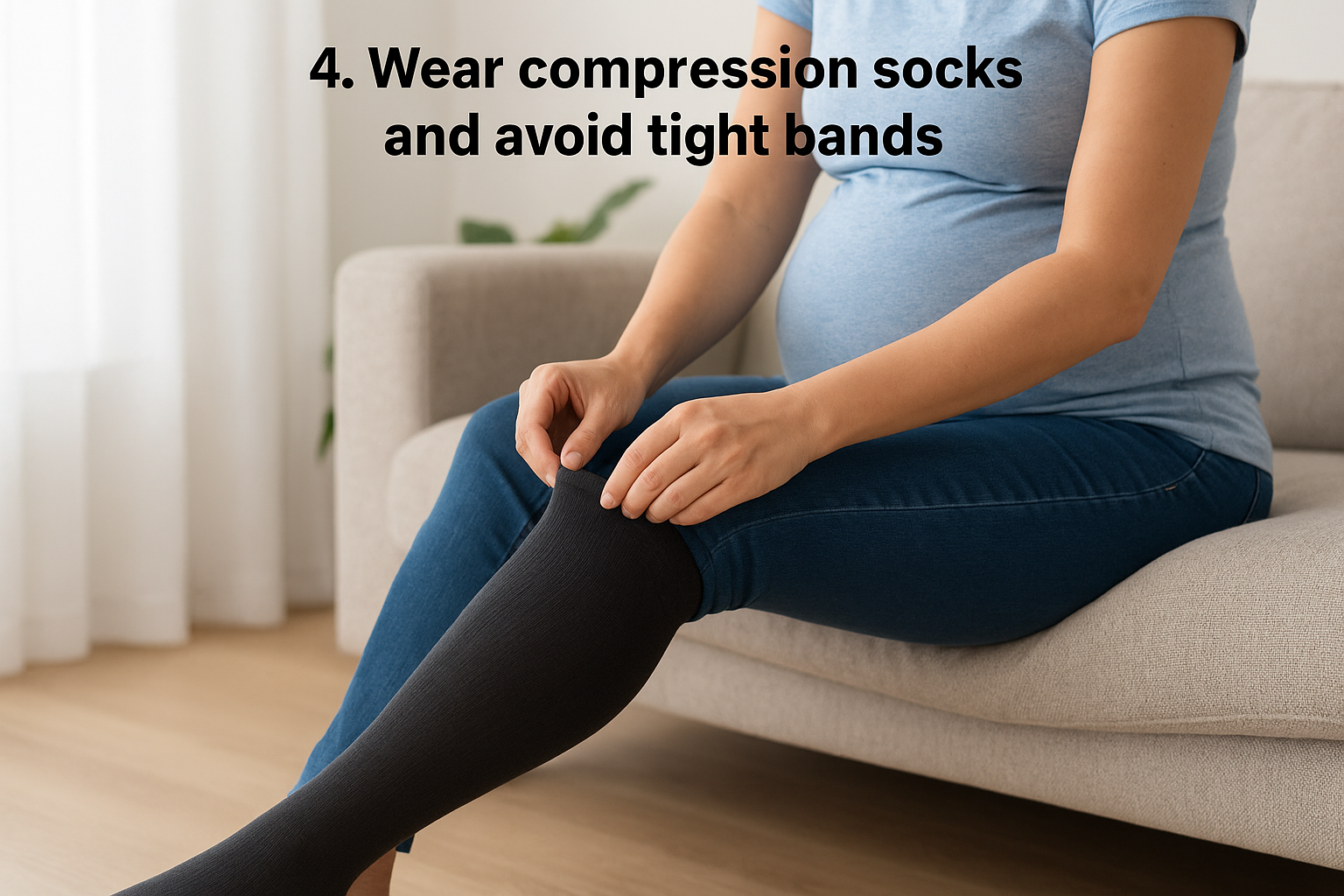
4. Wear compression socks and avoid tight bands
What you wear on your legs directly affects how much fluid collects in your ankles by day’s end. Making the right clothing choices is a simple, low-cost part of how to relieve swollen feet during pregnancy that you can act on today.
What to do at home
Pick up graduated compression socks rated 15 to 20 mmHg, available at most pharmacies. Put them on first thing in the morning before you stand up, when swelling is at its lowest. Also check for any clothing that binds around your ankles or calves, like tight sock bands or elastic edges, and replace them with looser options.
Why it helps
Graduated compression socks apply gentle, decreasing pressure from foot to knee, which actively pushes fluid upward and stops it from pooling. Tight bands do the opposite by restricting circulation at one point and trapping fluid below that line.
The American College of Obstetricians and Gynecologists recognizes compression garments as a safe option for managing pregnancy-related leg swelling.
Safety notes and when to call your doctor
Compression socks are safe for most pregnant women, but skip any garment that leaves deep marks or causes pain. If one leg is noticeably more swollen than the other, call your provider to rule out a blood clot.
5. Adjust hydration, salt, and footwear choices
What you eat, drink, and wear on your feet each play a direct role in how much fluid your body holds throughout the day. These three adjustments work together as part of how to relieve swollen feet during pregnancy without any medications or special treatments.
What to do at home
Small daily changes in your diet and footwear add up quickly. Making these three adjustments helps your body manage fluid more effectively:
- Reduce high-sodium foods like processed snacks, canned soups, and fast food, which cause your body to retain more water
- Wear wide, supportive shoes with low heels and a roomy toe box that accommodate swelling without cutting off circulation
- Drink water consistently throughout the day rather than in large amounts at once
Why it helps
Excess sodium signals your kidneys to retain water, which directly worsens ankle and foot puffiness. Shoes that are too narrow compress swollen tissue and restrict blood flow, making swelling harder to manage as the day progresses.
The National Institutes of Health links high sodium intake to increased fluid retention in body tissues.
Safety notes and when to call your doctor
Do not restrict fluids or follow an extreme low-sodium diet without your doctor’s approval during pregnancy. If swelling persists despite these changes, schedule an appointment with your provider to check for an underlying cause.
Next steps
Pregnancy swelling is common, but it does not have to derail your daily life. The five strategies covered in this article give you a solid starting point for how to relieve swollen feet during pregnancy using tools you already have at home. Consistent habits like elevating your feet, staying hydrated, walking regularly, wearing compression socks, and choosing supportive footwear will make a noticeable difference over time.
That said, some swelling goes beyond what home care can fix. If your feet and ankles remain persistently swollen, if one leg swells more than the other, or if you develop any pain or structural foot changes during pregnancy, it is time to get a professional opinion. A podiatrist can assess what is driving your symptoms and recommend targeted treatment before the problem gets worse. Do not wait until postpartum to address foot pain that is affecting your daily comfort. Schedule a same-day appointment with our team today.