
Your body changes in dozens of ways during pregnancy, and your feet are no exception. Arch pain during pregnancy is one of the most common complaints we hear from expecting mothers at our Central Virginia clinics, and it often catches them off guard. The combination of rapid weight gain, hormonal shifts, and changes in posture can put serious stress on the structures that support your arch, turning everyday activities like walking or standing into uncomfortable tasks.
The good news: you don’t have to just push through it. Most causes of pregnancy-related arch pain are well understood, and there are effective ways to manage the discomfort at home, along with clear signs that it’s time to see a specialist. At Achilles Foot and Ankle Center, our podiatrists regularly help pregnant patients find relief without compromising safety for mom or baby.
This article breaks down exactly why your arches hurt, what you can do about it right now, and when the pain warrants a professional evaluation. Whether you’re in your first trimester or counting down the final weeks, you’ll walk away with a clear plan.
Why arch pain happens during pregnancy
Several physical changes stack up at once during pregnancy, and your feet absorb the consequences of all of them. Understanding what drives arch pain during pregnancy helps you target the right solutions faster and gives you a clearer picture of what your body is actually doing.
Relaxin loosens your arch support
Your body produces a hormone called relaxin beginning in the first trimester. Its primary job is to loosen your pelvic ligaments for childbirth, but relaxin affects ligaments throughout your entire body, including the ones that hold your arch structure in place. When those ligaments become lax, your arch can flatten under your body weight, placing repetitive strain on the plantar fascia, the thick band of tissue running along the bottom of your foot.
Relaxin-related ligament laxity often persists for several months after delivery, which is why some women notice continued foot changes well after giving birth.
This gradual flattening is sometimes called acquired flat foot, and it tends to creep up on you. Many pregnant women don’t connect the dots until the daily aching becomes hard to push through.
Weight gain changes how you walk
By the third trimester, most women carry an additional 25 to 35 pounds. Your feet bear that entire load with every step. At the same time, your growing belly shifts your center of gravity forward, prompting many women to unconsciously widen their stance and roll their feet inward. This motion, called overpronation, repeatedly stresses the arch throughout the day and is a major driver of soreness that peaks after long periods of standing.
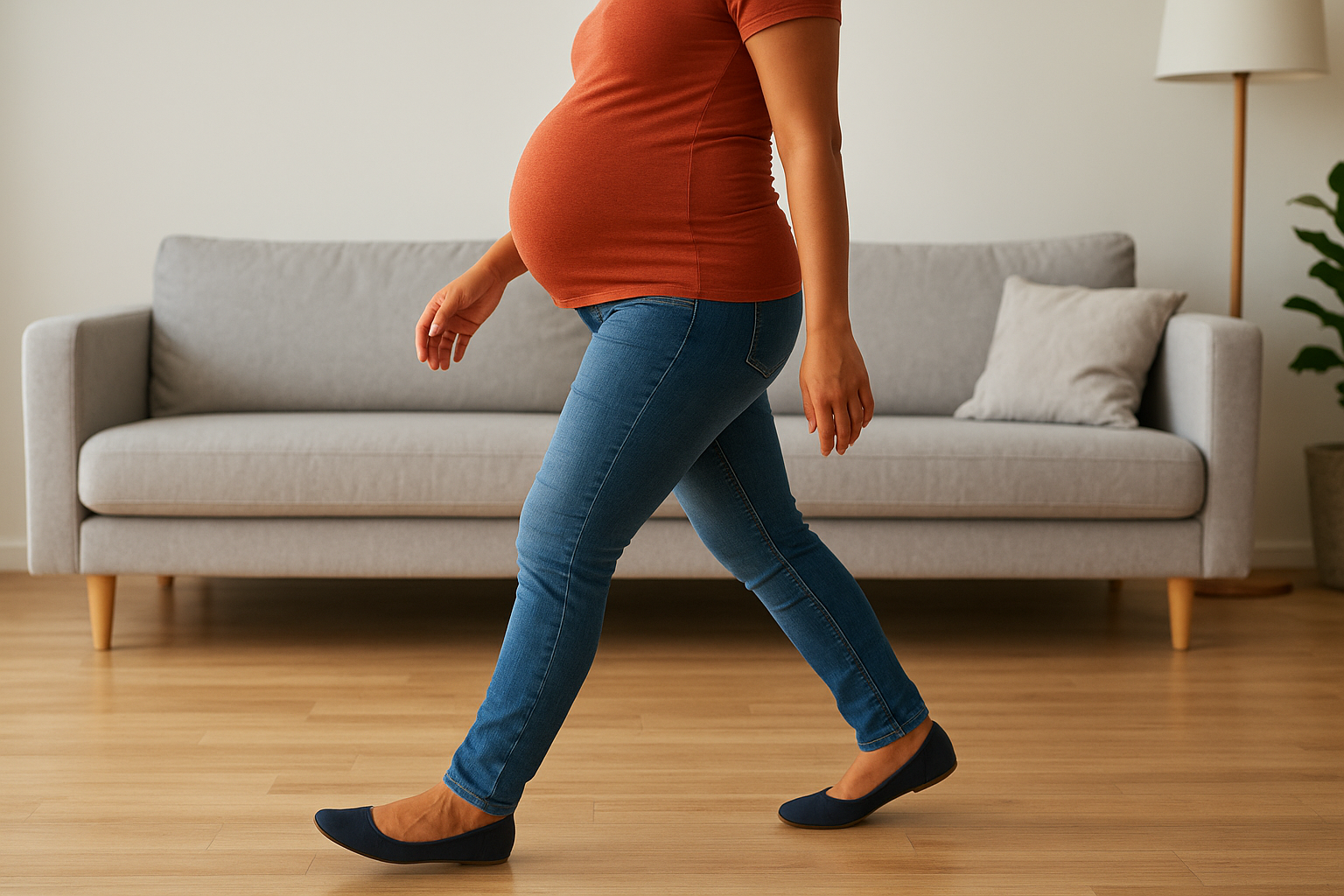
Footwear makes things worse. Flat sandals or worn-down sneakers strip away the support your arches need most during this time, turning a mild ache into persistent daily pain.
Signs it might not be normal
Most arch pain during pregnancy is mechanical, meaning it comes from the physical changes described above. However, some symptoms signal something more serious that needs prompt attention. Learning to tell the difference protects both your health and your pregnancy.
Pain that goes beyond typical aching
Typical pregnancy arch pain builds gradually and tends to ease with rest. If you notice sharp, stabbing pain in your heel or arch that hits hard with your first steps in the morning, you may be dealing with plantar fasciitis rather than general pregnancy-related strain. Pain that makes you alter your gait significantly or forces you to limp deserves a closer look from a podiatrist.
Severe unilateral swelling, redness, or warmth in one foot, especially in the third trimester, can indicate a blood clot and requires an immediate call to your OB or care provider.
Numbness, tingling, or burning
These sensations point toward nerve involvement, which a growing uterus or swelling tissue can trigger by compressing nerves in the lower leg and foot. Tarsal tunnel syndrome, where the tibial nerve gets compressed near the ankle, is more common during pregnancy and produces burning or tingling along the arch that stretches into the toes. Do not dismiss these symptoms as routine discomfort.
How to relieve arch pain at home
You have real options for managing arch pain during pregnancy without waiting for a doctor’s appointment. The most effective approach combines footwear upgrades, targeted stretching, and simple daily habits that reduce stress on your arch throughout the day.
Choose the right shoes and insoles
Your shoes do more work than you realize. Trade flat sandals and worn sneakers for supportive footwear with a firm midsole and a slight heel raise of around one inch. Over-the-counter arch support insoles can make an immediate difference, especially if you spend long stretches on your feet. Look for insoles with a deep heel cup and medial arch support rather than flat cushioning alone.
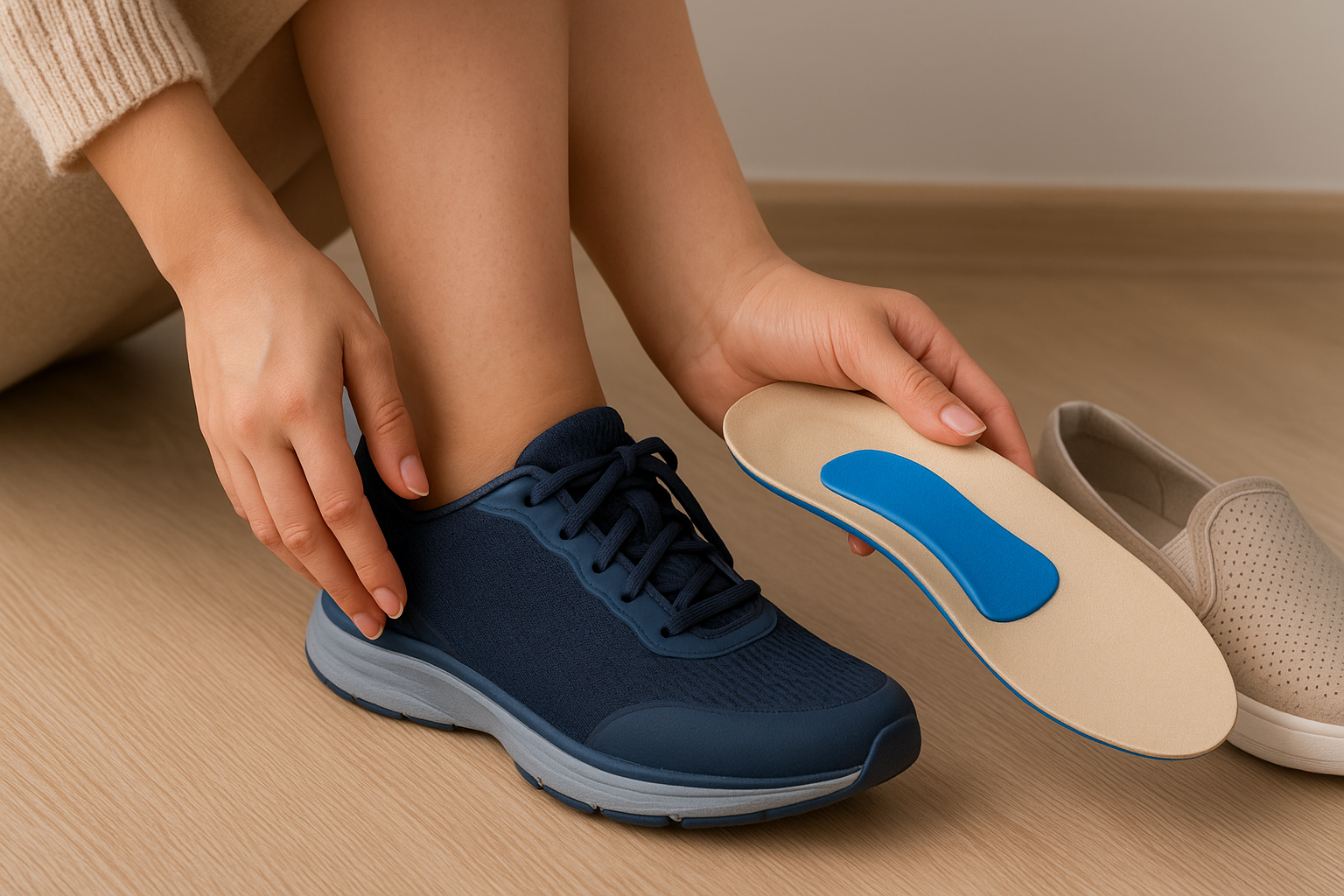
Avoid going barefoot at home, even for short trips across the room, since hard floors remove all arch support during a time when your ligaments are already compromised.
Stretch and ice regularly
A few minutes of targeted calf and plantar fascia stretching each morning before you take your first steps can significantly reduce that sharp initial pain. Roll a frozen water bottle under your foot for 10 minutes after long periods of standing to bring down inflammation and ease soreness fast.
When to call your doctor or a podiatrist
Knowing when to seek professional help separates manageable discomfort from a condition that needs real treatment. Arch pain during pregnancy often responds well to home care, but certain situations call for a phone call rather than another round of icing and stretching.
Symptoms that need same-day attention
Contact your OB or go to urgent care immediately if you notice sudden, severe swelling in one leg or foot, especially when it comes with redness or warmth. These signs can indicate deep vein thrombosis, a blood clot that pregnancy raises your risk for significantly.
Pain that forces you to limp or stops you from bearing weight on your foot warrants a same-day call to your podiatrist, not a wait-and-see approach.
Symptoms that need a podiatry appointment
Schedule a visit with a podiatrist if your heel or arch pain persists longer than two weeks despite rest and supportive footwear. You should also call if you experience burning, numbness, or tingling that spreads through your foot or toes, since these symptoms point toward nerve compression that worsens without proper treatment. Catching these issues early protects your mobility now and reduces the risk of lasting foot changes after delivery.
What to expect at a podiatry visit
A podiatry visit for arch pain during pregnancy is straightforward and focused on getting you relief safely. Your podiatrist will start by reviewing your medical history and pregnancy timeline, then examine your foot mechanics, arch structure, and gait to identify the root cause of your pain.
What the evaluation looks like
Your podiatrist will assess your arch height, foot alignment, and any areas of tenderness through a hands-on physical exam. They may use diagnostic ultrasound imaging to check the plantar fascia for signs of inflammation without exposing you or your baby to radiation, making it a safe and reliable tool throughout any trimester.
Custom orthotics prescribed during pregnancy can be used well after delivery, making them a long-term investment in your foot health.
What treatment options look like
Based on the exam findings, your podiatrist will recommend pregnancy-safe treatments tailored to your specific situation. These typically include custom orthotics, targeted stretching protocols, or specific footwear guidance. If nerve involvement is present, they may suggest supportive bracing or a physical therapy referral to address compression before it worsens.
Most pregnant patients leave their first visit with a clear treatment plan that brings noticeable, practical relief within days rather than weeks.
Quick recap and next steps
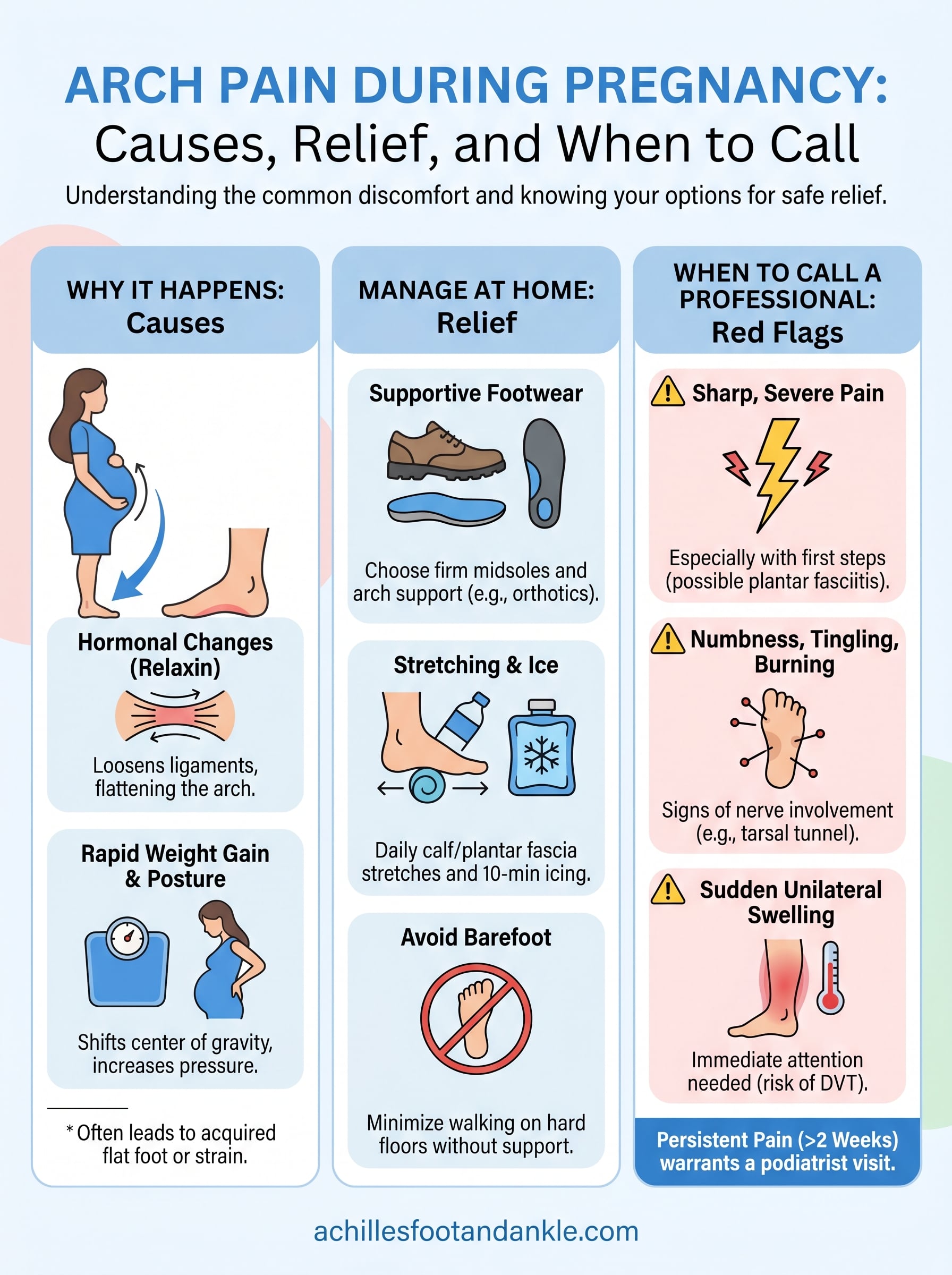
Arch pain during pregnancy is common, but it is not something you have to accept as unavoidable. Hormonal changes, weight gain, and altered gait mechanics all work against your arch at the same time, and understanding that combination puts you in a much better position to manage it. Supportive footwear, daily stretching, and icing after prolonged standing address most cases effectively at home.
Watch your symptoms closely as your pregnancy progresses. Burning, tingling, or numbness in your foot signals nerve involvement, while sudden severe swelling in one leg demands immediate medical attention. Persistent pain that outlasts two weeks of home care is your clearest sign that a professional evaluation will get you further than self-treatment alone.
You do not need to wait until after delivery to get relief. If your arch pain is limiting your daily life, schedule a same-day appointment with our podiatry team and get a clear, pregnancy-safe treatment plan working for you quickly.