Your body has done incredible work over the past several months, but foot pain third trimester hits differently. The swelling, the aching arches, the sharp heel pain that greets you first thing in the morning, it all tends to peak right when you’re already carrying the most weight and getting the least sleep. You’re not imagining it, and you’re far from alone in dealing with it.
Late-pregnancy foot pain has real, identifiable causes, from hormonal changes that loosen your ligaments to fluid retention that can make your shoes feel two sizes too small. The good news is that most of these issues respond well to straightforward treatment, and knowing what’s behind the pain helps you figure out what actually works. It also helps you recognize the handful of situations that do need a doctor’s attention.
At Achilles Foot and Ankle Center, our podiatrists across Central Virginia regularly treat pregnant patients dealing with exactly these problems. Below, we’ll walk through why your feet hurt during the third trimester, what you can do at home for relief, and the warning signs that mean it’s time to come in for an evaluation.
Why foot pain often gets worse in the third trimester
Several biological changes collide in the final months of pregnancy, and your feet absorb most of the impact. Understanding what’s happening inside your body makes the pain make sense and points you toward solutions that actually address the root cause rather than just masking discomfort.
Your ligaments are loosening throughout your body
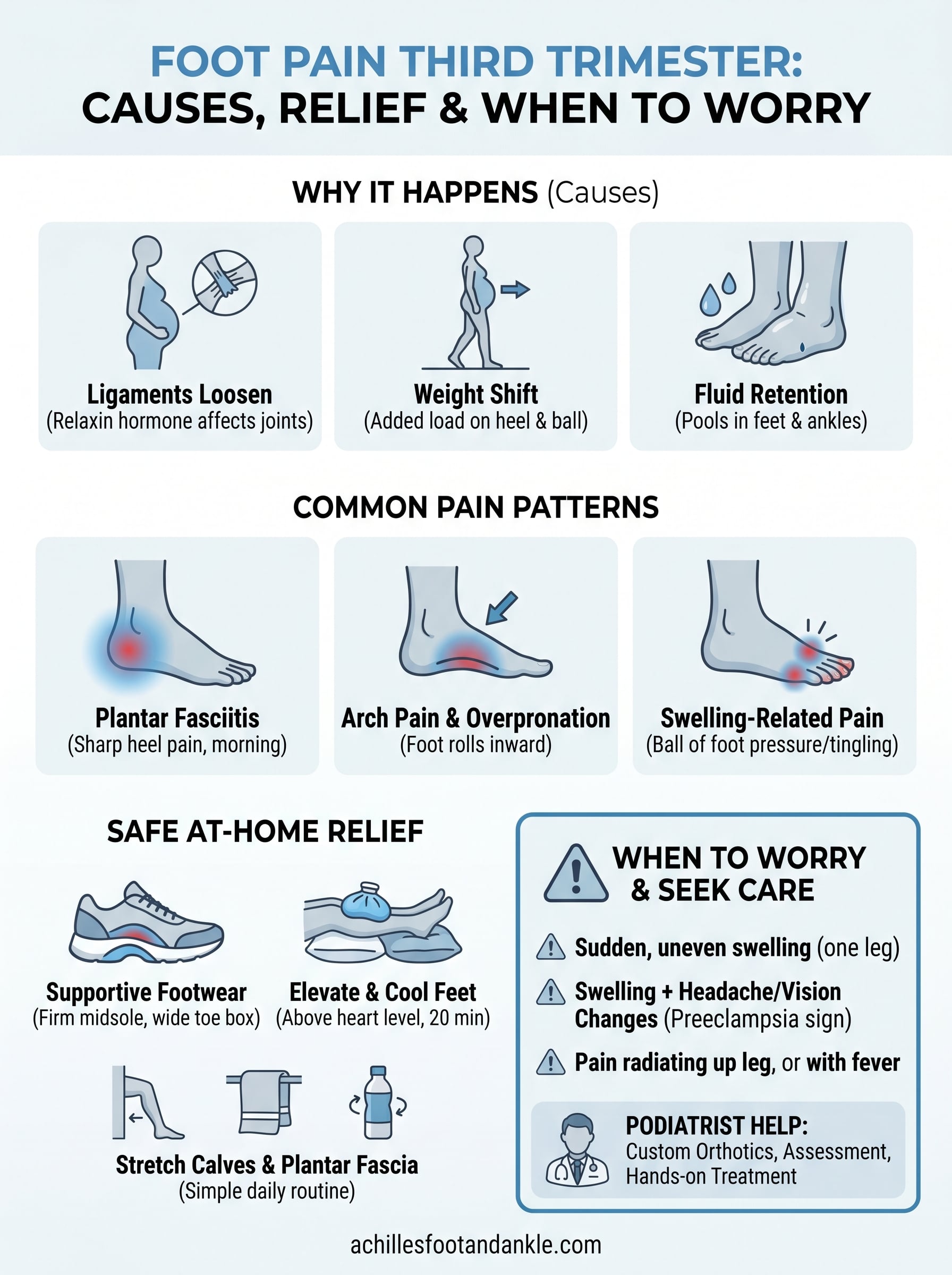
Your body produces a hormone called relaxin starting early in pregnancy, but its effects become most pronounced by the third trimester. Relaxin loosens the ligaments in your pelvis to prepare for delivery, but it doesn’t target only one area. It affects every joint in your body, including the ones in your feet. When the ligaments that normally hold your arch structure in place become lax, your foot can flatten and spread with each step, straining tissue that wasn’t designed to work that way.
Many patients are surprised to find their foot size permanently increases by a half size or more after pregnancy, which is a direct result of this ligament loosening.
Your weight and center of gravity have shifted
By the third trimester, most women have gained 25 to 35 pounds compared to pre-pregnancy weight, and that number is concentrated at the front of your body. Your center of gravity shifts forward, which changes the way you walk and distributes more pressure across the heel and ball of your foot than normal biomechanics would. Over weeks and months, that added load wears on tendons, fascia, and joints that were already working harder due to hormonal changes.
Fluid retention builds pressure in your feet and ankles
Swelling is one of the most common complaints tied to foot pain third trimester, and it has a straightforward cause. Your blood volume nearly doubles during pregnancy, and your growing uterus puts pressure on the large veins that return blood from your lower body. Fluid pools in your feet and ankles, especially after standing or sitting for long periods, which stretches tissue and creates an aching, heavy sensation that worsens as the day goes on.
Common third-trimester foot pain patterns and causes
Not all foot pain third trimester feels the same, and the location of your pain is usually a reliable clue to what’s causing it. Identifying your specific pattern helps you choose the right relief strategy instead of guessing.
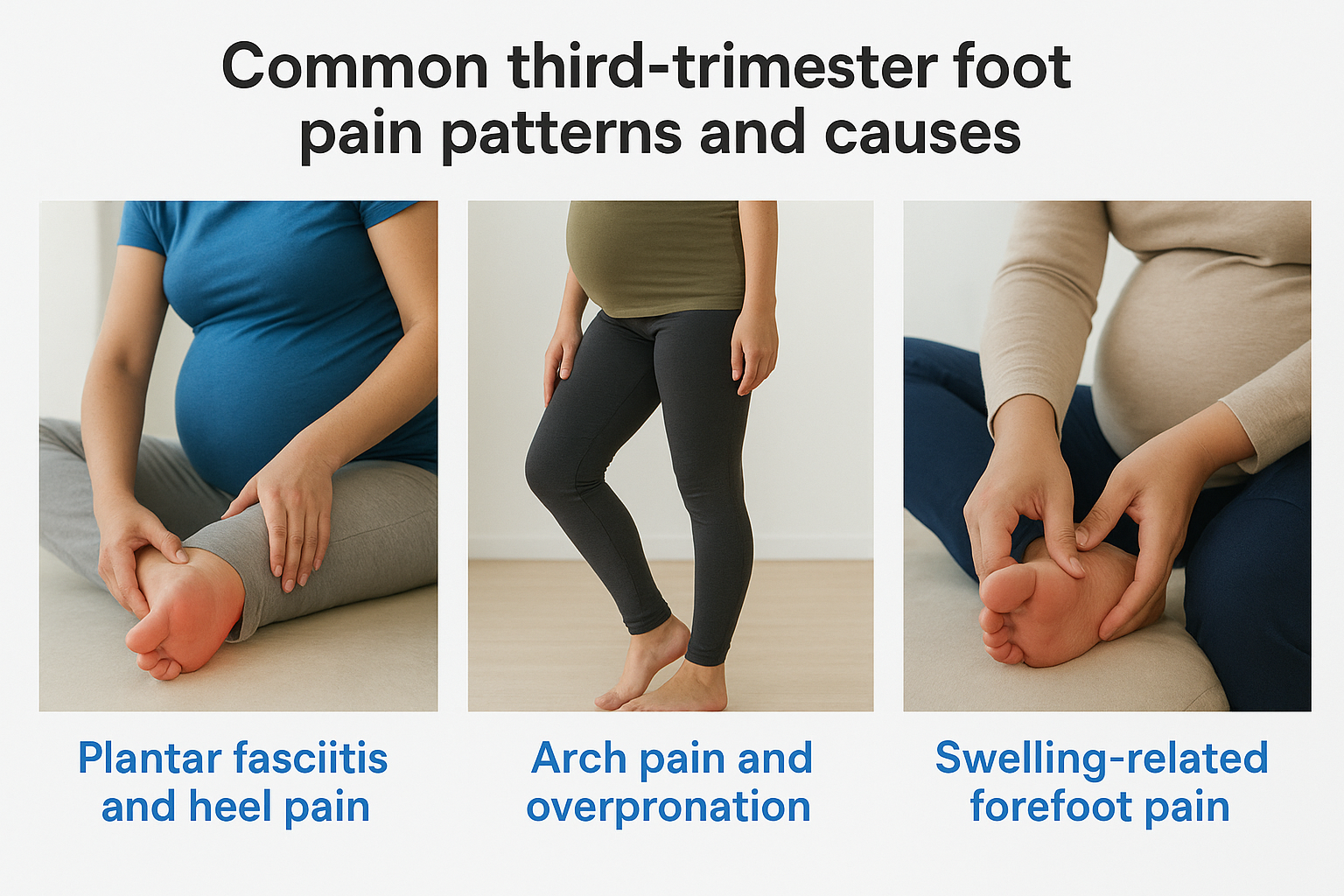
Plantar fasciitis and heel pain
The plantar fascia is a thick band of tissue that runs along the bottom of your foot from your heel to your toes. When relaxin loosens your arch and added weight increases the load on that tissue, small tears and inflammation develop. You’ll typically feel a sharp, stabbing pain in your heel, especially with your first steps in the morning or after sitting for a while.
Plantar fasciitis is the most common cause of heel pain in pregnant patients and often responds well to targeted stretching and supportive footwear.
Arch pain and overpronation
As your ligaments loosen and your foot spreads, your arch may drop lower than it normally would. This causes your foot to roll inward with each step, a pattern called overpronation. The result is a deep aching or burning pain along the inside of your arch that worsens after long periods of standing or walking.
Swelling-related forefoot pain
Fluid retention doesn’t just cause general puffiness. When excess fluid concentrates in the ball of your foot, it creates pressure on the nerves and joints between your toes. You may notice a burning or tingling sensation at the front of your foot that builds throughout the day.
Safe at-home relief for third-trimester foot pain
Managing foot pain third trimester doesn’t always require a clinic visit. Several simple, consistent strategies can significantly reduce your daily discomfort without any risk to you or your baby.
Supportive footwear and orthotics
The single most effective change most pregnant patients can make is switching to supportive footwear with a firm midsole and a wide toe box. Flat shoes and sandals with no arch support let your foot splay and pronate with every step, amplifying the tissue strain behind your pain. Over-the-counter arch support insoles can add meaningful relief if you’re not ready for custom orthotics.
Elevate and cool your feet
Fluid pools in your lower legs and feet because gravity and uterine pressure work against your circulation. Propping your feet above heart level for 20 to 30 minutes, two or three times a day, helps fluid drain back toward your core.
Lying on your left side while elevating your feet reduces pressure on the vena cava and improves circulation more effectively than lying on your back.
Cold packs wrapped in a cloth applied to swollen areas for 15 minutes at a time can ease the aching and heaviness that builds by evening.
Stretch your calves and plantar fascia
Tight calf muscles pull on the Achilles tendon and plantar fascia, making heel pain worse. A simple wall stretch held for 30 seconds on each leg, done several times a day, reduces that tension. Try these three movements daily:
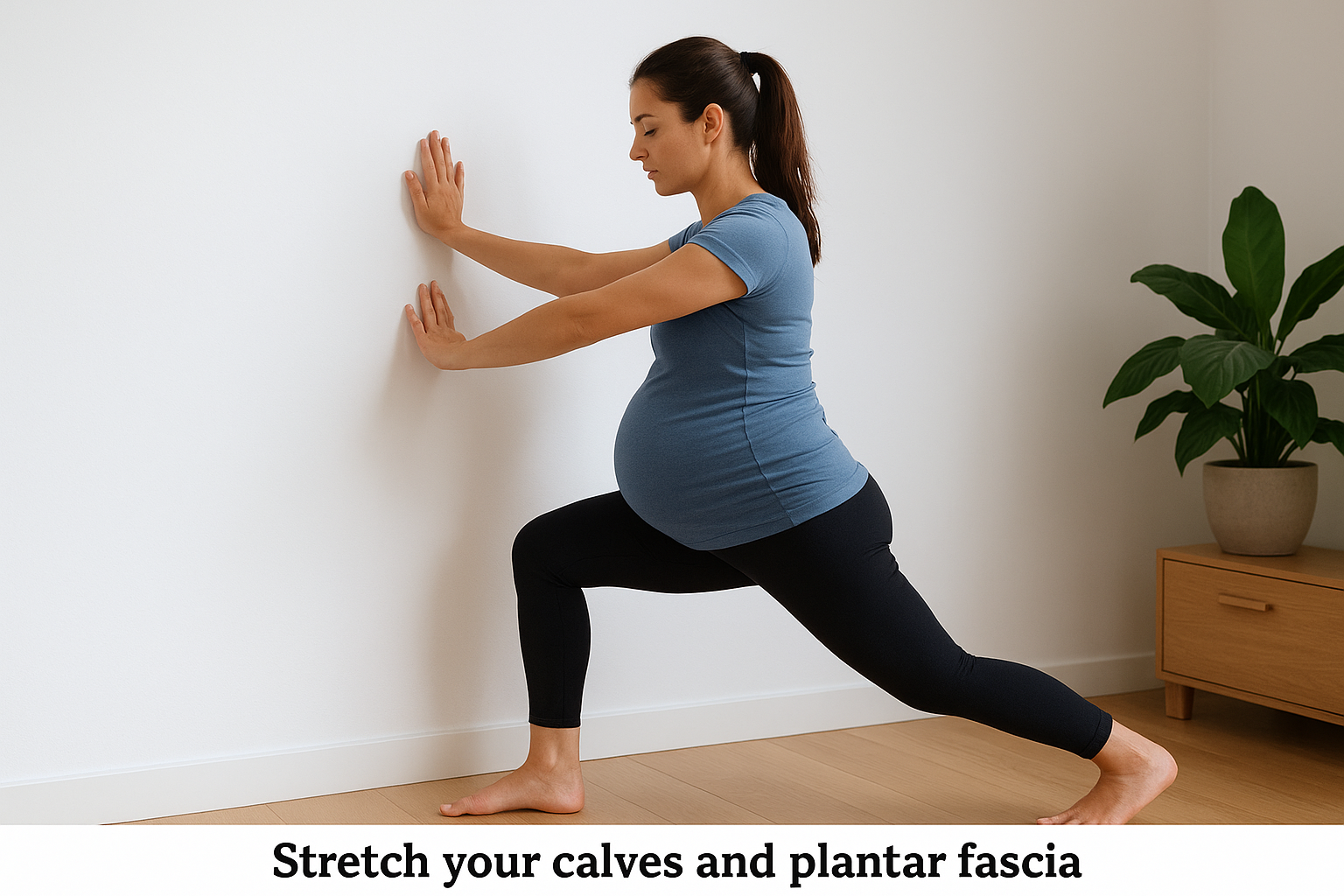
- Stand facing a wall with one foot back, heel flat, and lean forward gently.
- Sit and loop a towel around your toes to stretch the bottom of your foot.
- Roll a frozen water bottle slowly under your arch for a combined stretch and cooling effect.
When to worry and when to call your OB or seek care
Most foot pain third trimester discomfort is mechanical, meaning it comes from weight, swelling, and ligament changes rather than anything dangerous. But a few specific symptoms cross a line that requires prompt medical evaluation, not a wait-and-see approach.
Swelling that comes on suddenly or unevenly
Gradual swelling in both feet that builds across the day is normal. What is not normal is sudden swelling in one leg, or swelling that appears rapidly alongside headaches, vision changes, or pain in your upper abdomen. These can be signs of preeclampsia, a pregnancy complication involving dangerously high blood pressure. If you notice this combination, call your OB or go to labor and delivery right away.
One-sided calf swelling, redness, or warmth can indicate a deep vein thrombosis, which requires immediate evaluation.
Pain that does not fit the usual pattern
Sharp pain that radiates up your leg rather than staying localized in your foot or arch, numbness that spreads beyond your toes, or foot pain that arrives with fever or skin changes all warrant a call to your provider. Standard mechanical pain from arch strain or plantar fasciitis stays in the foot and follows predictable patterns tied to movement and rest. Pain that behaves differently, especially if it worsens at rest or wakes you from sleep, deserves professional attention before you try to manage it at home.
How a podiatrist can help during late pregnancy
When home strategies aren’t delivering enough relief, a podiatrist can offer targeted, pregnancy-safe care that goes beyond general advice. Many patients dealing with foot pain third trimester don’t realize that podiatric evaluation and treatment are entirely appropriate during late pregnancy and can make the final weeks significantly more manageable.
Custom orthotics and footwear assessment
A podiatrist will evaluate your specific gait mechanics and arch position to determine whether over-the-counter insoles are sufficient or whether custom orthotics would better support your foot structure. Custom orthotics are molded precisely to your foot and correct the overpronation that develops as relaxin loosens your ligaments, reducing strain on the plantar fascia and arch tissue with every step you take.
Because your foot shape often changes after delivery, your podiatrist will typically recommend a post-partum reassessment to update your orthotics once your ligament tone stabilizes.
Hands-on treatment for pain and swelling
Your podiatrist can also apply treatments that directly reduce inflammation and tissue stress, including ultrasound therapy, offloading taping techniques, and targeted stretching protocols designed for your specific condition. These approaches address the mechanical root of your pain rather than just the symptoms.
If your swelling or nerve symptoms are severe, your podiatrist can coordinate directly with your OB to confirm which interventions are safe at your current stage of pregnancy.
A simple plan for the next few days
Foot pain third trimester doesn’t have to dominate your final weeks. Start with the basics: switch to supportive shoes today and commit to elevating your feet for 20 minutes at least twice a day. Add the calf stretch and plantar fascia roll to your morning routine, and pay attention to how your pain responds over the next three to five days.
If those steps reduce your discomfort, keep going and stay consistent. If your pain stays the same or gets worse despite these changes, or if you notice any of the warning signs covered earlier, that’s your signal to get a professional evaluation. A podiatrist can identify exactly what’s driving your symptoms and build a treatment plan that works safely alongside your pregnancy care.
Your remaining weeks should feel manageable, not miserable. Book a same-day appointment at Achilles Foot and Ankle Center and get the targeted relief you need before your due date.