
That sharp, burning ache under the ball of your foot can turn every step into a challenge, whether you’re walking through a parking lot or standing at your kitchen counter. The good news is that targeted foot stretches for ball of foot pain can make a real difference, and you don’t need any special equipment or a gym membership to do them. Simple, consistent stretching helps restore flexibility, ease pressure on the metatarsal heads, and get you moving more comfortably.
At Achilles Foot and Ankle Center, our podiatrists across Central Virginia treat ball of foot pain, clinically known as metatarsalgia, on a daily basis. While every case deserves a proper evaluation, we know that home-based stretches and exercises are often a key part of recovery. Below, we’re sharing five stretches our team regularly recommends to patients, along with tips on how to perform each one safely so you can start finding relief today.
1. Achilles Foot and Ankle toe spread stretch
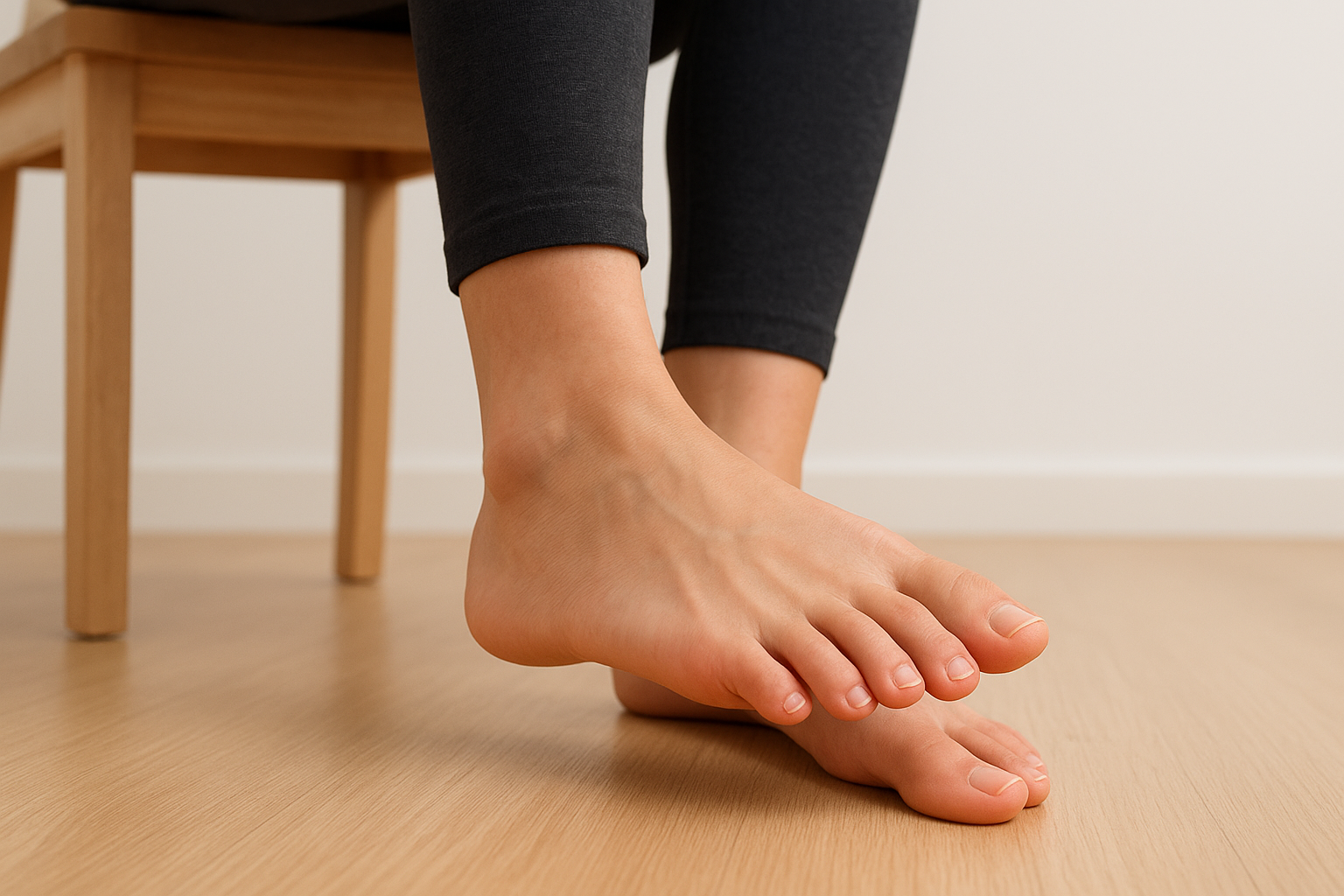
The toe spread stretch is one of the simplest and most effective foot stretches for ball of foot pain you can add to your daily routine. It targets the small intrinsic muscles that support the forefoot, helping to reduce crowding and pressure across the metatarsal heads where ball of foot pain typically originates.
What it targets and why it helps
This stretch works the intrinsic foot muscles, the small muscles running between and beneath the metatarsal bones. When these muscles are weak or tight, your toes tend to compress inward, increasing load on the ball of your foot. Spreading your toes trains these muscles to distribute weight more evenly across the entire forefoot.
Strengthening the intrinsic foot muscles is one of the most overlooked steps in relieving forefoot pain.
How to do it safely
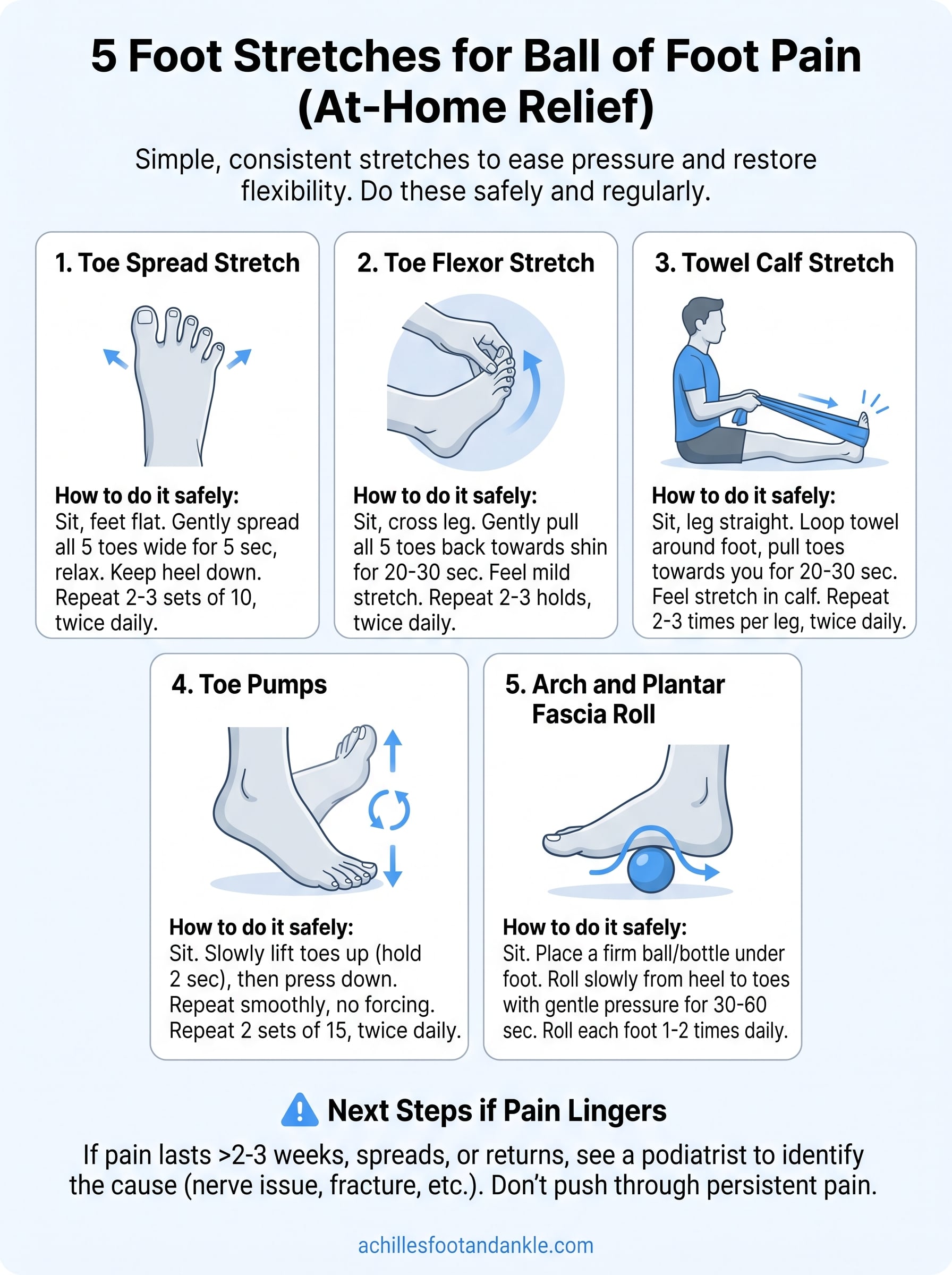
Sit in a chair with both feet flat on the floor. Slowly spread all five toes apart as wide as you comfortably can, hold for five seconds, then relax. Keep your heel and the rest of your foot pressed firmly to the ground throughout the entire movement.
Make it easier or harder
If spreading your toes feels difficult at first, use your fingers to gently guide each toe apart manually. To increase the challenge, loop a light resistance band around all five toes and spread against its tension for greater muscle activation.
How often to do it
Aim for two to three sets of 10 repetitions on each foot, once in the morning and once in the evening. Consistency matters more than intensity, so short daily sessions produce better results than occasional long ones.
When to stop and call a podiatrist
Stop immediately if you notice sharp pain, tingling, or numbness during the stretch. Those sensations can signal nerve involvement or a structural problem that needs professional evaluation rather than continued home stretching.
2. Toe flexor stretch for the ball of the foot
The toe flexor stretch targets the tendons and muscles that curl your toes downward, pulling extra load onto the metatarsal heads with every step. Adding this move to your routine of foot stretches for ball of foot pain directly addresses the tension building beneath your forefoot before it compounds into sharper discomfort.
Releasing toe flexor tension is often the missing piece when forefoot pain does not respond to arch-focused stretches alone.
What it targets and why it helps
This stretch works the flexor digitorum longus and brevis, the tendons running along the underside of your foot toward the toe tips. Loosening them reduces the downward pull on your toes and lifts compression off the metatarsal heads where pain concentrates.
How to do it safely
Sit and cross one foot over your opposite knee. Gently pull all five toes back toward your shin until you feel a mild stretch along the bottom of your foot, then hold for 20 to 30 seconds before releasing.
Make it easier or harder
Loop a towel around your toes if reaching your foot is difficult. To increase intensity, pull each toe back individually for a more isolated and targeted stretch.
How often to do it
Perform two to three holds per foot, twice daily, preferably after a warm shower when your tissues are most pliable and receptive to stretching.
When to stop and call a podiatrist
Stop if you feel sharp pain or a snapping sensation in the arch. Both signs point to a structural issue that needs a podiatrist’s evaluation rather than continued home stretching.
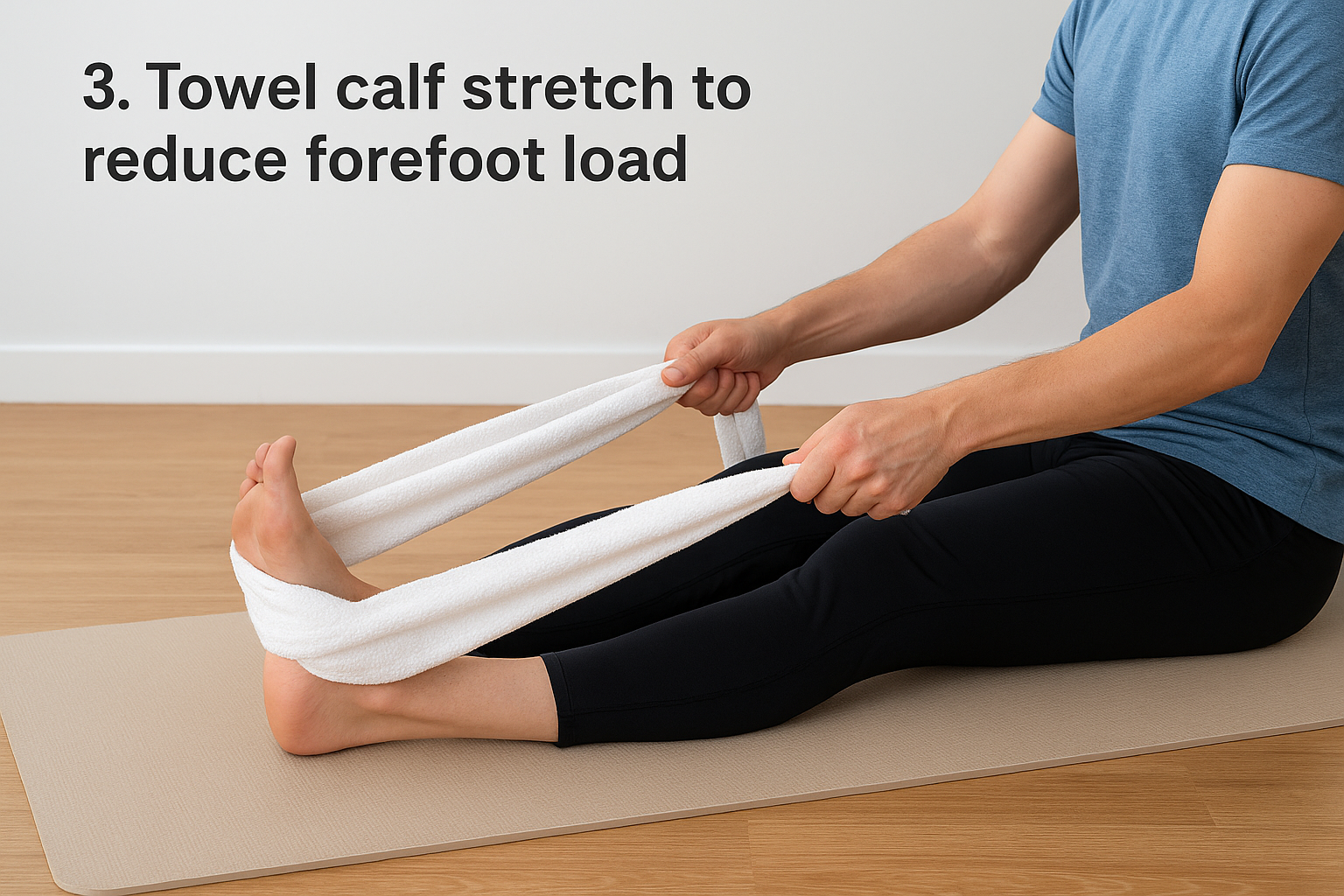
3. Towel calf stretch to reduce forefoot load
Tight calf muscles force your forefoot to absorb more impact with each step, which directly increases pressure on the ball of your foot. Adding this towel calf stretch to your foot stretches for ball of foot pain routine addresses a root cause that many people overlook when they focus only on the foot itself.
What it targets and why it helps
This stretch targets the gastrocnemius and soleus, the two main calf muscles that control ankle flexibility. When they shorten, your heel rises earlier during walking, shifting extra load forward onto the metatarsal heads and amplifying ball of foot pain over time.
Improving ankle dorsiflexion is one of the most effective ways to reduce forefoot pressure without changing your footwear.
How to do it safely
Sit on the floor with one leg straight out. Loop a towel or resistance band around your foot and gently pull your toes toward you until you feel a stretch up the back of your lower leg. Hold for 20 to 30 seconds, then switch sides.
Make it easier or harder
Perform the stretch seated in a chair if getting to the floor is uncomfortable. To increase intensity, do it standing against a wall with your back heel pressed flat.
How often to do it
Stretch each leg two to three times per session, twice daily, especially after sitting for long periods.
When to stop and call a podiatrist
Stop if you feel sudden tightness or pain behind the knee or in the Achilles tendon, and schedule an evaluation with your podiatrist promptly.
4. Toe pumps for stiffness and circulation
Toe pumps are a low-effort movement that gets blood flowing through your forefoot while loosening the joint stiffness that contributes to ball of foot pain. Including this exercise in your collection of foot stretches for ball of foot pain makes a noticeable difference, especially first thing in the morning when your feet feel their most rigid.
What it targets and why it helps
This movement works the metatarsophalangeal joints, the knuckle-like joints at the base of your toes. Gentle, repeated motion lubricates these joints and encourages circulation through the forefoot tissues, reducing the inflammatory buildup that sharpens ball of foot pain over time.
Circulation-focused exercises are often more effective at reducing morning stiffness than static stretches alone.
How to do it safely
Sit in a chair and lift all your toes slowly upward, hold for two seconds, then press them firmly but gently downward toward the floor. Repeat this pumping motion in a smooth, controlled rhythm without forcing the range of motion.
Make it easier or harder
Start with small, gentle movements if your joints feel very stiff. To increase the challenge, perform the exercise while standing to add light body weight resistance.
How often to do it
Do two sets of 15 repetitions per foot, twice daily.
When to stop and call a podiatrist
Stop if you notice joint swelling or sharp clicking pain during the movement, as these signs may indicate a condition requiring professional assessment.
5. Arch and plantar fascia roll stretch
The arch and plantar fascia roll stretch uses a firm ball or frozen water bottle to release tension along the entire underside of your foot. As one of the most direct foot stretches for ball of foot pain, this technique targets the fascial tissue connecting your heel to your forefoot, relieving tightness that concentrates pressure under the metatarsal heads.
What it targets and why it helps
Rolling mobilizes the plantar fascia, the thick band of connective tissue running the length of your arch. When this tissue shortens and tightens, it pulls on the metatarsal heads and worsens forefoot pain and inflammation with every step.
How to do it safely
Place a tennis ball or golf ball under your foot while seated. Apply gentle downward pressure and roll slowly from your heel toward your toes for 30 to 60 seconds, pausing briefly on any tender areas.
Substituting a frozen water bottle for a ball adds an anti-inflammatory effect that can speed up short-term relief.
Make it easier or harder
Modify the stretch based on your current comfort level:
- Easier: Keep extra weight in your chair to reduce downward pressure.
- Harder: Perform the roll while standing for deeper tissue mobilization.
How often to do it
Roll each foot once or twice daily, spending at least 60 seconds per session for consistent results.
When to stop and call a podiatrist
Stop if rolling triggers sharp, stabbing pain rather than mild relief. Persistent pain after rolling typically signals a structural issue that requires a professional diagnosis.
Next steps if pain lingers
These five foot stretches for ball of foot pain give you a solid starting point, but stretching only goes so far when an underlying structural problem is driving your discomfort. If your pain has lasted more than two to three weeks, spreads into your toes, or returns the moment you get back on your feet, your body is telling you something that stretches alone cannot fix.
A podiatrist can identify exactly what’s causing your forefoot pain, whether that’s nerve compression, a stress fracture, bursitis, or a biomechanical issue, and build a treatment plan tailored to how you move and live. Continuing to push through pain without answers often turns a manageable problem into a more complicated one. The team at Achilles Foot and Ankle Center serves patients across thirteen locations in Central Virginia and offers same-day appointments for urgent concerns. Schedule your appointment today and get a clear plan for lasting relief.