Stress fractures account for up to 20% of all sports medicine injuries, and runners are among the most frequently affected. These tiny cracks in the bones of your feet often develop gradually, by the time you feel the pain, the damage is already underway. The good news? Preventing stress fractures in feet starts with a few deliberate choices that protect your bones before a problem begins.
At Achilles Foot and Ankle Center, our podiatrists treat runners across Central Virginia who are sidelined by stress fractures in the metatarsals, heel, and midfoot. Many of these injuries are entirely avoidable with the right approach to training, footwear, and nutrition. We see what works, and what doesn’t, every day in our clinics.
This article breaks down five practical tips to keep your feet healthy and your training on track. Whether you’re building mileage for your first 5K or logging 50-mile weeks, these strategies apply to you. Let’s get into what actually helps, and what most runners overlook when it comes to protecting the 26 bones in each foot.
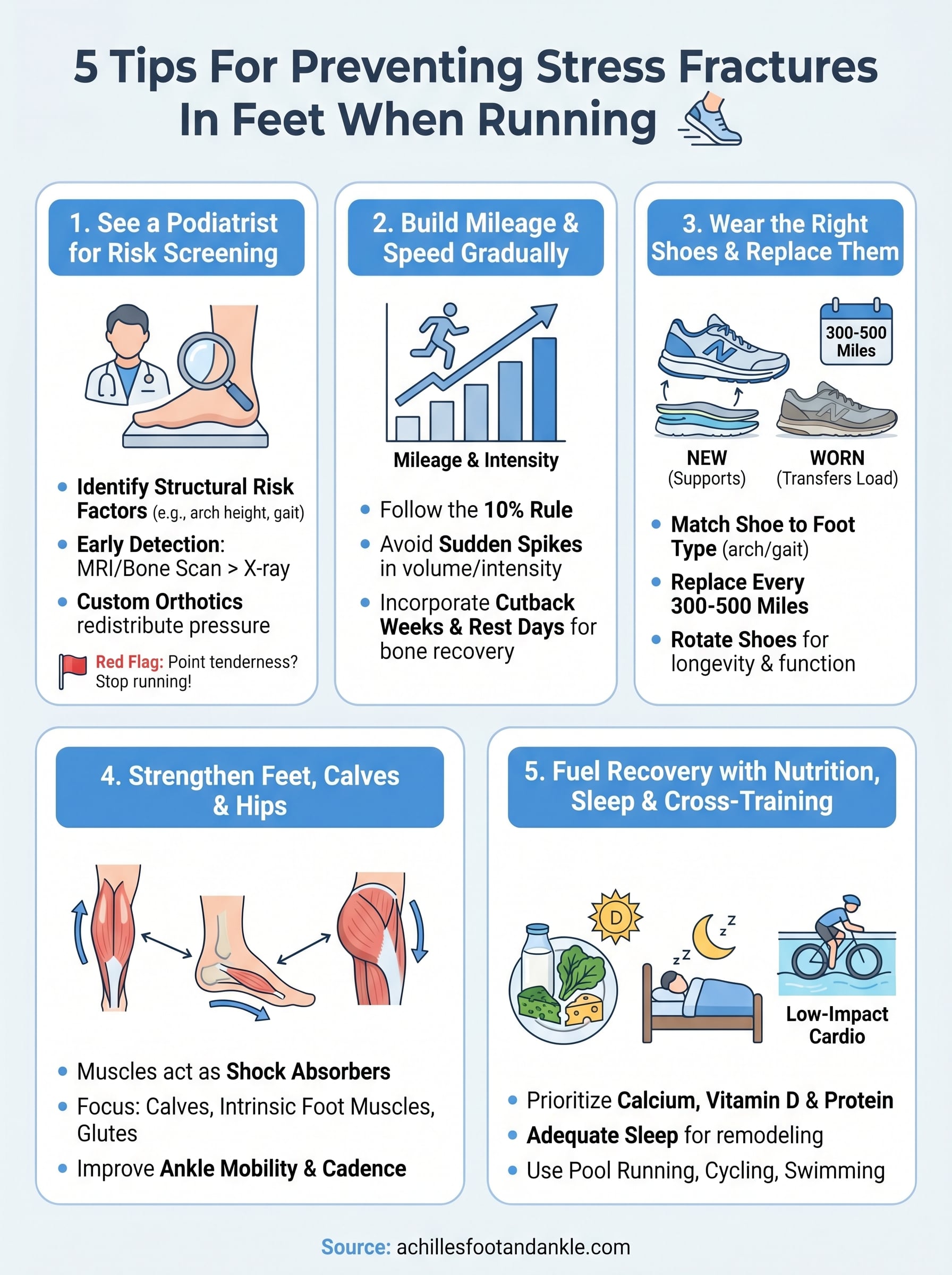
1. See a podiatrist for risk screening
A podiatrist can identify structural risk factors in your feet before they turn into injuries. Many runners don’t realize that foot mechanics, bone density concerns, and prior fractures all contribute to your overall stress fracture risk, and a clinical exam surfaces these details quickly.
What a foot and ankle exam can catch early
Your foot structure tells a lot about where stress concentrates when you run. A podiatrist will evaluate arch height, alignment, and gait patterns that put extra load on specific bones, like the second metatarsal in high-arched feet. Identifying these patterns early gives you time to correct them before mileage builds.
When imaging helps and what to ask about
Standard X-rays often miss early stress fractures because bone changes aren’t visible until healing begins. If your podiatrist suspects a fracture, ask about an MRI or bone scan, both of which detect stress reactions weeks before an X-ray would show anything. Catching a stress reaction early means shorter recovery and a faster return to running.
A stress reaction treated early rarely becomes a full fracture. A stress fracture that gets ignored often becomes a break that requires months off.
How custom orthotics and bracing can reduce load
Custom orthotics redistribute pressure across the entire foot rather than concentrating it on vulnerable spots. For runners with flat feet or high arches, this redistribution is one of the most effective tools for preventing stress fractures in feet long-term. Bracing can also stabilize the ankle and reduce the repetitive shock that travels up through the metatarsals.
Red flags that mean stop running and get seen today
Point tenderness directly on a bone, swelling that doesn’t resolve overnight, or pain that worsens mid-run and forces you to alter your stride all signal a possible fracture. Stop running immediately and schedule an appointment. Continuing to train on a stress fracture turns a manageable injury into one that may require surgery.
2. Build mileage and speed gradually
Your bones adapt to running stress, but only when you give them enough time to do it. Bone remodeling is a slow process, and when your training load increases faster than your skeleton can keep up, stress fractures become the predictable result. This is one of the most overlooked factors in preventing stress fractures in feet among runners at every level.
Why stress fractures happen when load outpaces recovery
Bones respond to impact by breaking down slightly, then rebuilding stronger. When you increase mileage or intensity too quickly, the breakdown outpaces the rebuilding, and small cracks develop in the metatarsals, heel, or navicular. High-impact surfaces and sudden volume spikes are the most common triggers.
A simple progression plan runners can follow
The 10% rule is a reliable baseline: increase your weekly mileage by no more than 10% from one week to the next. Avoid stacking speed work and long runs in the same week when total volume is already climbing.
Adding both distance and intensity at the same time is one of the fastest paths to a stress fracture.
Where runners accidentally add too much stress
Switching to a harder surface like concrete after training on trails increases impact load even with no mileage change. Combining new hill repeats with tempo runs compounds the stress on the same bones simultaneously.
How to use rest days and cutback weeks
Schedule one cutback week every three to four weeks, dropping mileage by 20 to 30 percent. Rest days let bone remodeling catch up with your training demands before the next build cycle begins.
3. Wear the right shoes and replace them on time
Your shoes directly influence how much impact force travels into your foot bones on every stride. The wrong pair, or a worn-out one, is a direct contributor to stress fractures in the metatarsals and heel.
What to look for in a running shoe for your foot type
Match your shoe to your arch type and gait pattern. Flat feet benefit from stability or motion-control shoes, while high arches need cushioned models to absorb shock.

Ask a specialty running store to watch you jog. A proper fit assessment takes minutes and steers you to the right category before you log a single mile.
How worn shoes change impact and foot mechanics
Most running shoes lose meaningful cushioning after 300 to 500 miles. A degraded midsole stops absorbing shock and transfers that load directly onto your bones.
Replacing your shoes on schedule is one of the most straightforward steps in preventing stress fractures in feet.
When inserts help and when they hurt
Over-the-counter inserts can address minor alignment issues, but the wrong one concentrates pressure in the wrong spots. Custom orthotics prescribed by a podiatrist match your specific mechanics without guesswork.
How to rotate shoes and match shoes to workouts
Rotating two pairs of running shoes lets the midsole foam decompress between runs and extends the life of each pair. Use cushioned trainers for long runs and lighter shoes for short, faster sessions.
4. Strengthen your feet, calves, and hips
Muscle strength directly controls how much impact force your bones absorb on every stride. Weak feet and hips shift load onto the metatarsals, making targeted strength training one of the most practical strategies for preventing stress fractures in feet.
Why strength protects bones in the foot
Strong muscles act as shock absorbers, reducing the peak forces that travel into your foot bones at impact. When muscles fatigue or are underdeveloped, bones absorb the stress that muscles should be handling, and that repeated overload is exactly how stress fractures form.
The key muscle groups that unload the metatarsals
Focus your training on these three areas that directly protect the forefoot:
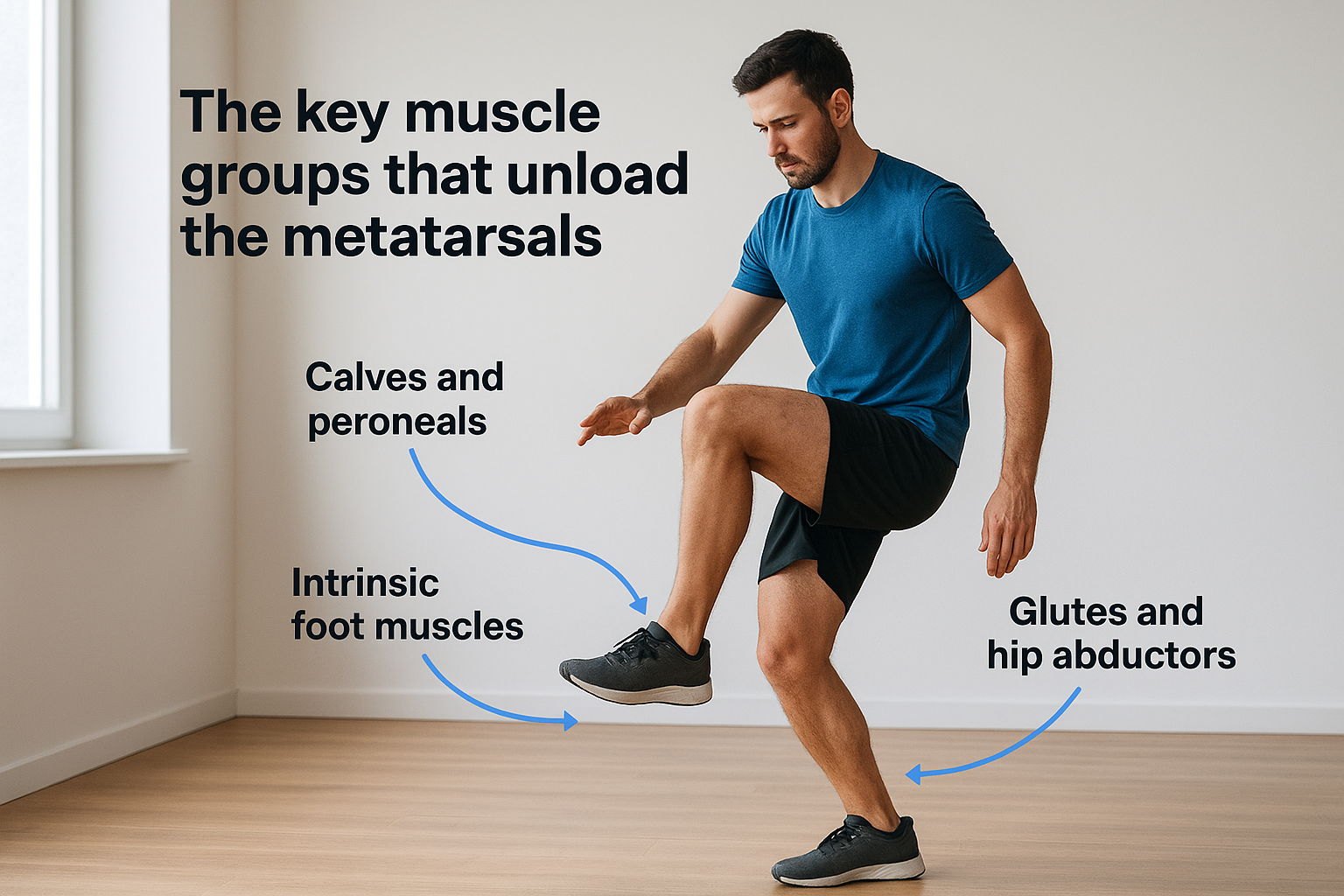
- Calves and peroneals: absorb impact through the posterior chain
- Intrinsic foot muscles: support the arch and stabilize metatarsals
- Glutes and hip abductors: control lower-limb alignment with every step
A weekly strength routine that fits run training
Add two sessions per week of calf raises, single-leg balance work, and clamshells. Schedule them after easy runs, not before hard workouts, so they don’t compromise your run quality or leave your legs fatigued heading into speed sessions.
Consistent strength work reduces bone stress more effectively than any single footwear change.
Mobility and form fixes that reduce pounding
Restricted ankle dorsiflexion forces compensation patterns that overload the metatarsals with every step. Improving ankle mobility and increasing your cadence by 5 to 10 steps per minute meaningfully reduces impact force without slowing you down.
5. Fuel recovery with nutrition, sleep, and smart cross-training
Training breaks bone down. Nutrition, sleep, and recovery are what build it back up, and skipping any one of them raises your risk significantly.
Why low energy and low vitamin D raise fracture risk
Low calorie intake and vitamin D deficiency both impair bone remodeling, leaving your skeleton less able to handle the stress of running. Runners who restrict food or skip regular sunlight exposure are at a measurably higher risk for stress fractures in the metatarsals and other foot bones.
Your bones rebuild during recovery, not during the run itself.
What to eat for bone health and how to time it
Prioritize calcium-rich foods like dairy, leafy greens, and fortified products, paired with vitamin D from sunlight or supplementation. Consuming protein within 30 to 60 minutes after your hard run supports both muscle repair and bone tissue recovery at the same time.
How sleep, stress, and smoking affect bone remodeling
Chronic sleep deprivation and elevated cortisol levels slow the bone remodeling cycle, making it harder for your skeleton to keep pace with training demands. Smoking reduces bone density directly, compounding the risk for anyone focused on preventing stress fractures in feet.
The best low-impact cardio when you need to back off
Pool running, cycling, and swimming maintain your cardiovascular fitness without loading your foot bones. These options let you stay aerobically sharp while bone tissue heals or adapts between hard training blocks.
Protect your feet and keep running
Stress fractures don’t have to be part of your running story. Each of the five strategies above works on its own, but combining them gives you the strongest defense against bone injury. Gradual progression, proper footwear, targeted strength work, and smart recovery all reduce the cumulative load on your foot bones before damage starts.
Preventing stress fractures in feet requires consistent attention across your training, nutrition, and equipment choices. No single fix does the whole job, but runners who address all five areas rarely face a stress fracture diagnosis. Your feet carry you through every mile, and protecting them now means fewer setbacks and more time doing what you actually want to do.
If you’re experiencing foot pain or want a professional assessment of your risk factors, schedule a same-day appointment with our podiatrists at Achilles Foot and Ankle Center today.