

If you’re dealing with a broken bone, torn ligament, or joint pain that won’t quit, you’ve probably wondered what does an orthopedic surgeon treat, and whether that’s the right specialist for you. Orthopedic surgeons handle a broad range of musculoskeletal problems, from fractures and arthritis to spinal conditions and sports injuries. Understanding their scope of practice helps you make a faster, more informed decision about your care.
Where it gets interesting is the overlap. When foot and ankle problems are involved, both orthopedic surgeons and podiatrists may treat similar conditions, but through different training backgrounds and approaches. At Achilles Foot and Ankle Center, our podiatric specialists focus exclusively on the foot and ankle, offering everything from conservative treatments to advanced reconstructive surgery. We often work alongside orthopedic teams to make sure patients across Central Virginia get the most targeted care possible.
This article breaks down the conditions and injuries orthopedic surgeons treat, how their role compares to other specialists, and when a different provider might be the better fit for your specific problem.
What an orthopedic surgeon treats at a glance
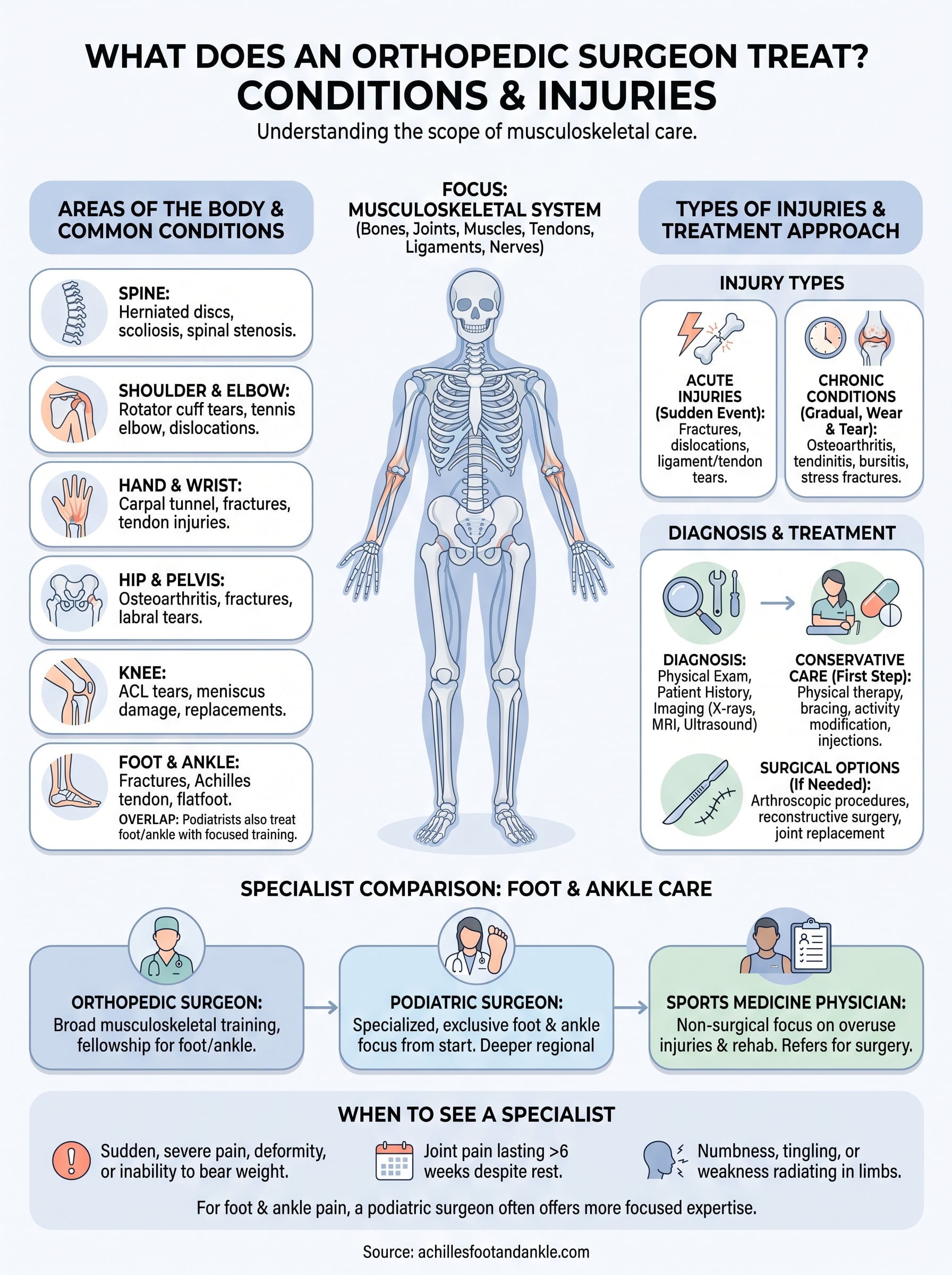
Orthopedic surgeons specialize in the musculoskeletal system, which includes your bones, joints, muscles, tendons, ligaments, cartilage, and related nerves. Their training covers the entire body, so if you’re asking what does an orthopedic surgeon treat, the short answer is: nearly any structural or mechanical problem from your neck down to your toes. Most orthopedic surgeons complete a general residency and then pursue a fellowship to focus on a specific region, such as the spine, hip, knee, shoulder, or foot and ankle.
The body systems they work with
The musculoskeletal system functions as a connected chain, and orthopedic surgeons are trained to evaluate the whole picture. A torn ligament in your knee changes how your hip and ankle compensate over time. A compressed spinal nerve can send pain radiating down into your calf or heel. Because of this, orthopedic surgeons don’t just treat the spot where you feel discomfort; they assess the surrounding structures and movement patterns to find the actual source of the problem.
Identifying the origin of a musculoskeletal problem, rather than just its location, is what separates effective treatment from a temporary fix.
Areas of the body orthopedic surgeons cover
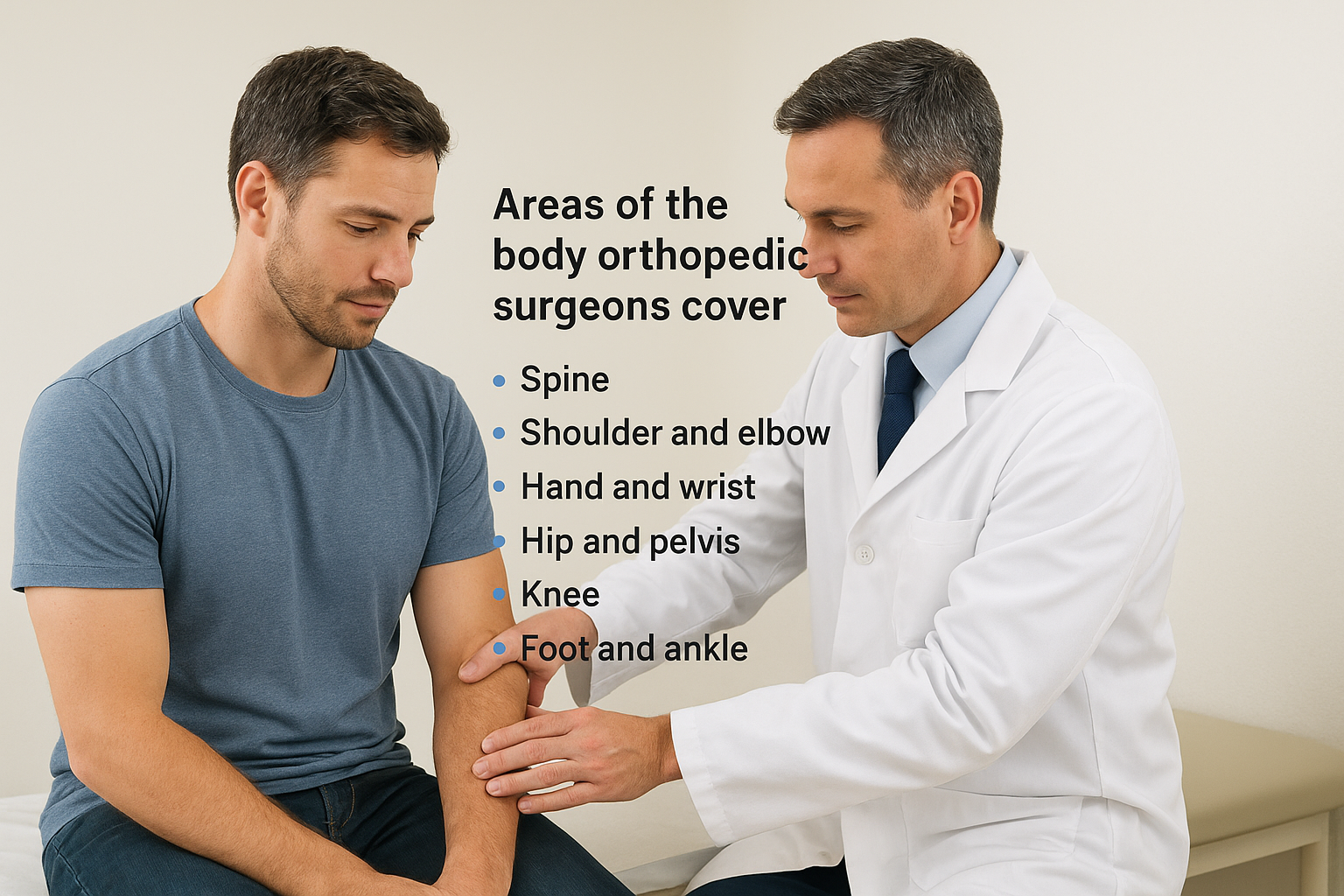
Orthopedic surgeons treat conditions across virtually every region of the body. The table below covers the most common areas and what falls under each:
| Body Region | Common Conditions Treated |
|---|---|
| Spine | Herniated discs, scoliosis, spinal stenosis |
| Shoulder and elbow | Rotator cuff tears, tennis elbow, dislocations |
| Hand and wrist | Carpal tunnel syndrome, fractures, tendon injuries |
| Hip and pelvis | Osteoarthritis, fractures, labral tears |
| Knee | ACL tears, meniscus damage, total knee replacement |
| Foot and ankle | Fractures, Achilles tendon ruptures, flatfoot deformity |
Your specific symptoms and injury location will usually determine which type of orthopedic specialist your primary care doctor refers you to. For foot and ankle conditions specifically, a podiatric surgeon often brings more focused training and experience in that region than a general orthopedic surgeon, which is a meaningful distinction when you’re weighing your options.
Conditions and injuries orthopedic surgeons treat
When patients ask what does an orthopedic surgeon treat, the answer falls into two broad categories: acute injuries that happen suddenly and chronic conditions that build over time. Both types can limit your mobility and cause significant pain if you leave them unaddressed.
Acute injuries
Acute injuries result from a specific event, such as a fall, collision, or sudden twist. Orthopedic surgeons commonly treat fractures, dislocations, torn ligaments, ruptured tendons, and muscle tears. Severity determines whether you need imaging and bracing or full surgical repair.
Common acute injuries orthopedic surgeons treat include:
- Bone fractures, including ankle and foot fractures
- Ligament tears, such as ACL and lateral ankle injuries
- Tendon ruptures, including Achilles tendon tears
- Joint dislocations in the shoulder, hip, or knee
Getting an accurate diagnosis quickly after an acute injury significantly reduces your risk of long-term instability and reinjury.
Chronic and degenerative conditions
Chronic conditions develop gradually through wear, repetitive stress, or underlying disease. Orthopedic surgeons regularly manage osteoarthritis, tendinitis, bursitis, stress fractures, and degenerative disc disease. Over time, these conditions erode cartilage, inflame tissue, and weaken bone structure.
Patients with diabetes or autoimmune conditions face a higher risk of chronic foot and ankle complications. For these individuals, early intervention from either an orthopedic surgeon or a podiatric specialist can prevent serious outcomes like joint destruction or deep tissue infection.
Orthopedic surgeon vs other specialists
Understanding what does an orthopedic surgeon treat becomes clearer when you compare their role to other providers you might see for similar complaints. Orthopedic surgeons, podiatrists, and sports medicine physicians all work with musculoskeletal problems, but their training, focus areas, and treatment approaches differ in ways that matter for your outcome.
Orthopedic surgeon vs. podiatrist
Both providers treat foot and ankle conditions, but their training takes different paths. Orthopedic surgeons complete medical school followed by a five-year residency covering the entire musculoskeletal system, then often pursue a fellowship in foot and ankle care.
Podiatric surgeons complete a dedicated podiatric medical school program with a residency focused exclusively on the foot, ankle, and lower leg. This means their entire training centers on the region you’re having problems with, which often translates to deeper region-specific expertise.
For foot and ankle issues, a podiatric specialist typically brings more focused training than a general orthopedic surgeon.
Orthopedic surgeon vs. sports medicine doctor
Sports medicine physicians manage many overuse injuries, sprains, and rehabilitation programs, but most are not surgeons.
When your condition requires surgical repair, such as a ligament reconstruction or tendon reattachment, your sports medicine doctor will typically refer you to an orthopedic or podiatric surgeon. Think of sports medicine as a first stop for conservative care, with orthopedic or podiatric surgery as the next step when those options aren’t enough.
How orthopedic surgeons diagnose and treat issues
Before recommending any treatment, an orthopedic surgeon builds a full picture of your injury or condition. They start with a physical exam and detailed patient history, then layer in imaging and functional tests to confirm what’s happening structurally and rule out other causes of your symptoms.
Diagnostic tools they use
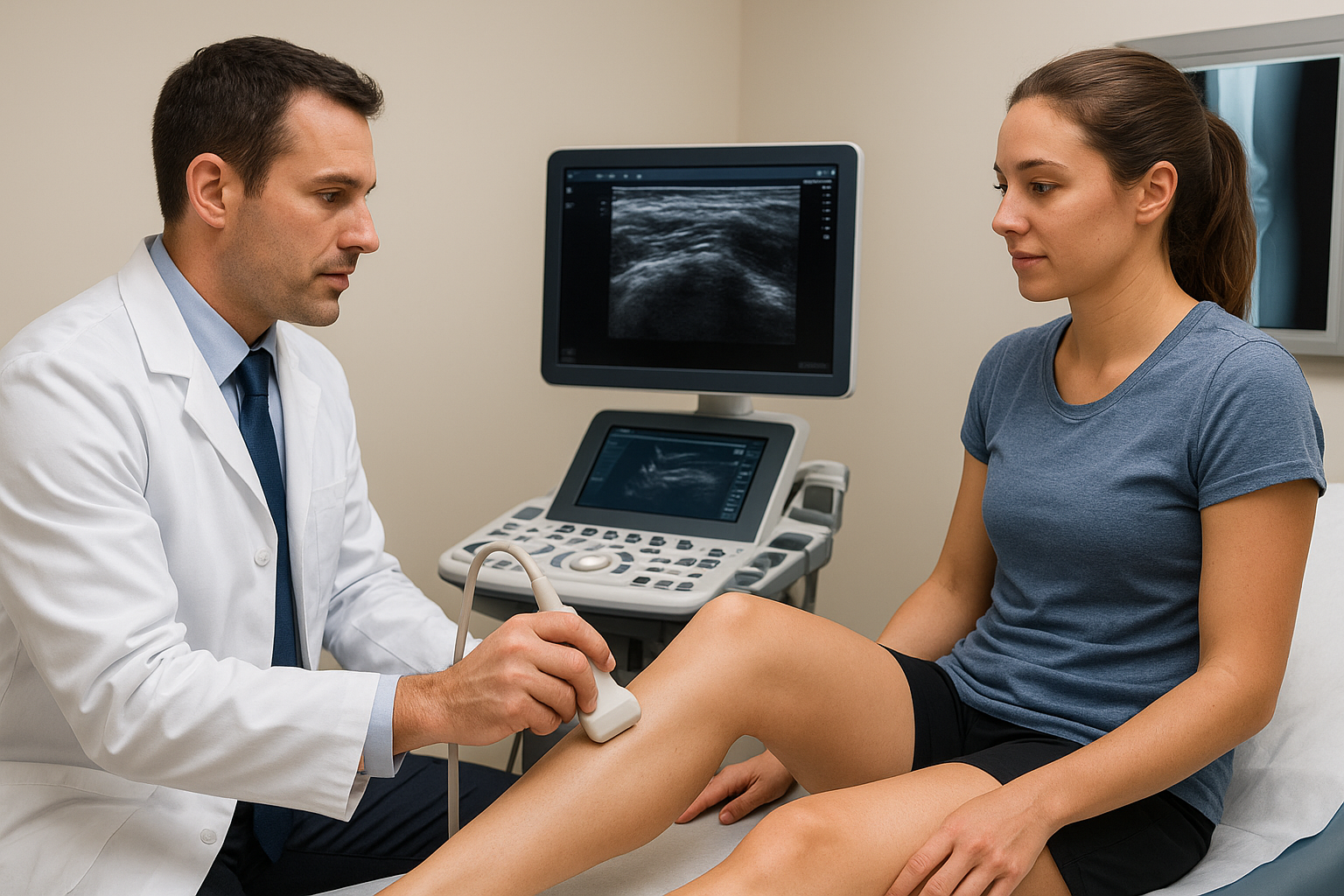
Orthopedic surgeons rely on several tools to get an accurate diagnosis. X-rays confirm fractures and joint space narrowing, while MRI scans reveal soft tissue damage in tendons, ligaments, and cartilage that plain imaging misses. For dynamic issues like instability or tendon movement, diagnostic ultrasound gives real-time feedback during motion.
A precise diagnosis is what separates a treatment plan that resolves your problem from one that only manages symptoms temporarily.
Treatment options
When considering what does an orthopedic surgeon treat, it’s worth noting that surgery is rarely the first option. Most orthopedic surgeons start with conservative treatments such as physical therapy, activity modification, bracing, and corticosteroid injections. Your surgeon moves toward surgical intervention only when those measures fail to restore function or when the injury requires immediate structural repair.
Surgical options range from minimally invasive arthroscopic procedures, which use small incisions and a camera, to full reconstructive surgeries like joint replacement or tendon reattachment. Recovery timelines vary widely depending on the complexity of the procedure and your overall health, but most patients receive a structured rehabilitation plan to rebuild strength and mobility after surgery.
When to see an orthopedic surgeon
Knowing when to seek care is just as important as knowing what does an orthopedic surgeon treat. If you’ve had a significant injury, persistent joint pain, or a structural problem that limits your daily function, an orthopedic evaluation gives you a clear diagnosis and a defined path forward. Waiting too long often lets minor injuries become serious ones.
Signs that point to an orthopedic evaluation
Several specific situations warrant a prompt orthopedic visit. You should schedule an appointment if you experience any of the following:
- Sudden, severe pain following a fall, collision, or twisting injury
- Visible deformity in a limb or joint after trauma
- Joint pain that has lasted more than six weeks despite rest and over-the-counter treatment
- Numbness, tingling, or weakness radiating into an arm or leg
- Reduced range of motion that affects your ability to walk, lift, or perform daily tasks
If you cannot put weight on a foot or ankle after an injury, treat it as an emergency and seek care the same day.
When a podiatric specialist may be a better fit
For problems below the ankle, a podiatric surgeon often delivers more targeted results because of their region-specific training. Heel pain, toe deformities, diabetic foot complications, and Achilles tendon injuries all fall squarely within the podiatrist’s area of deep expertise, making them the stronger first call for most lower extremity concerns.
Next steps for your foot and ankle pain
Now that you understand what does an orthopedic surgeon treat and how their role compares to other specialists, you can make a smarter decision about who to call first. For most foot and ankle problems, including heel pain, Achilles injuries, toe deformities, and diabetic foot complications, a podiatric specialist gives you more focused expertise right from the start. You don’t need a referral to find out what’s causing your pain and what your options are.
At Achilles Foot and Ankle Center, our podiatric surgeons treat the full spectrum of foot and ankle conditions across thirteen locations in Central Virginia. Whether your problem is acute or long-standing, our team uses advanced diagnostics and both conservative and surgical treatments to get you moving again. If your symptoms are holding you back, schedule a same-day appointment and get a clear diagnosis from a specialist who focuses exclusively on this part of your body.