

That nagging pain under your heel or on top of your foot might not be "just soreness." Bone spur foot symptoms often develop gradually, and many people walk around for months assuming the discomfort will resolve on its own. By the time the pain becomes hard to ignore, the bony growth may already be affecting how you stand, walk, or exercise.
At Achilles Foot and Ankle Center, our podiatrists diagnose and treat bone spurs across our thirteen Central Virginia locations every week. We see firsthand how early recognition makes a real difference, patients who act on the warning signs tend to respond well to conservative, non-surgical treatments, while those who wait often face a longer road to recovery.
This article breaks down 10 specific symptoms that point to a bone spur in your foot, along with what causes them and when it’s time to see a specialist. If any of these signs sound familiar, you’ll know exactly what to do next.
What a bone spur is and why it forms
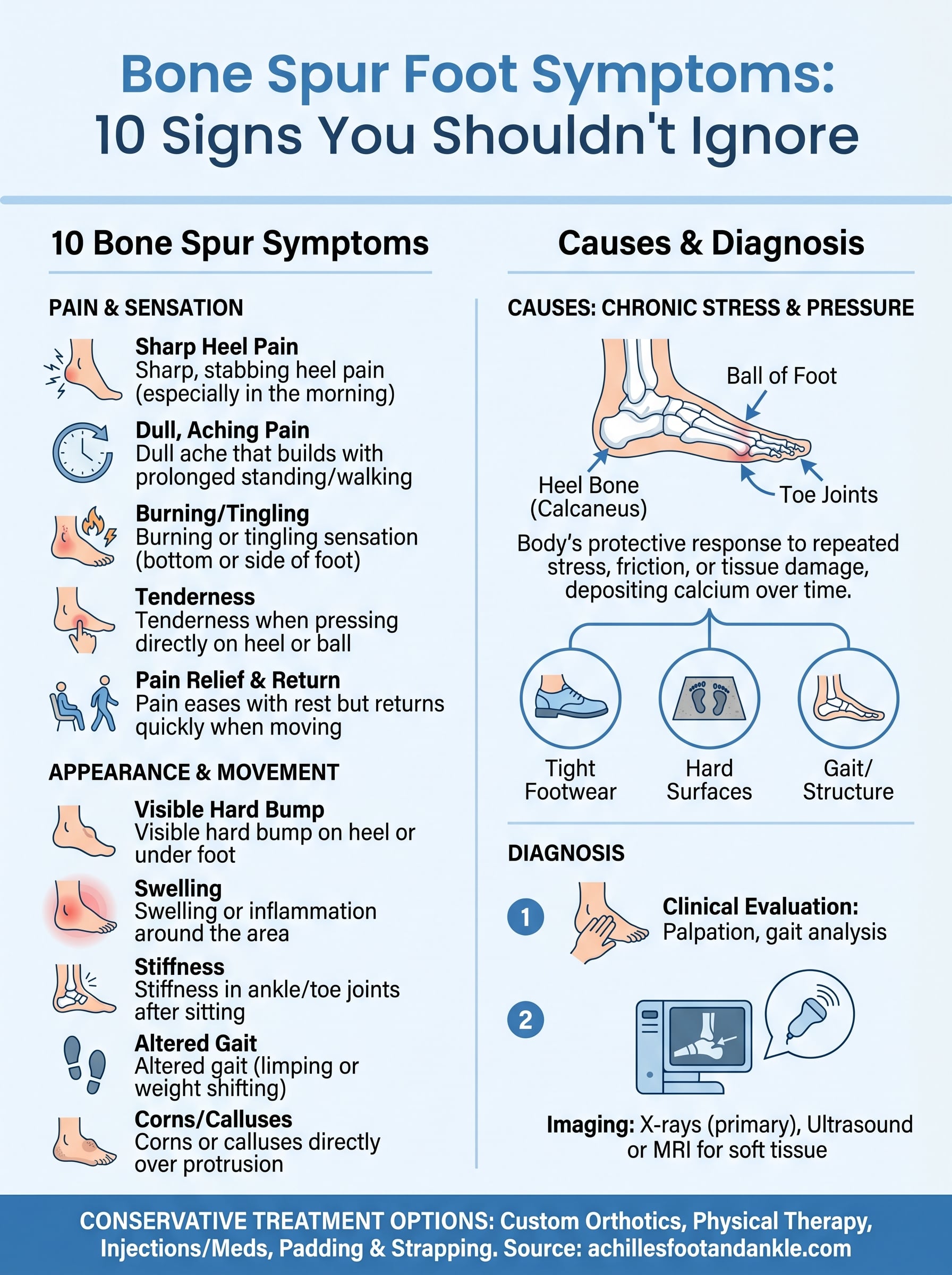
A bone spur, called an osteophyte in medical terms, is a smooth, bony projection that grows along the edge of an existing bone. Despite the word "spur," these growths are not jagged spikes. Your body actually builds them as a protective response to repeated stress, friction, or tissue damage. In the foot, they most commonly develop on the heel bone (calcaneus), along the ball of the foot, or near the toe joints.
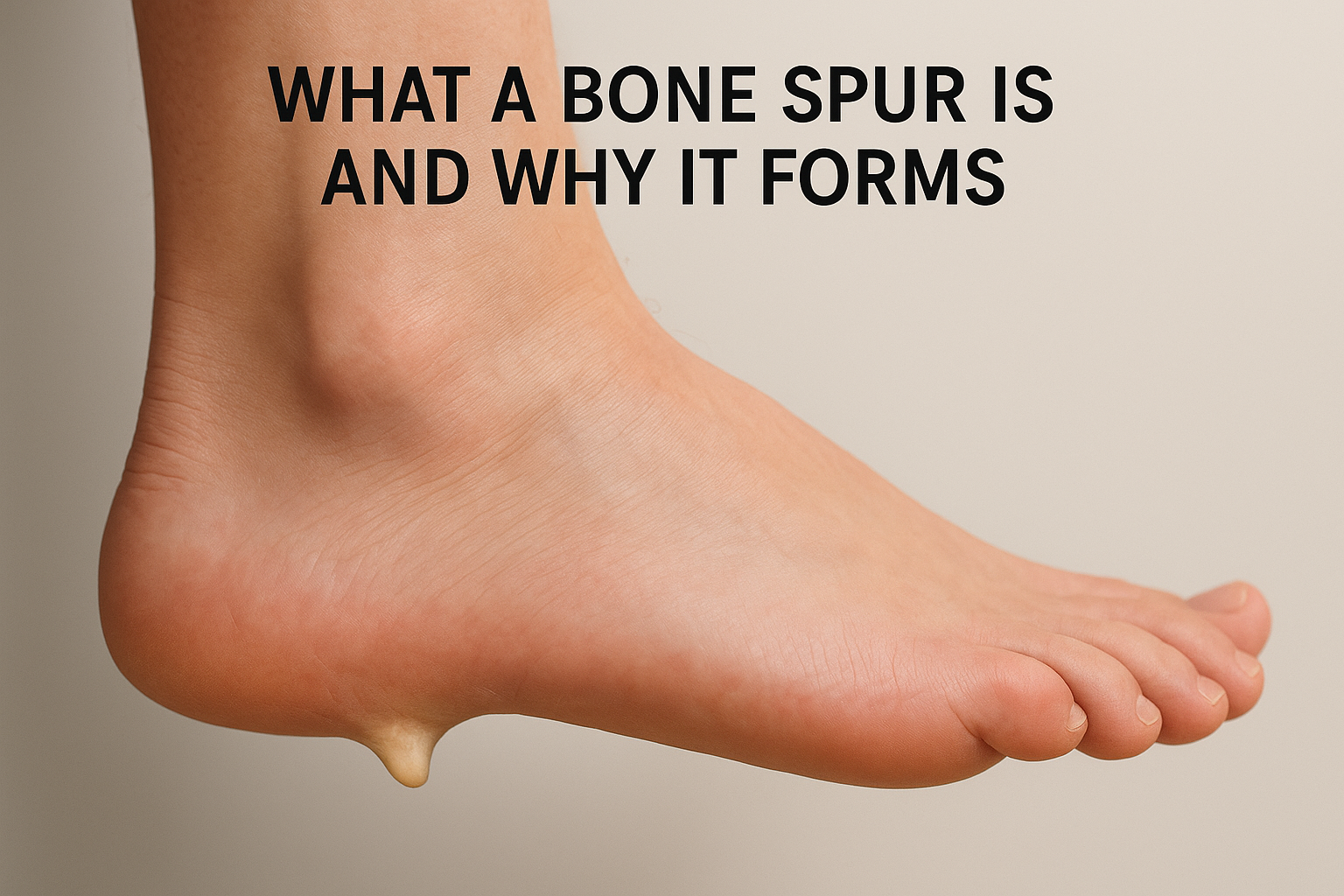
How the body builds a bone spur
When soft tissue or cartilage in your foot experiences chronic stress, your body responds by depositing calcium at the site of irritation. Over time, those calcium deposits harden and calcify into bone. The process unfolds slowly, often across months or years, which explains why many people don’t realize a spur has formed until bone spur foot symptoms become noticeable enough to interfere with normal activity like walking or standing for extended periods.
The bone spur itself is not always the direct source of pain. In most cases, it’s the surrounding tendons, ligaments, and soft tissue pressing against the growth that generates discomfort.
Why the foot is especially vulnerable
Your feet absorb enormous cumulative force with every step. A 150-pound person places hundreds of thousands of pounds of total pressure on their feet during a single day of normal walking. That load concentrates around specific structures, especially the plantar fascia, Achilles tendon, and metatarsal joints, making those areas prime sites for osteophyte formation when stress becomes chronic.
Certain patterns push the risk higher. Tight footwear, altered gait mechanics, and occupations that require prolonged standing on hard surfaces all drive excess strain into the same vulnerable areas. The heel is the most frequent location for spurs because the plantar fascia anchors directly to the calcaneus, and every step places repetitive tension on that attachment point, signaling the body to reinforce the area with more bone over time.
10 bone spur foot symptoms to watch for
Bone spur foot symptoms rarely appear all at once. Most people notice one or two signs first, then find that additional symptoms develop as the spur grows or begins pressing on surrounding tissue. Recognizing the pattern early gives you a real advantage in treatment.
Symptoms tied to pain and sensation
These are the warning signs that show up most often in our patients:
- Sharp, stabbing heel pain in the morning when you first step out of bed
- Dull, aching pain that builds throughout the day with prolonged standing or walking
- A burning or tingling sensation on the bottom or side of the foot
- Tenderness when pressing directly on the heel or ball of the foot
- Pain that eases with rest but returns quickly once you start moving again
If your heel pain is worst with the first steps of the morning, that pattern strongly suggests involvement of the plantar fascia and a possible heel spur.
Symptoms related to appearance and movement
Some bone spur symptoms are visible or affect how your foot functions:
- A visible hard bump on the back of the heel or under the foot
- Swelling or inflammation around the affected area
- Stiffness in the ankle or toe joints after sitting for long periods
- Altered gait, such as limping or shifting weight to avoid pressure on a specific spot
- Corns or calluses forming directly over the bony protrusion
What causes foot bone spurs and risk factors
Bone spurs don’t form randomly. They develop because your body is responding to repeated mechanical stress over time. Understanding the root causes helps explain why bone spur foot symptoms appear in some people and not others, even when their daily routines look similar on the surface.
The most common triggers
The leading trigger is chronic tension on a tendon or ligament attachment point. When the plantar fascia or Achilles tendon repeatedly pulls on the heel bone without adequate recovery time, the body lays down extra bone to stabilize the area. Poorly fitting shoes that crowd the toes or press on the heel compound this problem significantly.
Flat feet and high arches both alter how force distributes across your foot, making either structural type more prone to spur formation than a neutral arch.
Who faces the highest risk
Certain factors push your likelihood of developing a spur well above average. Age is a primary contributor, since cartilage thins and tendons lose elasticity naturally after your forties, leaving bones more exposed to friction. Consider whether any of these apply to you:
- Obesity, which multiplies the load on every foot structure with each step
- Standing or walking on hard surfaces for hours each workday
- A history of plantar fasciitis or Achilles tendinitis
- Participation in high-impact sports like running or basketball
How podiatrists diagnose a bone spur in the foot
When you walk into a podiatrist’s office with persistent foot pain, the diagnostic process starts with a thorough clinical evaluation. Your doctor will ask about your symptom history, including when the pain started, what makes it worse, and whether specific bone spur foot symptoms like morning heel pain or a visible bump have appeared.
Physical Examination
Your podiatrist will palpate the affected area directly, checking for tenderness, swelling, and any palpable bony protrusion beneath the skin. Gait analysis and range of motion testing also play a key role, helping your doctor observe how the spur affects your movement patterns before any imaging is ordered.
Pressure on specific points along the heel or ball of the foot can pinpoint the exact location of irritation, which makes physical palpation one of the most informative parts of the exam.
Imaging to Confirm the Diagnosis
X-rays are the primary imaging tool for confirming a bone spur, clearly showing its size and exact position on the bone. Your podiatrist will interpret the image alongside your reported symptoms rather than treating the X-ray finding in isolation.
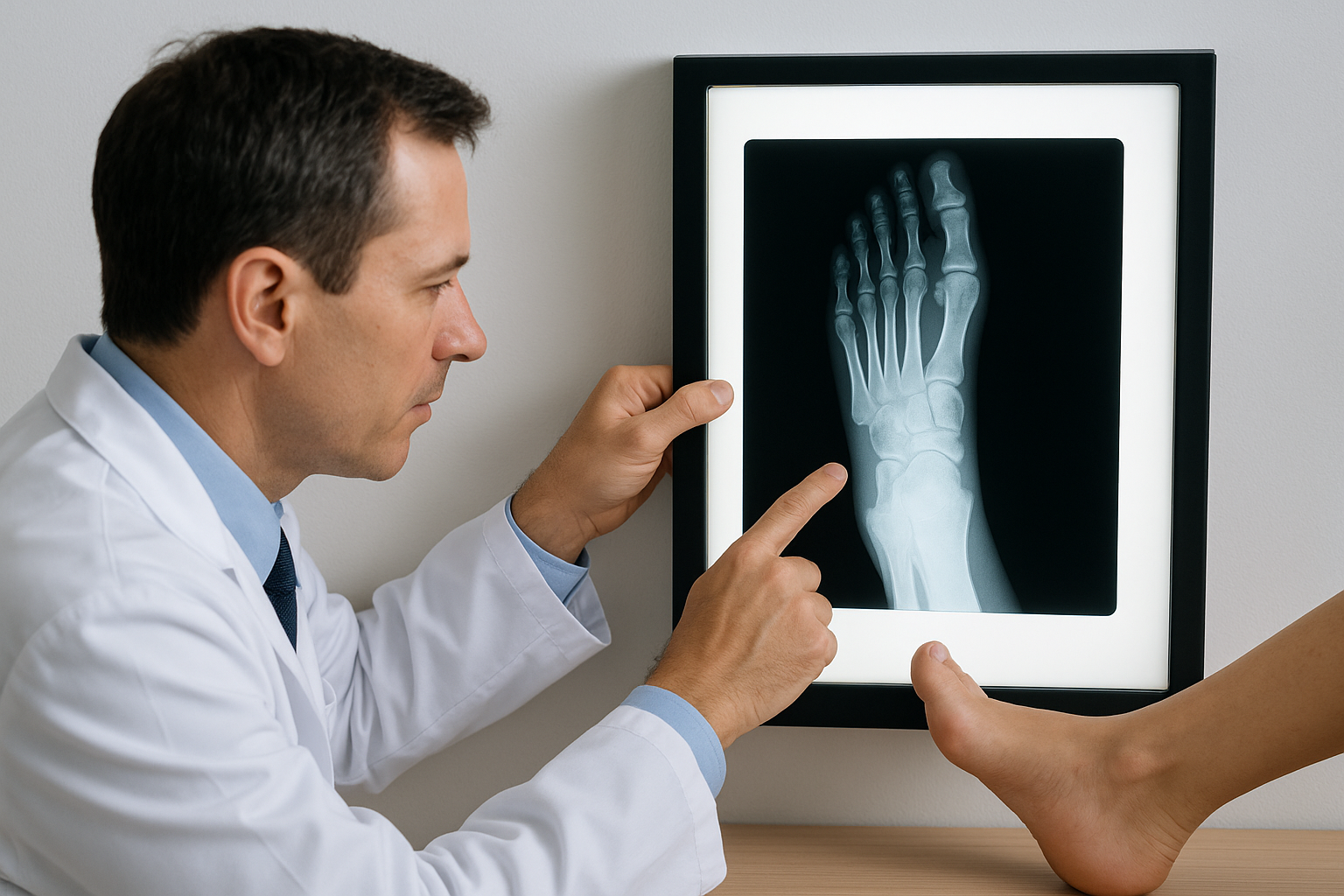
Soft tissue damage requires a closer look. Diagnostic ultrasound or an MRI can reveal tendon tears, ligament damage, or nerve compression that an X-ray alone would miss, helping your podiatrist build a complete clinical picture before recommending treatment.
Treatment options and what to do at home
Most people with bone spur foot symptoms respond well to conservative care, and surgery is rarely the first option your podiatrist reaches for. The goal of initial treatment is to reduce inflammation, relieve pressure on the spur, and address the underlying mechanical stress that caused it to form.
Starting treatment early gives you a significantly better chance of resolving symptoms without surgical intervention.
Conservative, non-surgical treatments
Your podiatrist will likely recommend a combination of approaches tailored to your specific spur location and symptom severity. These methods work together to offload pressure and calm the surrounding tissue:
- Custom orthotics to redistribute weight away from the spur
- Physical therapy to stretch tight tendons and strengthen supporting muscles
- Corticosteroid injections to reduce localized inflammation quickly
- Anti-inflammatory medications (NSAIDs) for short-term pain management
- Padding or strapping to protect the affected area during daily activity
What you can do at home right now
Before your appointment, you can take several steps to manage discomfort and prevent the symptoms from worsening. Switch to supportive footwear with adequate cushioning, and avoid walking barefoot on hard floors. Applying ice wrapped in a cloth for 15 to 20 minutes after activity reduces swelling effectively without risking skin irritation. Gentle calf and plantar fascia stretches each morning also ease the tension that aggravates heel spurs throughout the day.
Your next step if symptoms match
If several of the bone spur foot symptoms described in this article sound familiar, the most productive thing you can do is schedule a professional evaluation before the problem worsens. Morning heel pain, a visible bump, and altered gait are not signs your body will resolve on its own without some form of targeted treatment.
Waiting typically narrows your options. The longer a spur presses against surrounding tissue, the more likely that tissue sustains secondary damage such as tendon irritation or nerve compression, both of which complicate recovery. Acting early keeps you in the category of patients who respond well to conservative, non-surgical care.
Our team at Achilles Foot and Ankle Center is ready to evaluate your symptoms across thirteen Central Virginia locations, with same-day appointments available when you need them quickly. Book a same-day appointment today and get a clear answer about what’s happening in your foot.