

Your foot hurts, you searched near me podiatrist, and now you’re staring at a dozen names with no idea which one actually fits your situation. That’s a real problem when you’re dealing with a swollen ankle, a diabetic wound, or heel pain that’s kept you off your feet for weeks, all signs it’s time to see a podiatrist. Not every practice handles every condition, and picking the wrong one can mean a referral, a delay, and more pain before you get real answers.
This guide gives you a practical way to sort through your options in Central Virginia. You’ll learn what to check beyond star ratings, including board certification, whether a practice offers same-day appointments, and if they treat your specific issue, whether that’s a sports injury, a nerve problem, or a wound that won’t heal.
We’ll walk through the questions to ask before booking, how to compare clinic locations against your daily routine, and what separates a general foot care office from one equipped for advanced procedures like ultrasound-guided injections or surgical care. By the end, you’ll know exactly how to narrow thirteen local options down to the right one for you, without wasting another week guessing.
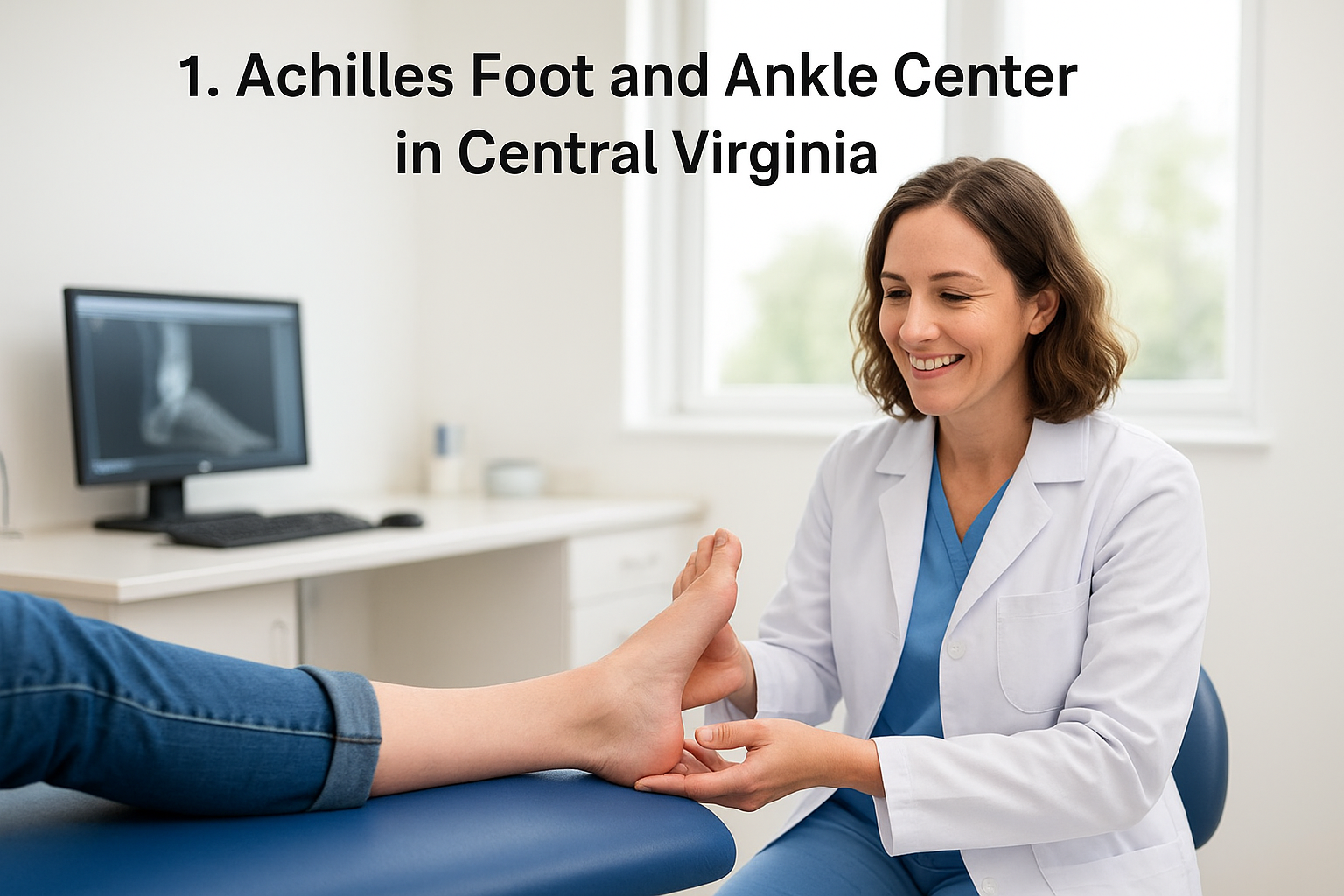
1. Achilles Foot and Ankle Center in Central Virginia
When you search for a podiatrist near you in Richmond, Mechanicsville, Midlothian, or anywhere else in Central Virginia, Achilles Foot and Ankle Center is worth putting at the top of your list. The practice runs thirteen podiatry office locations across Central Virginia, which means you’re likely within a short drive of one no matter where you live or work. That density matters when you’re limping into a pharmacy for gel inserts and just want someone to look at your foot this week instead of next month.
How it works
Patients book through the practice’s Healow patient portal or by calling the location nearest them, and same-day appointments are available for urgent issues like a suspected fracture, a diabetic wound that needs a wound care clinic, or sudden swelling. Once you’re in the chair, the team can move from a basic exam straight into diagnostic imaging, ultrasound, or fluoroscopy-guided injections without sending you elsewhere. Surgical cases go through the practice’s own Foot and Ankle Ambulatory Surgery Center, the only dedicated one in Central Virginia, so complex procedures don’t require a separate facility or a second set of unfamiliar staff.
A practice that can diagnose, treat, and operate under one roof saves you weeks of referrals and repeat paperwork.
Who it’s best for
Central Virginia residents dealing with anything from a rolled ankle to a non-healing diabetic ulcer fit well here, since the practice covers sports injuries, nerve pain, heel and arch conditions, toe deformities, skin and nail problems, and a full limb salvage program. It also suits anyone who wants conservative treatment first, like custom orthotics for foot pain or physical therapy, but wants the option to move to surgery with the same team if that becomes necessary.
What to keep in mind
Given the range of services, it helps to confirm which of the thirteen locations offers the specific equipment or specialist you need before you book, since not every office runs identical hours or handles every procedure on-site. Calling ahead for insurance verification also saves you a surprise at checkout, even though the practice accepts most major plans including Medicare and Medicaid.
2. Getting a referral from your primary care doctor
Your family doctor already knows your medical history, so asking them for a podiatrist referral is often the fastest way to skip the guesswork. This route works especially well if you have diabetes, arthritis, or another condition where your podiatrist needs to coordinate care with your existing treatment plan.
How it works
Mention your foot or ankle issue at your next visit, or call your doctor’s office directly and ask for a recommendation. Many primary care practices keep a short list of local specialists they trust, and some insurance plans actually require a referral before they’ll cover a specialist visit, so this step can also be a coverage requirement rather than just a courtesy.
A referral from a doctor who already manages your health gives your podiatrist context you’d otherwise have to explain from scratch.
Who it’s best for
This approach suits patients with chronic conditions, complicated medical histories, or insurance plans that require a referral before they’ll pay for specialist care. It’s also useful if you simply don’t know where to start and trust your doctor’s judgment more than a search engine.
What to keep in mind
Your doctor’s recommendation might not account for logistics that matter to you, like which clinic locations are closest or whether the practice offers same-day appointments. Always double-check that the referred podiatrist actually treats your specific issue before scheduling.
3. Checking your insurance provider directory
Before you fall in love with a five-star review, log into your insurance company’s website and search its provider directory for podiatrists in your area. This step catches the coverage problem early, before you’ve already booked and shown up for an appointment that costs far more than you expected.
How it works
Most insurers, including Anthem, Aetna, and UnitedHealthcare, let you filter by specialty and zip code, so type in "podiatry" and your Central Virginia address to pull a list of in-network providers. Cross-check that list against any names your doctor or friends recommended, and call the practice directly to confirm the listing is current, since directories lag behind staff changes more often than you’d think.
An out-of-network podiatrist can turn a routine visit into a bill you didn’t budget for.
Who it’s best for
This step matters most if you’re on a tight budget, have a high-deductible plan, or you’re comparing multiple local podiatrists and want to narrow the list before calling anyone. It’s also worth doing if you’re on Medicare or Medicaid and need to confirm which practices accept your specific plan, since Medicare foot care coverage rules limit what gets paid for.
What to keep in mind
Directories aren’t always accurate, so a phone call to the front desk beats trusting the website alone. Ask specifically whether they’re in-network for your plan, not just whether they "accept insurance" in general, since those are two different things.
4. Searching online directories and review sites
Typing "podiatrist near me" into Google is usually where this search starts, and sites like Healthgrades, Zocdoc, and Google Maps itself will surface a stack of names with star ratings attached. These platforms pull together patient reviews, office photos, and sometimes real-time appointment availability, which makes them a fast way to build a shortlist before you commit to a single practice.
How it works
Search your specialty and city, then sort by rating or distance, and read a handful of recent reviews rather than just the star average. Look for comments that mention wait times, how the doctor explained treatment options, and whether staff followed up after procedures like surgery or wound care.
A five-star average means nothing if the reviews are three years old and say nothing about your actual condition.
Who it’s best for
This method suits anyone starting from scratch with no referral or personal recommendation, especially if you’re new to Central Virginia or just moved and don’t know any local podiatrists yet. It’s also a quick way to compare multiple practices side by side before making calls.
What to keep in mind
Reviews skew toward extreme experiences, so a few angry posts don’t necessarily reflect the whole practice. Cross-reference what you find online with the practice’s own site and what patients actually mention in Achilles Foot and Ankle reviews, to confirm services and locations match what reviewers describe.
5. Asking friends and family for recommendations
Word of mouth still beats a stranger’s five-star review, especially when the person recommending a podiatrist actually had your condition. Someone who went through bunion surgery or months of plantar fasciitis treatment can tell you things no review site captures, like how the doctor handled a setback or whether the office actually called back when they said they would.
How it works
Ask coworkers, neighbors, or family members who’ve dealt with foot or ankle problems which practice they used and why they’d go back. Push past a simple thumbs up and ask what the visit actually looked like, how long they waited for an appointment, and whether the treatment worked.
A recommendation from someone who lived through the same problem carries more weight than a stranger’s star rating.
Who it’s best for
This approach works well if you have a close-knit community, family in Central Virginia, or coworkers who’ve mentioned similar issues. It also helps if you want a local podiatrist recommendation tied to a specific condition, like diabetic wound care or podiatric sports medicine for injury recovery, rather than a generic search result.
What to keep in mind
One good experience doesn’t guarantee yours will match, since every foot problem is different. Verify that the recommended practice actually treats your specific issue and check their current locations before assuming anything from years ago still applies.
6. Verifying credentials and board certification
Once you’ve narrowed your list, check that the podiatrist you’re considering actually holds current board certification. A license lets someone practice, but certification from a body like the American Board of Foot and Ankle Surgery means they’ve passed additional exams and case reviews specific to foot and ankle care, especially important if surgery might be part of your treatment.
How it works
Search the podiatrist’s name on the certifying board’s website, or ask the office directly which credentials their doctors hold, since a foot doctor’s DPM training differs from an MD’s. Most practices list this information on their own site too, so a few minutes of reading replaces guesswork with an actual answer.
Certification tells you a podiatrist has been tested on the exact procedures your foot might need.
Who it’s best for
This step matters most if you’re facing a surgical decision, a complex diagnosis, or a condition like a diabetic wound where mistakes carry real consequences. It also suits anyone who wants documented proof of expertise before trusting a stranger with their mobility.
What to keep in mind
Certification alone doesn’t guarantee bedside manner or a good office experience, so pair it with reviews and referrals. Also confirm the certification is current, not expired or pending, since some directories list outdated information for doctors who’ve since moved or retired from a specialist visit roster.
7. Comparing locations, hours, and appointment options
Once you’ve verified credentials, the practical question becomes whether a podiatrist actually fits your schedule. A podiatrist near me search means little if the closest office closes at 3pm and you work until 5pm, or if the only opening is three weeks out while you’re limping on a swollen ankle right now.

How it works
Pull up the practice’s website and compare its locations against your commute, then check listed hours, walk-in policies, and how a same-day podiatry appointment gets booked for urgent cases. A quick table often makes this easier than scrolling through multiple sites:
| Factor | Why it matters |
|---|---|
| Distance from home/work | Affects follow-up visits after surgery or wound care |
| Evening or weekend hours | Matters if you can’t take time off during the day |
| Same-day availability | Critical for fractures, infections, or sudden pain |
| Telehealth options | Useful for quick follow-ups or medication questions |
The best podiatrist on paper isn’t much help if you can never get in to see them.
Who it’s best for
This comparison matters most for anyone juggling work, kids, or a condition requiring frequent follow-up appointments, like ongoing wound care or post-surgical checks.
What to keep in mind
Hours listed online sometimes lag behind reality, especially around holidays, so call ahead before driving across town for an appointment that no longer exists at that time slot.
8. Scheduling a consultation and preparing your questions
Once you’ve picked a practice, the first visit works best when you walk in with a plan instead of just a list of symptoms. Booking the consultation is only half the job; showing up ready to ask the right questions determines whether you leave with a real treatment plan or just another appointment card.
How it works
Call or use the online portal to book, then spend ten minutes before the visit writing down your symptoms, when they started, and what’s made them better or worse. Bring a list of current medications, prior imaging if you have it, and a short set of questions about diagnosis, treatment options, and expected recovery time so you’re not scrambling to remember them mid-appointment.
A prepared patient gets a faster diagnosis because the doctor spends less time reconstructing your history and more time treating it.
Who it’s best for
This step matters most for anyone with a chronic condition, a nagging injury that’s dragged on for months, or a first visit to a new practice where the podiatrist has no history with you yet.
What to keep in mind
Don’t leave without confirming your insurance was verified correctly and asking what a follow-up plan looks like if the first treatment doesn’t resolve things. If surgery comes up, ask directly about the podiatrist’s board certification, how many similar procedures they’ve performed, and how to prepare for foot surgery at home.
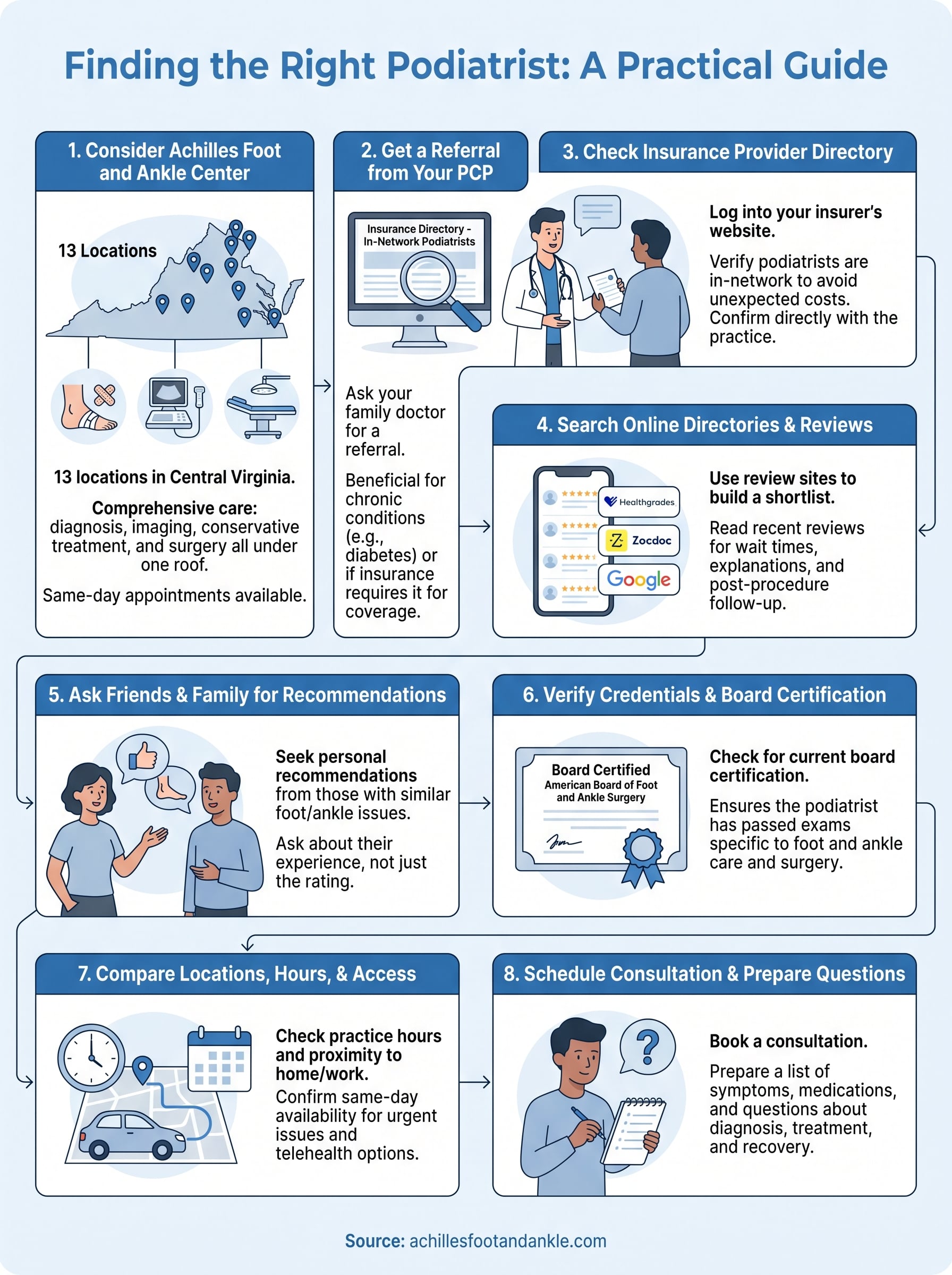
Finding the right podiatrist for your feet
Sorting through a near me podiatrist search doesn’t need to take weeks. Start with what actually matters: a practice that treats your specific condition, carries current board certification, sits within reach of your daily schedule, and takes your insurance without surprises. Referrals, reviews, and word of mouth all help narrow the list, but the real test comes when you call and ask direct questions about wait times, treatment approach, and whether same-day care exists for urgent problems.
Central Virginia residents have thirteen Achilles Foot and Ankle Center locations to choose from, each backed by the region’s only dedicated foot and ankle surgery center and a team ready to move from diagnosis to treatment without bouncing you elsewhere. If your foot or ankle pain has already cost you enough time, stop comparing and start treating it. Schedule same-day foot and ankle care and get real answers this week instead of next month.