Flat feet affect roughly 25% of the American population, and if you’re one of them, you already know the toll it takes, sore arches, tired legs, and pain that builds with every step. The right pair of insoles can change that. But finding the best arch support insoles for flat feet isn’t straightforward when dozens of brands all claim to be the answer.
At Achilles Foot and Ankle Center, our podiatrists treat flat feet every day across our thirteen Central Virginia locations. We see what works, what doesn’t, and what ends up making things worse. That hands-on experience, evaluating patients, fitting orthotics, and tracking outcomes, gives us a practical perspective that goes beyond spec sheets and marketing claims.
We put together this list of 10 insoles that consistently earn our recommendation. Each pick is evaluated for arch structure, cushioning, durability, and how well it actually performs inside a shoe. Whether you’re dealing with mild overpronation or significant flatfoot pain, this guide will help you find an insole worth your money, and one that your feet will thank you for.
1. Custom Orthotics from Achilles Foot and Ankle Center
Before diving into over-the-counter options, custom orthotics deserve the top spot on any list of the best arch support insoles for flat feet. They are the only insole type designed specifically around your foot’s exact shape and mechanics, which makes a meaningful difference for people with true flatfoot conditions.
Why Custom Orthotics Can Beat Over-the-Counter Insoles
Off-the-shelf insoles are built around an average foot. If your flat feet come with a specific gait pattern, asymmetry, or secondary issues like plantar fasciitis or posterior tibial tendon dysfunction, a generic insert will not fully address what’s happening. Custom orthotics are fabricated from a 3D mold or digital scan of your foot, which allows them to correct biomechanical problems at their source rather than simply cushion the symptoms.
Custom orthotics don’t just support your arch, they redistribute pressure across your entire foot, reducing stress on joints, tendons, and soft tissue.
Best For
Custom orthotics from Achilles Foot and Ankle Center work best for patients who fall into one or more of these categories:
- Moderate to severe flatfoot with chronic arch or heel pain
- Overpronation that causes knee, hip, or lower back discomfort
- Flatfoot tied to a structural problem such as posterior tibial tendon dysfunction
- Anyone who has tried multiple over-the-counter insoles without lasting relief
What You Get at Your Orthotics Visit
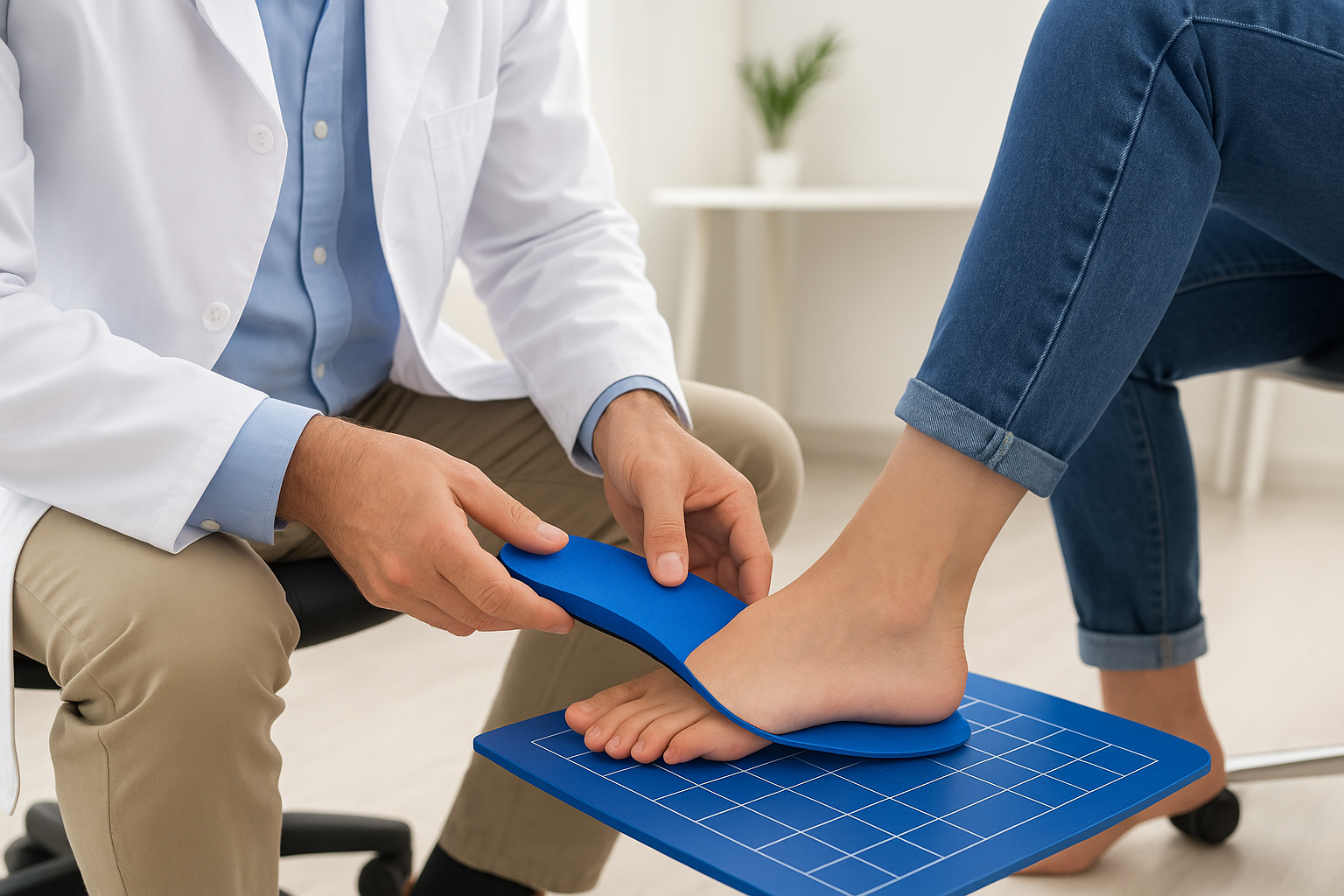
Your appointment starts with a full gait analysis and structural assessment by a podiatrist who evaluates how your foot moves, not just how it looks standing still. From there, the team takes precise measurements or a digital scan to fabricate an orthotic that fits your foot correctly. You’ll also receive guidance on which shoe types pair best with your new orthotics, so you get the full benefit from day one.
Potential Downsides and Limitations
These insoles cost more upfront than any over-the-counter option, and they typically require at least one follow-up visit to confirm the fit is correct. They’re also specific to the shoes they’re fitted for, so swapping them between very different shoe styles can reduce their effectiveness over time.
Typical Pricing and Insurance Notes
Pricing for custom orthotics generally falls between $300 and $600 without insurance, but many major plans, including Medicare, cover them when medically necessary. Achilles Foot and Ankle Center accepts all major insurance plans, so contacting the office directly is the fastest way to understand your out-of-pocket costs before your visit.
2. PowerStep Pinnacle Low Insoles
PowerStep is one of the most podiatrist-recommended over-the-counter brands available, and the Pinnacle Low model stands out as a reliable option for people searching for the best arch support insoles for flat feet without jumping straight to a custom solution.
Why It Works for Flat Feet
The Pinnacle Low features a semi-rigid arch shell that provides structured support without feeling stiff underfoot. That shell prevents the arch from collapsing during each step, which reduces the overpronation pattern that causes so much pain in flat-footed individuals. The double-layer cushioning adds shock absorption at the heel and forefoot, two areas where flat feet typically take the most impact.
Structured arch support combined with heel cushioning addresses the two main pain drivers for most people with flat feet.
Best For
This insole works well for people with mild to moderate flatfoot who need daily support in casual or athletic footwear. It is particularly effective for those experiencing heel pain or early-stage plantar fasciitis alongside their flat feet.
Fit and Shoe Compatibility Tips
The Pinnacle Low trims easily along marked guidelines, so you can fit it to most athletic shoes, walking shoes, and casual sneakers. It works less well in dress shoes or narrow toe boxes where space is limited. Always remove the existing shoe liner before inserting it to get a proper fit and full benefit.
Potential Downsides
The arch height may feel aggressive during the first few days of wear. People with very wide feet sometimes find the width slightly narrow after trimming.
Typical Price Range
Expect to pay between $25 and $40 depending on the retailer, making it one of the more affordable structured options on this list.
3. Tread Labs Pace Insoles
Tread Labs takes a different approach than most over-the-counter brands, and the Pace insole earns its place on our list of the best arch support insoles for flat feet because of one standout feature: a lifetime-guaranteed polypropylene arch support that doesn’t compress or break down over time the way foam-only insoles do.
Why It Works for Flat Feet
The Pace insole uses a firm, biomechanically engineered arch shell paired with a replaceable top cover. This combination supports the medial arch without relying on foam density that degrades with use. The shell holds its shape through thousands of steps, which means you get consistent, repeatable support rather than the gradual flattening that makes most OTC insoles feel worn out within months.
Insoles that lose their structure over time stop supporting flat feet at exactly the moment your foot has adapted to them.
Best For
This insole suits people with flat feet who want long-term durability without paying custom orthotic prices. It works particularly well for those who are on their feet all day, or who have burned through other insoles quickly and need something that holds up under daily demands.
Fit and Shoe Compatibility Tips
Tread Labs offers four arch heights, so take their online fitting quiz before ordering to match the right profile to your foot. The Pace insole fits well in athletic shoes and work boots but can feel too bulky in lower-volume footwear. Remove the factory insole before inserting it for best results.
Potential Downsides
The firm shell may feel uncomfortable during the first week of wear. People with very sensitive feet may need a longer break-in period.
Typical Price Range
Expect to pay between $75 and $90, with replacement top covers available separately to extend the life of the base.
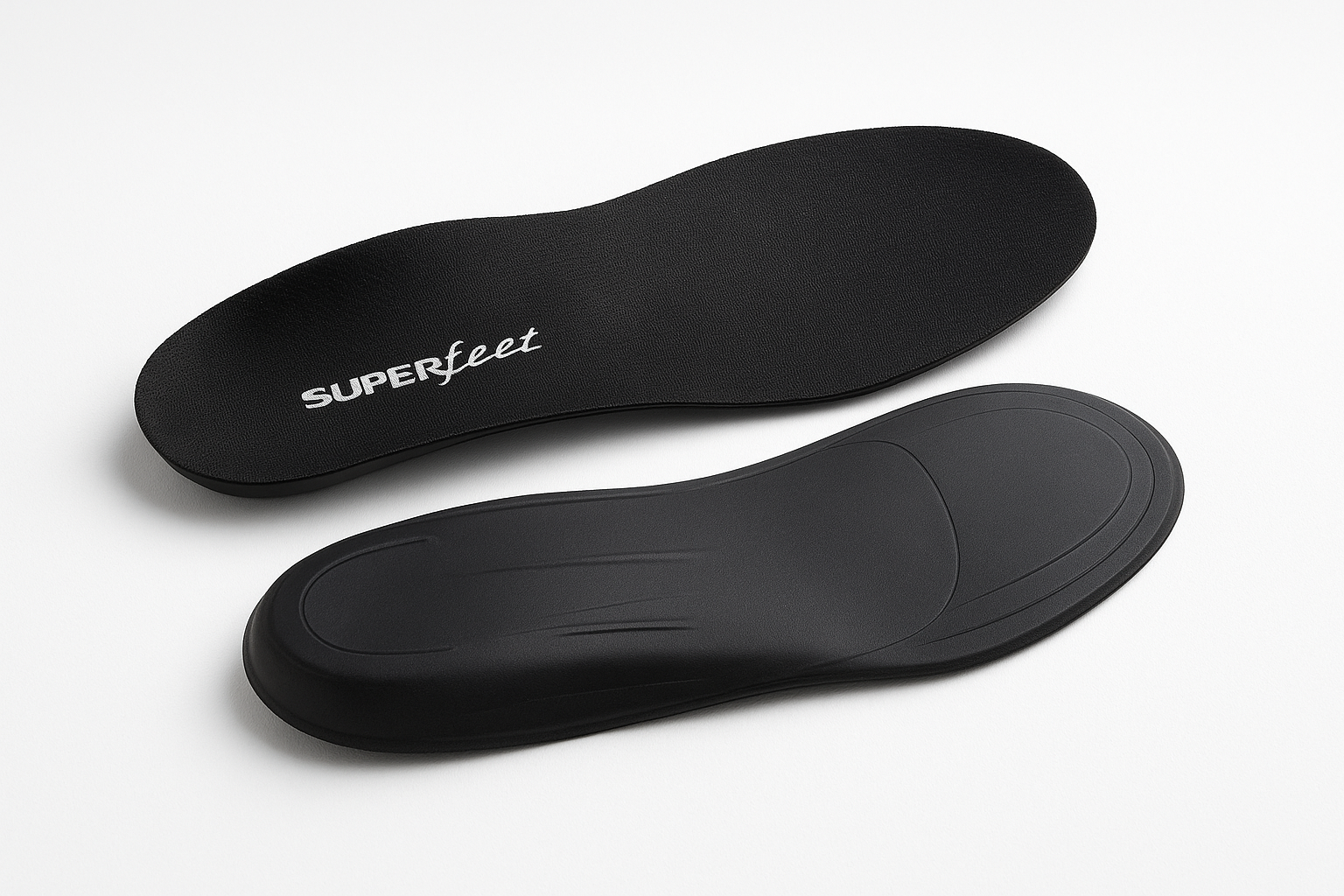
4. Superfeet All-Purpose Support Low Arch Black Insoles
Superfeet is a trusted name in foot care, and the Black low-arch insole earns its spot among the best arch support insoles for flat feet because it delivers structured support in a profile designed specifically for lower-volume shoes where thicker insoles simply won’t fit.
Why It Works for Flat Feet
The Black insole features a stabilizer cap under the heel and rearfoot that controls motion from the ground up, reducing the inward rolling that causes pain in flat-footed individuals. The low-profile design still includes a biomechanical shape that lifts and supports the medial arch without adding bulk, making it one of the few OTC options that works well across a wide range of shoe styles.
Getting arch support into low-volume shoes is often the difference between wearing dress or casual footwear comfortably and avoiding it entirely.
Best For
This insole works best for people with flat feet who need support in dress shoes, flats, or slim casual footwear where most insoles are too thick to fit. It is also a strong choice for those experiencing heel fatigue or mild arch soreness after long days on hard surfaces.
Fit and Shoe Compatibility Tips
Trim the insole using the size guides printed on the surface, and remove the original shoe liner before inserting. The low profile fits well in loafers, boat shoes, dress shoes, and slim-cut casual sneakers.
Potential Downsides
The cushioning is minimal compared to thicker insoles on this list, so people who need significant shock absorption may want to pair it with a cushioned shoe. Those with severe flatfoot may find the arch support level insufficient on its own.
Typical Price Range
Pricing typically falls between $40 and $55 depending on the retailer and size.
5. Superfeet Run Cushion Low Arch Insoles
The Superfeet Run Cushion Low Arch insole takes the same structural approach as the Black but adds targeted cushioning built for impact-heavy activity, making it the running and training-focused option in Superfeet’s low-arch lineup. If you run or train with flat feet, this insole deserves a close look among the best arch support insoles for flat feet.
Why It Works for Flat Feet
This insole pairs a low-arch stabilizer cap with a foam layer engineered to absorb repeated heel strike and forefoot impact. The rearfoot control reduces the inward rolling that flat feet are prone to during a running stride, while the cushion layer protects joints from the cumulative load of high-rep movement. That combination of structure and shock absorption addresses both the mechanical and comfort problems that runners with flat feet typically deal with.
Support without cushioning leaves flat-footed runners absorbing impact that the insole should be handling.
Best For
This insole works best for runners, gym-goers, and active individuals with flat feet who need support during repetitive movement. It is a strong fit for anyone who has tried standard Superfeet insoles and found them lacking adequate cushioning for training volume.
Fit and Shoe Compatibility Tips
Trim to size using the numbered guides on the insole surface, and pull out the factory liner first. It fits well in running shoes, training shoes, and cross-trainers but adds too much bulk for casual or dress footwear.
Potential Downsides
People with severe flatfoot may still need more arch correction than this insole provides. The cushion layer also compresses faster than the firm shell wears out, so heavy runners may notice reduced padding within six months.
Typical Price Range
Pricing typically falls between $50 and $65 depending on retailer and size.
6. Spenco Total Support Max Insoles
The Spenco Total Support Max is one of the most cushioned structured insoles available over the counter, and it earns its place among the best arch support insoles for flat feet by combining a rigid arch frame with generous padding that many competing products simply don’t offer at this price point.
Why It Works for Flat Feet
Spenco builds the Total Support Max around a deep heel cup and a firm medial arch post that together limit the inward rolling flat feet are prone to. The rigid base holds your rearfoot in a neutral position while the multi-layer foam top cushion absorbs shock at the heel and ball of the foot, which reduces the fatigue that builds up over long periods of standing or walking.
Controlling rearfoot motion early in the gait cycle prevents the chain reaction of stress that flat feet send up into the ankles, knees, and hips.
Best For
This insole suits people with flat feet who spend long hours standing, particularly those in retail, healthcare, or warehouse environments. It also works well for casual walkers who need both structure and comfort in the same insole.
Fit and Shoe Compatibility Tips
Trim the insole along the size guidelines printed on the underside, and always remove the original shoe liner beforehand. The Total Support Max fits best in athletic shoes and work shoes with a roomy toe box but is too thick for low-profile or dress footwear.
Potential Downsides
The bulk may crowd narrower shoes, and the cushioning layer compresses faster than the arch frame wears down with heavy daily use.
Typical Price Range
Pricing typically falls between $30 and $50 depending on size and retailer.
7. Dr. Scholl’s Stability Support Insoles
Dr. Scholl’s Stability Support insoles are one of the most widely available options on this list, and they hold their own among the best arch support insoles for flat feet when your priority is getting reliable support at a budget-friendly price point without sacrificing basic biomechanical function.
Why It Works for Flat Feet
The Stability Support insole uses a reinforced arch support structure paired with a heel stabilizer that keeps your rearfoot from rolling inward. The design addresses the primary mechanical issue flat-footed individuals face: the arch collapsing under load and pulling the ankle into overpronation. The firm base layer helps distribute pressure more evenly across the foot, reducing the concentrated soreness at the arch and heel that builds up through the day.
Consistent rearfoot stabilization at an accessible price point makes this insole a practical starting point for flat feet that don’t yet need a custom solution.
Best For
This insole works well for people with mild flatfoot who need everyday support in casual footwear and want a reliable, no-fuss option they can pick up at most pharmacies or big-box stores without waiting for a delivery.
Fit and Shoe Compatibility Tips
Trim the insole using the size markers on the underside, and remove the factory liner before inserting it. It fits best in walking shoes, casual sneakers, and low-top athletic footwear with adequate depth.
Potential Downsides
The cushioning compresses faster than higher-end options, and the arch support level may feel insufficient for anyone with moderate to severe flatfoot who needs more correction than a budget insole can deliver.
Typical Price Range
Pricing typically falls between $12 and $20, making it the most affordable structured option on this list.
8. Sole Performance Heat-Moldable Insoles
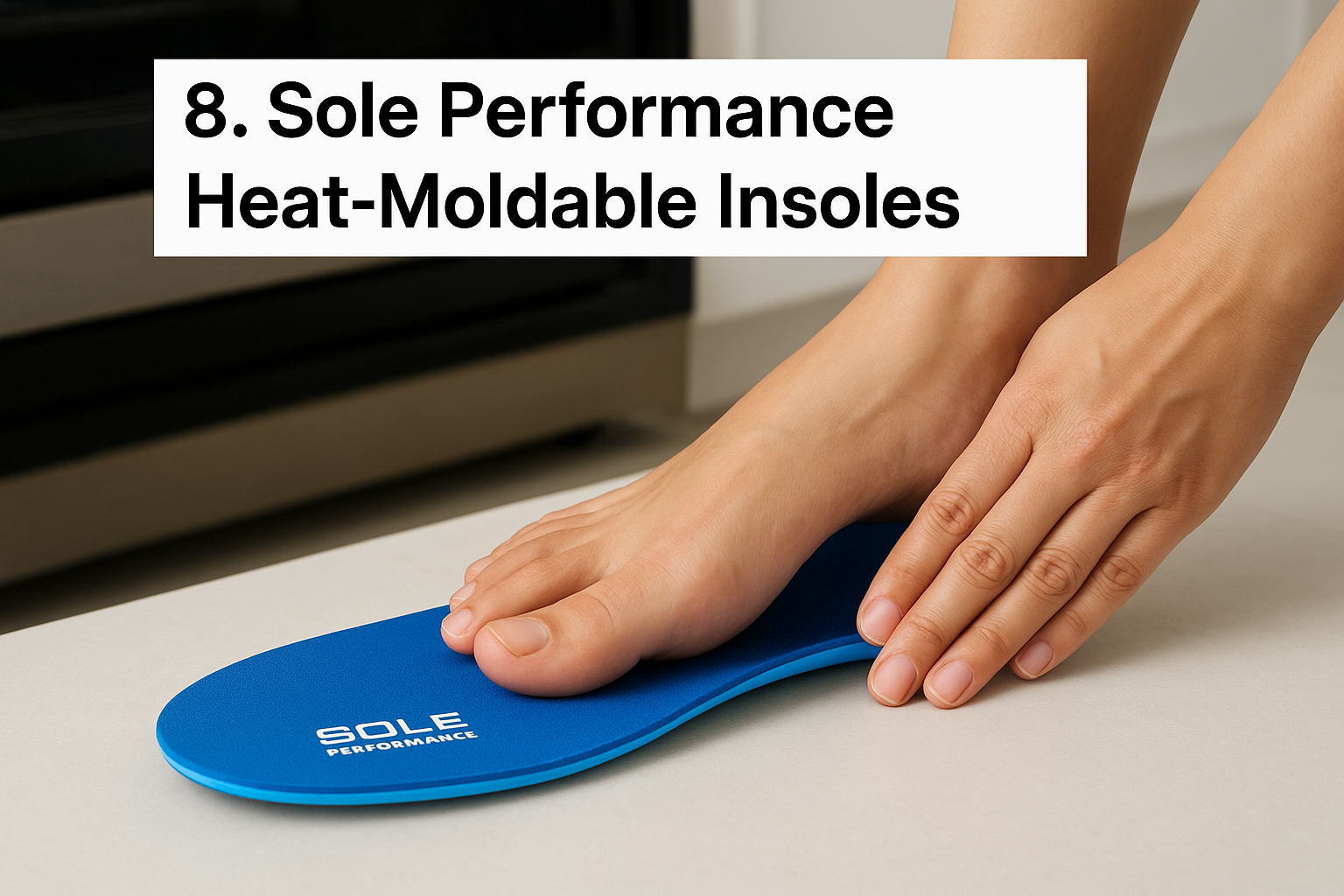
The Sole Performance insole takes a different approach than every other over-the-counter option on this list of the best arch support insoles for flat feet: you heat it in a conventional oven and then step into it, letting it conform to your foot’s shape. That process gives you a semi-custom fit without the cost of a podiatrist visit.
Why It Works for Flat Feet
Most OTC insoles offer a fixed arch profile that may or may not align with your foot. Sole’s heat-molding process allows the insole to form around your actual arch height, which reduces the pressure gaps that cause discomfort when a flat arch meets a pre-shaped insert. The result is a personalized contact surface that standard insoles can’t match at this price range.
A closer fit between your foot and the insole means more consistent arch support throughout your entire stride, not just at the midpoint.
Best For
This insole suits people with flat feet that fall somewhere between mild and moderate who have struggled to find a pre-shaped insole that sits comfortably. It also works well for those transitioning between OTC insoles and custom orthotics who want a closer fit without the full custom investment.
Fit and Shoe Compatibility Tips
Follow the manufacturer’s heating instructions precisely, typically three to four minutes at 200°F, then stand naturally in your shoes for the molding period. The insole fits well in athletic shoes and hiking footwear but works poorly in shallow dress shoes where the thickness becomes a problem.
Potential Downsides
The molding process is not reversible, so if you overheat the insole or mold it incorrectly, you cannot reset it. The arch support level also remains relatively modest compared to rigid-shell options.
Typical Price Range
Pricing typically falls between $45 and $60 depending on size and retailer.
9. PowerStep Wide Fit Orthotics Insoles
The PowerStep Wide Fit insole addresses a problem that most of this list sidesteps entirely: standard insoles are too narrow for wide feet. If you have flat feet and a wide foot profile, finding the best arch support insoles for flat feet that actually fit your shoe without bunching or slipping is its own challenge. This insole solves that problem without sacrificing the structured support flat feet need.
Why It Works for Flat Feet
PowerStep builds the Wide Fit around the same semi-rigid arch shell used in their Pinnacle line, which prevents arch collapse and controls overpronation through each step. The wider platform keeps the insole stable inside the shoe rather than shifting laterally, so the arch support stays positioned where it needs to be rather than drifting toward the center.
Consistent insole positioning matters just as much as arch height, a shifting insole provides inconsistent support that flat feet can’t rely on.
Best For
This insole works best for people with flat feet and wide or extra-wide foot widths who have tried standard insoles and found them uncomfortable, too narrow, or prone to movement inside the shoe. It fits particularly well for those who wear wide-width athletic or walking shoes.
Fit and Shoe Compatibility Tips
Always pull out the factory shoe liner before inserting this insole, and trim along the size guides printed on the underside. It fits best in wide-last athletic shoes, walking shoes, and work shoes built with extra toe box room.
Potential Downsides
The arch height may still feel low for anyone with severe flatfoot who needs aggressive correction. It also lacks the cushioning depth of the Total Support Max.
Typical Price Range
Pricing typically falls between $25 and $40 depending on size and retailer.
10. Redi-Thotics Flex Orthotic Insoles
The Redi-Thotics Flex rounds out our list of the best arch support insoles for flat feet with a design built around flexibility rather than rigidity, making it a practical choice for people who find firm-shell insoles uncomfortable from day one. This insole delivers consistent arch support through movement rather than against it.
Why It Works for Flat Feet
Built around a flexible polypropylene base, the Redi-Thotics Flex bends naturally with your foot’s motion while still providing enough medial arch lift to reduce overpronation through each step. Unlike rigid-shell options that can feel stiff and foreign during the first weeks of use, the flex design allows your foot to adapt more quickly without giving up the structural correction flat feet actually need.
A flexible base that supports your arch through motion, rather than working against it, tends to produce faster comfort without sacrificing biomechanical benefit.
Best For
This insole works best for people with mild to moderate flatfoot who have tried rigid or semi-rigid shells and found them too uncomfortable during break-in. It also suits those who want reliable daily arch support in athletic or casual footwear without a lengthy adjustment phase.
Fit and Shoe Compatibility Tips
Trim the insole using the size markings on the underside, and remove the factory liner before inserting it. Redi-Thotics Flex fits well in athletic shoes, walking shoes, and casual sneakers with sufficient depth but tends to feel too thick in low-profile or dress footwear.
Potential Downsides
The flexible base delivers less motion control than a rigid or semi-rigid shell, which means people with moderate to severe overpronation may not get enough correction. The arch support also compresses gradually with heavy daily use, reducing its effectiveness over time.
Typical Price Range
Pricing typically falls between $20 and $35 depending on size and retailer, making it one of the more budget-friendly flexible options on this list.
Next Steps
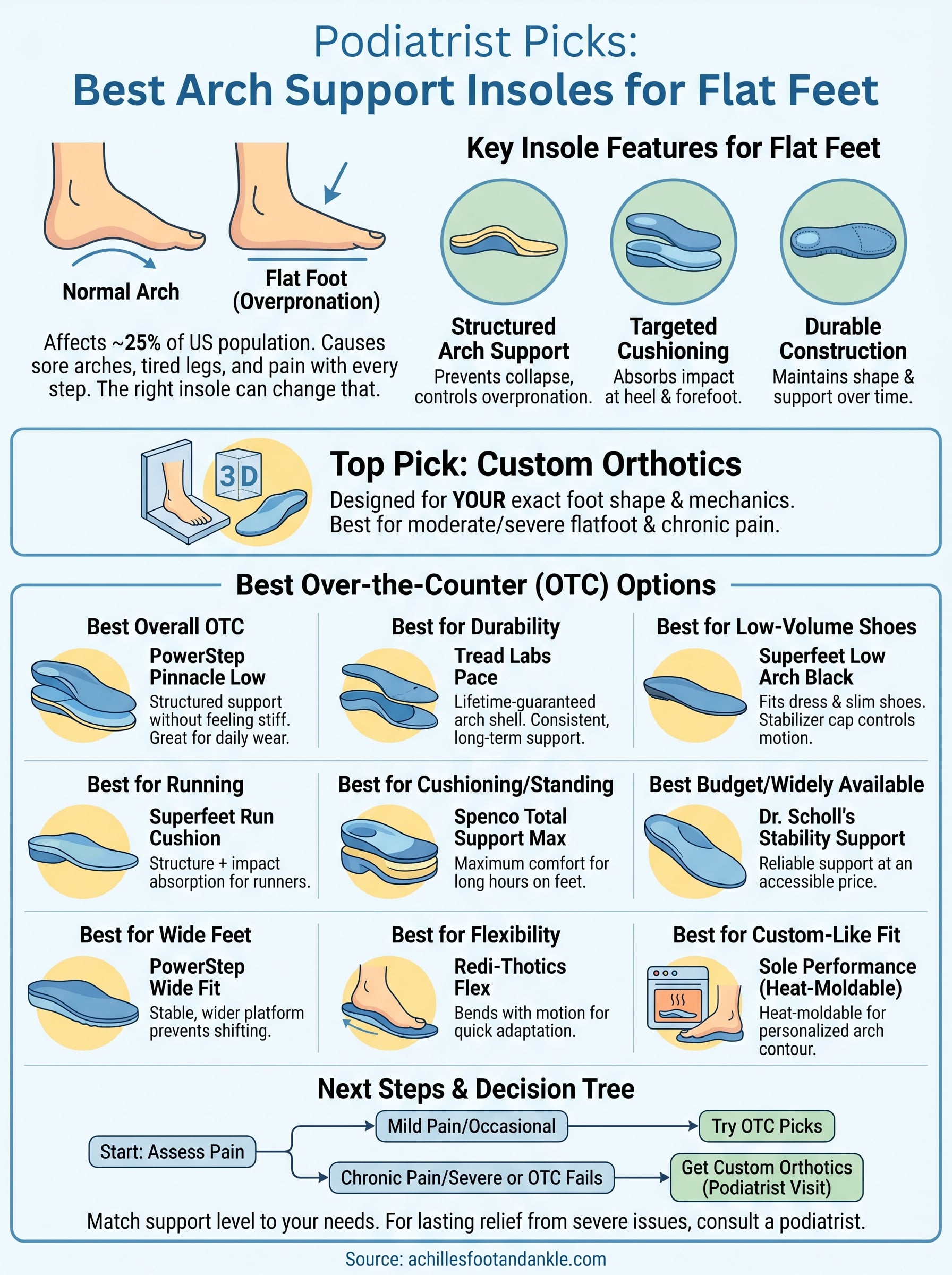
Finding the best arch support insoles for flat feet comes down to matching the right level of support to your specific foot mechanics. If you have mild flat feet and manageable pain, the over-the-counter picks on this list give you a solid starting point at an accessible price. If you have moderate to severe flatfoot, chronic pain that keeps coming back, or a history of burning through insoles without relief, an OTC insert is a temporary fix, not a real solution.
Custom orthotics from a podiatrist address what off-the-shelf products can’t, which is your exact gait, your arch structure, and the specific mechanics driving your discomfort. At Achilles Foot and Ankle Center, our podiatrists evaluate all of that in a single visit and build an orthotic around what your feet actually need. If you’re ready to stop guessing, book a same-day appointment and get a professional assessment today.