Standing on your feet for eight, ten, or twelve hours straight puts enormous stress on your arches, heels, and ankles. Over time, that repetitive load breaks down the foot’s natural support system and leads to conditions we treat every day at Achilles Foot and Ankle Center, plantar fasciitis, posterior tibial tendon dysfunction, and metatarsalgia, to name a few. The right pair of arch support insoles for standing all day can act as a first line of defense, reducing strain before it turns into a clinical problem.
As podiatric specialists across thirteen Central Virginia locations, we see firsthand what happens when people ignore arch support, and what changes when they finally get it right. Not every insole on the market is worth your money, though. Many are too soft, too rigid, or shaped for a generic foot that doesn’t exist. That’s why our team evaluated dozens of options and narrowed it down to twelve insoles that actually deliver meaningful support based on biomechanical design, material quality, and real-world durability under prolonged standing.
In this guide, we break down each pick with honest assessments so you can find the right match for your foot type, work environment, and budget. Whether you’re a nurse pulling doubles, a warehouse worker on concrete, or a teacher who never sits down, this list was built with your feet in mind. And if insoles alone aren’t cutting it, we’ll point you toward next steps for professional evaluation as well.
1. Achilles Foot and Ankle Center custom orthotics and insole guidance
Before we get into over-the-counter options, you need to understand why a custom orthotic sits at the top of this list. Every over-the-counter insole on this page is built for a statistically average foot. Your foot is not average. It has a specific arch height, heel width, pressure distribution pattern, and gait mechanics that no mass-produced product can fully address. Custom orthotics from a qualified podiatrist are precision-engineered devices made from a 3D mold or digital scan of your actual foot, which is a fundamental difference in clinical value.
Why it stands out for standing all day
When you wear arch support insoles for standing all day, the goal is to control the way force travels through your foot over thousands of repetitive steps. Off-the-shelf insoles cushion that load. Custom orthotics redirect it. Your podiatrist can prescribe a device that corrects overpronation, offloads painful areas like the heel or ball of the foot, and distributes pressure evenly across the entire plantar surface. That level of precision reduces cumulative microtrauma that builds up when you stand for extended periods on hard surfaces.
Custom orthotics address the root cause of arch fatigue, not just the symptoms.
Best for
Custom orthotics are the right first call for people who fit into specific categories. You benefit most if you have:
- Diagnosed conditions such as plantar fasciitis, flat feet, high arches, or posterior tibial tendon dysfunction
- Persistent foot or ankle pain that has not responded to over-the-counter insoles after 4 to 6 weeks
- Occupations requiring 8-plus hours of standing, especially on concrete or hard flooring
- Diabetes or circulation issues where pressure management is medically critical
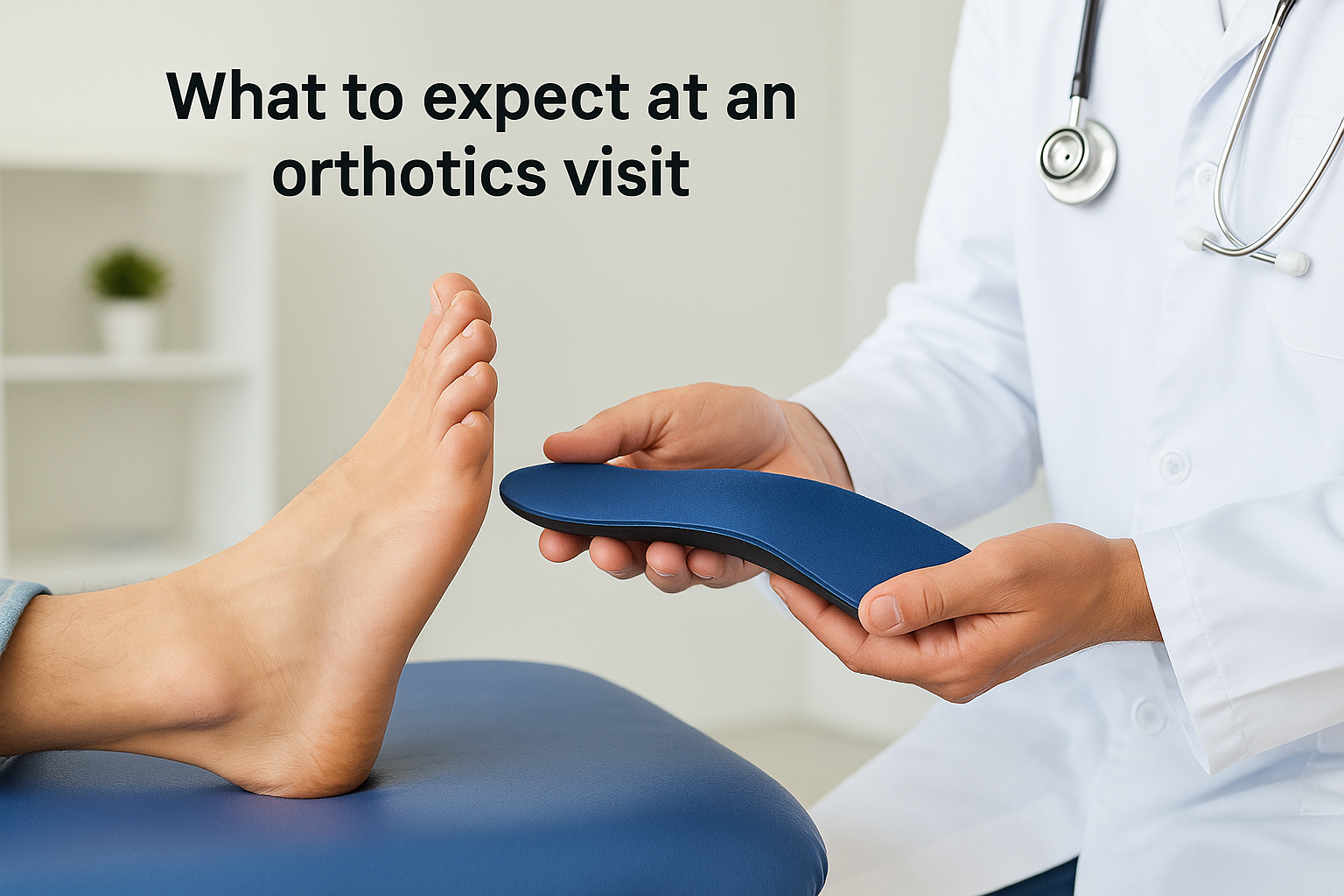
What to expect at an orthotics visit
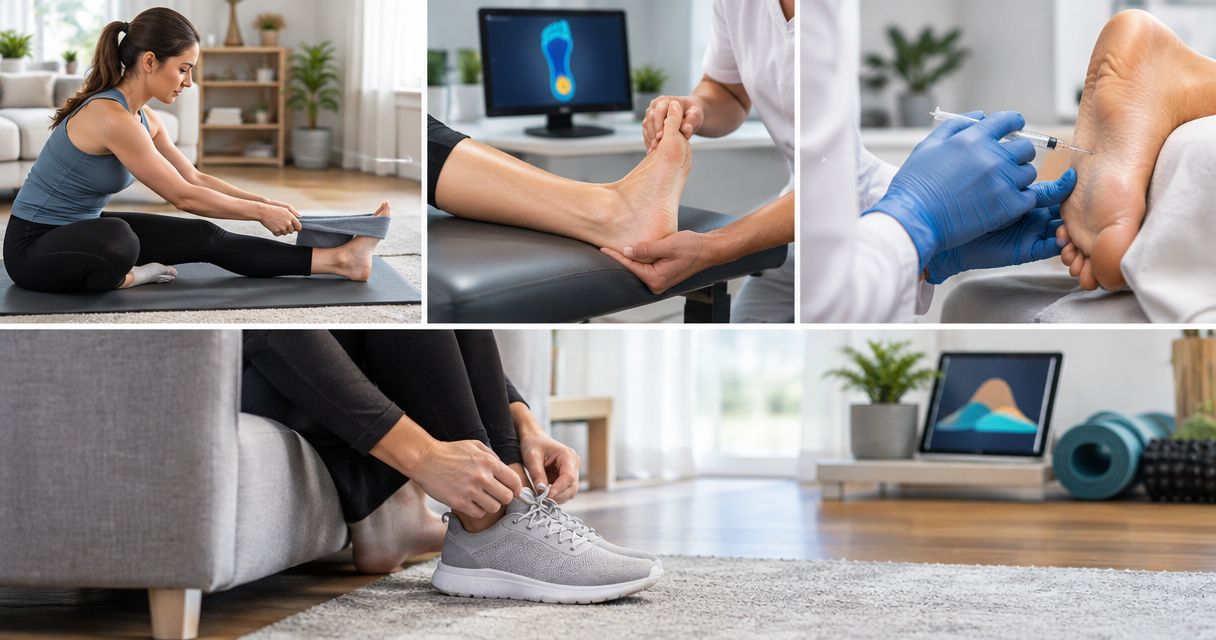
Your appointment starts with a full biomechanical evaluation. Your podiatrist will assess your gait, measure your arch height, and examine joint range of motion. From there, a digital scan or foam casting captures the exact contours of your foot. Fabrication typically takes one to two weeks. You then return for a fitting, and your provider adjusts the device until it functions correctly inside your chosen footwear. Most patients notice a meaningful reduction in fatigue and discomfort within the first few weeks of consistent wear.
Typical pricing range
Custom orthotics generally run between $300 and $600 per pair before insurance. Most major insurance plans, including Medicare, cover a portion of the cost when a podiatrist documents a medical necessity. Your out-of-pocket expense can drop significantly after coverage is applied.
When to skip and what to do instead
If your pain is mild and recent, start with a quality over-the-counter option from the list below. Give it four to six weeks of consistent use. If the pain persists, worsens, or spreads above the ankle, book an appointment with a podiatrist rather than cycling through more retail products.
2. PowerStep Pinnacle Maxx
The PowerStep Pinnacle Maxx is one of the most clinically recommended over-the-counter insoles on the market, and for good reason. It combines a firm but flexible polypropylene shell with dual-layer cushioning that handles both shock absorption and arch support at the same time. If you need a reliable step up from a flat factory insole, this is a strong starting point.
Why it stands out for standing all day
The Pinnacle Maxx uses its semi-rigid shell to hold your arch in position as your foot fatigues throughout the day. That structural integrity matters because soft foam insoles compress and lose their effectiveness within hours of continuous use. The Pinnacle Maxx maintains its form from your first step to your last, which is exactly what you need from arch support insoles for standing all day in physically demanding environments. It handles both pronation control and impact absorption without sacrificing one for the other.
A firm shell underneath the cushioning layer is what separates functional insoles from decorative ones.
Best for
- Moderate to high arch profiles that need consistent lift throughout a long shift
- Overpronators who need medial support without a prescription device
- Workers in healthcare, retail, or food service standing on hard flooring for eight or more hours
Fit and footwear notes
The Pinnacle Maxx runs slightly thick, so you need a shoe with a removable factory insole to make room. It fits best in lace-up work shoes, athletic trainers, and boots with a standard toe box. Narrow dress shoes and slip-ons typically won’t accommodate it without crowding at the toe.
Typical pricing range
You can expect to pay between $25 and $40 per pair, depending on the retailer. PowerStep sells multiple size ranges, so buy your range and trim down as needed.
When to skip and what to do instead
If a podiatrist has confirmed flat feet or moderate plantar fasciitis, the Pinnacle Maxx likely won’t provide enough corrective control on its own. In that case, revisit the custom orthotics option before cycling through additional retail products.
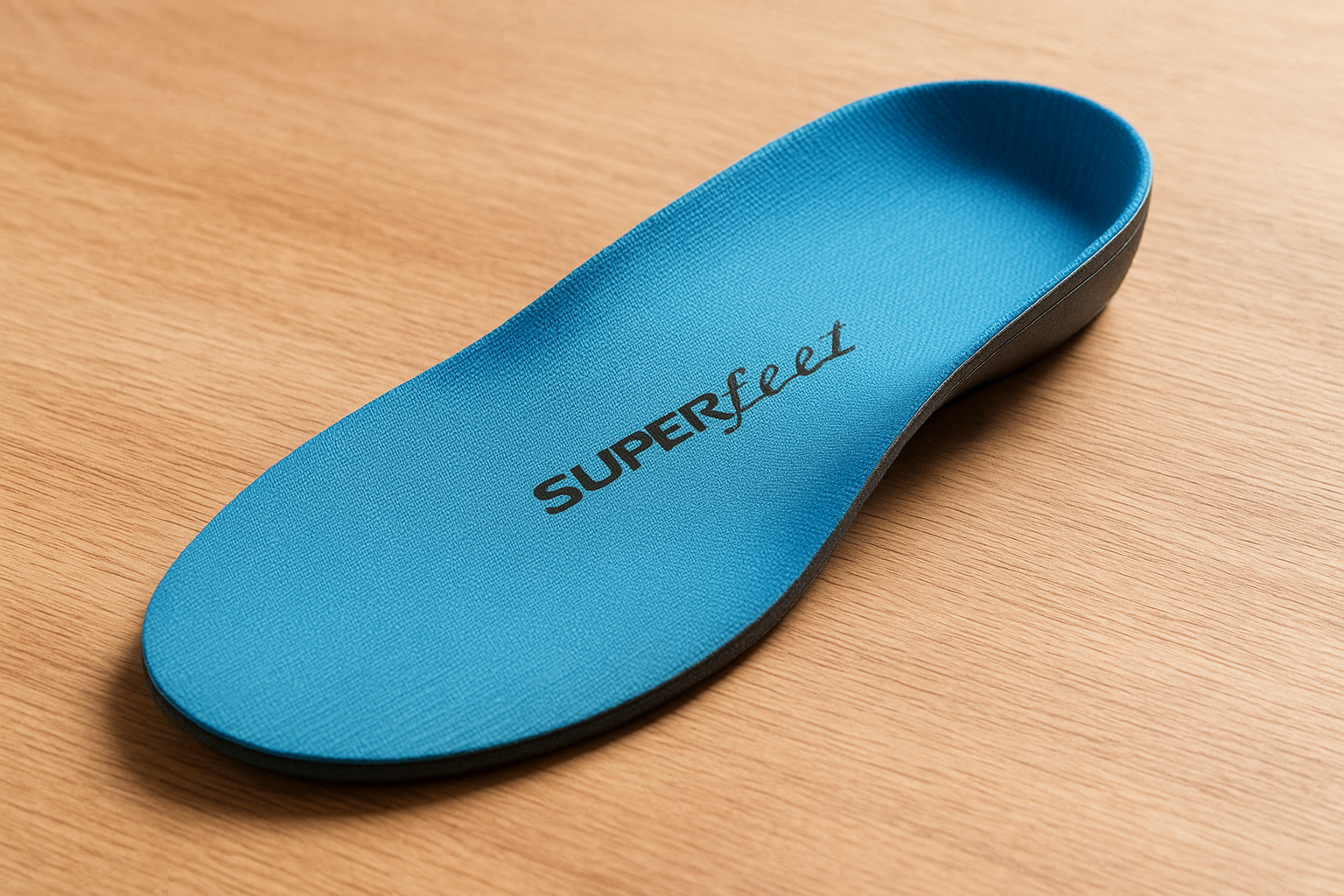
3. Superfeet All-Purpose Support High Arch
The Superfeet All-Purpose Support High Arch takes a different design philosophy than most competitors. Rather than stacking soft foam layers for cushioning, it prioritizes a rigid carbon fiber composite shell and a deep stabilizing heel cup that locks your rear foot in place and prevents the sideways rolling that drives arch fatigue on long shifts.
Why it stands out for standing all day
Superfeet’s high-arch profile creates an elevated platform under your midfoot that keeps your arch from collapsing as the hours accumulate. The stabilizer cap at the heel is the standout feature. It holds the fatty tissue directly beneath your heel bone, which maximizes the natural shock absorption your foot already produces with each step. For anyone searching for reliable arch support insoles for standing all day, this combination of rigid structure and biomechanical efficiency makes a measurable difference by hour six or seven of a shift.
Locking your heel in position with a deep stabilizer cup multiplies the cushioning effect your foot produces naturally, without adding bulk.
Best for
- Workers with high or rigid arches that need elevation rather than compression
- Individuals experiencing heel soreness after prolonged standing on tile or concrete
- People replacing thin factory insoles in lace-up shoes or structured work boots
Fit and footwear notes
Superfeet insoles run thicker than average, so remove your factory insole before inserting them. They seat best in roomy athletic shoes, hiking boots, and work boots with a structured toe box. They don’t trim down as easily as some competitors, so verify your size against Superfeet’s sizing chart before purchasing.
Typical pricing range
Expect to pay between $30 and $55 per pair, depending on the size and where you buy.
When to skip and what to do instead
If you have flat feet or a low arch, this high-arch version will push too aggressively against your midfoot and create new pressure points. Try a neutral-arch insole instead, or schedule a podiatric evaluation to confirm your arch type before committing to any structured product.
4. Aetrex Lynco arch support insoles
Aetrex developed the Lynco line with direct input from podiatrists, and that foundation shows clearly in the product’s construction. Unlike most retail insoles built around cushioning alone, the Lynco series incorporates metatarsal support and a structured heel cup that target the biomechanical causes of arch fatigue rather than simply padding over them.
Why it stands out for standing all day
The Lynco insole’s layered construction gives it a real advantage in sustained-use scenarios. A firm orthotic base controls rearfoot motion, while the top layer manages friction and surface contact at the same time. The metatarsal pad built into select Lynco models lifts the transverse arch and reduces forefoot pressure, which is exactly where most standing workers feel the most strain by mid-shift. For anyone relying on arch support insoles for standing all day, that forefoot offloading feature separates the Lynco from most competitors in its price range.
Metatarsal support is often overlooked in over-the-counter insoles, but it’s critical for anyone standing on hard floors for hours at a stretch.
Best for
- Workers with low to medium arches who need structured midfoot and forefoot support simultaneously
- People experiencing ball-of-foot pain or forefoot fatigue alongside arch soreness
- Nurses, teachers, and retail staff standing on flat, unforgiving surfaces throughout their shifts
Fit and footwear notes
Aetrex offers the Lynco in multiple arch configurations including neutral, support, and sport variants, so match your selection to your actual arch height before buying. These insoles seat well in lace-up work shoes and casual sneakers with removable factory liners, and they trim cleanly to size when needed.
Typical pricing range
Lynco insoles typically cost between $35 and $55 per pair, with sport and support variants landing toward the higher end of that range depending on the retailer.
When to skip and what to do instead
If your symptoms include sharp heel pain during your first few steps in the morning, that pattern points strongly toward plantar fasciitis. A podiatric evaluation will serve you far better than cycling through additional retail products at that point.
5. Tread Labs Dash insoles
Tread Labs takes a modular approach that separates it from every other insole on this list. The Dash uses a firm biomechanical arch support shell paired with a replaceable top cover, which means you replace the worn surface layer instead of discarding the entire insole when the top breaks down. That design decision extends the functional life of your investment well beyond what a single-piece insole delivers.
Why it stands out for standing all day
Tread Labs offers the Dash in four arch height options: low, medium, high, and ultra-high. That level of specificity is unusual for a retail insole and it matters enormously when you need arch support insoles for standing all day to match your actual foot structure rather than a generic profile. The firm nylon shell holds its shape under constant load, so you’re getting the same level of support at hour ten that you had at hour one.
Matching arch height to your actual foot geometry is one of the most important factors in whether an insole helps or simply sits in your shoe.
Best for
- Workers with clearly defined arch profiles, particularly medium or high arches, who want a precise fit
- People who go through insoles frequently and want a longer-term, cost-efficient option with replaceable covers
- Individuals in healthcare or service industries who need consistent structural support across back-to-back shifts
Fit and footwear notes
The Dash fits well in lace-up athletic shoes, work boots, and structured sneakers with removable factory insoles. Tread Labs provides a straightforward sizing guide on their product pages, and the insole trims cleanly at the toe if needed.
Typical pricing range
Expect to pay between $75 and $95 per pair for the shell and initial top cover combined.
When to skip and what to do instead
If you have flat feet or undiagnosed chronic pain, get a podiatric evaluation before spending at this price point. A professional assessment will tell you exactly which arch height you need and whether a custom device is a better fit for your situation.
6. Fulton The Athletic Insole
Fulton takes a materials-first approach that most insole brands skip entirely. The Athletic Insole uses a natural cork and rubber base that molds gradually to the shape of your foot over the first few weeks of use, creating a personalized support profile without the cost of a custom device. That adaptive quality gives it a distinct advantage over rigid options that feel the same on day one as they do on day one hundred.
Why it stands out for standing all day
Cork compresses under load and then rebounds to its original shape, which means this insole doesn’t bottom out the way standard foam products do by midday. The arch support ridge sits at a medium height that suits a wide range of foot types without feeling aggressive. If you need arch support insoles for standing all day and prefer a natural material that breathes better than synthetic foam, the Fulton Athletic is worth a serious look.
Cork’s ability to rebound under repeated compression makes it one of the more durable base materials available in over-the-counter insoles.
Best for
- Workers with medium arches who want a softer, adaptive support profile rather than a rigid shell
- People with sensitive feet who find firm polypropylene insoles uncomfortable during long shifts
- Those prioritizing sustainably sourced materials in their footwear choices
Fit and footwear notes
Fulton’s Athletic Insole fits comfortably in lace-up sneakers and casual work shoes with removable liners. It trims cleanly at the toe and sits at a moderate thickness that accommodates most standard footwear without requiring a larger shoe size.
Typical pricing range
Expect to pay between $38 and $48 per pair depending on size and retailer.
When to skip and what to do instead
If you need significant motion control for overpronation or a diagnosed structural condition, the cork base won’t provide enough corrective rigidity. A semi-rigid or custom option will serve you better in that situation.
7. Sole Active Medium
The Sole Active Medium uses a heat-moldable EVA footbed that you warm briefly in an oven, then step into while it’s pliable. Within seconds, the material conforms to your arch height, heel width, and pressure points, creating a semi-custom fit that off-the-shelf insoles built on fixed molds simply can’t replicate at this price point.
Why it stands out for standing all day
That molding process is what sets this insole apart when you need arch support insoles for standing all day in a work environment where your foot shape differs from the industry average. The result is an insole that supports your specific arch geometry rather than a generic profile. A polyurethane top layer adds surface cushioning that holds up through long hours without compressing into a flat sheet by noon.
Personalized fit through heat molding bridges the gap between retail insoles and a professionally fabricated custom device.
Best for
- Workers with irregular arch heights or wide heels that standard insoles can’t accommodate properly
- People who have tried multiple over-the-counter options without success and want a semi-custom solution before committing to a podiatrist visit
- Individuals in healthcare or light industrial roles who stand on mixed surfaces throughout the day
Fit and footwear notes
The Sole Active Medium fits well in lace-up athletic shoes and work boots with removable factory liners. It trims cleanly at the toe using standard scissors, and the thickness is comparable to most mid-profile insoles, so you won’t need to size up your footwear.
Typical pricing range
Expect to pay between $35 and $55 per pair depending on size and retailer.
When to skip and what to do instead
If you have confirmed overpronation or plantar fasciitis, the moldable base doesn’t offer enough corrective rigidity on its own. A semi-rigid shell insole or a custom orthotic from a podiatrist will deliver more meaningful structural control for those conditions.
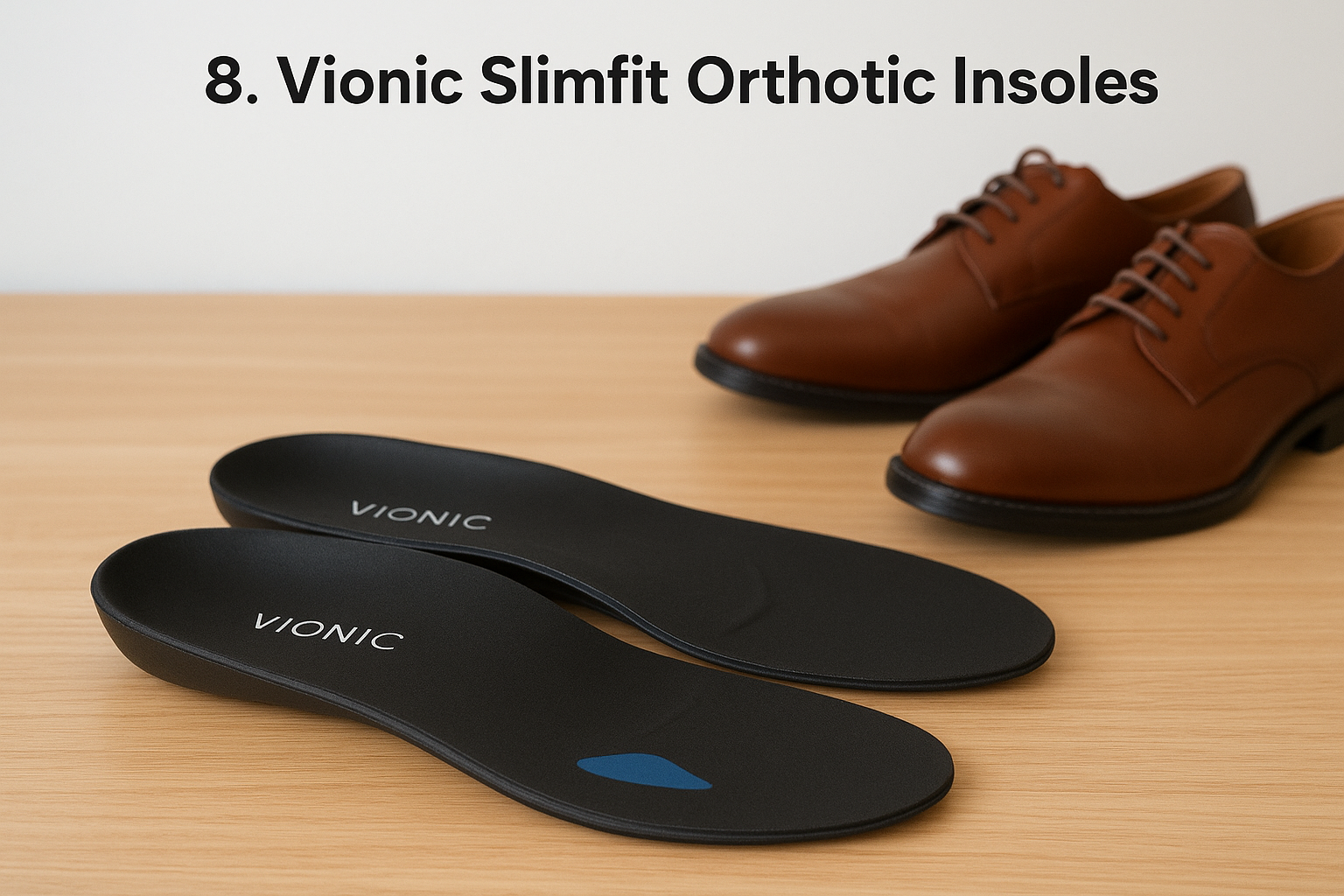
8. Vionic Slimfit Orthotic Insoles
Vionic designed the Slimfit specifically for people whose footwear rules out a standard-thickness insole. If you work in a professional environment where dress shoes are required, most of the insoles on this list simply won’t fit. The Slimfit solves that problem by delivering podiatrist-designed orthotic support in a low-profile package that slides into dress shoes, loafers, and other fitted footwear without creating a crowded fit.
Why it stands out for standing all day
Vionic’s Vio-Motion support system places a firm heel cup and structured arch ridge into a noticeably thinner footbed than most competitors manage. That architecture keeps your foot aligned properly even when the insole itself takes up minimal vertical space in your shoe. For anyone relying on arch support insoles for standing all day inside dress or fashion-forward work footwear, this insole fills a gap that most other brands ignore entirely.
Orthotic support doesn’t require a thick insole. The quality of the shell geometry matters far more than the overall height of the device.
Best for
- Workers in office, hospitality, or professional environments where dress footwear is non-negotiable
- Individuals with mild to moderate overpronation who haven’t found a slim insole with real structural support
- People with narrow or standard-width feet who need a fitted profile without added bulk
Fit and footwear notes
The Slimfit works best in dress shoes, loafers, and fitted flats where thicker insoles fail. It also performs well in low-profile casual sneakers. Because of its slim build, it doesn’t require removing the factory liner in most cases.
Typical pricing range
Expect to pay between $30 and $50 per pair depending on size and retailer.
When to skip and what to do instead
If your pain is moderate to severe or concentrated in your heel, the slim profile won’t provide enough corrective force. Move to a semi-rigid insole or book a podiatric evaluation before purchasing again.
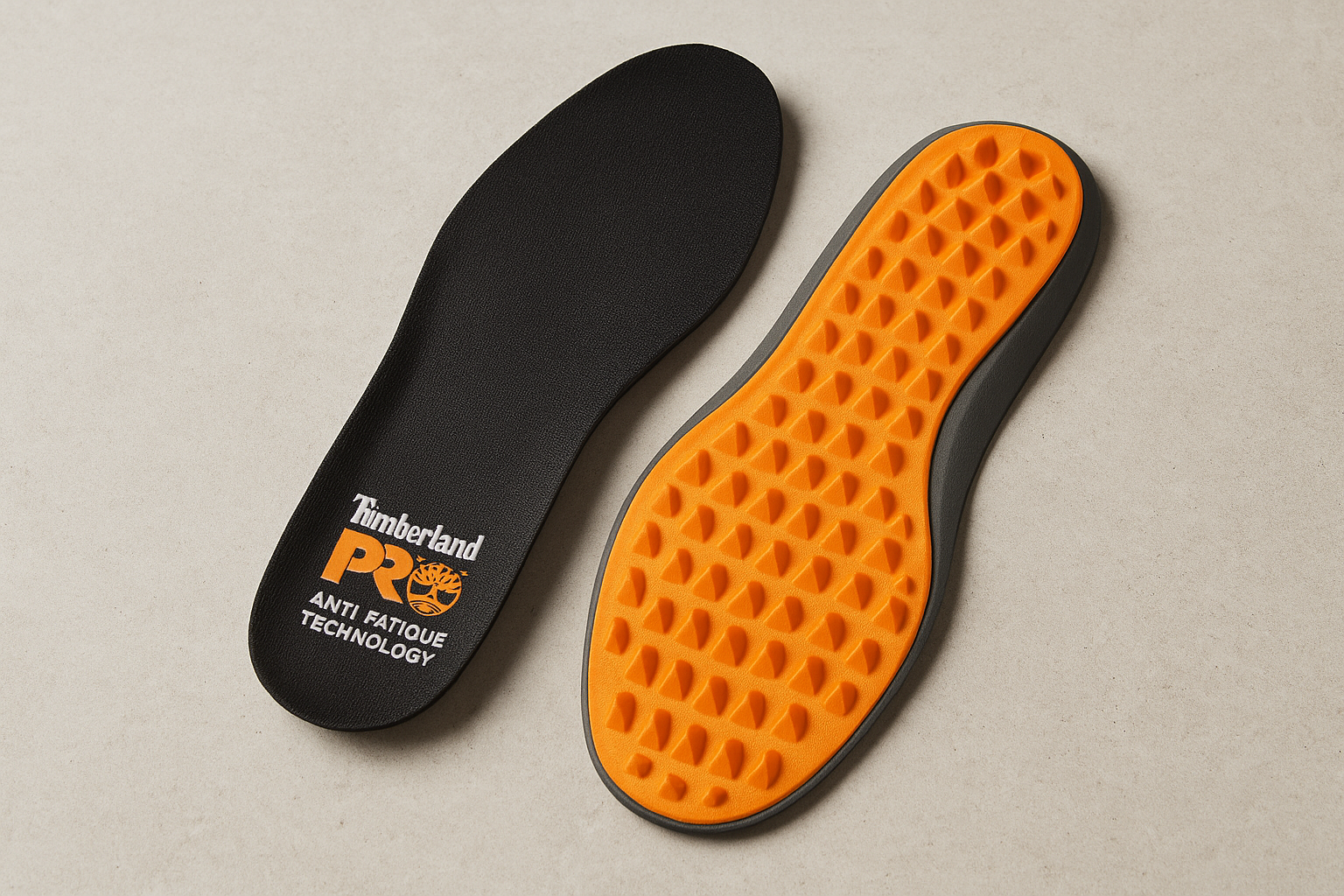
9. Timberland PRO Anti-Fatigue Technology Insoles
Timberland PRO built its Anti-Fatigue Technology insole specifically for trade workers, construction crews, and industrial staff who stand on concrete and uneven surfaces for full shifts. The design centers on an inverted cone geometry embedded throughout the footbed that compresses under impact and then pushes energy back up through your foot with each step, a system Timberland calls energy return.
Why it stands out for standing all day
The inverted cone structure gives this insole a mechanical advantage that standard foam beds can’t match. Each cone absorbs the downward force of your step and then converts that compression into upward rebound energy, which reduces the cumulative fatigue your legs and arches absorb across an eight or ten-hour shift. That makes it a strong pick if you need arch support insoles for standing all day in physically demanding work environments where your foot never gets a break from hard, unforgiving surfaces.
Energy return technology actively works against fatigue accumulation rather than simply padding your foot against it.
Best for
Workers in roles with sustained, high-impact standing see the clearest benefit from this insole. It suits you best if you fall into one of these categories:
- Workers in construction, warehousing, or light industrial roles standing on concrete for full shifts
- People who experience significant leg and arch fatigue by the second half of their workday
- Individuals already wearing Timberland PRO work boots who want a compatible replacement insole
Fit and footwear notes
This insole is designed to pair directly with Timberland PRO footwear and seats well in most structured work boots with a wide toe box and removable factory liner. It trims cleanly at the toe, though the thicker heel profile means slim dress shoes and fashion sneakers won’t accommodate it comfortably.
Typical pricing range
Expect to pay between $25 and $40 per pair depending on size and where you purchase. That price point makes it one of the more affordable structured insoles on this list for its level of fatigue-reduction technology.
When to skip and what to do instead
If your pain is specific to your arch or heel rather than general leg fatigue, an insole built primarily around energy return won’t address the structural issue driving your symptoms. Consult a podiatrist or move to a semi-rigid arch-specific insole that targets the corrective support your foot actually needs.
10. Currex RunPro insoles
Currex designed the RunPro with runners in mind, but its architecture transfers directly to long-duration standing. The insole uses a dynamic arch concept that varies the rigidity of the shell depending on which of three arch profiles you select: low, medium, or high. That profile-matching approach means you’re not choosing between a generic fit and a custom device. You’re selecting a product built for your specific arch geometry from the start.
Why it stands out for standing all day
The RunPro’s deep heel cup and contoured arch ridge work together to control how your foot loads and unloads across a full shift. Unlike flat foam insoles that treat your entire foot as a single surface, the RunPro’s zone-specific support channels force away from high-pressure areas and into a more even distribution across your plantar surface. That targeted load management is exactly what you need from arch support insoles for standing all day when hard floors and repeated impact are unavoidable.
Selecting the correct arch profile is the single most important decision you make when buying the RunPro. The wrong profile produces a worse outcome than no insole at all.
Best for
- Athletes and active workers who combine standing shifts with walking or light running throughout their day
- Individuals with clearly identifiable arch heights who want a structured retail insole matched to their profile
- Workers in healthcare or retail who need reliable motion control without the cost of a custom device
Fit and footwear notes
The RunPro fits best in lace-up athletic shoes and running-style work footwear with removable factory liners. It trims cleanly at the toe and sits at a moderate thickness that accommodates most standard sneakers without requiring a size adjustment.
Typical pricing range
Expect to pay between $50 and $65 per pair depending on arch profile and retailer.
When to skip and what to do instead
If you have significant overpronation or a diagnosed structural condition, the RunPro’s corrective range may fall short of what your foot actually requires. A podiatric evaluation will confirm whether a custom orthotic is the more appropriate choice before you invest further in retail options.
11. Spenco Polysorb Cross Trainer
Spenco has been manufacturing medical-grade insoles since the 1960s, and the Polysorb Cross Trainer reflects that long institutional focus on functional cushioning over marketing aesthetics. This insole uses a multi-layer polysorb foam system that prioritizes shock absorption and surface contact across the full length of the foot, making it one of the more straightforward options on this list for workers who need consistent underfoot comfort without a complex arch geometry.
Why it stands out for standing all day
The Polysorb’s foam layers compress progressively under load rather than collapsing immediately like single-density foam products. That progressive compression behavior keeps the insole performing at hour eight roughly the same way it did at hour one. A 4-way stretch fabric top layer reduces friction and surface heat, which matters considerably when you’re wearing the same pair of shoes for an extended shift. If you need arch support insoles for standing all day on a tighter budget without sacrificing basic structural integrity, this insole delivers reliable performance for its price.
Multi-layer foam with a stretch fabric top layer addresses both structural fatigue and surface friction, two separate causes of foot discomfort during long shifts.
Best for
- Workers with low to medium arches who need reliable cushioning over aggressive corrective support
- Individuals in retail, food service, or light healthcare roles who stand on mixed surfaces throughout their shift
- Budget-conscious buyers who want a dependable everyday insole without a premium price tag
Fit and footwear notes
The Polysorb Cross Trainer trims cleanly and fits well in lace-up athletic shoes and casual work footwear with removable factory liners. Its moderate thickness suits most standard sneakers without requiring a size adjustment.
Typical pricing range
Expect to pay between $15 and $25 per pair depending on size and retailer, making this one of the most accessible options on this list.
When to skip and what to do instead
If you have diagnosed plantar fasciitis, significant overpronation, or heel pain that wakes you up in the morning, the Polysorb won’t provide enough structural correction. Move to a semi-rigid shell insole or a custom orthotic evaluated by a podiatrist.
12. Dr. Scholl’s Work All-Day Insoles
Dr. Scholl’s Work All-Day Insoles represent the most widely available option on this list. You’ll find them at most pharmacies, big-box retailers, and grocery stores, which makes them a practical solution when you need immediate relief without waiting for a shipment or a professional appointment.
Why it stands out for standing all day
Dr. Scholl’s built this insole specifically around the demands of shift workers and people standing on hard floors for extended periods. The dual-layer construction combines a gel heel cushion with a foam arch support layer that handles shock absorption and midfoot stability at the same time. For workers who need basic arch support insoles for standing all day without a complex fitting process, this insole checks that box consistently across a full shift.
Immediate retail availability means you can replace a failing insole the same day rather than waiting days for a delivery.
Best for
- Workers in retail, food service, or warehouse roles who need a reliable budget option fast
- Individuals with mild arch fatigue rather than a diagnosed structural condition
- People testing whether insole support helps before committing to a more expensive product
Fit and footwear notes
These insoles fit comfortably in lace-up work shoes and athletic sneakers with removable factory liners. They trim cleanly at the toe with standard scissors and sit at a moderate thickness that suits most standard footwear without requiring a size adjustment.
Typical pricing range
Expect to pay between $10 and $20 per pair, making this the most affordable option on the entire list.
When to skip and what to do instead
If your foot pain is persistent, localized, or worsening, a budget cushioning insole won’t solve the underlying problem. Book a podiatric evaluation instead of continuing to cycle through retail products at this level.
What to do next
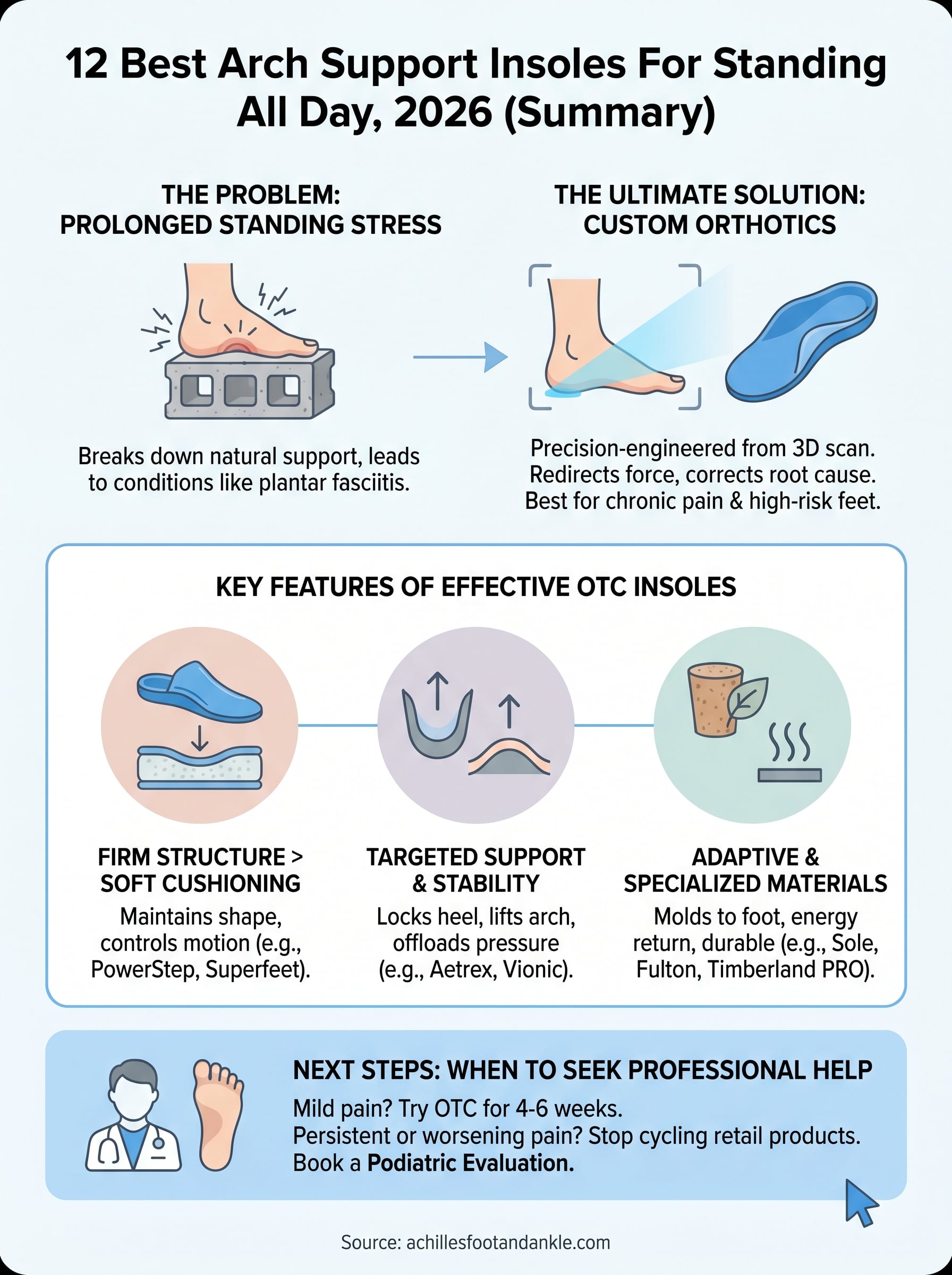
Finding the right arch support insoles for standing all day comes down to matching the product to your specific foot structure, work environment, and pain level. If your symptoms are mild and recent, start with one of the over-the-counter options on this list and give it four to six weeks of consistent use before drawing any conclusions. Pay attention to where your discomfort is concentrated and whether it changes with the insole in place.
Persistent pain that spreads above the ankle or wakes you up at night is a clear signal to stop cycling through retail products and get a professional evaluation instead. Our podiatric team at Achilles Foot and Ankle Center sees these patterns every day across thirteen Central Virginia locations, and we can tell you quickly whether an insole is enough or whether you need a more targeted intervention. Book a same-day appointment and get a straight answer about your foot health today.